



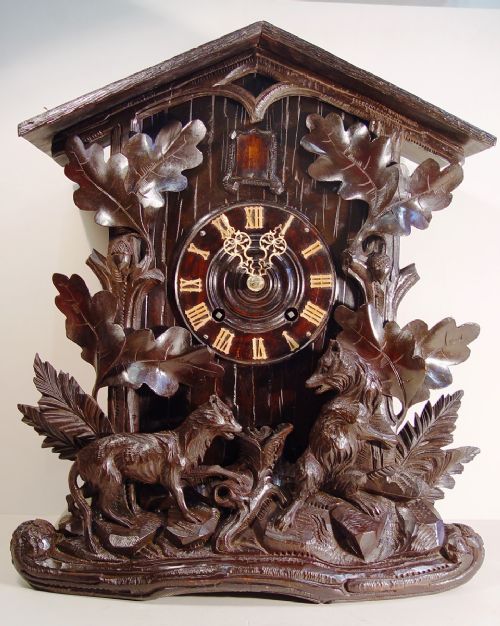

Black Forest Cuckoo Clock
These black forest cuckoo clock examples bring rustic mechanical charm and intricate woodcarving directly to your interior.
Black Forest Cuckoo Clock
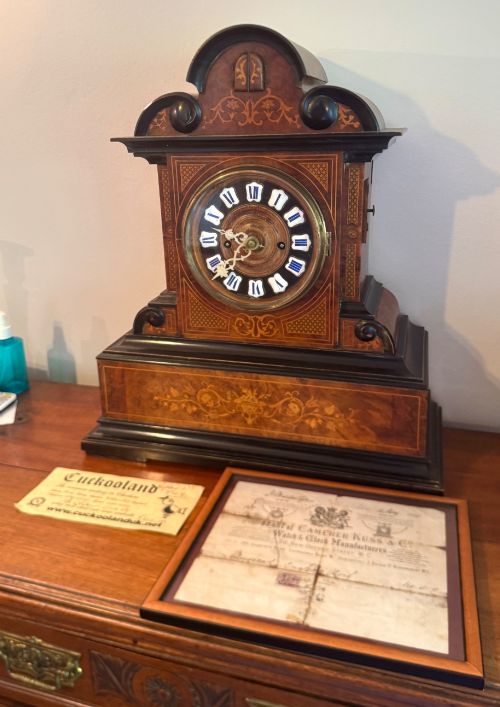
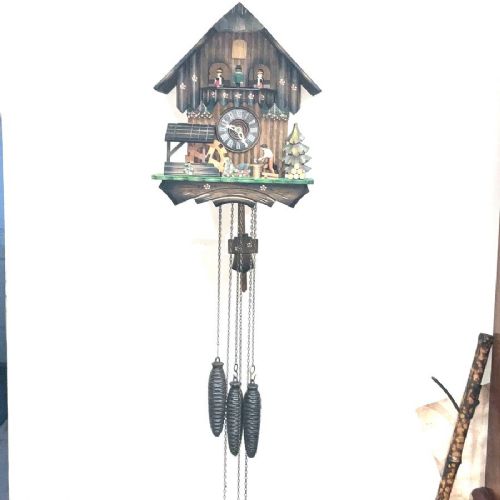
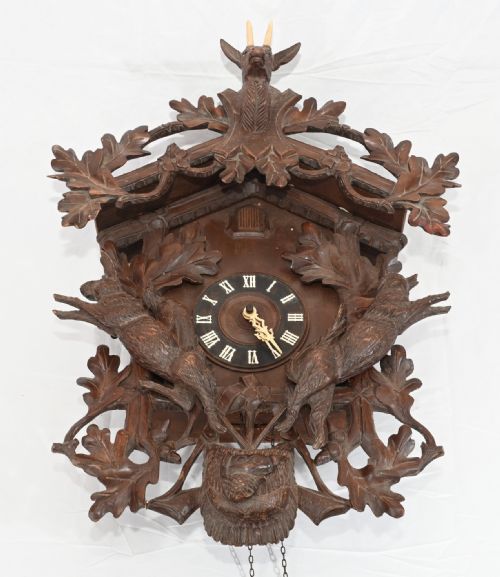
A black forest cuckoo clock combines traditional German woodworking with mechanical timekeeping, taking the form of wall-hanging models, shelf pieces, and bracket clocks. The examples seen here range from nineteenth-century carved walnut wall clocks to mid-twentieth-century musical automaton versions.
Most pieces display the classic regional aesthetic, featuring carved woodwork, enamel dials, and moving bird automata. You will encounter various formats including twin weight wall clocks, table standing models, and mantel designs.
Makers and workshops utilised distinct regional styles ranging from traditional Black Forest motifs to Victorian influences. The selection spans the nineteenth century through to nineteen-fifty, capturing both simple hanging wooden clocks and complex mechanical musical pieces.
How they were made
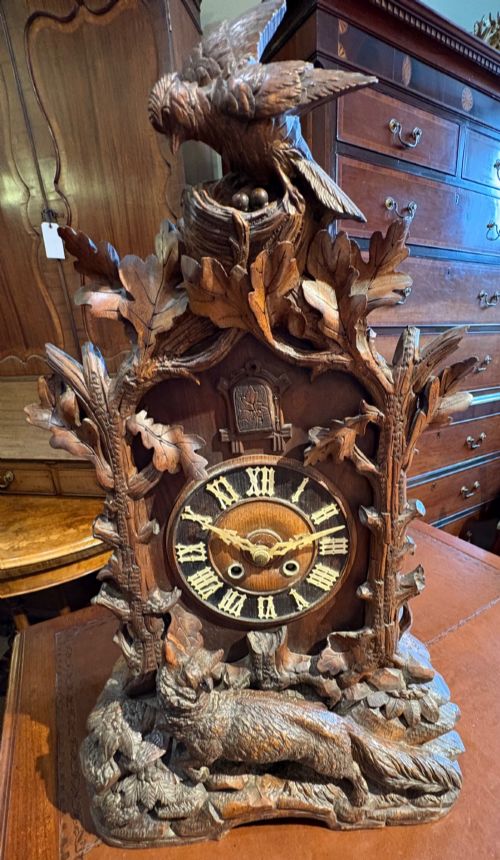
Carved wood forms the structural and decorative core of these clocks, with walnut and ebonised wood frequently utilised alongside brass movements and cast iron components. Artisans applied detailed hand-carving techniques to shape natural timber into elaborate foliage, animals, and architectural cases.
Internal mechanics rely on brass and metal gear trains, sometimes incorporating twin fusee or eight-day movements. Enamel dials and bone details complete the contrasting textures found across the clock faces and moving automata.
Early carvers occasionally hid tiny carved beetles inside the foliage.
What varies in quality
Depth and precision in the woodcarving separate standard production from superior examples, with particular skill visible in animal figures and foliage details. The complexity of the internal mechanism also dictates quality, distinguishing simple timepieces from eight-day twin fusee movements and musical automata.
Material selection plays a defining role, as rich carved walnut and well-preserved ebonised wood elevate the visual presence of the case. The integration of mechanical elements, such as smooth automaton action and clear enamel dials, marks the distinction at the upper end.
Beha
The Black Forest Cuckoo Clock Glossary
- Automaton
- A mechanical device that imitates human or animal action. In these clocks, it typically describes the animated cuckoo bird that emerges on the hour.
- Twin Fusee
- A clock movement driven by chains or cords wrapped around conical drums that equalise the force of the mainspring. This mechanism ensures more accurate timekeeping across the running duration.
- Ebonised Wood
- Timber treated to resemble ebony, usually through a staining or finishing process. It provides a dark, uniform contrast to lighter carved elements and enamel dials.
- Bracket Clock
- A portable clock designed to sit on a bracket, shelf, or table rather than hanging on a wall. These pieces often feature refined cabinetry suited for interior display.
- Enamel Dial
- A clock face made by fusing powdered glass to a metal substrate at high temperatures. This creates a durable, glossy surface with painted numerals.
Black Forest Cuckoo Clock: Frequently Asked Questions
How do I wind a cuckoo clock?
Winding depends on whether your clock uses a weight-driven or spring-driven mechanical movement. For weight-driven models, gently pull the chains to raise the weights back toward the underside of the case.
Avoid pulling the chains too quickly or misaligning the weights, as this can disrupt the internal gear train and the mechanical beat.
Where should I hang a wall clock?
Mount your wall clock on a sturdy interior wall away from direct sunlight, dampness, and major draughts. Secure the clock firmly to a proper wall anchor or stud to support the weight of the timber case and hanging components.
Ensure the wall surface is completely vertical so the pendulum swings freely without catching on the back panel.
Why does the cuckoo bird stop calling?
The call mechanism relies on a delicate system of miniature bellows and pipes connected to the time train. If the bird stops emerging or sounding, dust buildup or a slipped wire in the linkage is often the cause.
Gentle inspection of the internal levers behind the dial usually reveals whether a wire has become dislodged from the movement.