


Victorian Black Forest Clock
These victorian black forest clock pieces bring intricate wood carving and mechanical precision together, offering a striking centrepiece for a mantel or wall.
Victorian Black Forest Clock
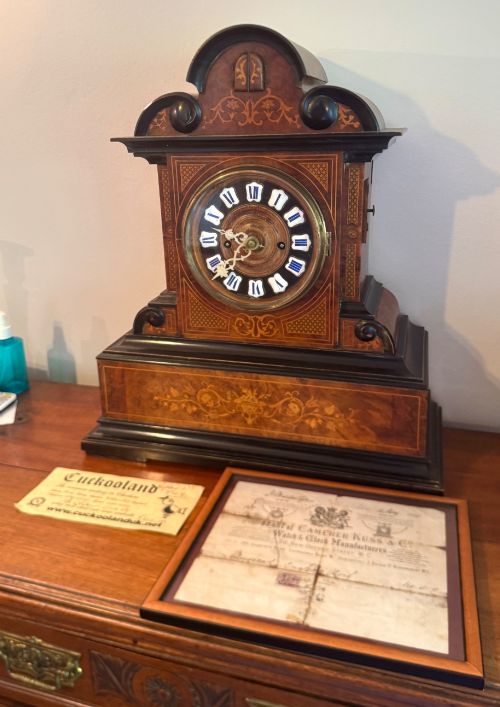
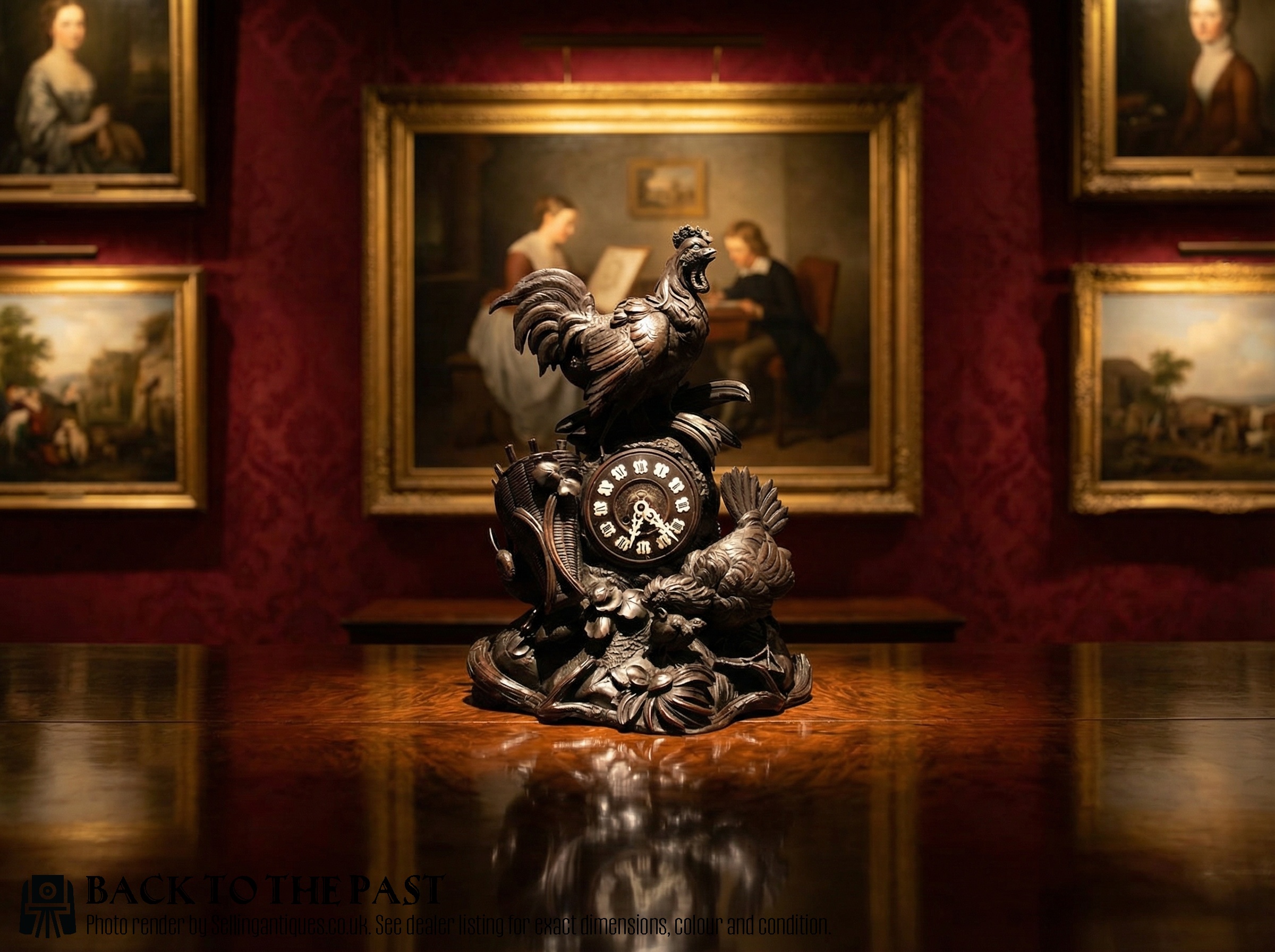
When you search for a victorian black forest clock, you encounter wooden timepieces originating from the 19th century, spanning periods from 1850 to 1900. These objects appear primarily as mantel clocks, wall clocks, and table or bracket clocks, alongside related instruments such as aneroid barometers.
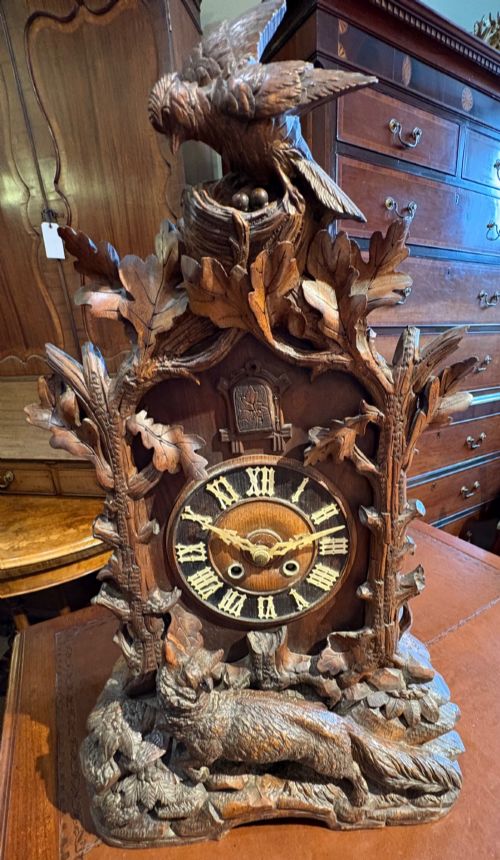
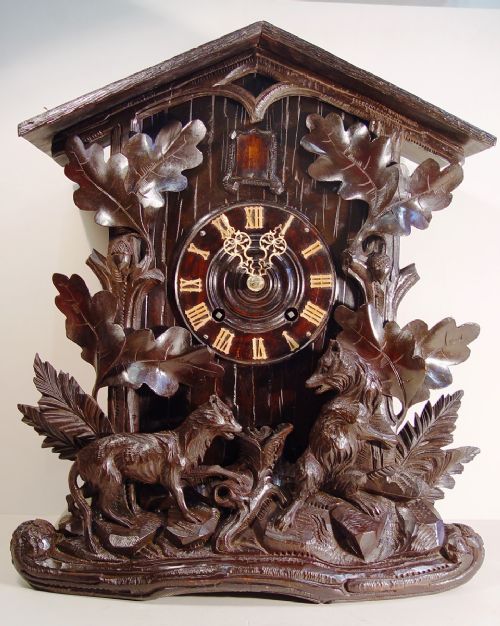
The versions most commonly met on this page include cuckoo clocks and larger mantel clocks, often housed in architectural or naturalistic wooden cases. Stylistic influences range from the traditional Black Forest aesthetic to French Rococo, Swiss variations, German Historicism, and Gothic Revival.
Originating from German and Swiss workshops during the Victorian era, these clocks serve both functional timekeeping and decorative roles. Their presence reflects the technical skill and regional traditions of 19th-century woodcarvers.
How They Were Made
Carved wood forms the foundation of these pieces, utilising materials such as walnut, carved walnut, linden wood, and ebonised wood. Artisans shaped these timbers by hand to create elaborate foliage, animals, and architectural motifs characteristic of the style.
Movements and dials incorporate brass, enamel, and glass components to house the delicate mechanical gears. Marquetry inlay also appears on select wooden cases to provide contrasting surface patterns.
The listings span the nineteenth century, utilising walnut, linden wood, brass, and enamel across various mantel and wall clock forms.
What Varies In Quality
The depth and intricacy of the wooden carving distinguish standard examples from finer works, with crisper details and more complex animal or botanical subjects marking superior production. The choice of timber, from plain walnut to finely grained linden wood, contributes to the visual weight of the case.
The complexity of the movement, such as twin fusee mechanisms or specialised cuckoo functions, separates simpler timepieces from advanced mechanical achievements. Furthermore, the preservation of original enamel dials and brass elements influences the overall integrity of the piece.
Bergen & Co·Johann Baptist Beha·Lenzkirch
The Victorian Black Forest Clock Glossary
- Cuckoo clock
- A mechanical timekeeper that uses pipes and bellows to imitate the call of a cuckoo bird. This mechanism is frequently housed within intricately carved wooden cases.
- Twin fusee
- A mechanical movement system utilising cones and chains to equalize the pull of the mainspring. This arrangement ensures consistent power delivery to improve timekeeping accuracy.
- Aneroid barometer
- An instrument that measures atmospheric pressure without using liquid mercury, relying instead on a flexible metal box. These devices often share the decorative woodwork style of contemporary clocks.
- Marquetry
- The art of applying pieces of veneer to a structure to form decorative patterns. This technique appears on selected wooden clock cases.
- Ebonised wood
- Timber treated to resemble ebony through staining or finishing processes. This dark surface treatment provides a sharp contrast against lighter carved elements.
Victorian Black Forest Clock: Frequently Asked Questions
How do I wind a cuckoo clock?
Winding requires pulling the chains carefully to raise the hanging weights back toward the underside of the case. Care must be taken not to pull the wrong chain or force the mechanism beyond its natural stop.
Most models require weekly attention, though some larger table-standing versions utilise 8-day movements that need less frequent winding.
Where should I place a wooden clock?
These clocks belong on sturdy mantelpieces, dedicated wall brackets, or stable tables where vibrations are kept to a minimum. Keeping them away from direct sunlight and strong temperature fluctuations preserves the carved wooden case.
Allowance must be made for the clearance of hanging weights and pendulums if the chosen model requires them to operate.
How do I tell different styles apart?
Style identification relies on examining the motifs and structural lines of the wooden case. French Rococo influences appear as asymmetrical scrolls and curves, whereas Gothic Revival pieces display pointed arches and ecclesiastical details.
Traditional Black Forest examples typically feature deeply carved leaves, birds, and rustic woodland animals rather than classical architectural orders.
Are all these clocks from the Victorian period?
The pieces originate primarily across the 19th century, aligning with the broader Victorian era and encompassing decades from 1850 through 1900. Specific dates assigned to individual items reflect the estimated period of manufacture based on style and mechanical design.
German and Swiss workshops produced these variations continuously throughout this timeframe, leading to diverse regional interpretations.