



Black Forest Mantel Clock
A black forest mantel clock brings carved wooden craftsmanship and mechanical movement together in domestic spaces.
Black Forest Mantel Clock
When you search for a black forest mantel clock, you are looking at nineteenth-century timepieces originating from the wooded mountain regions of central Europe. These objects combine timekeeping mechanics with elaborate woodwork, often taking the form of chalet designs or architectural cases. You meet walnut, linden wood, and ebonised examples frequently on this page, representing the traditional output of the region.
The objects span periods from the mid-nineteenth century to the Victorian era, showing regional styles that range from Swiss variations to French Rococo influences. Many pieces incorporate mechanical automata, swinging maiden pendulums, or cuckoo mechanisms within their wooden housings. They serve both as functional timepieces and as ornamental centrepieces for a mantelpiece.
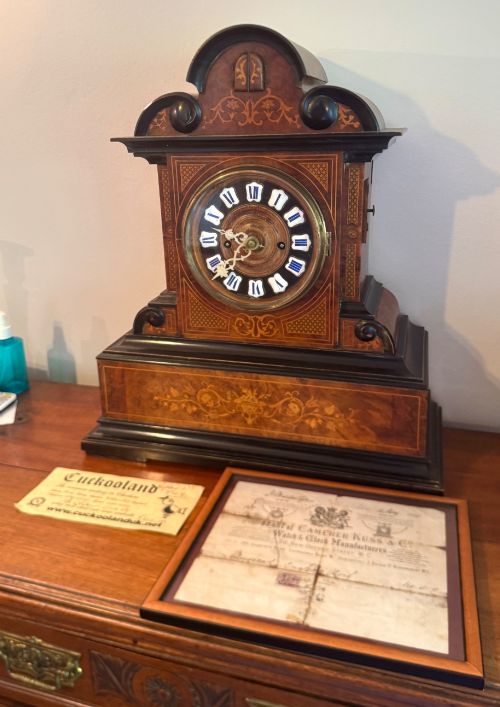
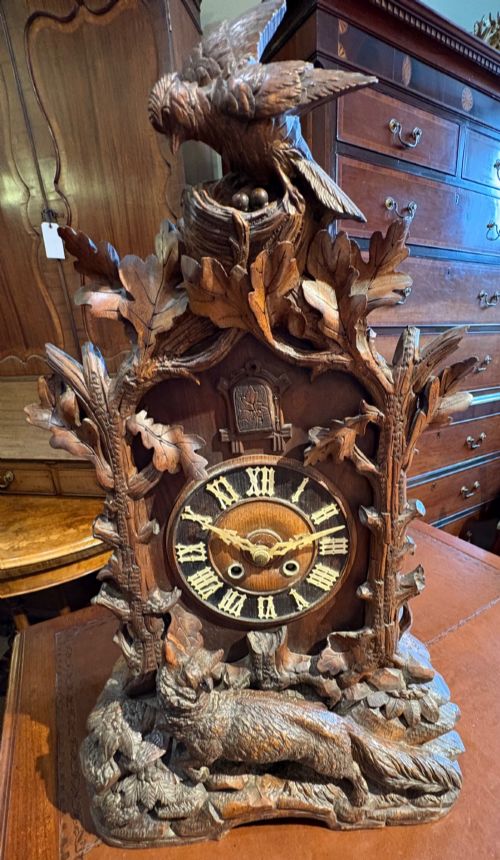
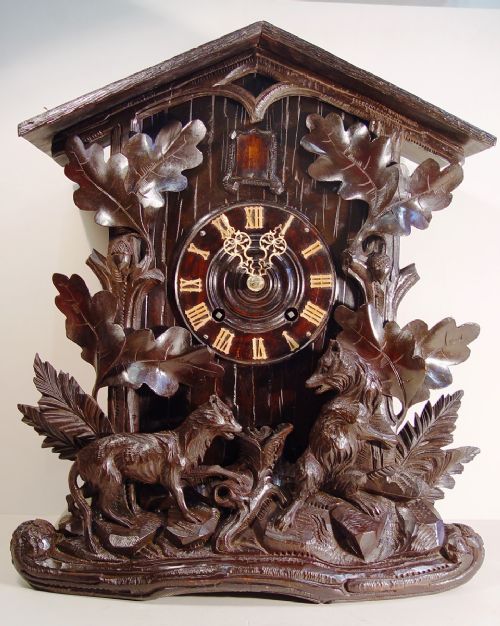
Most pieces date to the nineteenth century, utilising carved wood structures paired with brass movements and enamel dials. The designs vary from simple architectural boxes to monumental carved mantel clock sets flanked by detailed foliage and animal motifs. Buyers find both table-standing bracket clocks and larger chalet forms within this selection.
How they were made
Carvers utilised linden wood and walnut for the cases, working the timber by hand to create deep relief foliage, animals, and architectural facades. Ebonised wood and marquetry details also appear, adding contrast and geometric patterns to the wooden surfaces. The timber work required skilled hand-tooling to achieve the characteristic textured finishes.
Movements relied on brass gear trains, often driven by twin fusee systems or spring-driven mechanisms housed behind enamel dials. Glass panels protected the dial faces while allowing visibility of the escapement and hands. Makers integrated specialised mechanical components to operate cuckoo calls and swinging pendulums.
Swinging maiden pendulums and cuckoo mechanisms bring motion and sound directly into the wooden clock cases.
What varies in quality
The depth and crispness of the wood carving separate standard production pieces from the finest workshop output. Pierced foliage and figurative elements demand high levels of carving skill, which alters the visual presence of the clock case.
Bergen and Co·Lenzkirch·Beha·Junghans
The Black Forest Mantel Clock Glossary
- Carved Wood
- Timber shaped by cutting and gouging to form decorative motifs, figures, and architectural details. This technique defines the exterior appearance of these clocks.
- Linden Wood
- A pale, fine-grained timber frequently utilised for intricate carving work due to its consistent density. Carvers favoured this wood for detailed foliage and animal subjects.
- Twin Fusee
- A mechanical system using a cone-shaped pulley and chain to equalise the force of the mainspring as it unwinds. This mechanism improves timekeeping accuracy across the power reserve.
- Enamel
- A glassy substance fused to a metal dial plate to provide a smooth, white surface for painted numerals. These dials resist tarnishing and offer high legibility.
- Ebonised Wood
- Timber treated with a dark stain or finish to imitate ebony. This treatment creates a strong visual contrast against lighter carved elements.
Black Forest Mantel Clock: Frequently Asked Questions
How do these clocks work?
These timepieces operate via brass mechanical movements driven by springs or weights, housed within carved wooden cases. Many incorporate specialised gear trains to sound the hours or operate cuckoo mechanisms and moving automata.
The internal components require periodic cleaning and oiling by a horologist to maintain reliable timekeeping and protect the historic brass gears from wear.
Where were they made?
The pieces originate from the Black Forest region in Germany, alongside adjacent Swiss and French border areas during the nineteenth century. Local woodworking traditions combined with specialised clockmaking communities to produce these distinct chalet and carved cases.
Workshops in towns such as Lenzkirch and makers like Beha established reputations for producing both the wooden cabinetry and the brass movements.
How should I care for the wood?
Keep the carved wooden cases away from direct sunlight and steady heat sources to prevent the timber from drying out and cracking. Dust the deep relief carvings gently with a soft brush to maintain the surface without damaging fine details.
Avoid using liquid polishes or modern chemical sprays on antique timber and enamel dials, as these substances can degrade original finishes.
What styles are available?
The selection includes traditional Swiss and German chalet designs, alongside pieces influenced by French Rococo aesthetics and Victorian taste. Some examples feature monumental architectural facades, while others take the form of bracket clocks or table-standing models.
Details range from simple ebonised wooden frames to elaborate carved scenes depicting animals, foliage, and swinging maiden pendulums.