



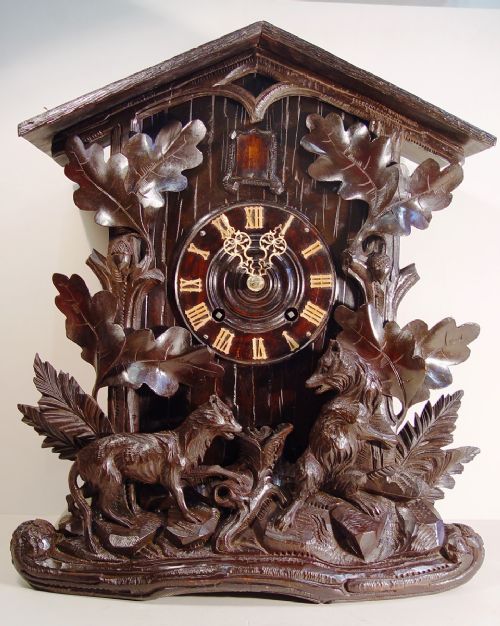

Antique Cuckoo Clocks
A carved wooden clock, weight or spring driven, with a pair of bellows and a whistle that give the bird its call on the hour, made as an everyday domestic timekeeper.
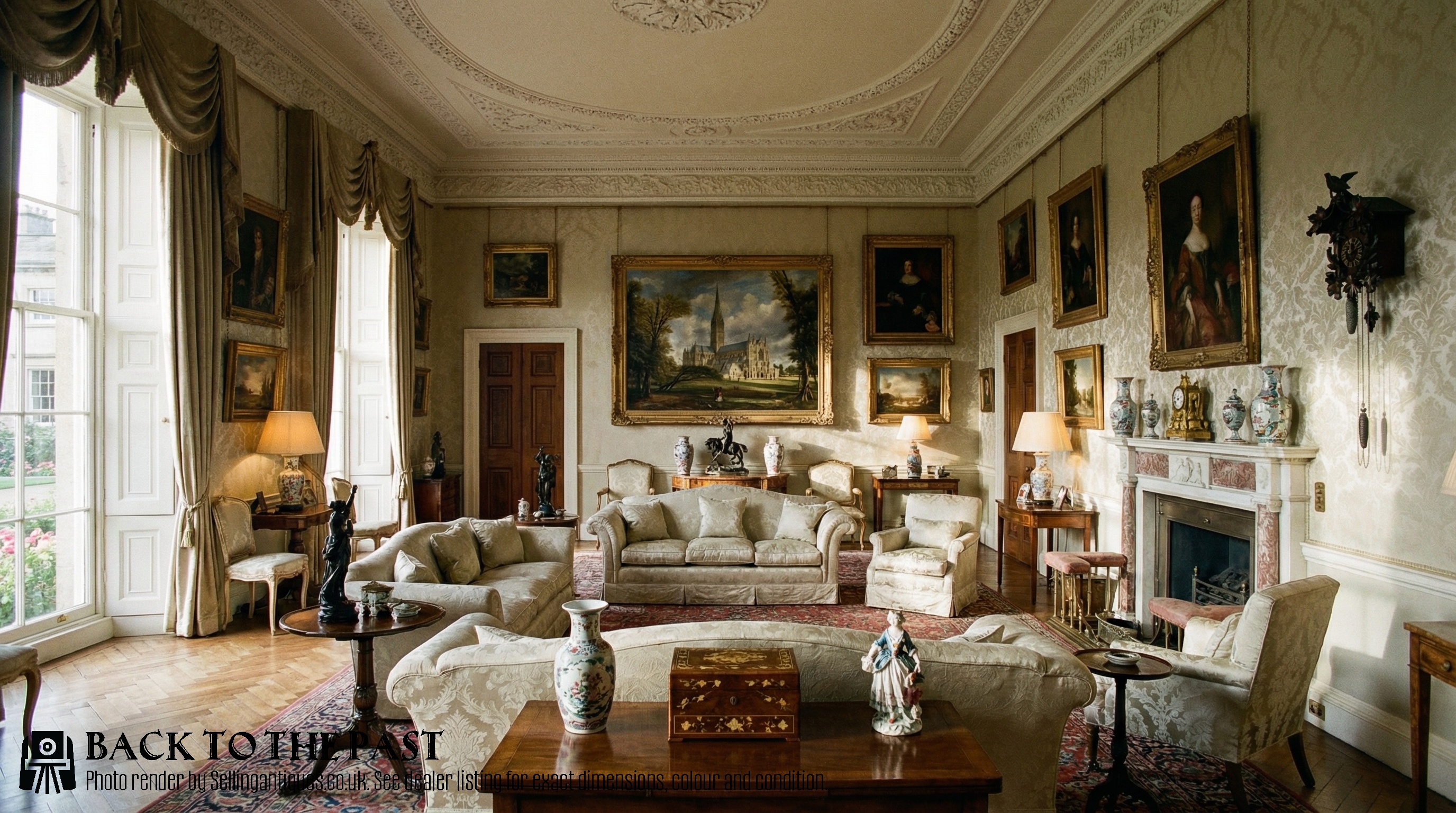
What Are Antique Cuckoo Clocks?
The cuckoo clock came out of the Black Forest in south-west Germany, where workshops and cottage makers built wooden-cased clocks from the eighteenth century onward and exported them through the nineteenth. It began as an inexpensive novelty timekeeper for ordinary houses, and the carving on the case became the selling point as the trade grew.
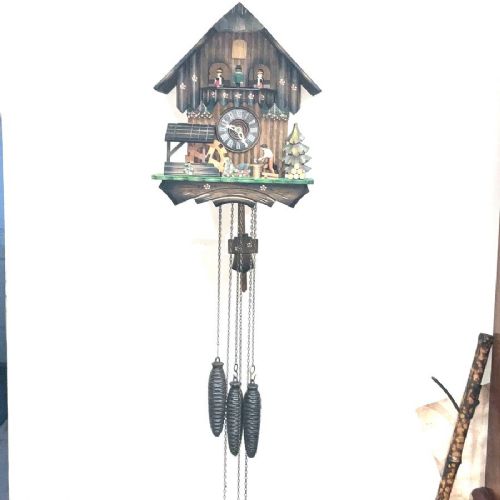
That regional origin is effectively part of the name. "Black Forest" appears in 20 of the 27 titles on Sellingantiques, and the commonest listing is simply an Antique Black Forest Cuckoo Clock with nothing further said. The form behind that plain title is the hanging wall clock on twin weights, one weight driving the going train and the other the strike and the call.
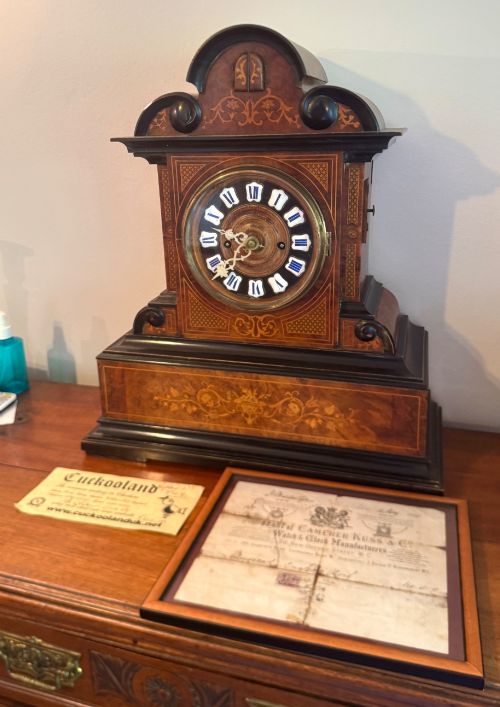
A smaller group stands rather than hangs. Six titles describe shelf, table, mantel or bracket cases, flat-bottomed and made for a surface, and the three fusee movements in the archive all belong to this standing group. Musical and automaton versions turn up three times, with a moving figure or a music movement working alongside the bird.
Dates run from 1850 to 1950, with 21 listings carrying a clean year. The 1900s and the 1860s tie as the busiest decades at five apiece, so the archive has two peaks rather than one. Six entries give only "19th Century" or "Victorian", which is a dealer's broad placing rather than a date, and two sit at 1950, outside any usual antique threshold.

Where The Range Splits
Case format does more work than anything else. The standing forms, shelf and table and mantel and bracket, all sit above the middle of the range, and the highest-priced entry in the archive is a marquetry, ebonised walnut mantel or bracket clock. The plain hanging weight-driven wall clock is the baseline the rest is measured against.
Movement follows the case. Fusee appears three times and always with a standing case, never on a hanging weight-driven example, and the 8-day titles sit above the midpoint too. Novelty on its own doesn't lift a clock, though: two of the three musical or automaton pieces are among the more modestly priced.
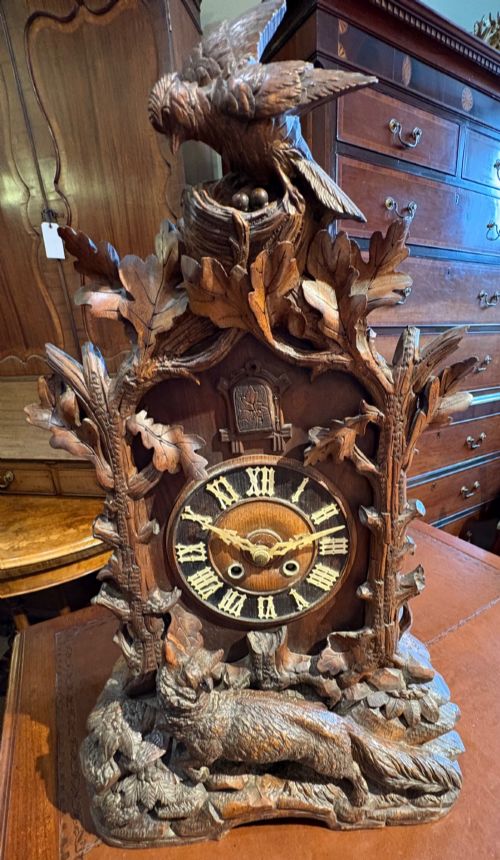
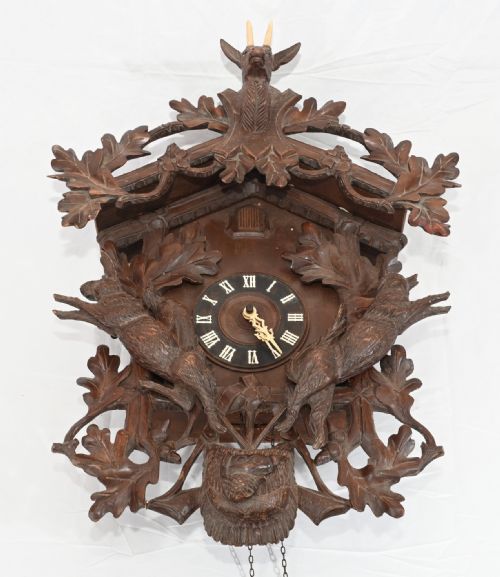
Carving and attribution account for most of the remainder. Figural and deeply worked cases, a carved bear among them, push upward, and titles carrying a maker's name or an attribution to one all fall in the top third. Dealers' quality language sits in the same territory, appearing only from the middle of the range upward.
Retail Price Guide 2026
Typical UK retail prices for cuckoo clocks, calculated from the Sellingantiques database of over a million retail prices indexed since 2003. This retail price guide relies exclusively on Sellingantiques data; no external sources or auction records are used, so the figures do not describe the wider market.
Black Forest appears in most cuckoo clock titles on Sellingantiques, so the region reads almost as part of the object's name.
Beha
The Antique Cuckoo Clocks Glossary
- Black Forest
- The south-west German region whose workshops made these clocks. It is named in three quarters of the titles in this category.
- Twin weight
- Two hanging weights, one driving the going train and the other the strike and cuckoo call. The standard arrangement on the hanging wall form.
- 8-day
- A movement that runs a week and more on one wind or weight-pull, rather than needing daily attention.
- Fusee
- A cone-shaped pulley that evens out mainspring power. Twin fusee means one for going and one for striking, and it turns up only on the standing cases.
- Automaton
- A moving figure beyond the cuckoo itself, named in three of the titles here, sometimes alongside a music movement that plays on the hour.
- Ebonised
- Timber stained and polished black in imitation of ebony, recorded once with marquetry inlay on a walnut mantel case.
Frequently Asked Questions
Are cuckoo clocks Swiss or German?
Every regional term in this archive points to the Black Forest, in south-west Germany. Switzerland is never named in a title.
The attribution is so consistent that it functions as part of the object's name: 20 of the 27 titles say Black Forest, and a couple more say German.
How often do these come up for sale?
Roughly three a year on Sellingantiques. It's a slow trickle rather than a steady supply.
Twenty-one different dealers have listed one across 27 listings in total, so almost every dealer who has handled the form has handled exactly one.
What is the difference between a hanging and a table cuckoo clock?
The hanging version is the one people picture: a wall case driven by twin weights on chains, one for the going train and one for the strike and call.
The standing version has a flat-bottomed case for a shelf, table or mantel. About six titles describe that form, and all of them sit above the middle of the range.
Do musical cuckoo clocks sell for more?
Not on this evidence. Musical or automaton work is named in three titles, and two of those are among the more modestly priced pieces.
Standing cases, fusee movements and deep carving track with the upper end far more reliably than movement novelty does.
What dates do these clocks carry?
The dated field runs 1850 to 1950, with 21 of the 27 listings giving a clean year. The 1900s and the 1860s are the busiest decades at five each.
Six entries give only "19th Century" or "Victorian". Two carry 1950 dates, which fall outside any usual antique threshold, and one is dated 1920.
Which case timbers and finishes appear?
Walnut is the timber named most often, usually with carving described alongside it. Carved bear and other figural work turns up in the titles too.
One case is recorded as marquetry walnut and ebonised, an inlaid and blackened finish that appears nowhere else in the archive.