
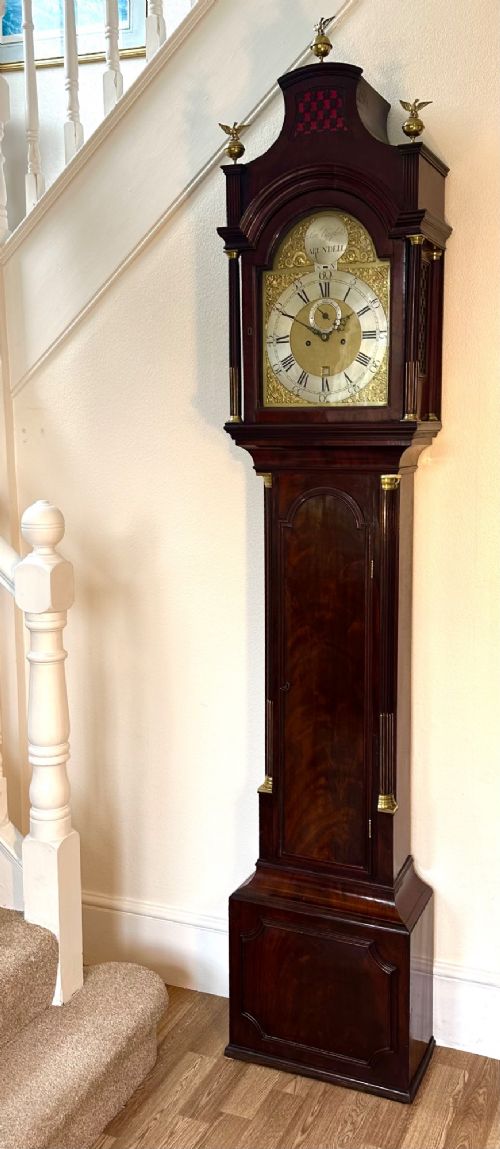
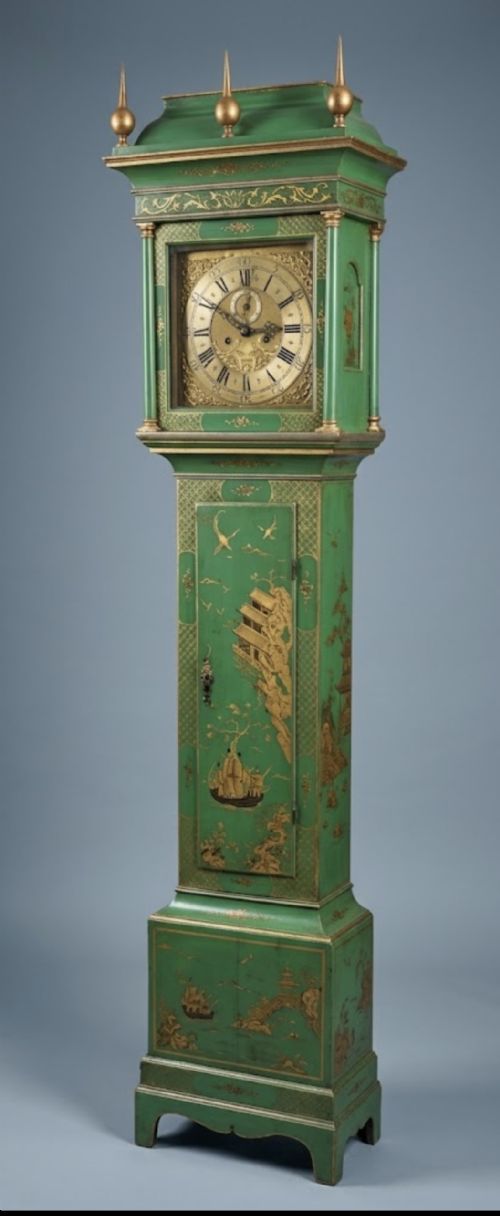
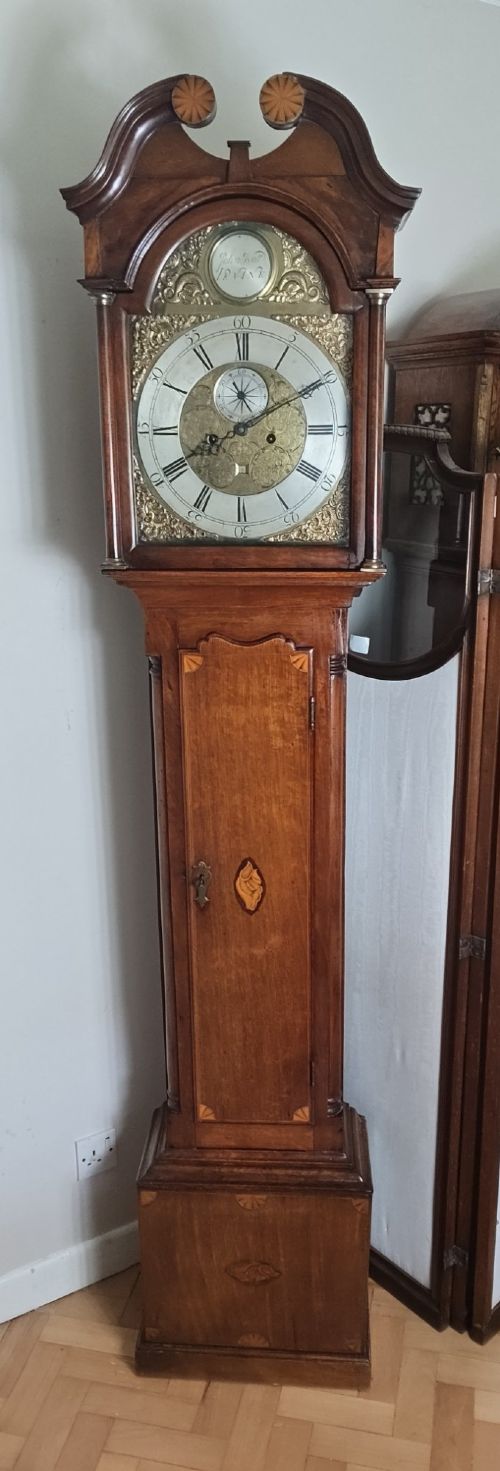
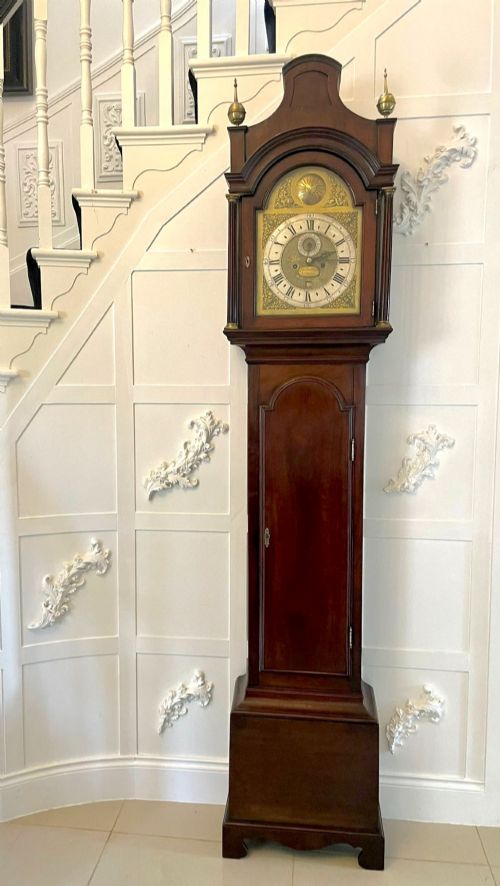
Antique Longcase Clocks
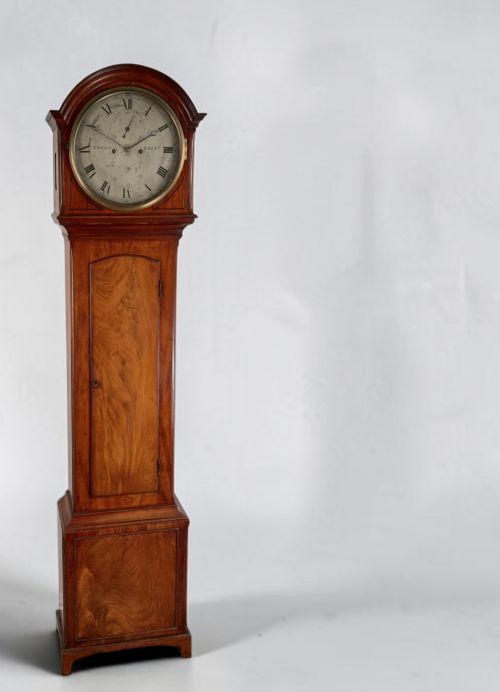
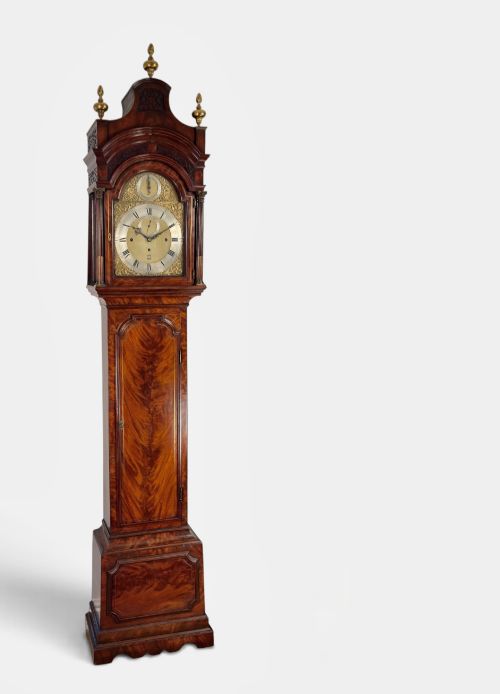
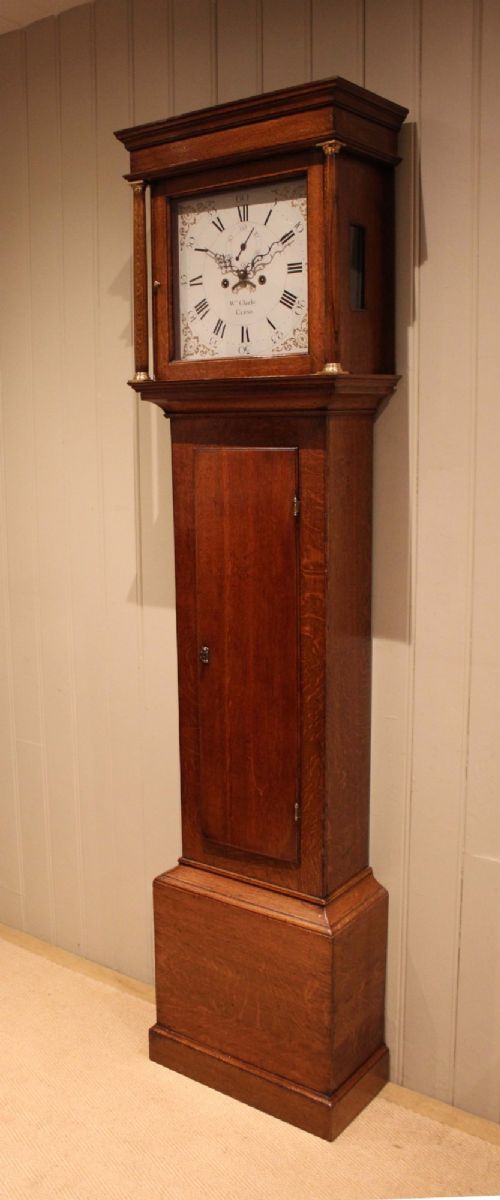
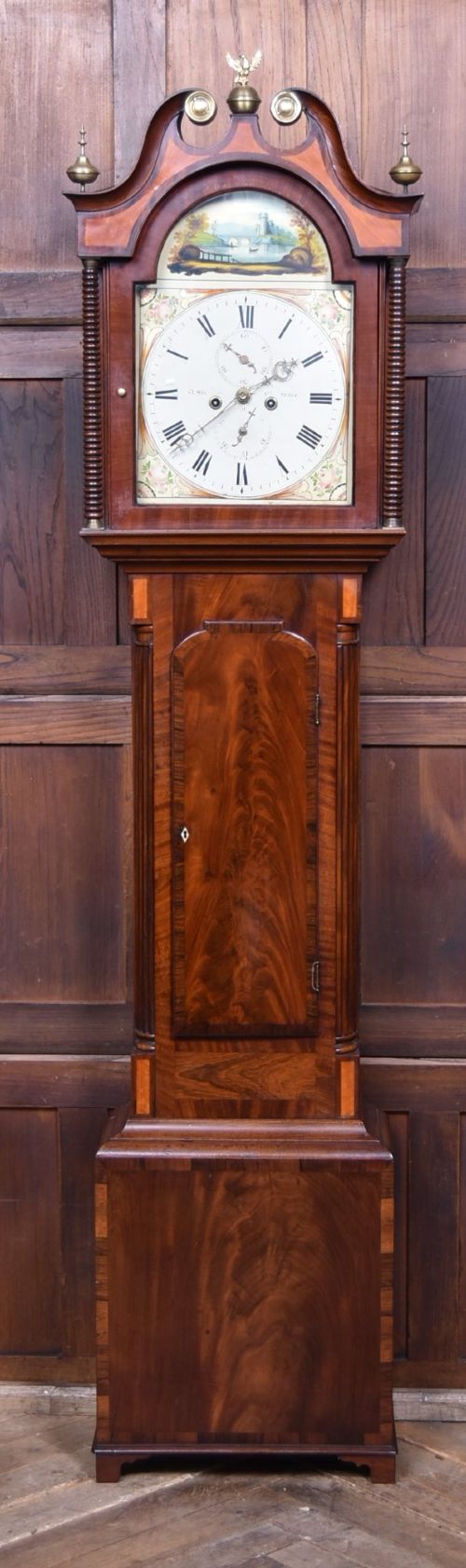
A floor-standing clock in a tall wooden case of hood, trunk and base, built to house long weights and a swinging pendulum and keep them out of harm's way.
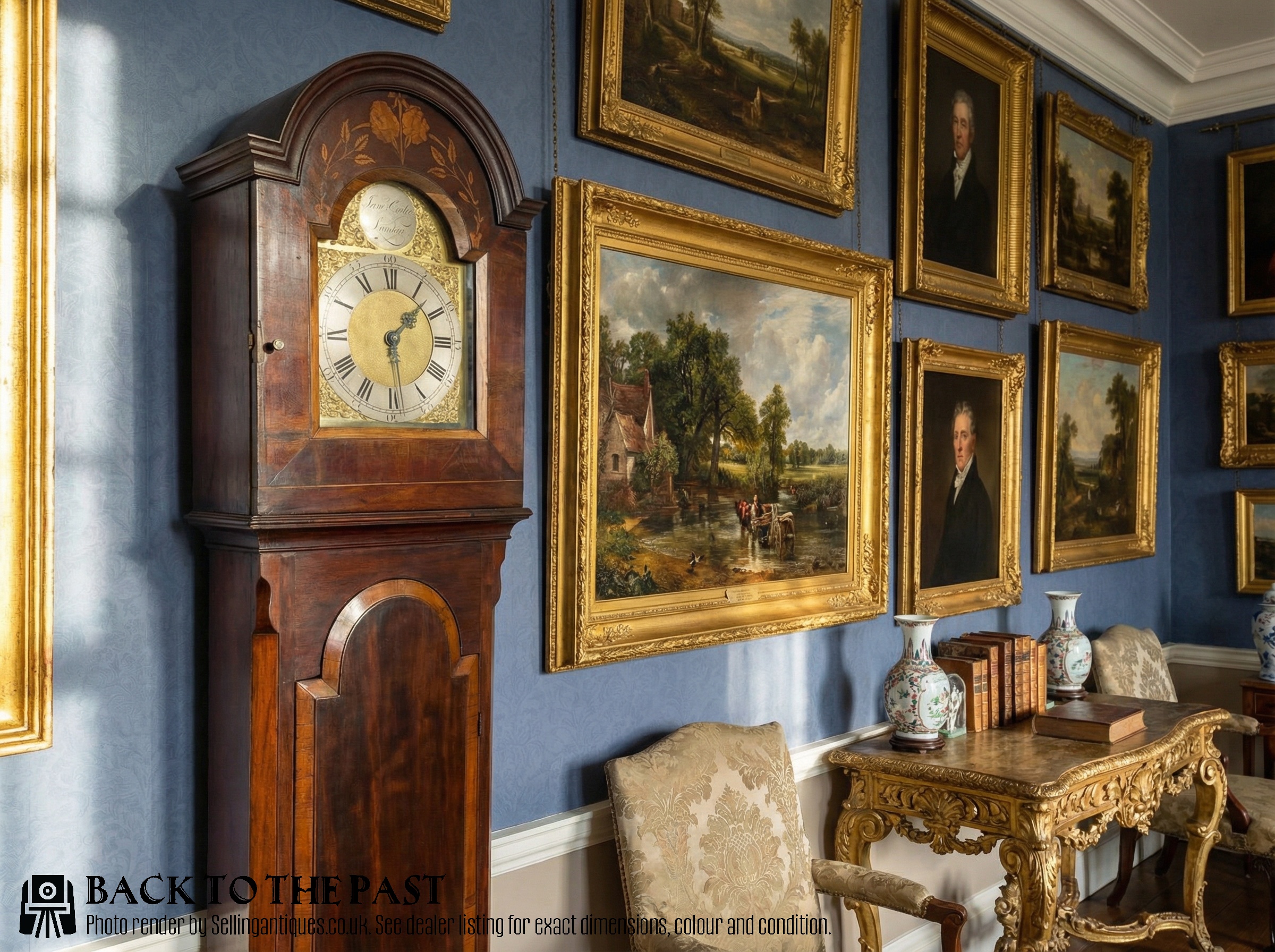
Antique Longcase Clocks
The form arrived in the second half of the seventeenth century, when the pendulum made accurate domestic timekeeping possible and the case gave the weights room to fall. It stayed the standard English domestic clock until spring-driven mantel and wall clocks took over in the nineteenth century.
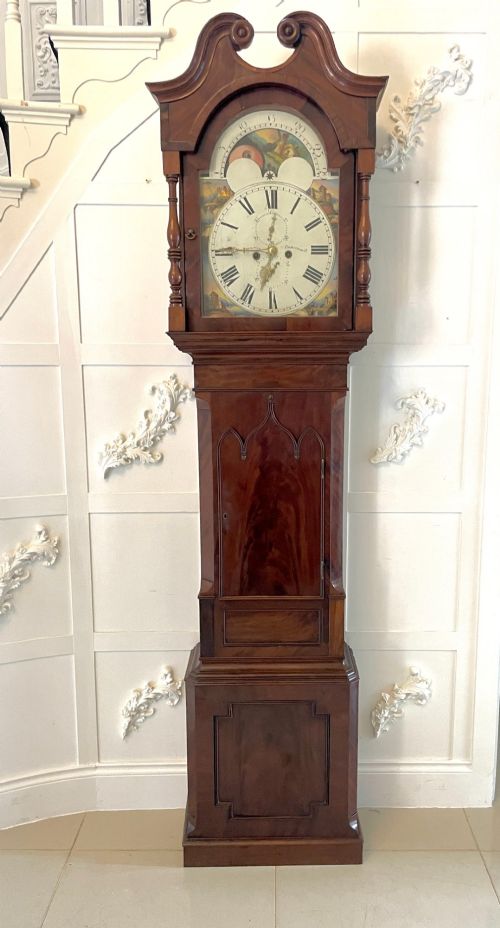
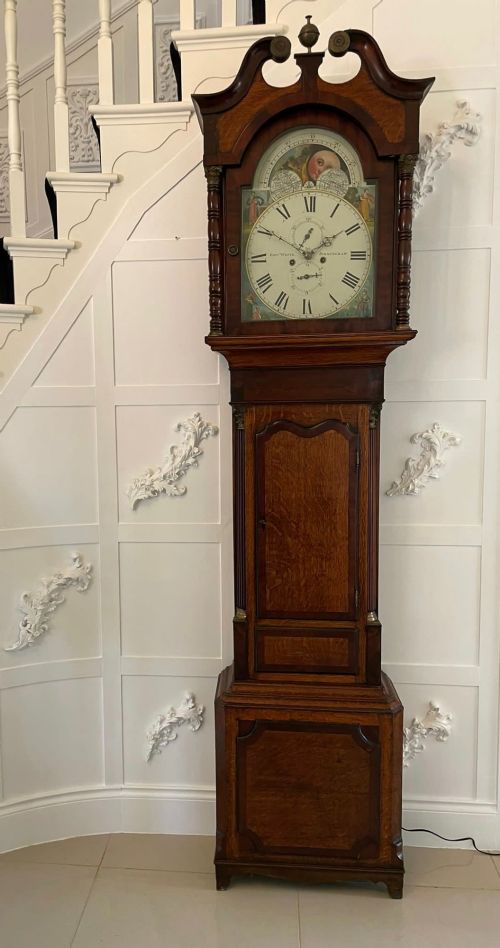
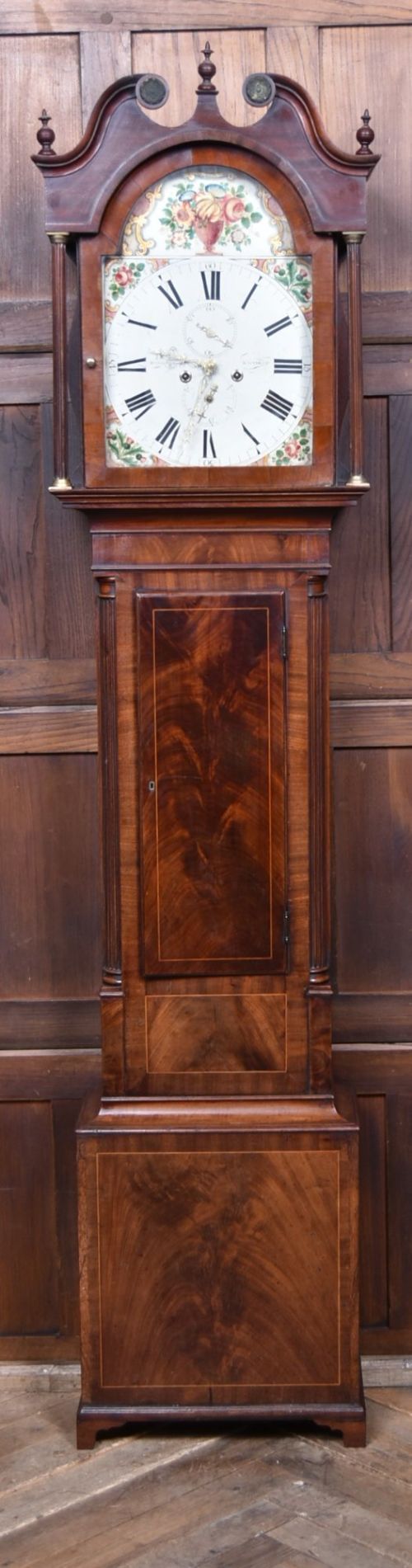
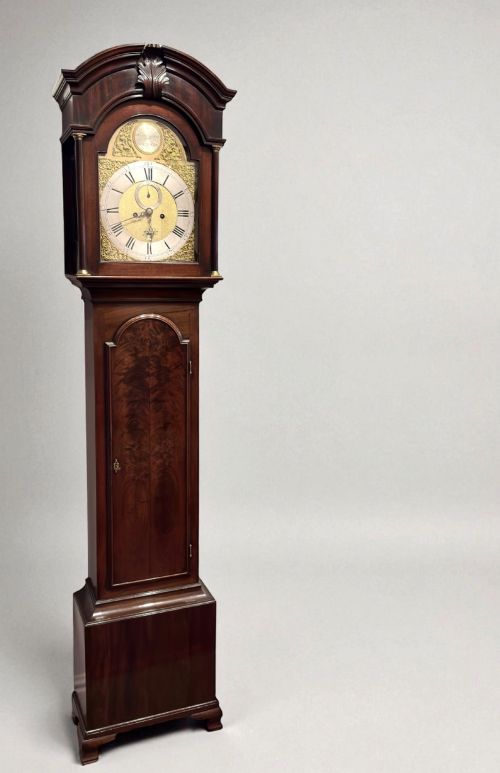
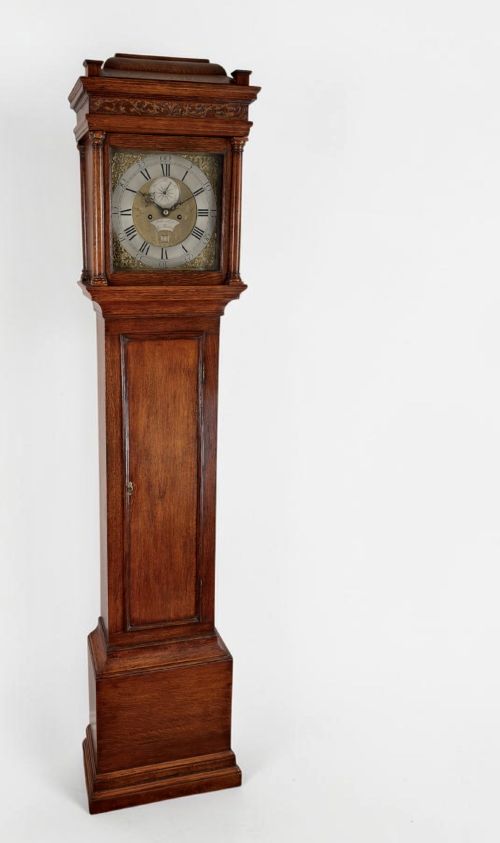
What sells on Sellingantiques is overwhelmingly English provincial work in mahogany or oak, dated by dealers to the eighteenth or early nineteenth century. Mahogany appears in nearly a third of titles and oak in under a fifth, so the popular image of the oak country longcase is outnumbered roughly two to one.
Titles are deliberately redundant. The word 'case' shows up in almost every one, and a quarter carry both 'case' and 'grandfather', with 'longcase' and 'long case' often stacked in alongside, because dealers are hedging against three different search habits. Short cases go under 'grandmother' or 'granddaughter'.
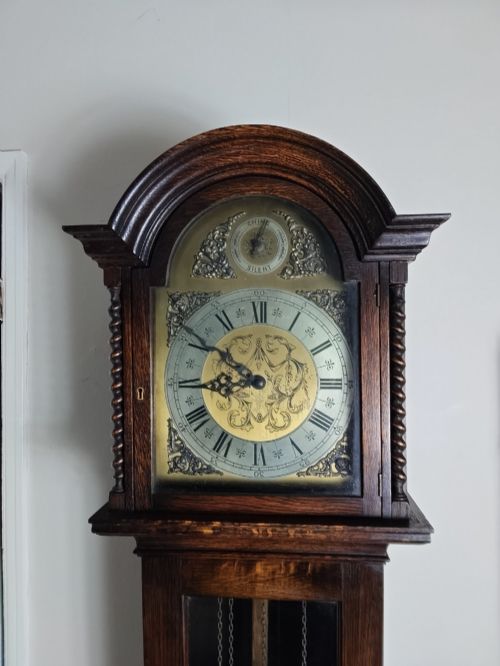
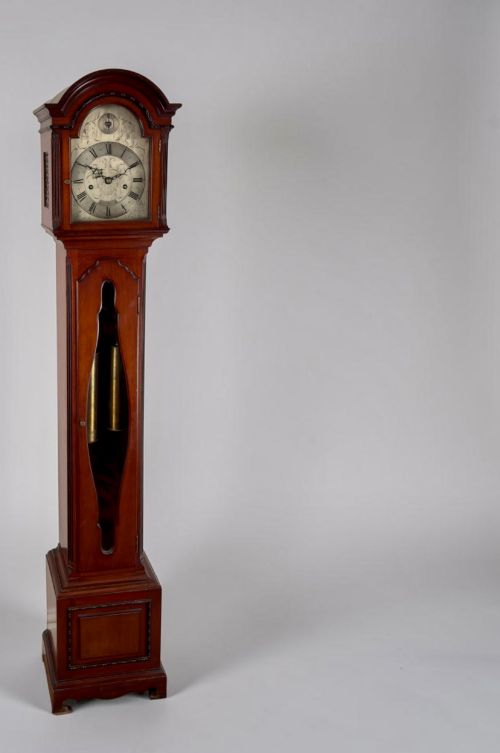
Beyond the Georgian bulk sit smaller groups: moon-dial and painted-dial provincial clocks at about one title in ten, Scottish work naming Edinburgh, Glasgow, Dundee and Leith, and a late tail of Edwardian and 1920s chiming and musical cases with Westminster chimes or tubular bells. Dealer dates run from 1700 to 1960.
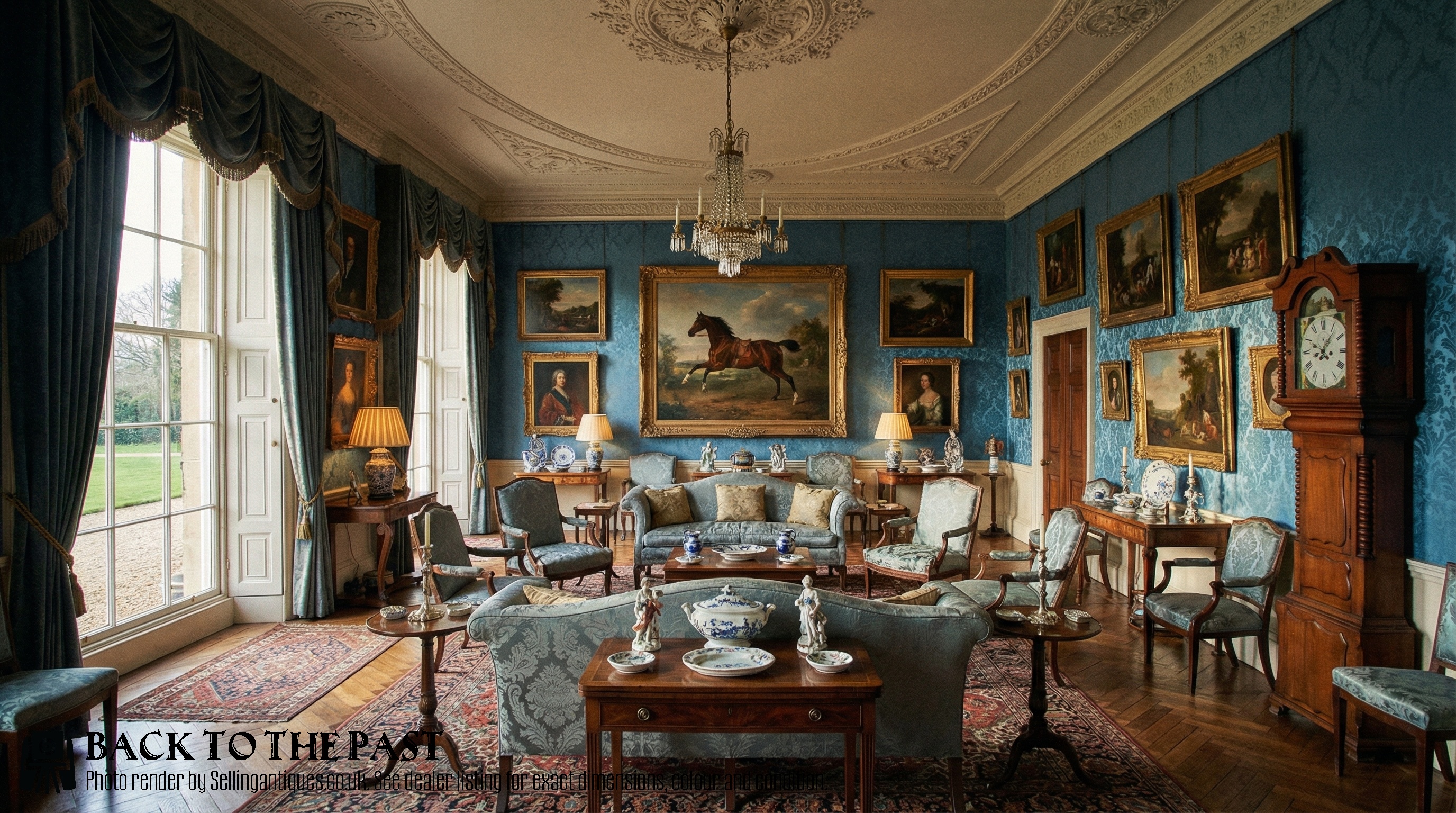
What Sets Them Apart
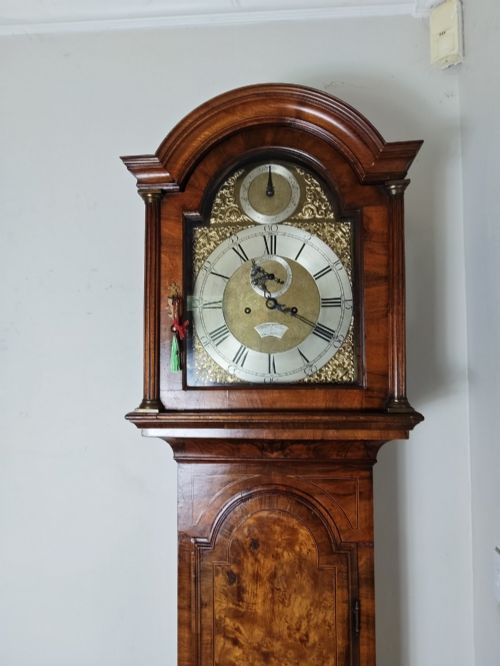
Timber and surface do most of the work. Plain oak and pine cases sit at the bottom of the range, mahogany fills the middle, and walnut, marquetry, lacquer and ebony carry the top. The seventeenth-century marquetry and chinoiserie-lacquer cases are a tiny handful of listings but occupy almost the whole upper end, the earliest sampled around 1685.
Then the movement. Eight-day is the commonest duration named, and thirty-hour work, often single-handed and simpler, sits below it. Above both come musical, three-train, quarter-striking and regulator movements. Dial interest follows the same logic: a moon dial in the arch is the only complication common enough to count as a category feature, and automata such as rocking ships or an Old Father Time surface once or twice across the whole archive.
A signed dial matters. London runs through a good number of titles, and named provincial makers with their town appear across the upper half of the range, while the plainest listings are simply 'long case clock' with no attribution at all. Scale pushes at both ends: nine-foot cases and true miniature or grandmother cases both sit above ordinary height.
Antique Longcase Clocks Retail Price Guide 2026
Typical UK retail prices for longcase clocks, calculated from the Sellingantiques database of over a million retail prices indexed since 2003. This retail price guide relies exclusively on Sellingantiques data; no external sources or auction records are used, so the figures do not describe the wider market.
The tallest longcase clocks listed on Sellingantiques stand nine feet; the smallest are grandmother cases, given at 65.5 and 70 inches.
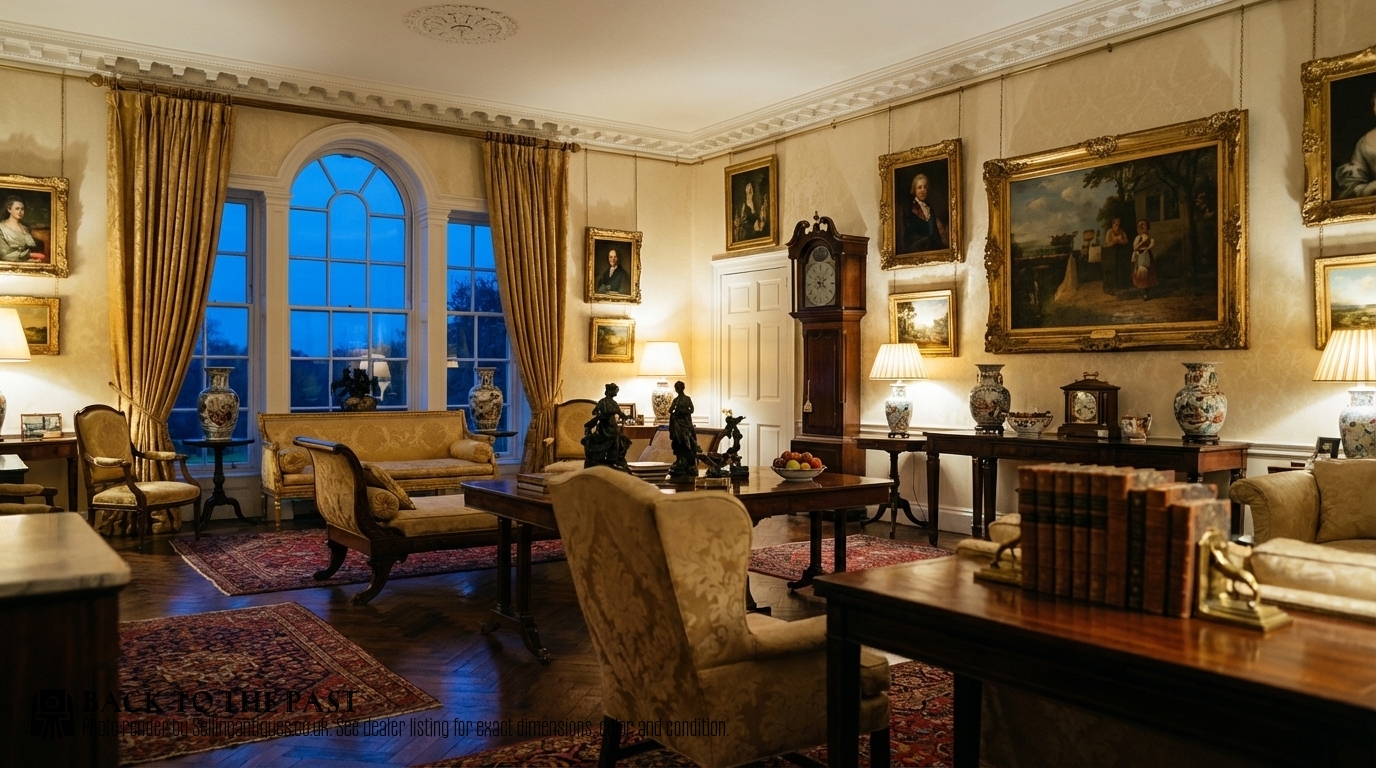
The Antique Longcase Clocks Glossary
- Longcase / long case
- The trade name for the form, written both ways and often both in one title so the listing turns up whichever way a buyer types it.
- Grandfather clock
- The everyday name for a full-height longcase, and the single commonest word in titles in this category.
- Grandmother / granddaughter clock
- A short longcase, roughly five to six feet. Sampled heights of 65.5in and 70in are described as grandmother clocks.
- Eight-day
- A movement wound once a week. It is the duration named most often here, against thirty-hour work that needs winding daily and is usually simpler.
- Moon dial / moon phase
- A rotating disc in the arch showing the moon's age. A penny moon is a small circular aperture instead of a full arched lunar disc.
- Break arch
- A dial with an arched top above the square chapter section, as against a plain square dial. Painted iron dials are the later provincial standard, engraved or silvered brass the earlier one.
Antique Longcase Clocks: Frequently Asked Questions
What is the difference between longcase and grandfather?
Nothing. They are two names for the same object, one from the trade and one from everyday speech.
Dealers routinely put both in a title, along with 'long case' as two words. A quarter of listings on Sellingantiques carry 'case' and 'grandfather' together, and many carry all three variants at once.
Which timbers turn up most often?
Mahogany leads, in nearly a third of titles, with oak in under a fifth and walnut in a smaller group again.
Marquetry, lacquered and inlaid cases appear in modest numbers, and they cluster at the top of the range along with the seventeenth-century walnut and ebony work.
How old are these clocks usually?
An eighteenth-century attribution is the default claim. Georgian and 18th Century dominate the dealer date field, with 19th Century behind them.
Only a portion of listings carry a clean year, and those run from 1700 to 1960. Where a title says just 'Georgian' or '18th Cent', that is the dealer's period judgement rather than a documented year.
Are moon dials common on these clocks?
The moon dial is the most-named dial feature in the category, appearing in around 45 titles.
Its variants are much scarcer. Penny moons, ball moonphases and four-hand dials each turn up once or twice across the whole archive.
Do Scottish longcase clocks appear on Sellingantiques?
Scotland is the only regional origin named often enough to count, at 28 titles.
Sampled examples name Edinburgh, Glasgow, Dundee, Leith, Kirkcaldy, Montrose, Annan, Wishaw and Newburgh, and include drumhead and pillar forms. Ireland, Wales, Holland, Sweden, France and America each show up once or twice.
What are grandmother clocks?
Short longcases, roughly five to six feet rather than full height. Granddaughter and 'small scale' are used for the same idea.
Sampled heights are given as 65.5 and 70 inches. Together with miniature cases they make up a small part of the category, and both the smallest cases and the nine-foot ones sit above ordinary height in the range.