


Antique Grandfather Clocks
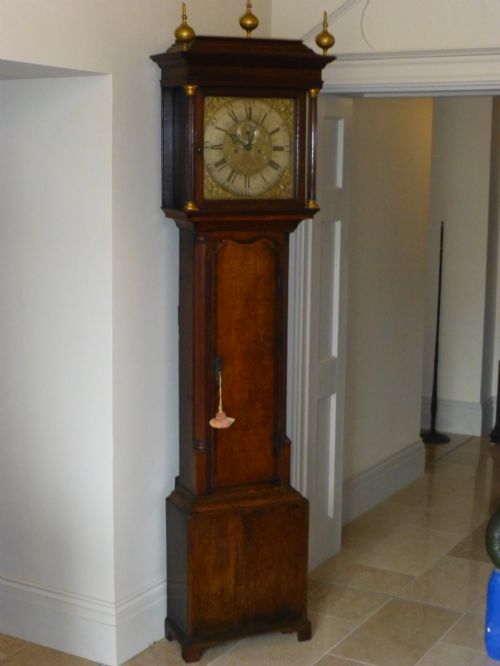
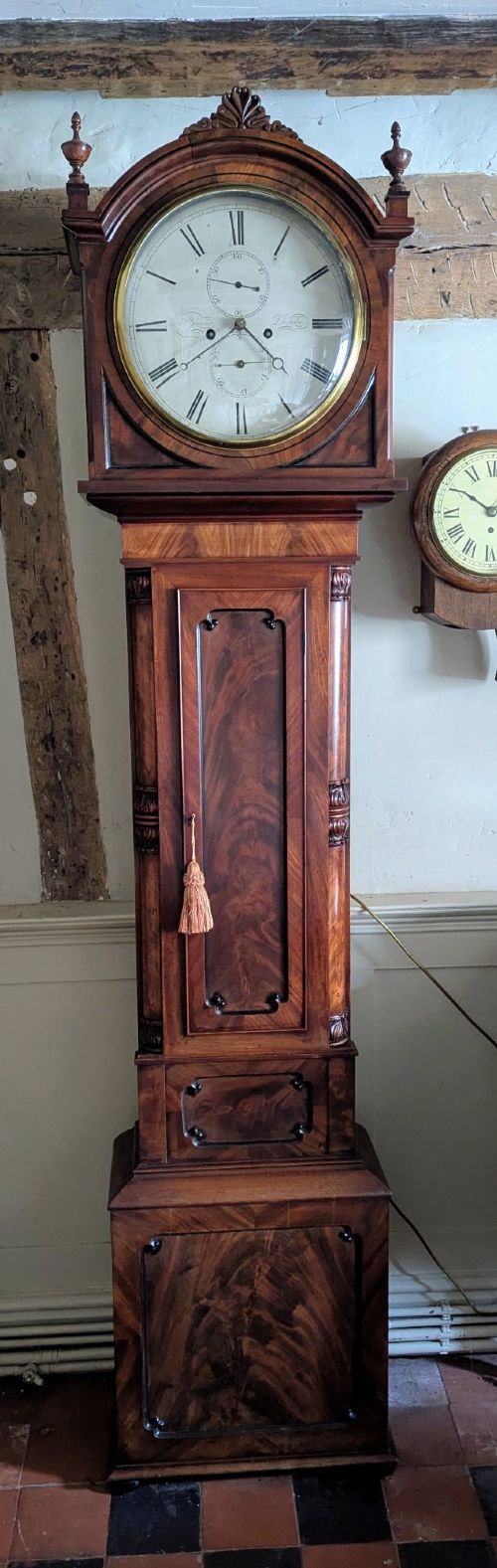
A floor-standing, weight-driven clock in a tall wooden case, built to house a long pendulum and its weights, and for two centuries the main timekeeper in the house.
What Are Grandfather Clocks?
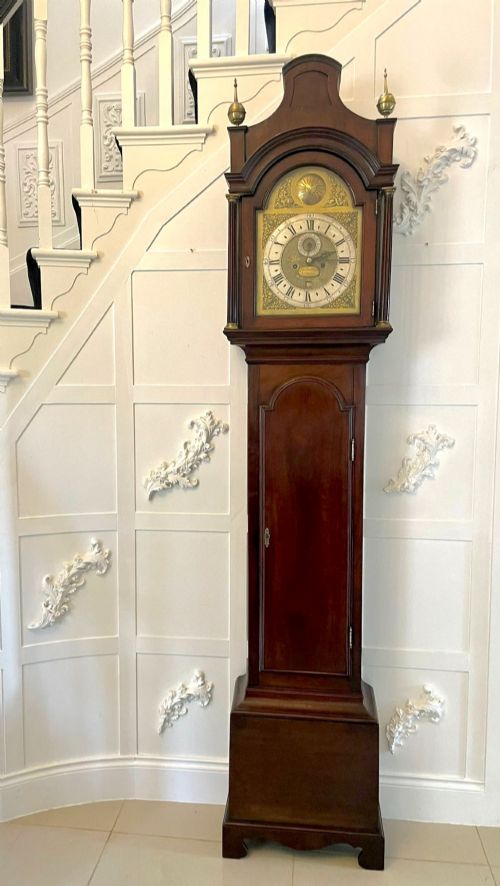
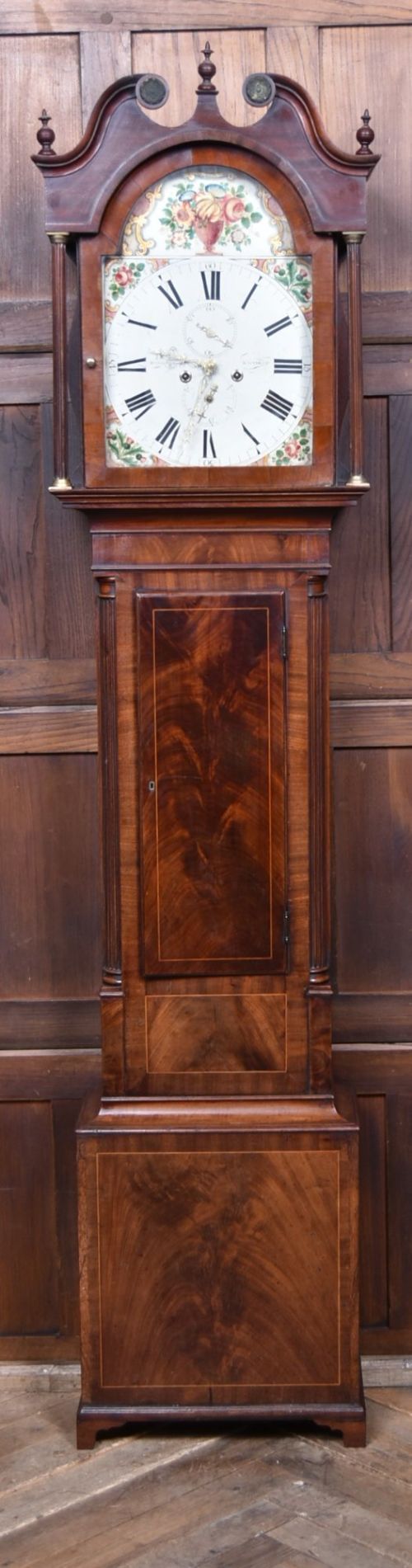
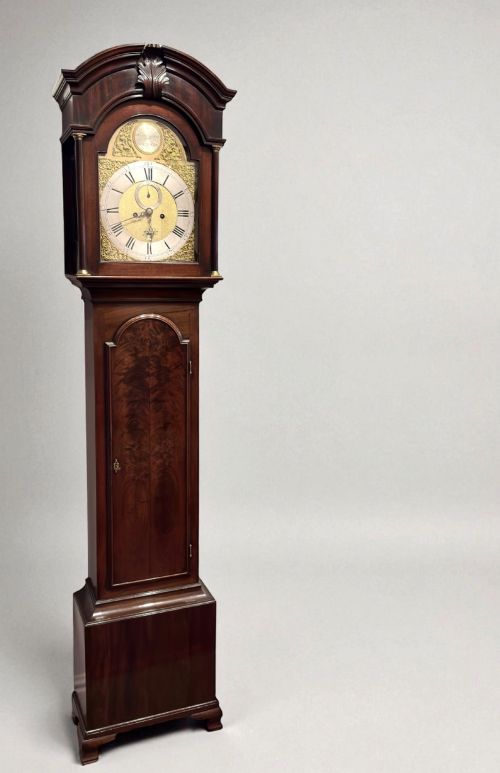
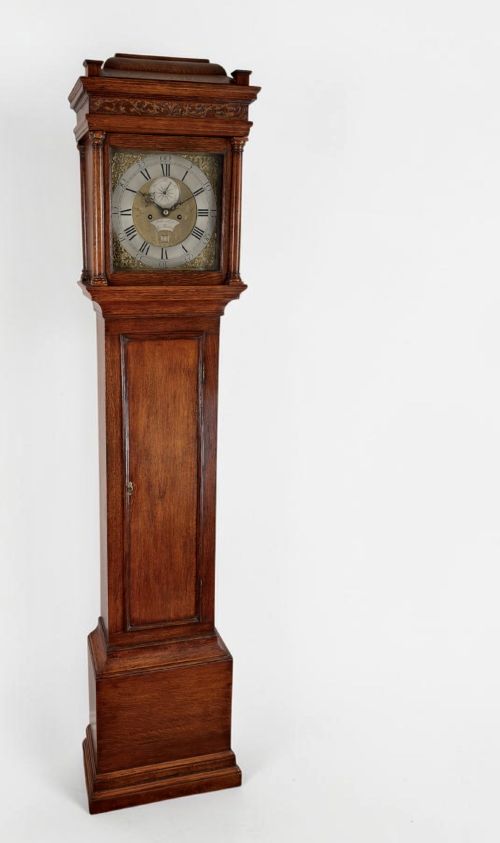
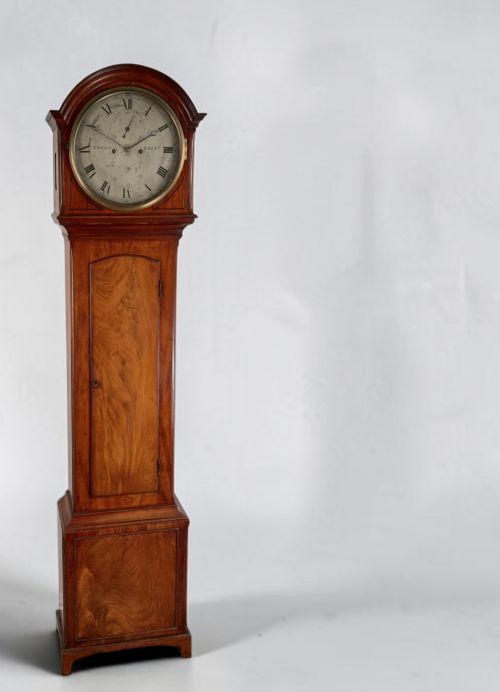
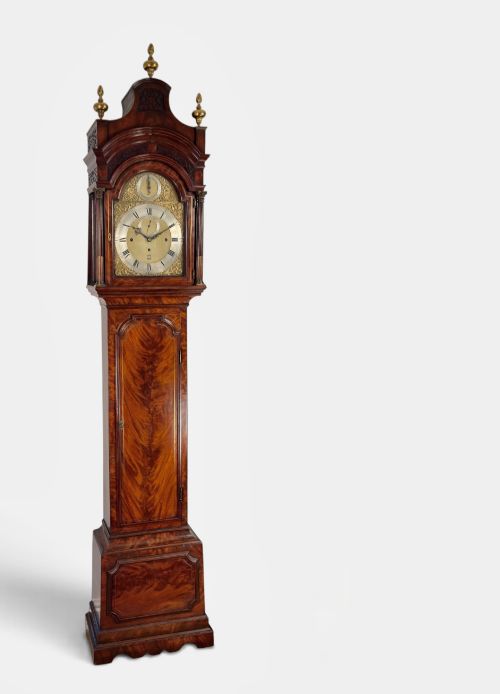
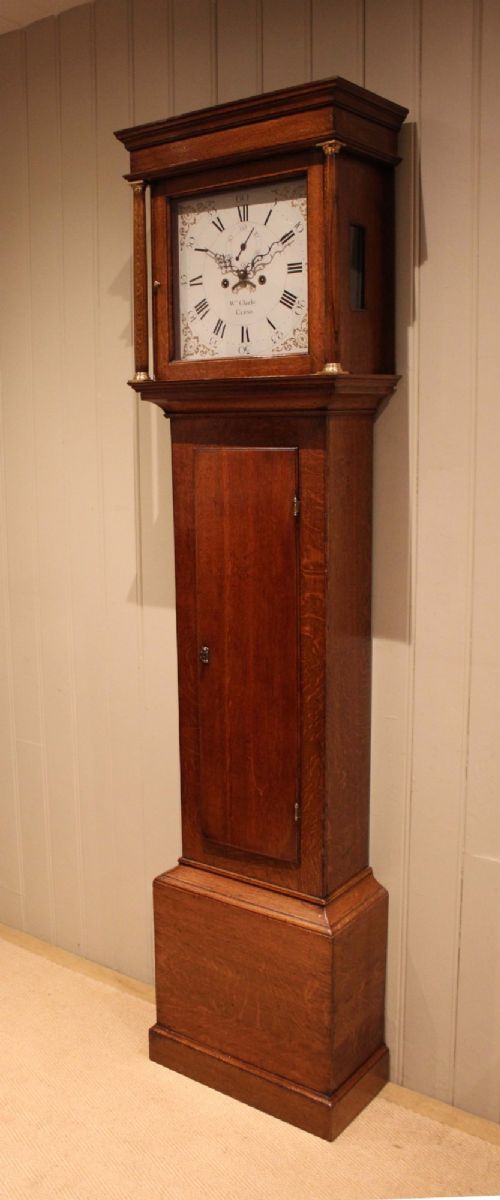
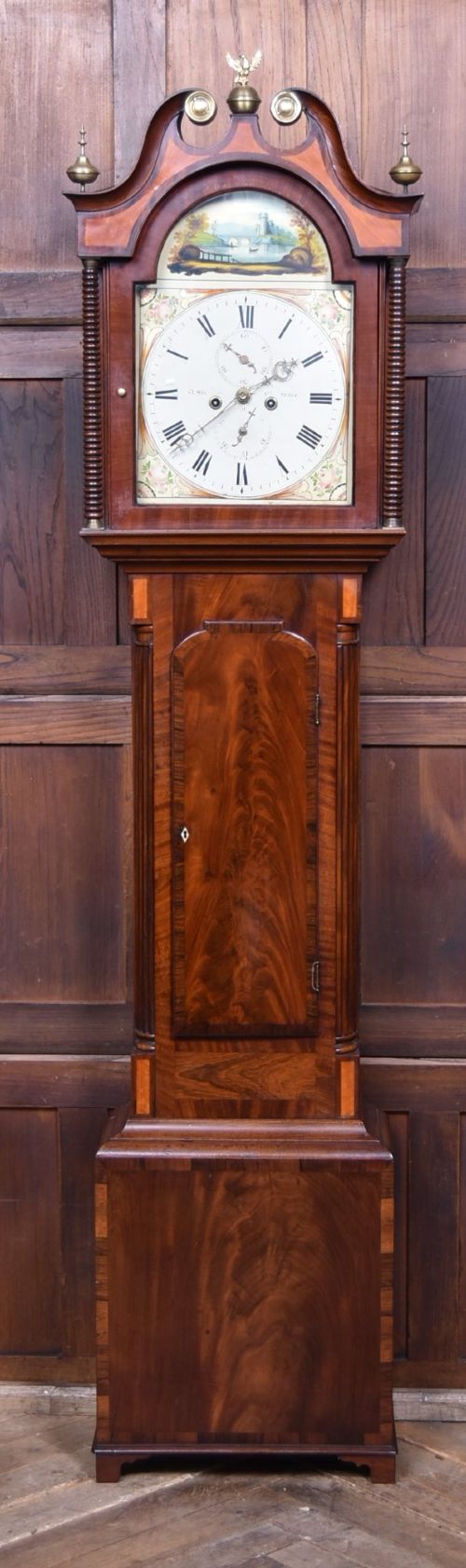
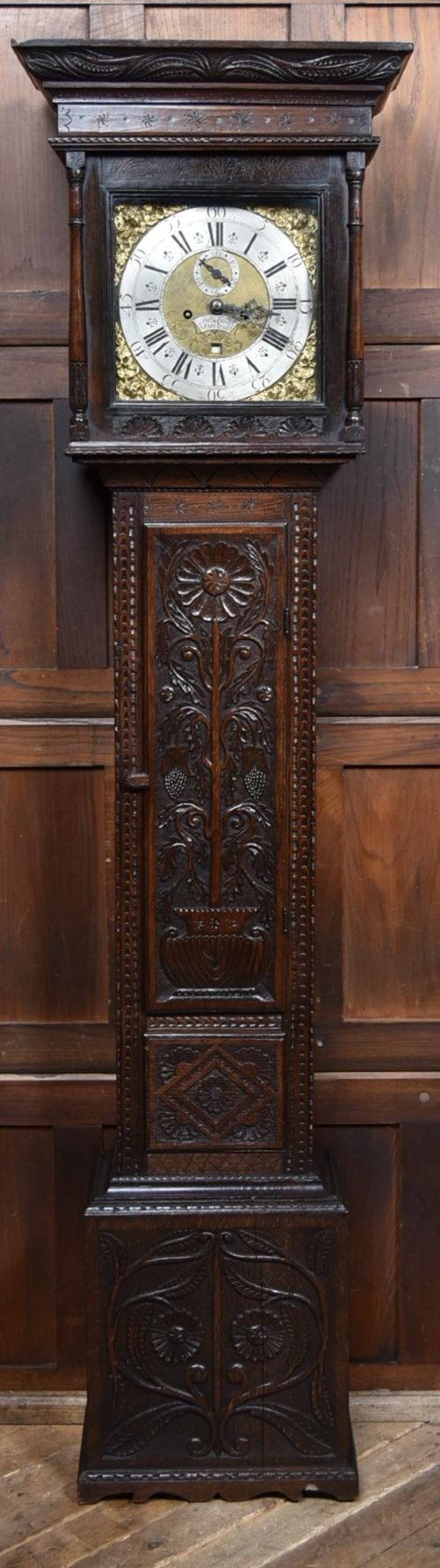
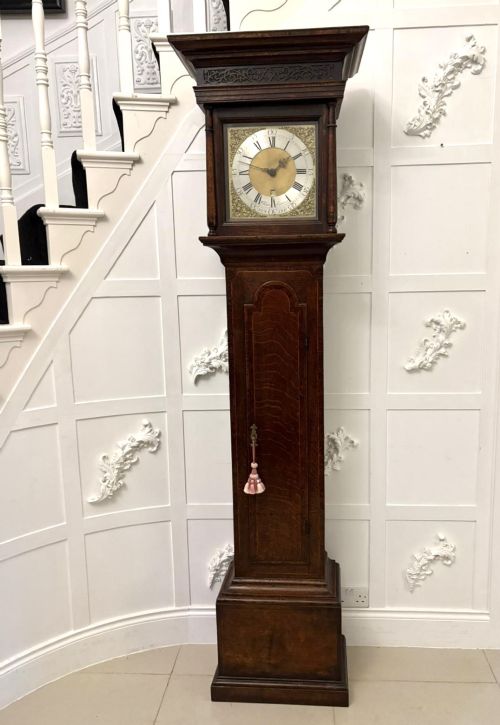
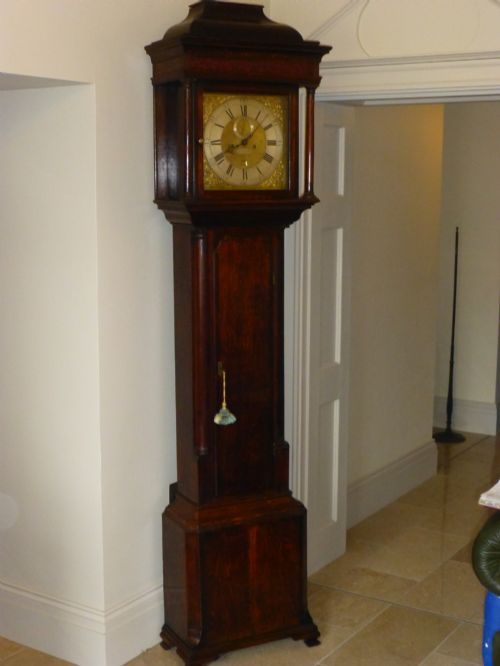
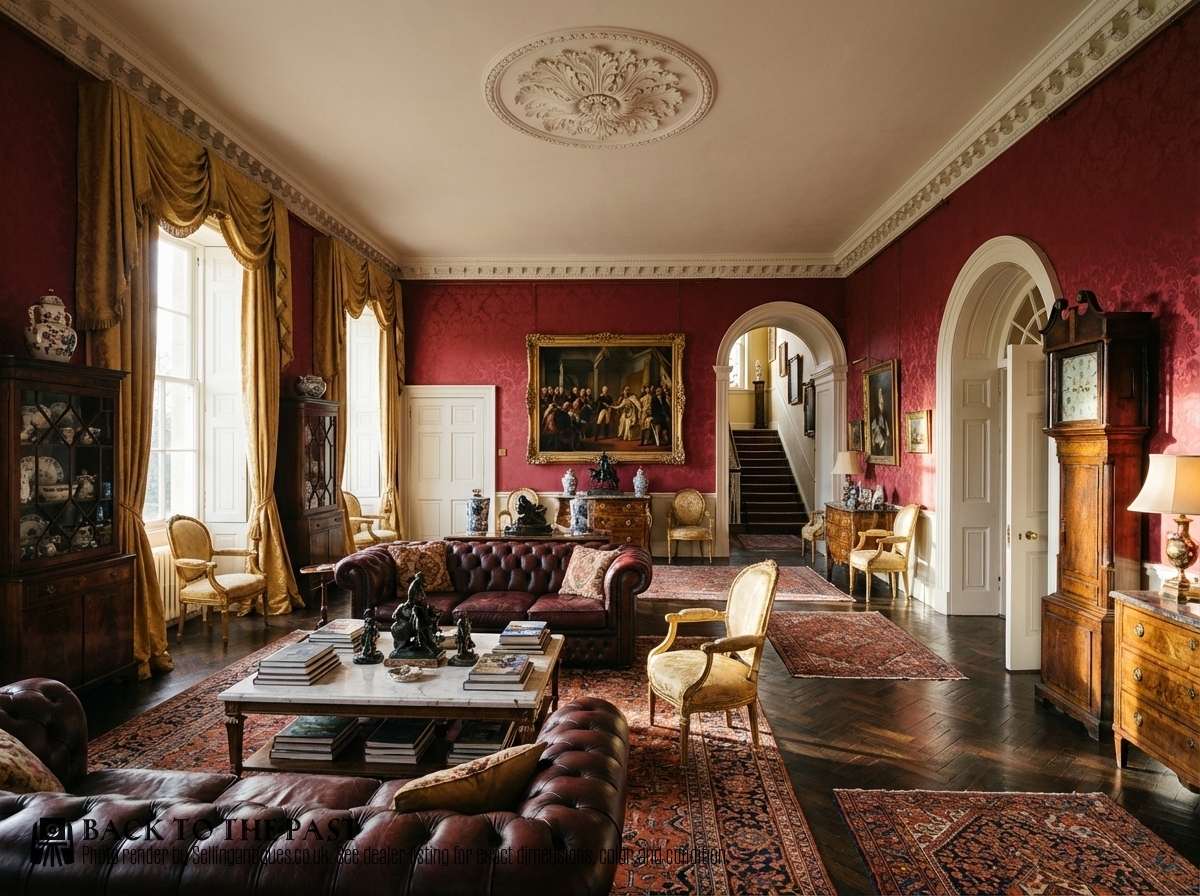
The form appeared in the later 17th century, once the pendulum made accurate domestic timekeeping possible. Movement and dial sit in a hood at the top, and the trunk below encloses the swinging pendulum and the falling weights. Dealers call the same thing a longcase, a long case or a grandfather, and titles on Sellingantiques often stack two of those words together.
What you'll meet most often is an eight-day English clock in oak or mahogany, described as Georgian or 18th century. Georgian and 18th Century are the two largest entries in the dated field, and Georgian is frequently narrowed to George III. Roughly one in twenty of the titles sampled is a plain unattributed long case clock with nothing but a period attached.
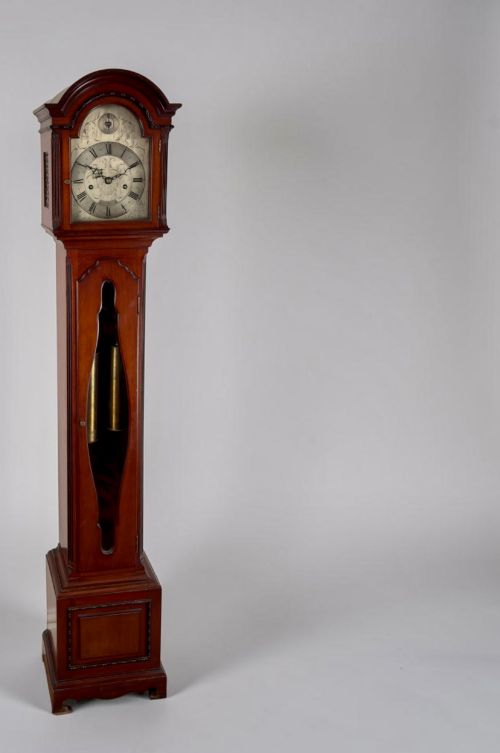
The second cluster is quite different: small chiming clocks of the 1920s and 30s, sold as grandmother or small grandfather cases, commonly with triple-weight musical movements and Westminster chime. Almost nothing sits between the two groups. Around 129 clocks are listed a year on Sellingantiques and 136 different dealers have handled them.
Smaller branches run alongside. Moon-dial clocks turn up throughout, and automata such as rocking ships or a swinging angel appear once in a blue moon. Regulators form a small precision group. Scottish, Welsh, Irish, Dutch, German and French cases each appear, and some listings are a case, a dial and movement, or a bare movement.
Where The Range Widens
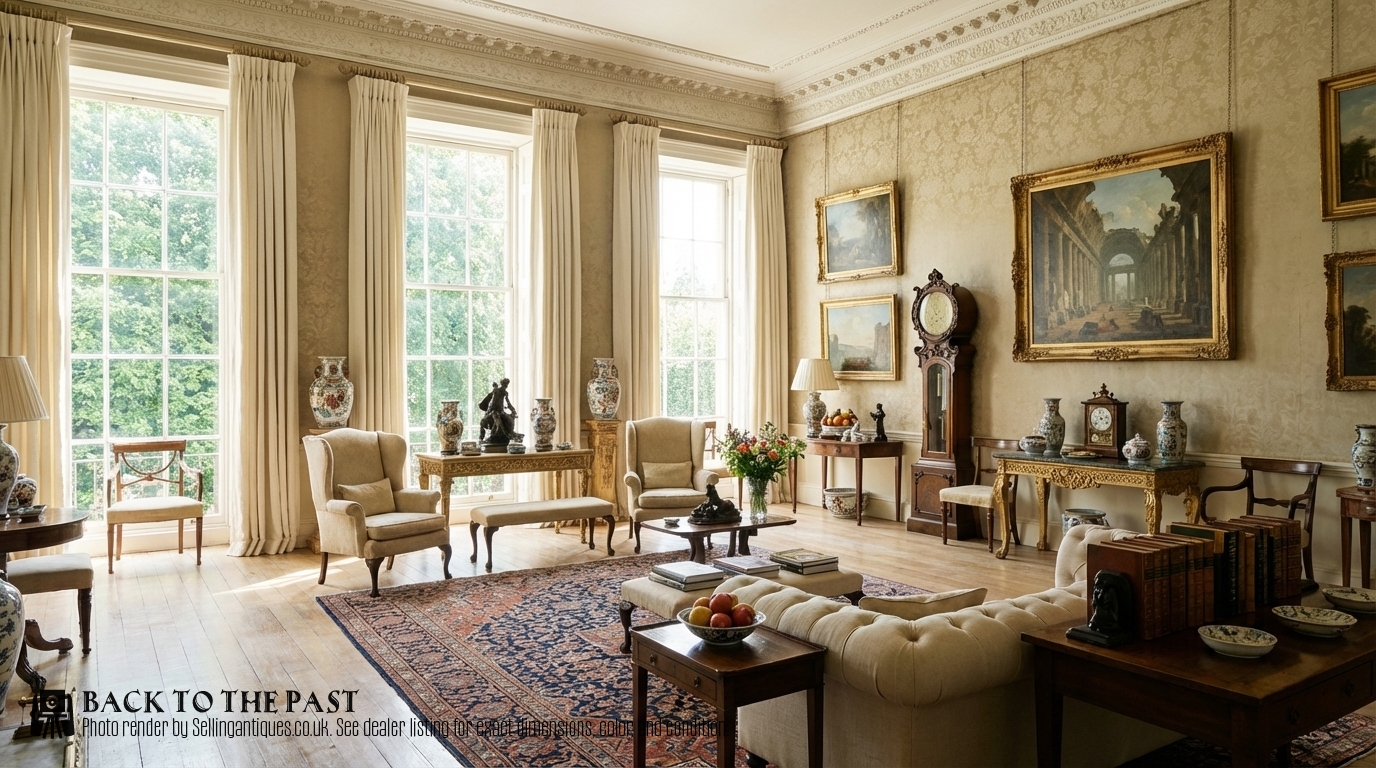
Complexity does most of the work. A single-train clock that only tells the time sits well below a three-train chiming movement, and triple weight, musical, chiming and Westminster all recur in the titles. Eight- and nine-tube and eight-bell musical clocks reach higher still. Timekeeping refinement pulls the same way: deadbeat escapement, maintaining power, mercurial and grid-iron pendulums cluster at the upper end.
Case timber separates the middle from the top. Mahogany and walnut run ahead of oak, and pine sits at the bottom. Marquetry, lacquered and chinoiserie work, ebony and burr walnut belong to the highest levels; plain pine and painted oak to the lowest. Dial interest counts too, from a rolling moon to tidal dials and the early single-handed dials.
Origin shows in the price. London-signed clocks make up a modest share of titles but dominate the highest-priced listings, while the bulk of the archive is provincial, signed with the maker's name and his town. At the other end are the incomplete listings: cases without movements, a dial and movement without a case, and titles that say for restoration.
Retail Price Guide 2026
Typical UK retail prices for grandfather clocks, calculated from the Sellingantiques database of over a million retail prices indexed since 2003. This retail price guide relies exclusively on Sellingantiques data; no external sources or auction records are used, so the figures do not describe the wider market.
Georgian is the period label used most on Sellingantiques for grandfather clocks, with 18th century next and the 1920s third.
The Antique Grandfather Clocks Glossary
- Eight-day
- A movement that runs a week or more on one winding, and the commonest duration named in these titles.
- Thirty-hour
- A simpler movement wound daily, usually pulled up by rope or chain rather than with a key.
- Hood
- The removable top section holding dial and movement, often carried on turned or barley-twist columns.
- Trunk door
- The long door in front of the pendulum, sometimes astragal-glazed, or fitted with an oval glass in the 1920s cases.
- Break-arch dial
- An arched top to the dial, as against the earlier square brass dial, and the usual place for a moon disc.
- Grandmother clock
- A reduced-height longcase, listed alongside words like miniature, dwarf and cottage size, and often given a stated height.
- Regulator
- A precision longcase, commonly with deadbeat escapement and maintaining power, and a small presence in the archive.
Frequently Asked Questions
Is a longcase clock the same as a grandfather clock?
Yes. The two words describe the same floor-standing weight-driven clock, and dealers use them interchangeably. Longcase appears in most titles, long case in a smaller share, and grandfather turns up throughout.
Many titles carry two of the terms at once, so a search on either word finds broadly the same stock.
What is a grandmother clock?
A reduced-height version of the same form. The word appears in a good number of titles, often paired with miniature, dwarf or cottage size, and sometimes hedged as "grandmother or small grandfather".
On Sellingantiques these belong mainly to the 1920s and 30s, with triple-weight musical movements and Westminster chime.
Height and dial size are stated more often on the small ones than on full-size clocks.
Why are so many dated only as Georgian?
Because provincial clocks rarely came with a date. Just under half the listings carry a clean year; the rest are labelled by era, with Georgian, 18th Century, 19th Century and 1800s doing most of that work.
Round-number years such as 1750, 1800 and 1900 are plainly approximations. Precise circa dates do exist, and Georgian is often narrowed to George III.
What does a moon dial do?
It shows the phase of the moon on a rotating disc set into the arch of the dial. Sometimes it is called a Halifax or penny moon, and rolling moon means the same thing.
Moon appears in a fair number of titles, making it the commonest dial complication in the category.
How old are the oldest ones listed?
The dated field runs from 1695 to 1960, so the archive covers about 265 years of the same basic form.
Sampled circa dates reach back to 1685 and 1690, and the top of the range includes a late-17th-century walnut eight-day. The latest pieces run into the 1940s and 50s, with one 1960s example.
Do these clocks carry maker names?
Often, but no name recurs across enough dealers to become a category name in its own right. The archive reads as a roll-call of individual provincial clockmakers and the towns they worked in, from Ecclefechan and Auchtermuchty to Pwllheli, Wisbech and Kirkby Stephen.
London-signed clocks are a smaller group and dominate the highest-priced listings.