


Antique German Clocks
German domestic clocks made from the 1850s onward: spring-driven bracket and mantel clocks, weight-driven wall clocks, carved Black Forest cuckoos and later Art Deco desk pieces, built to tell the time in an ordinary room.

Antique German Clocks
"German clock" is a national label rather than one object. It covers several unrelated case traditions, from small chrome and Bakelite desk clocks up to porcelain garnitures and precision longcase regulators. What holds them together is where they were made, not how they look.
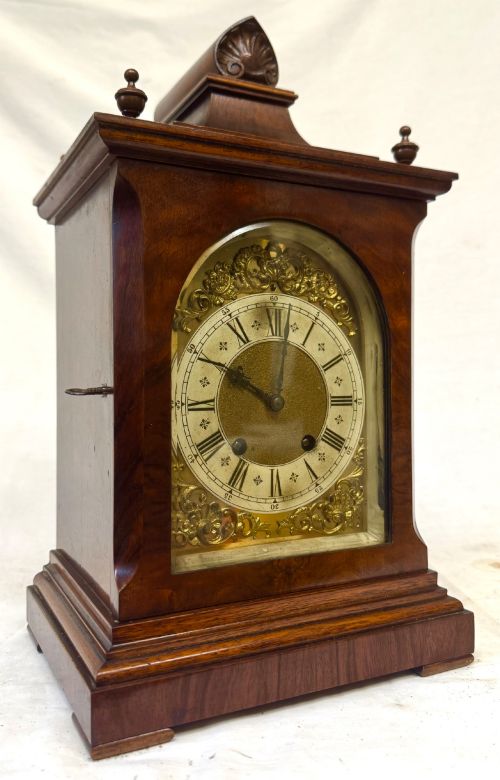
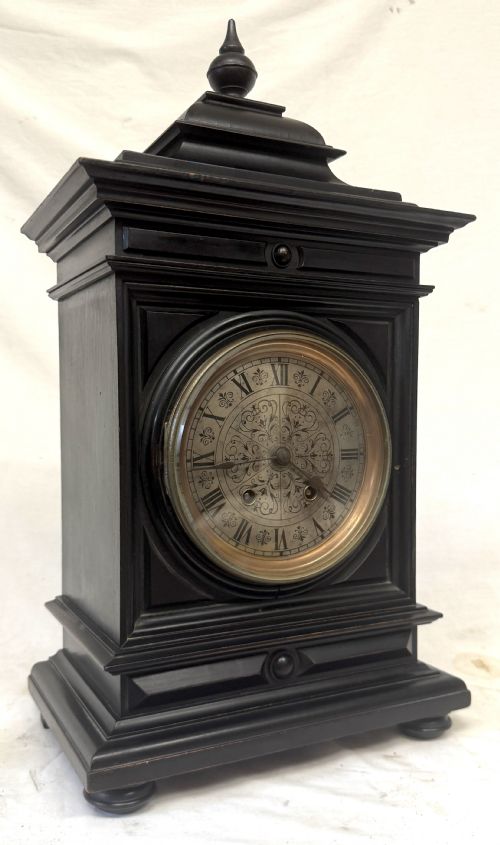
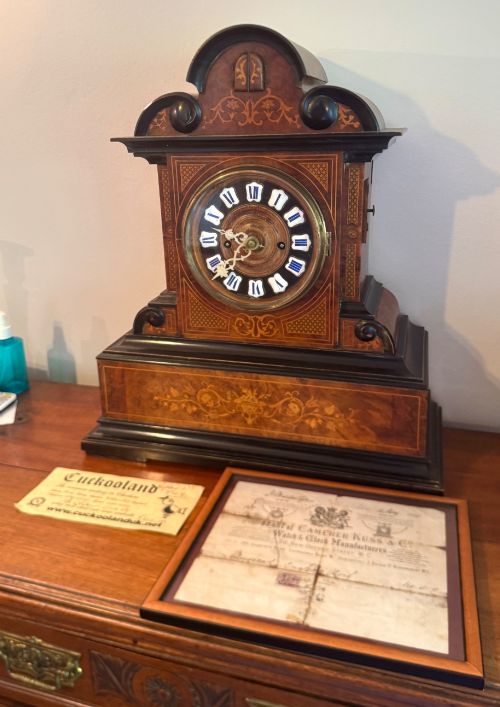
The clock you'll meet most often is a wooden-cased striking bracket or mantel clock. "Bracket" appears in 27 of the titles on Sellingantiques and "mantel" in 25, with walnut, mahogany and oak the usual case woods. Twelve name the ting-tang two-bell quarter strike, the most frequently advertised technical feature in the category.
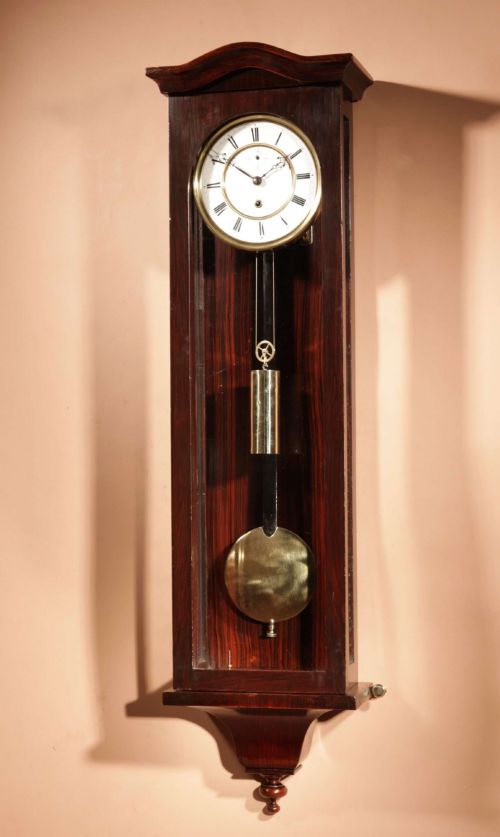
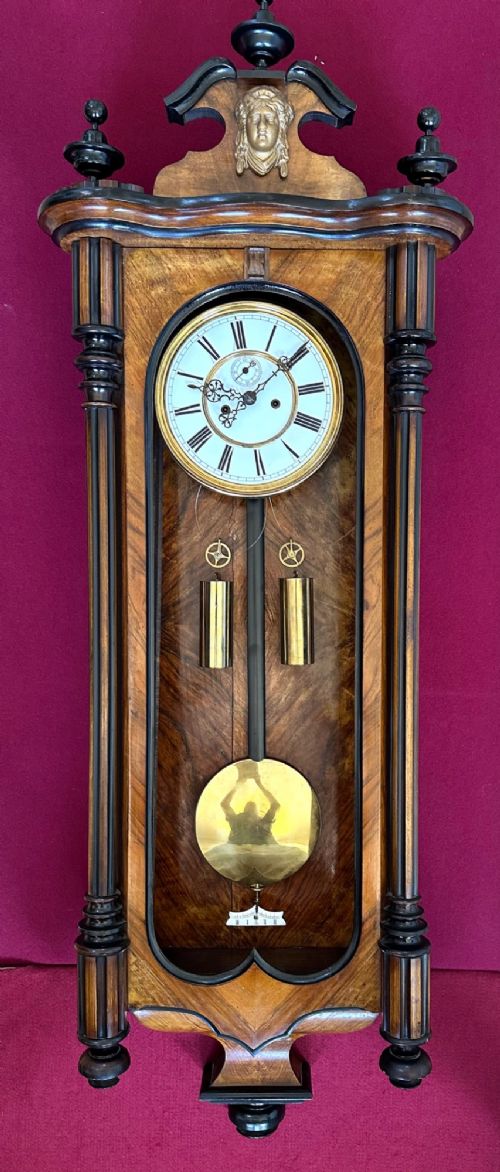
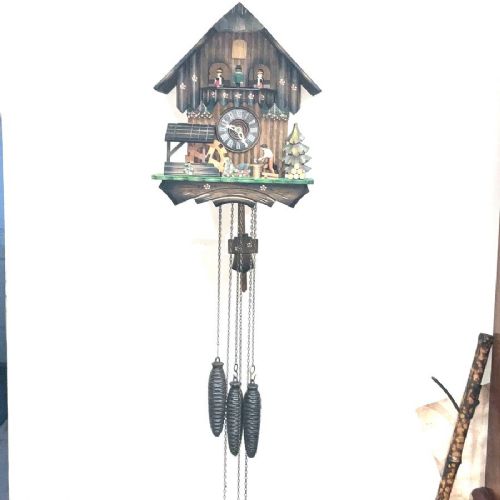
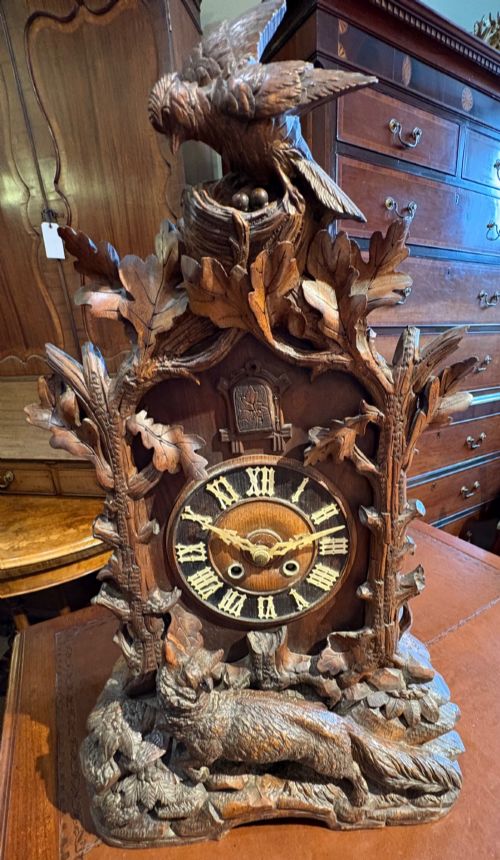
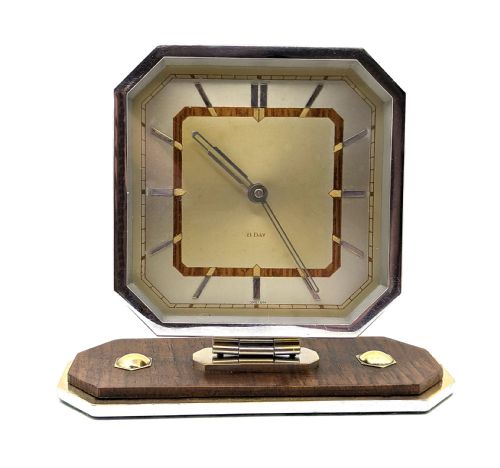
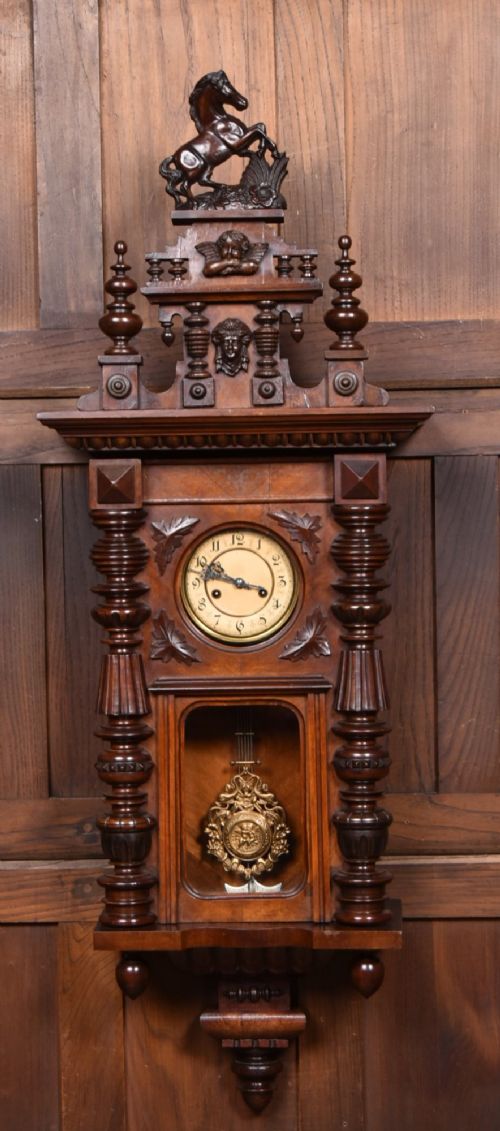
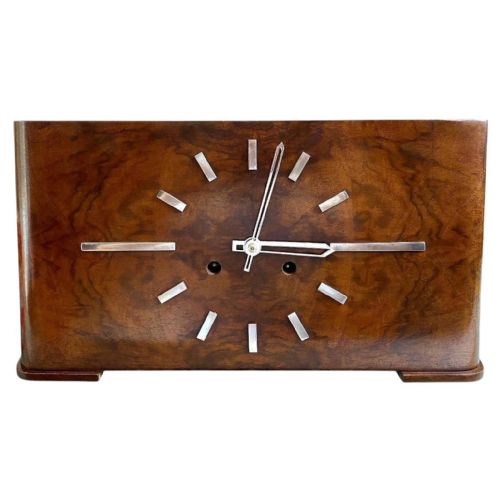
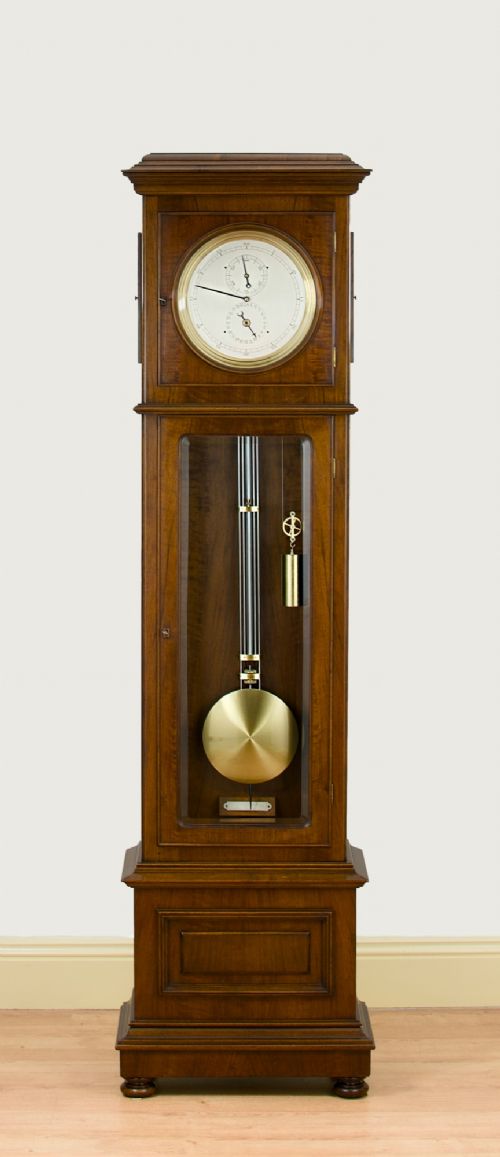
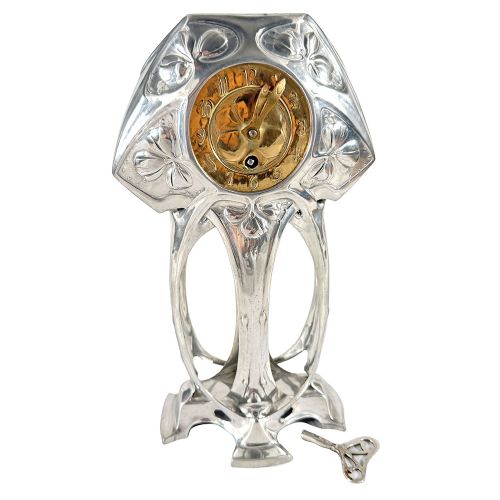
After that come three smaller groups. Black Forest work, carved cases and cuckoos, accounts for around a sixth and is more prominent in current stock than in what has sold. Weight-driven wall clocks of Vienna-regulator form, double and triple weight, make up a similar share. Art Deco and Bauhaus-era pieces of the 1920s to 1950s form about an eighth. A handful of longcase and grandmother clocks pair a German movement with an English oak or mahogany case.
The trade grew out of the Black Forest cottage industry of wooden-movement wall and cuckoo clocks, then moved into factory production for export. By the later nineteenth century German factories supplied much of Britain's middle-market clock trade. Dating here runs 1850 to 1960, with the 1890s the busiest single decade, though a good number of entries are logged only as "19th Century" or "Victorian".
Where The Range Splits
Complication does most of the work. Three-train movements, quarter striking, Westminster chime and triple-weight musical examples sit at the top; a plain timepiece or a simple striking wall clock sits at the bottom. Ting-tang is the middle ground, common enough that dealers name it in the title.
Case comes next. Burr walnut, rosewood, marquetry, ebonising, carved work and ormolu mounts turn up on the higher-priced titles, while chrome, Bakelite and plain oak occupy the cheapest end. Size counts too: titles flagging large proportions, or the 73.5-inch longcase, sit above the desk and alarm clocks.
A named factory lifts a clock clear of the unattributed "German mantel clock", and porcelain lifts it further still. The few porcelain-cased clocks and garnitures hold the entire ceiling of the range on their own, well above anything in wood.
Antique German Clocks Retail Price Guide 2026
Typical UK retail prices for german clocks, calculated from the Sellingantiques database of over a million retail prices indexed since 2003. This retail price guide relies exclusively on Sellingantiques data; no external sources or auction records are used, so the figures do not describe the wider market.
Lenzkirch is the name that turns up from the most dealers on Sellingantiques in this category.
Lenzkirch
The Antique German Clocks Glossary
- Ting-tang
- Quarter strike sounded on two bells or gongs of different pitch. Named in a tenth of all titles in this category.
- Bracket clock
- A spring-driven case clock meant to stand on a shelf or bracket. The commonest form here.
- Eight-day
- Runs a week on one winding. "8 day" appears in eight titles.
- Westminster chime
- Four-note quarter chime on gongs or rods, named in several bracket and mantel titles.
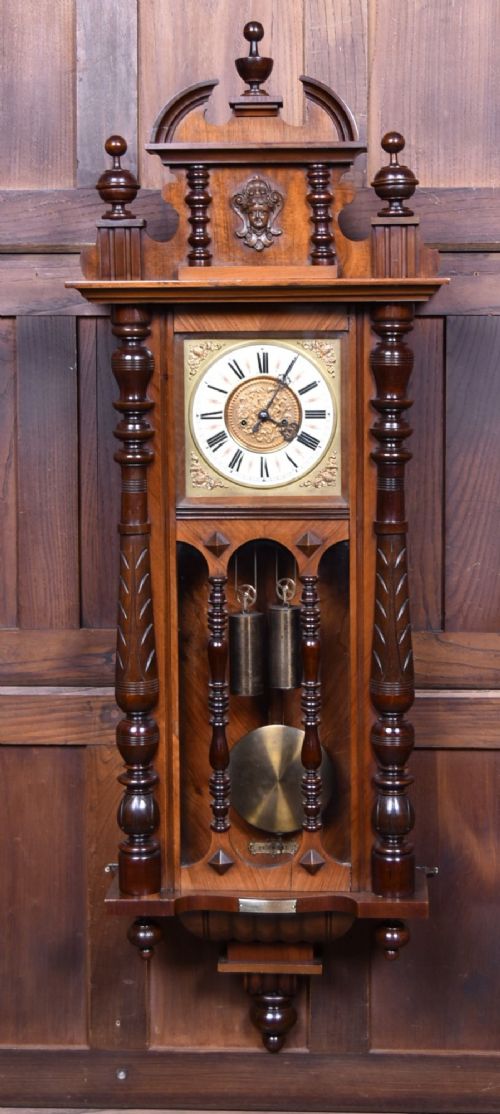
- Vienna regulator
- Weight-driven wall clock in a glazed case with a visible pendulum, used in listings for German-made examples as well as Austrian-style ones.
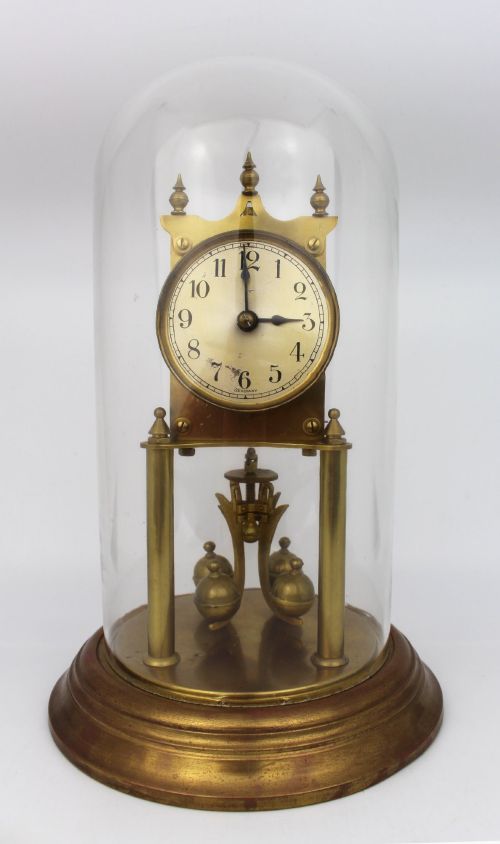
- Torsion or anniversary clock
- Runs a year on one wind by way of a slowly rotating torsion pendulum, often under a glass dome.
Antique German Clocks: Frequently Asked Questions
What kind of German clock turns up most often?
A wooden-cased striking bracket or mantel clock. Between them, "bracket" and "mantel" account for a little over two-fifths of the titles listed on Sellingantiques.
Walnut leads the case woods, with mahogany and oak behind it. Many carry a quarter strike, most often the ting-tang on two bells or gongs.
How old are these clocks?
The dated listings run from 1850 to 1960. Nothing is logged earlier or later.
The 1890s is the single busiest decade, followed by the 1930s, then the 1920s and 1900s. A further group is dated only as "19th Century" or "Victorian", so the century's internal dating is looser than the decade counts alone suggest.
Are Black Forest and cuckoo clocks part of this category?
Yes. Black Forest is named in 18 titles and cuckoo in 10, together about a sixth of the category, and the group is more prominent in current stock than in the sold archive.
They include carved walnut cuckoos, musical automaton cuckoos and one table-standing cuckoo with twin fusees. The region is where German clockmaking began, as a cottage trade in wooden-movement wall clocks.
Why do some listings say the case is English?
Several longcase and grandmother entries pair a German movement with an English oak or mahogany case. German factories were supplying movements into the British trade in quantity by the later 1800s.
That pairing is the reason "longcase" appears at all in a category otherwise built on bracket, mantel and wall clocks.
Which examples sit at the top of the range?
Porcelain. The few porcelain-cased clocks and garnitures stand at the ceiling on their own, above everything in wood.
Below them come the three-train chiming brackets, triple-weight musical wall clocks and the larger carved cases. Named factory attribution lifts a clock clear of the unattributed "German mantel clock".
Do Art Deco German clocks appear?
They make up about an eighth of the category, dated across the 1920s to 1950s.
The forms are chrome desk clocks, a Bakelite alarm, Bauhaus-design wall clocks and brass world-time desk pieces. They sit at the small-format end, well away from the bracket and longcase work.