


Edwardian Clocks
Spring-driven shelf clocks, portable carriage clocks and weight-driven wall dials, dated by dealers to the Edwardian decade and made for the chimneypiece, the travelling bag, the schoolroom and the station platform.
What You're Looking At
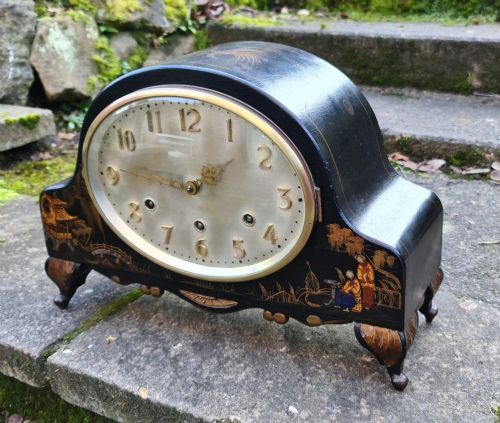
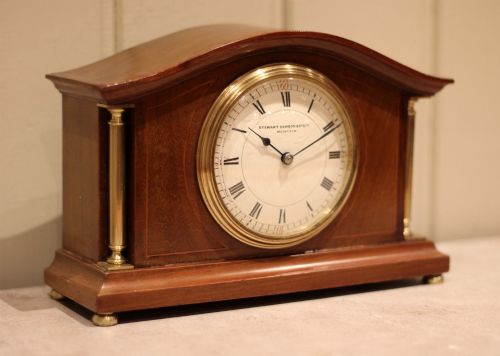
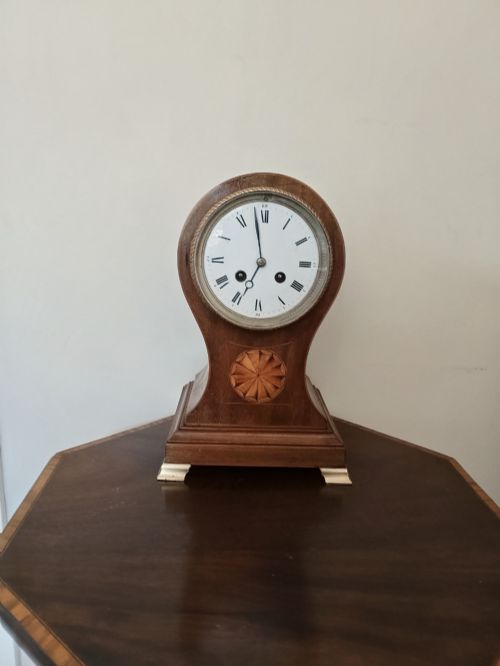
Wooden-cased mantel clocks dominate. Of 765 titles on Sellingantiques, 333 say "mantel" and another 57 say "mantle", the same thing spelled two ways. A quarter name mahogany and a quarter name inlay, so the piece you're most likely to meet is a small inlaid mahogany shelf clock. "Small" appears in 50 titles, "miniature" in 32, "large" in only 18.
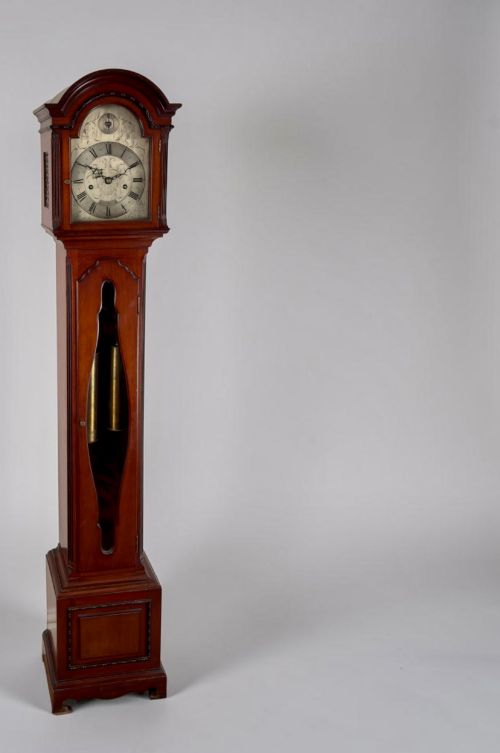
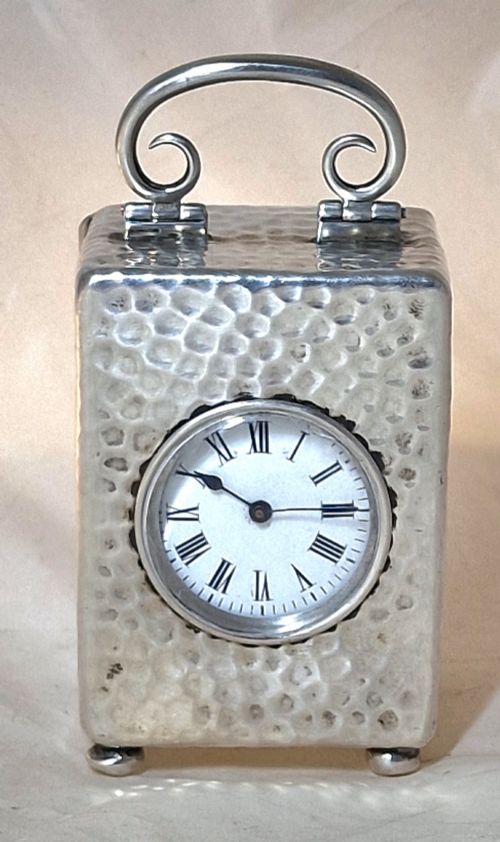
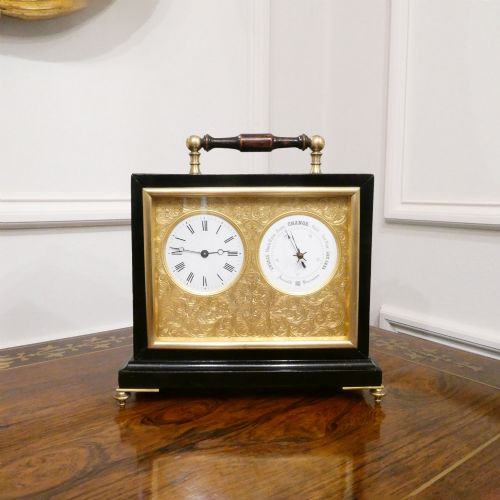
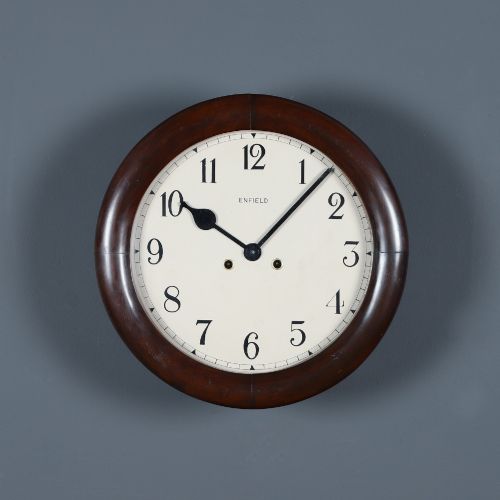
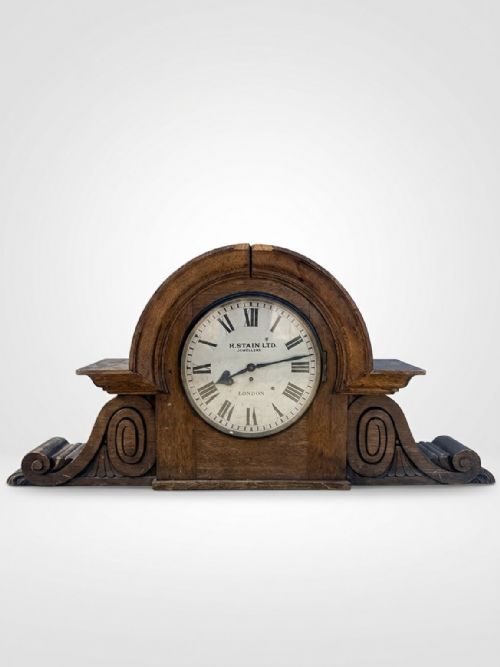
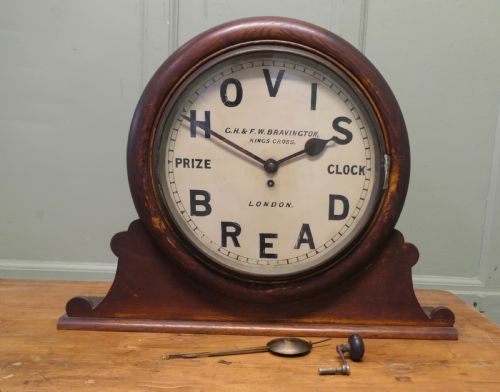
Around that core sit four smaller groups. Carriage clocks in brass and silver, often with France or French attached. Fusee dial and drop-dial wall clocks from schools, stations, post offices, factories and ships. Small longcase clocks sold as grandmother, granddaughter or miniature grandfather. Bracket and table clocks, with silver-cased desk and travel timepieces alongside.
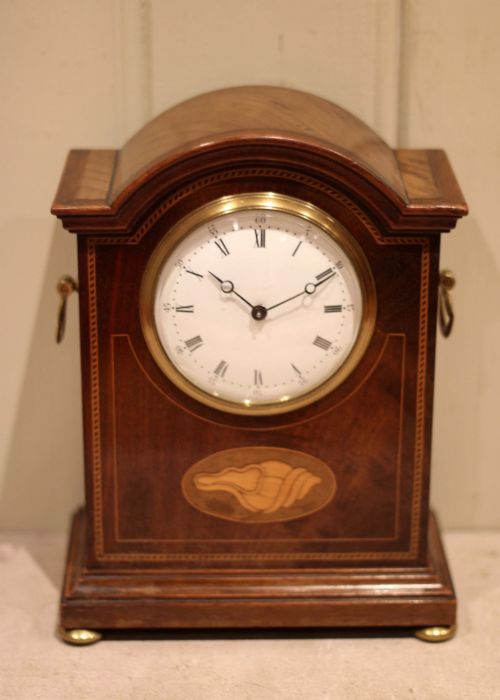
Case shape does more descriptive work in these titles than anything else. Lancet, balloon, arch, pad, swept, chamfer, caddy, keyhole and Napoleon-hat tops all recur, and "top" alone appears in 54 titles. Inlay motifs get named outright too: poppies, butterflies, sunflowers, herringbone banding, a conch shell, the Prince of Wales feathers.
Treat the period label loosely. Where a clean year is given it clusters on 1900 and 1910, but the dated field runs from 1800 to 1960, with a Victorian tail and a run forward into the 1920s and 1930s. Several titles straddle it openly, as "Late 19th/Edwardian". English cases frequently house bought-in French movements, and German and Swiss work appears as well.
What Separates Them
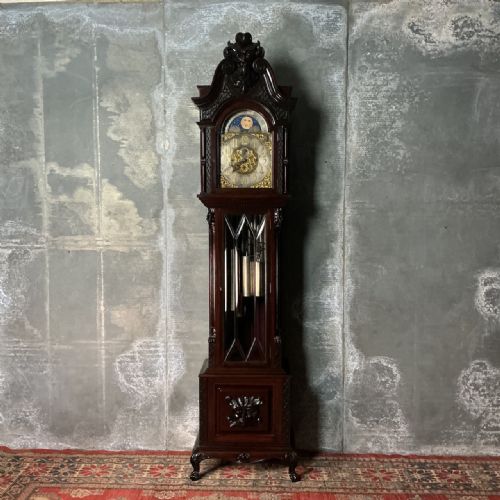
What the movement does sets the range more than anything. A timepiece runs and shows the hour, nothing more, and 40 titles say so; those sit low and mid-range. Striking comes next, then chiming and Westminster, and at the very top the musical trains, nine-tube and eight-bell longcase clocks that hold the highest ground in the archive.
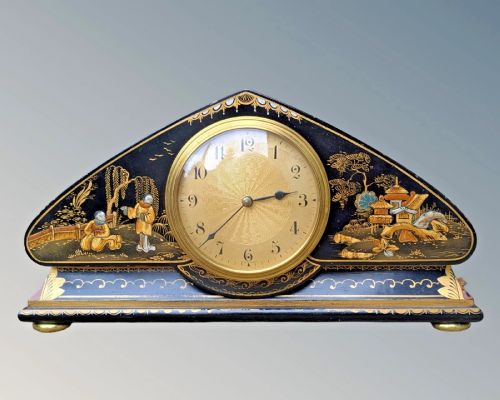
Case decoration and timber follow the same climb. A plain mahogany mantel clock anchors the bottom. Satinwood, amboyna, burr walnut, birds-eye maple, shell inlay and marquetry rise from there, and Sheraton-revival banding and chinoiserie lacquer are their own recurring strands. Silver and enamel cases occupy the upper half, hallmarked carriage clocks and enamelled boudoir timepieces among them.
Scale pulls from both ends. Miniature carriage clocks command, and so do the few genuinely big things, boardroom bracket clocks, factory dials and full-height longcases. Ordinary shelf sizes sit in the middle. Names attached to a London retailer, or service marks from the GPO, LNER, LMS, NER or a town hall, cluster well above the mantel-clock median.
Retail Price Guide 2026
Typical UK retail prices for edwardian clocks, calculated from the Sellingantiques database of over a million retail prices indexed since 2003. This retail price guide relies exclusively on Sellingantiques data; no external sources or auction records are used, so the figures do not describe the wider market.
The most expensive Edwardian clock ever sold on Sellingantiques was a mahogany inlaid tubular chiming longcase clock, in February 2018.
Dent of London
The Edwardian Clocks Glossary
- Mantel or mantle clock
- A shelf clock for a chimneypiece. Both spellings are used for the same thing, and a search on one misses the other.
- Timepiece
- In these titles, a clock that only tells the time, with no strike and no chime. It appears in 40 titles.
- Dial clock
- A round wall clock, essentially dial and movement with minimal case. Drop-dial adds a trunk below to house the pendulum.
- Fusee
- A tapering drum with a chain or gut line that evens out the pull of the mainspring. Named in 38 titles, almost all wall and bracket clocks.
- Balloon
- A waisted case shape that widens up to a round dial. It turns up in 34 titles and is one of the commonest shapes named.
- Ting-tang
- A two-note quarter strike sounded on two gongs or bells. It appears in several bracket-clock titles.
- Four glass
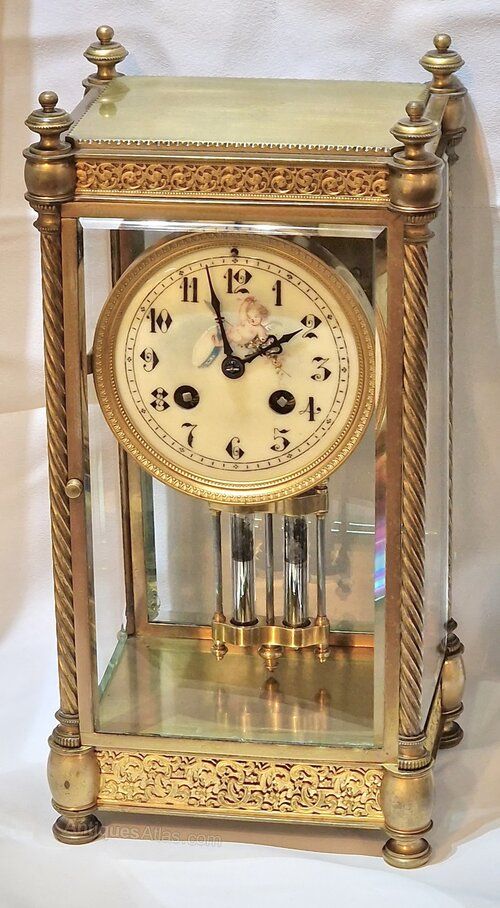
- A mantel case glazed on all four sides, so the movement can be seen from any angle.
Frequently Asked Questions
What is a grandmother clock?
A small longcase clock, standing well under full height. Thirty-four titles use the word, often alongside "miniature grandfather" for the same idea.
They're a minority of the category, under one in ten, but they occupy the top of the range. The musical and tubular-bell versions, nine-tube and eight-bell, sit highest of all.
Why do so many titles describe the top of the case?
Because case shape carries more weight in these listings than any maker's name. "Top" appears in 54 titles on Sellingantiques.
Lancet, arch, pad, swept, chamfer, caddy, bombé, keyhole, petal, scalloped, teardrop, club and Napoleon-hat all turn up. It's the working shorthand for telling one inlaid mahogany case from the next.
Are Edwardian clocks all English?
No. Country of origin does appear in titles, with France in 24 and England in 22, and German and Swiss work shows up too.
A common pattern is an English case housing a bought-in Continental movement. Some titles say as much outright, one giving "England and France, 1900 to 1910".
What does fusee mean on a wall clock?
A tapering drum with a chain or line wound round it, arranged to even out the pull of the mainspring as it unwinds.
Thirty-eight titles name it, and almost all of them are wall or bracket clocks. It goes hand in hand with the round dial and drop-dial clocks that came from schools, stations, post offices and factories.
How common are carriage clocks in this group?
About one in ten. Carriage appears in 84 titles, split between brass and silver cases, with France and French frequently attached.
Miniature examples recur among the higher-priced ones. Hallmarked silver carriage clocks sit in the upper half of the range.
Does Edwardian here mean strictly 1901 to 1910?
Not reliably. It's a style-and-decade label dealers apply, and 248 titles simply say "Edwardian" with no year at all.
Where clean years are given they cluster on 1900 and 1910, but the dated field as a whole stretches from 1800 to 1960. Titles reading "Late 19th/Edwardian" show the join.