


Antique Lantern Clocks
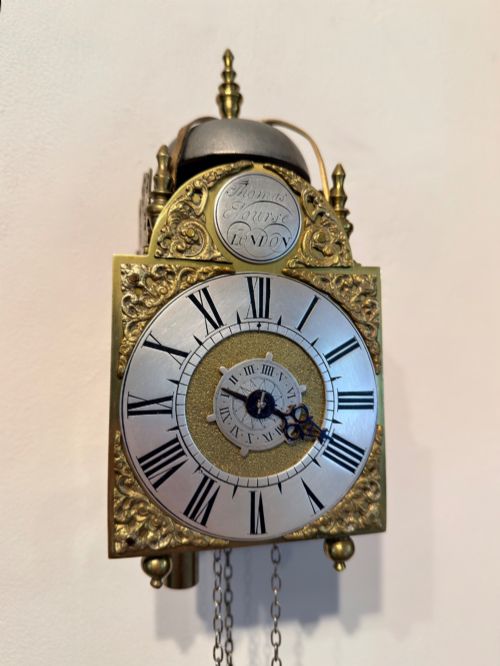
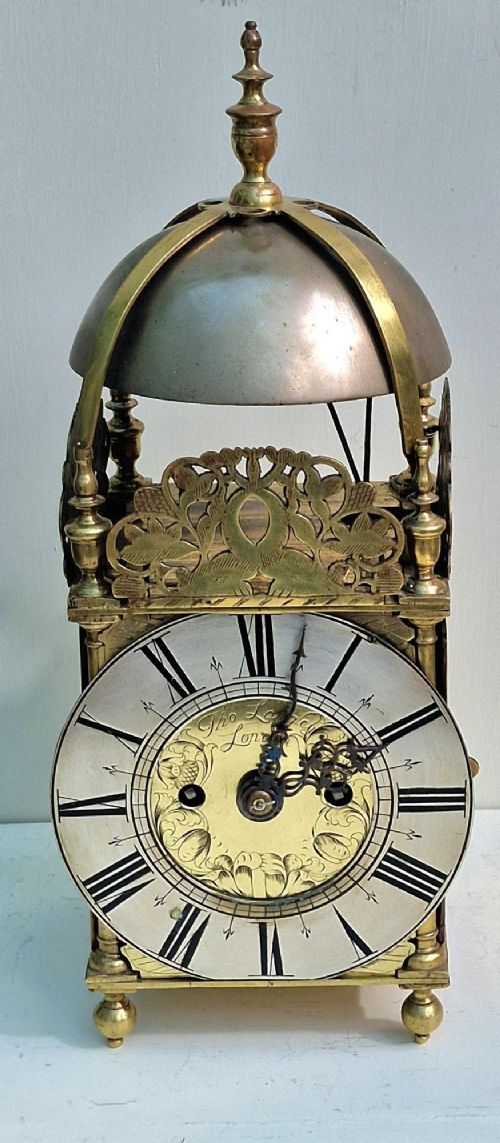
A lantern clock is a brass-cased chamber clock, taller than it is wide, with a bell mounted above the movement and a wide chapter ring across the front, made to hang on a wall or stand on a bracket and strike the hours.

Antique Lantern Clocks
It's the earliest domestic English house clock: a brass-framed, weight-driven timepiece hung on a wall or set on a bracket, striking the hours on the bell above the case. Longcase and bracket clocks pushed it out of most homes, and the shape came back in the later 19th century as a spring-driven mantel clock.
The heading covers both. Genuine 17th- and 18th-century English clocks make up one group, with 'english' in 19 titles, 'london' in 15 and 'verge' in 8; period labels of 17th Century, 18th Century and Before 1700 account for 39 listings. The later group is Victorian to Edwardian brass fusee work in 17th-century style, another 20 or so. The word 'fusee' in a title tells you which half you're in.
So a buyer browsing meets one of two things. Either a verge-escapement wall clock with hook and spike, signed by a London or provincial maker, or a spring-driven fusee lantern clock of mantel or table size. Quarter-striking and twin fusee versions run through the later group, and a small tail of 20th-century clocks in the old shape reaches to 1960.
Dating needs reading twice. Only 24 of 82 listings carry a clean year, and the dealer's dated field is often a broad label rather than a date, so the century band and any circa in the title carry the weight. Several titles flag later alteration outright, with wording such as '18th Century and Later' or 'Circa 1680 and Later'.
Where The Range Splits
A signature with a town behind it does most of the work. The upper half of the range is almost entirely signed and localised, with makers named at London, New Sarum, Mansfield, Coventry and York, while the bottom is plain description: 'Brass lantern clock', 'Victorian Lantern Clock'. Northern and provincial work carries its own following, and titles calling out Lancashire, Wigton, West Yorkshire, Cheshire and Preston recur towards the top.
Age within the form pushes the same way. Listings dated Before 1700 or 17th Century, including titles at circa 1615, 1620, 1650 and 1655, sit at the top; the 1880s to 1960 clocks sit at the bottom. Alongside age sits originality: titles stating an original verge escapement rank high, while 'Converted', 'and Later' and a case of about 1780 carrying a double fusee movement are set out separately.
Form and complication account for the rest. Winged cases turn up three times across the whole archive, miniatures twice, alarum clocks twice, and the two titles calling the thing a house or chamber clock cluster near the top. Within the later fusee group, plain single-train clocks sit lowest, and quarter-striking, twin fusee and ting tang examples reach well above them.
Antique Lantern Clocks Retail Price Guide 2026
Typical UK retail prices for lantern clocks, calculated from the Sellingantiques database of over a million retail prices indexed since 2003. This retail price guide relies exclusively on Sellingantiques data; no external sources or auction records are used, so the figures do not describe the wider market.
Dealers on Sellingantiques use a shorthand found in almost no other clock form: titles announcing a 1st period, a second period and a 3rd period lantern clock.
The Antique Lantern Clocks Glossary
- Verge escapement
- The early escapement, named in 8 titles, usually with a short pendulum or a balance. On a lantern clock it marks the older half of the category.
- Fusee
- A spring-driven movement with tapered barrel and chain, in 11 titles, all of them on the later spring-driven revival clocks.
- Hook and spike
- The iron hook and back spikes that let a weight-driven lantern clock hang on a wall, named in titles as HOOK & SPIKE.
- Chapter ring
- The applied ring carrying the hour numerals across the front of the dial; one title notes a silvered chapter ring.
- Quarter striking
- Strikes the quarters as well as the hours, in five titles, sometimes on two bells; ting tang is the two-bell quarter strike, named once.
- First, second and third period
- Dealers' shorthand for successive stages of 17th-century lantern clock development, used in three titles and in almost no other clock form.
Antique Lantern Clocks: Frequently Asked Questions
How many lantern clocks come up each year?
Around ten a year on Sellingantiques, carried between 21 different dealers. That's a wide spread of hands for so small an annual flow.
The archive stands at 82 listings, split fairly evenly between the early English clocks and the later fusee revival.
What does 'and Later' mean in a title?
It flags that the clock isn't all of one date. Titles read '18th Century and Later' or 'Circa 1680 and Later', and two say 'Converted' outright, meaning the movement has been altered from its original escapement or drive.
One listing pairs a case of around 1780 with a double fusee movement. Another has a French carriage clock movement fitted into a lantern case.
Are lantern clocks weight-driven or spring-driven?
Both, and the title usually says which. The 17th- and 18th-century clocks are weight-driven, hung on a wall by hook and spike, with a verge escapement.
The Victorian and Edwardian ones are spring-driven with a fusee, made for a mantel or table top rather than a wall.
Which towns and makers turn up in the listings?
London leads, appearing in 15 titles, and 'english' in 19. Beyond London the naming is provincial and single: Preston, Stamford, Maidstone, Royston, Bury St Edmunds, Bolnhurst, Dorking, Titchfield, Wigton, Totnes, Mobberley, Soyland and New Sarum each appear once.
Northern English work is called out by name in several titles and sits in the upper part of the range.
What is a winged lantern clock?
A case with side wings enclosing a swinging pendulum bob. Three titles across the whole archive use the term.
Miniature examples are equally scarce, with just two on file, both hook-and-spike or verge alarum clocks of about 1745.
Why do some listings say house or chamber clock?
Two titles use those words instead of lantern clock. That's what the earliest examples were originally known as, before the later name stuck.
Both sit in the upper part of the sampled range.