


Antique Wall Clocks
A clock made to hang on a wall, from the plain round dial that told the time to a whole hall or office to the slim glazed regulator that hung in a parlour.
What You're Looking At
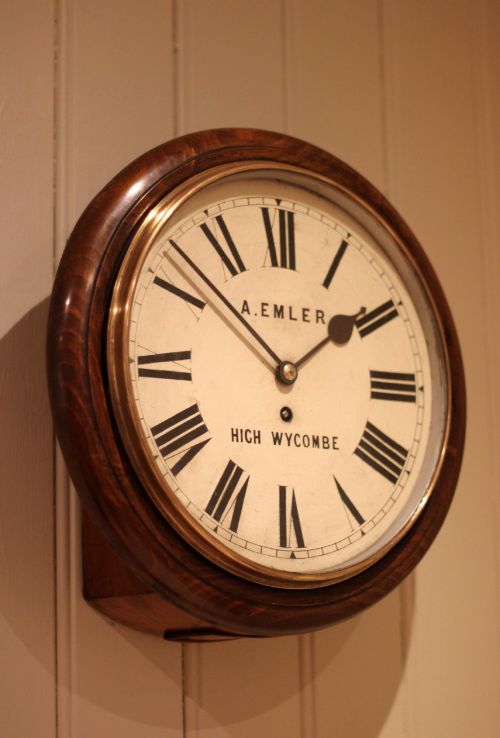
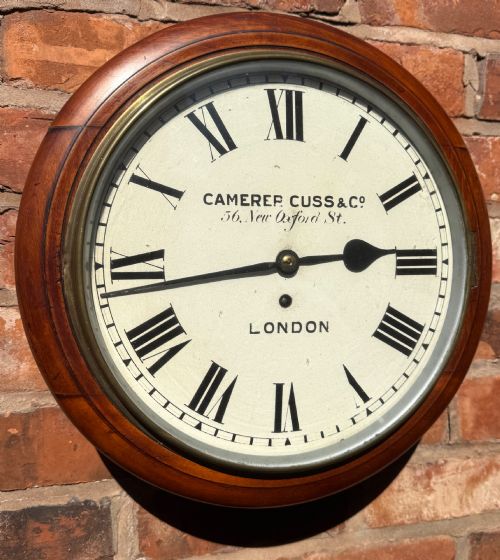
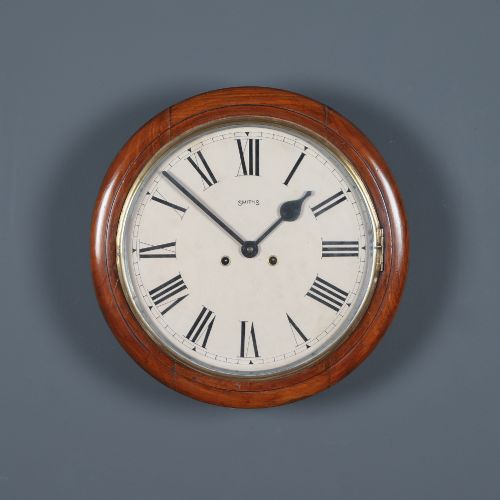
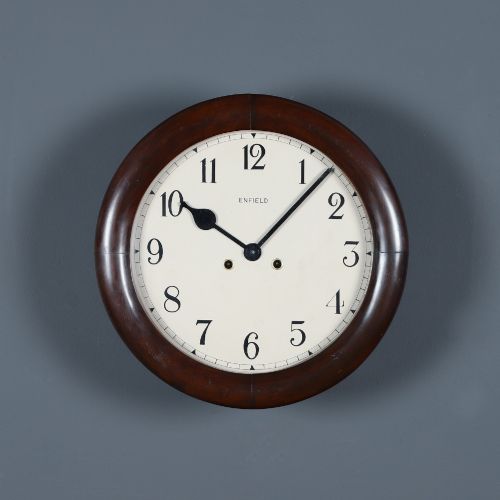
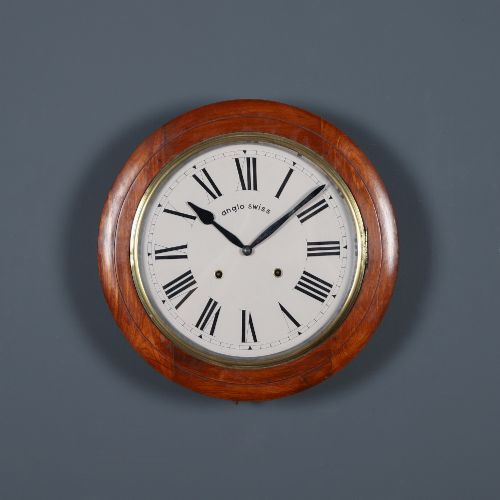
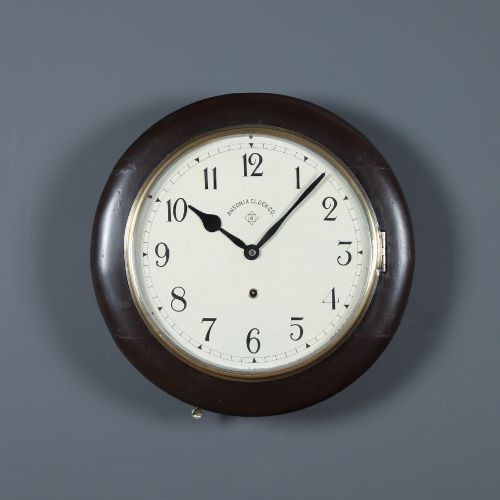
Two forms dominate. The first is the English dial clock: a circular painted or silvered dial in a wooden bezel with a spring-driven fusee movement behind it. "Dial" turns up in 513 titles and "fusee" in 485, so between them they set the tone of the whole category. Mahogany is the timber named most often, and 134 titles carry London.
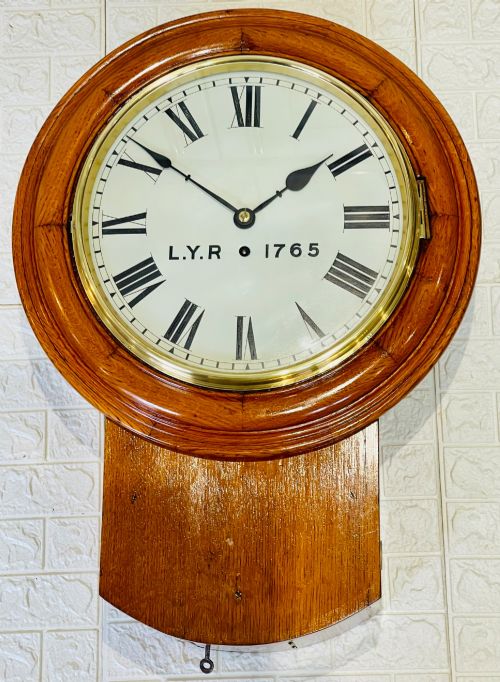
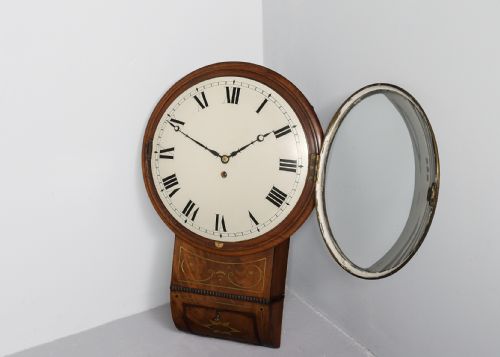
The drop-dial is the version you'll meet most within that group, with a round dial over a shaped trunk that houses the pendulum. It accounts for 173 titles, plus another 34 spelled dropdial. Oak and rosewood cases appear alongside the mahogany.
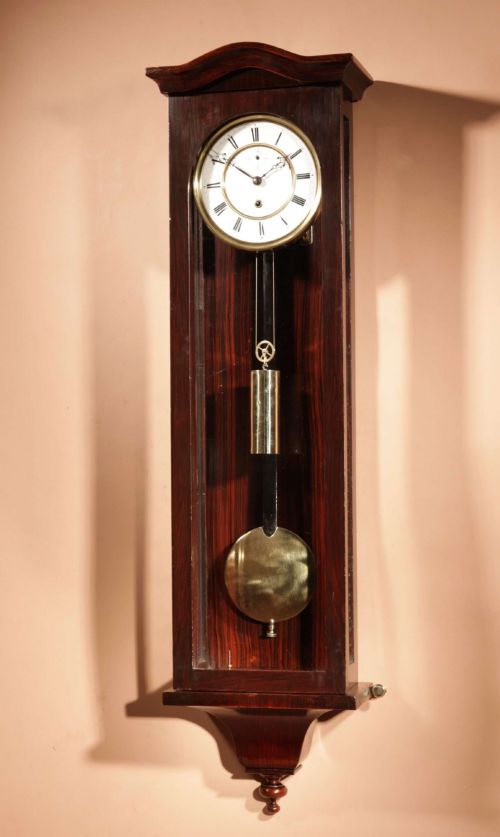
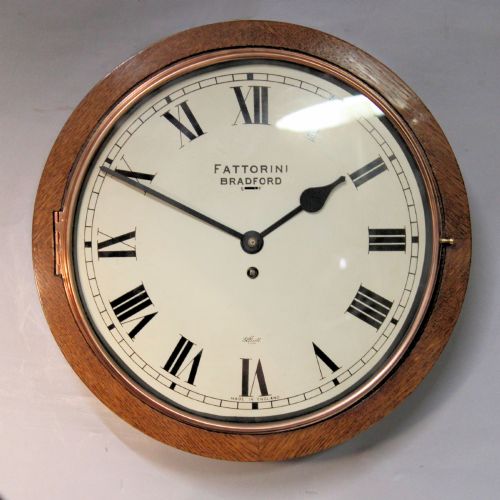
The second pole is the Vienna regulator, German or Austrian, slim and glazed, weight- or spring-driven, walnut or ebonised. "Vienna" appears in 194 titles. Beyond those two, the category takes in French cartel clocks in gilt bronze, hooded and hook-and-spike clocks, tavern clocks, and a run of 20th-century factory, railway, GPO and military clocks in oak, Bakelite and chrome.
Dating leans late Victorian. The dealer-supplied years run 1750 to 1960, with the 1890s and 1880s the biggest decades and a clear interwar tail in the 1920s and 1930s. Around a third of dated entries rest on a label such as "19th Century" or "Victorian" rather than a year. Seventeenth- and eighteenth-century wall clocks do appear, but in single figures.
Where The Range Splits
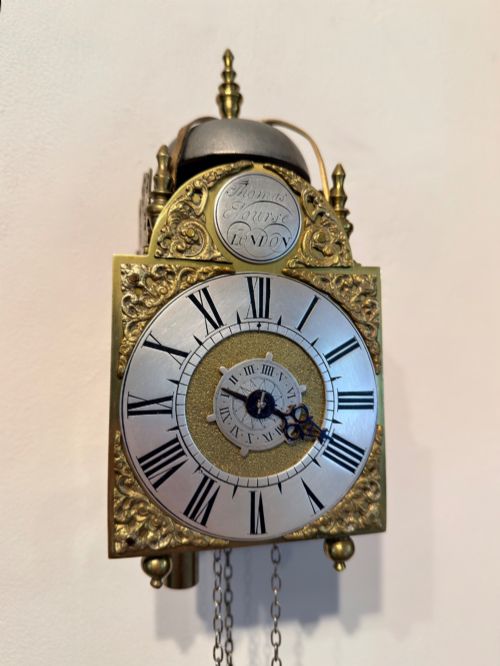
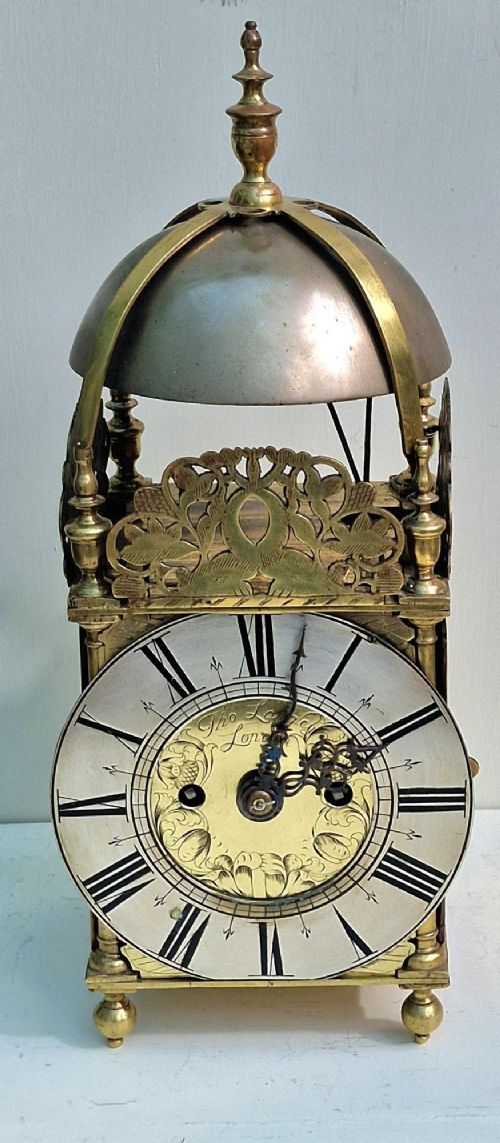
Movement does most of the work. A single fusee train means timekeeping only; twin or double fusee means it strikes as well, and those titles sit well above the single-train ones. Verge escapements and lantern movements cluster at the very highest figures, as do Vienna regulators of month or 30-day duration with grande sonnerie striking.
Age pulls in the same direction. Lantern, hooded, hook-and-spike and tavern clocks put at the 17th or 18th century occupy the top of the sampled range, while 1930s oak, Bakelite, chrome and painted cases sit near the bottom, some dated as late as 1960. A name and town on the dial lifts a clock too; titles that read simply "Wall clock" recur at the lower end.
After that it's case and scale. Burr walnut, bird's eye maple, burr yew, brass and mother-of-pearl inlay, carving and gilt bronze recur among the higher-priced titles, plain oak and painted or plastic cases among the cheaper. Dial diameter is the category's own unit, and both extremes carry a premium over the ordinary 10 to 12 inch: 6- and 7-inch dwarf dials at one end, 18-, 20-, 32- and 33-inch industrial dials at the other. Documented institutional use does the same, with GWR, LNER, LMS, GNR, British Railways, GPO, RAF and Army clocks running through the upper half.
Retail Price Guide 2026
Typical UK retail prices for wall clocks, calculated from the Sellingantiques database of over a million retail prices indexed since 2003. This retail price guide relies exclusively on Sellingantiques data; no external sources or auction records are used, so the figures do not describe the wider market.
About 157 wall clocks are listed on Sellingantiques each year, and 139 different dealers have handled one.
Dent·Thwaites & Reed of Clerkenwell·Elliott of London·Camerer Cuss & Co·Gustav Becker·Japy Freres
The Antique Wall Clocks Glossary
- Dial clock
- A wall clock that is essentially a round dial and bezel with the movement behind it. The commonest description in the category, in 513 titles.
- Fusee
- A spring barrel with a tapering grooved cone and a gut line or chain, which evens out the pull of the mainspring. Named in 485 titles.
- Drop dial
- A round dial with a shaped box or trunk hanging below it to house the pendulum. In 173 titles, and another 34 written dropdial.
- Single / twin (double) fusee
- One fusee train means timekeeping only, two means the clock strikes as well. Single appears in 32 titles, twin fusee in 28, double in 45.
- Timepiece
- The trade word for a clock that shows the time but doesn't strike. Used in 27 titles.
- Convex dial
- A domed dial with a matching curved glass, an early 19th-century English feature. In 46 titles.
Frequently Asked Questions
What does fusee mean on a wall clock?
It's the drive. A fusee is a grooved cone linked to the spring barrel by gut line or chain, and it evens out the mainspring's pull as it unwinds.
The word runs through the category, appearing in 485 titles, usually paired with "dial" in the English wall clocks.
How are wall clock sizes given?
By dial diameter. It's the category's own unit of measurement, quoted in 35 titles.
The range in the samples runs from a 6-inch and two 7-inch dwarf dials up to 18-, 20-, 32- and 33-inch industrial and factory dials. Ten to twelve inches is the ordinary size, and both extremes are treated as selling points.
Which wall clocks are most common on Sellingantiques?
English fusee dial clocks, by a distance. "Dial" appears in 513 titles and "fusee" in 485, and the drop-dial version accounts for 173 more.
Vienna regulators are the second group, at 194 titles. French cartel clocks in gilt bronze make up a smaller band, around one in twenty.
Are railway and military wall clocks part of this category?
Yes, and they run deep. Railway appears in 40 titles, with GWR, LNER, LMS, GNR, South Eastern and British Railways all represented.
GPO and London Passenger Transport Board clocks turn up too, along with RAF and Army issue examples dated 1943, 1945, 1951 and 1952. A documented user tends to place a clock in the upper half of the range.
What period do most of these date from?
Late Victorian is the centre of gravity. The 1890s and 1880s are the two biggest decades, followed by the 1900s, 1930s and 1860s.
The dated field spans 1750 to 1960 overall, with a distinct interwar tail. Around a third of dated listings carry a label such as "19th Century" or "Victorian" instead of a year.
Do unusual wall clocks turn up?
Now and then. The samples include a hook-and-spike clock given as circa 1710, a lozenge-cased verge timepiece put at the late 17th century, a moving-windmill automaton dial and a French mystery globe clock.
There's also a skeleton wall clock and one advertising chocolate. Origins beyond England, Germany and France are thin: single appearances from Sweden, Switzerland and Japan, a Dutch Frisian stoelklok and a Belfast postman's clock.