



Antique Marine Chronometers
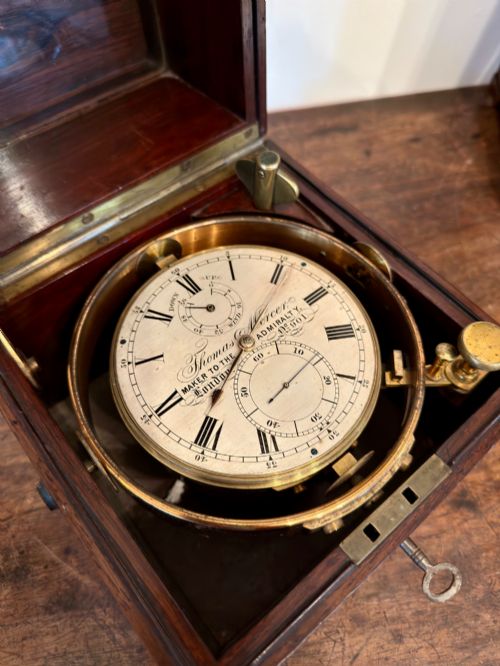
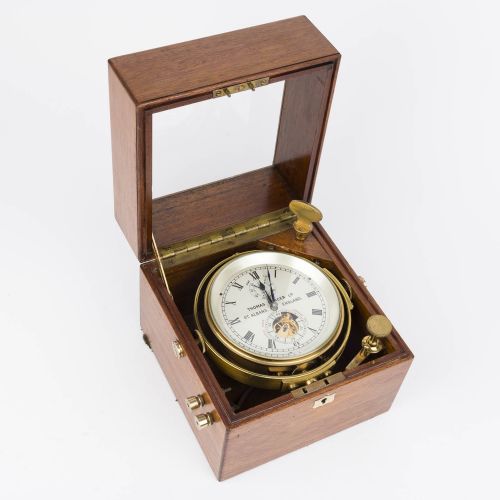
A marine chronometer is a precision spring-driven timekeeper made for navigation at sea, normally gimbal-mounted in a brass bowl inside a hinged wooden box.
Antique Marine Chronometers
The chronometer was developed in the eighteenth century so a ship could keep accurate time at sea and work out its longitude. It stayed standard navigational kit aboard ship well into the twentieth century, and its form settled early: a gimballed movement in a brass bowl, set in a lidded wooden box.
The boxed two-day chronometer dominates. "Day" is the single most common word in the titles, appearing in thirteen of thirty-five, almost always as a two-day piece. The same movement gets advertised two ways, so a listing may say "2-Day" or may quote the running time instead as 54 or 56 hours. Eight-day chronometers, wound weekly rather than every other day, turn up only occasionally.
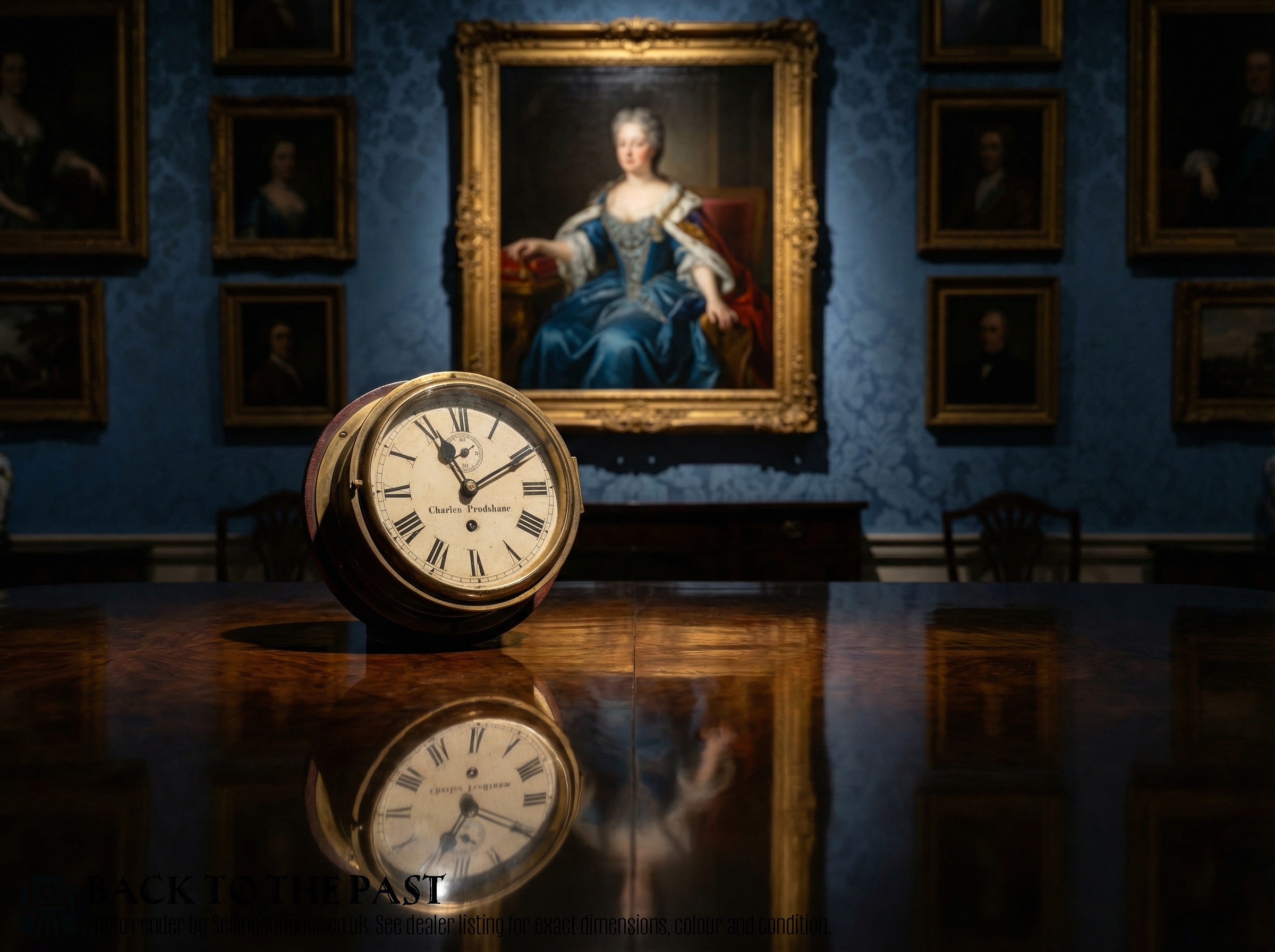
Not everything under the heading is a gimballed chronometer. Ship's wall and bulkhead clocks with fusee movements are listed alongside them, and they sit at the bottom of the range. Where a case timber is named it's mahogany or rosewood, and titles frequently carry a maker's name and a serial number, quoted openly, from figures as low as 199 to numbers in the 2900s.
Dating runs long. Of thirty-five listings, twenty-four carry a clean year and that field spans 1850 to 1950, a full century of seagoing timekeepers. Nine more are given only as "19th Century", with one each as Victorian and Edwardian, so a good slice is dated by era rather than decade. Decade entries cluster in the 1850s to 1890s and again in the 1900s, 1920s, 1940s and 1950s, and a Russian example sits among the British and Western European ones.
Where The Range Splits
A name and a number in the title carries the most weight. The upper half of the range is almost entirely maker-attributed and often numbered, while the cheapest listings carry no maker at all. Whether that name is stamped on the movement or only offered as an attribution is the distinction the copy draws.
Form comes next. Every listing above the bottom of the range is titled marine chronometer; the fusee ship's wall and bulkhead clocks sit beneath them. Above that line, run time separates further, with the eight-day examples sitting at or near the top and the two-day pieces filling the middle.
Two smaller things track upward. Titles that specify a mahogany or rosewood case fall in the upper part of the range, and date pulls in the same direction: pieces given circa dates in the 1830s to 1850s sit high, while several 1940s and 1950s examples sit low.
Antique Marine Chronometers Retail Price Guide 2026
Typical UK retail prices for marine chronometers, calculated from the Sellingantiques database of over a million retail prices indexed since 2003. This retail price guide relies exclusively on Sellingantiques data; no external sources or auction records are used, so the figures do not describe the wider market.
The most expensive marine chronometer ever sold on Sellingantiques was an eight-day example made in Liverpool, dated about 1839. It sold in December 2021.
The Antique Marine Chronometers Glossary
- Two-day
- A chronometer built to run about two days on a full wind. It's the commonest run time in this category by a wide margin.
- 54-hour / 56-hour
- The same two-day class described by its actual running time rather than in days. Some dealers write it one way, some the other.
- Eight-day
- A longer-running chronometer needing winding only once a week. It surfaces occasionally, and high in the range when it does.
- Gimbals
- The pivoted rings that hold the movement level as the ship rolls. They're what makes a chronometer a chronometer rather than a clock in a box.
- Fusee
- A cone-shaped, chain-driven barrel that evens out the pull of the mainspring as it unwinds. Named in the ship's clock titles here, including one specified as a chain fusee.
- Bulkhead clock
- A ship's clock made to be fixed to a vessel's internal wall or partition, rather than carried in a case.
Antique Marine Chronometers: Frequently Asked Questions
How many come up for sale?
Only about four marine chronometers are listed on Sellingantiques in a year. They're spread across fifteen different dealers, so no one dealer holds the category.
The archive stands at thirty-five listings in total.
What does two-day actually mean?
It means the chronometer is designed to run roughly two days on a full wind, so it was wound every other day at sea.
Some dealers give the same thing as a running time instead, writing 54-hour or 56-hour. Both describe the same class of movement.
Are ship's clocks the same thing?
No. A marine chronometer is gimballed in a brass bowl inside a hinged wooden box. Ship's wall and bulkhead clocks are fixed timepieces with fusee movements.
They're listed under the same heading on Sellingantiques, and they sit at the bottom of the range.
What dates do these cover?
The dated field runs from 1850 through to 1950. Decade entries cluster in the 1850s to 1890s, then again in the 1900s, 1920s, 1940s and 1950s.
So the category isn't a Victorian one on this evidence. A fair number of twentieth-century chronometers appear.
Why are some listings dated only 19th Century?
Nine of the thirty-five carry that wording with no decade, and one each is given as Victorian and Edwardian. More than a third of the archive is dated by era rather than by year.
Where sales copy offers a circa date, it can run earlier than the era field suggests, with c.1830 and c.1839 both sitting under "19th Century".
Do serial numbers appear in the titles?
Yes, and openly. Numbers as low as 199 and as high as 2923 appear among the listings, usually alongside a maker's name.
Titles carrying both a name and a number sit in the upper half of the range.