
Antique Carriage Clocks
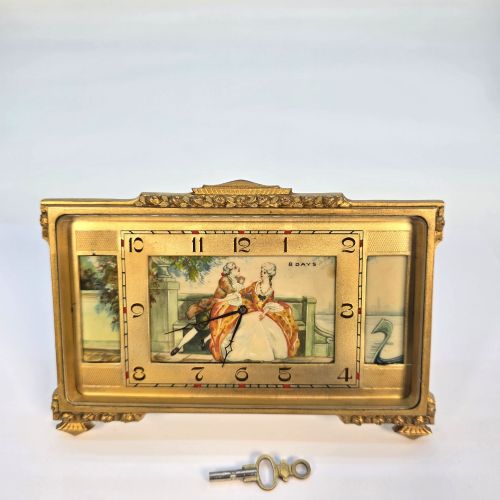
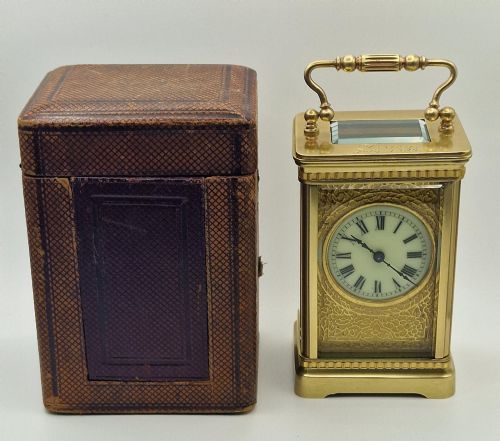
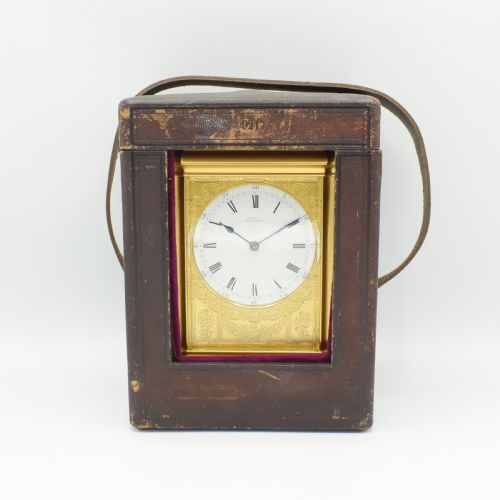
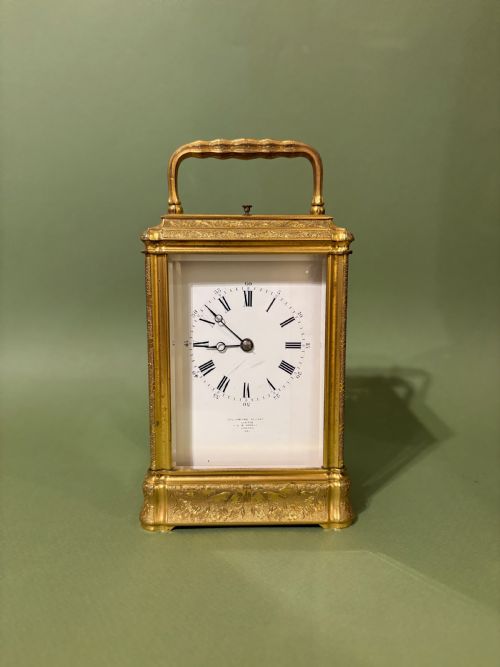
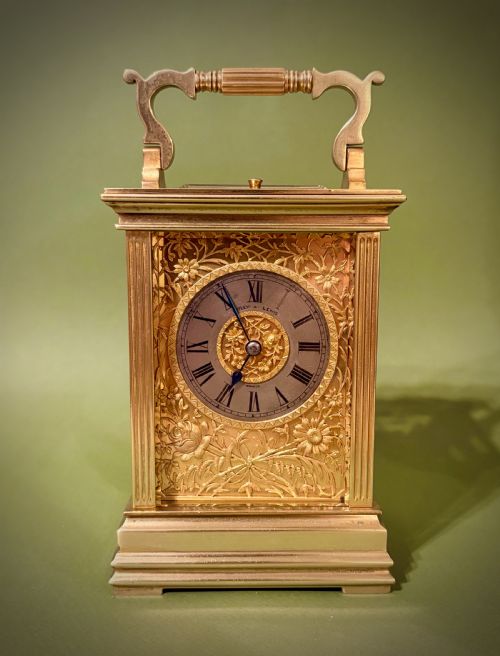
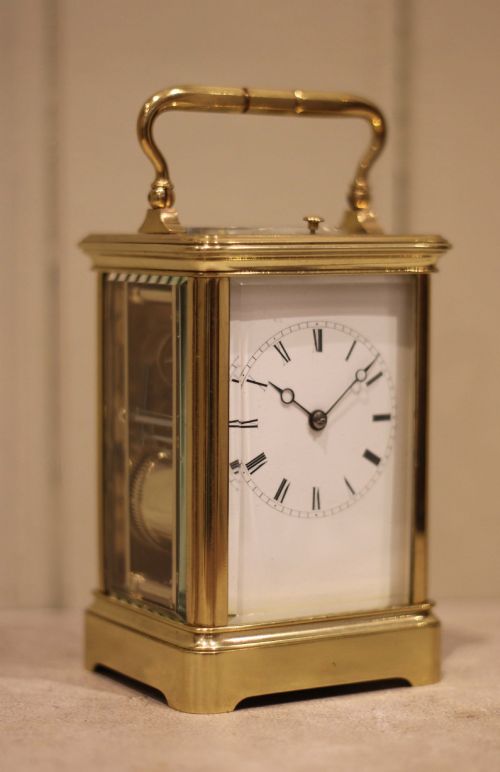
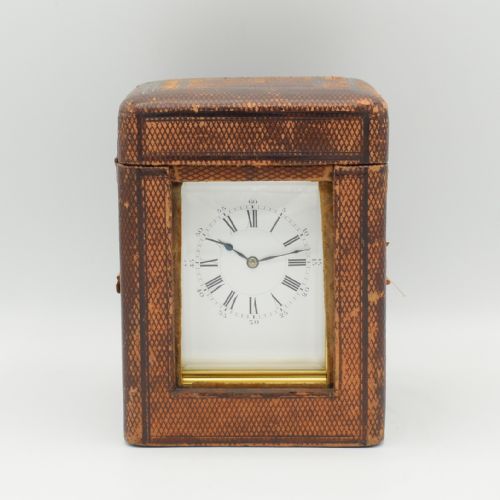
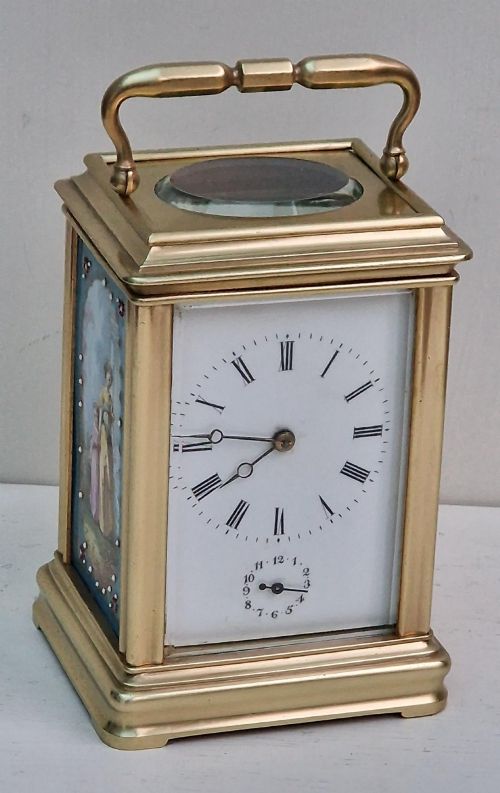
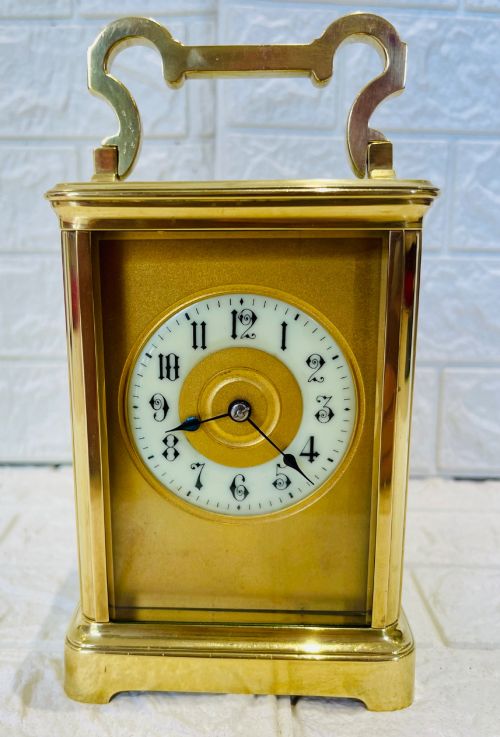
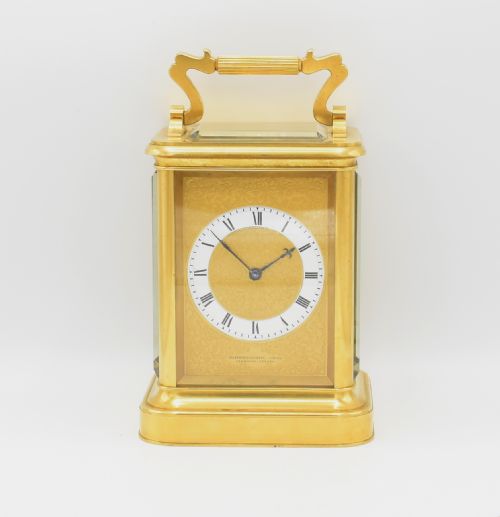
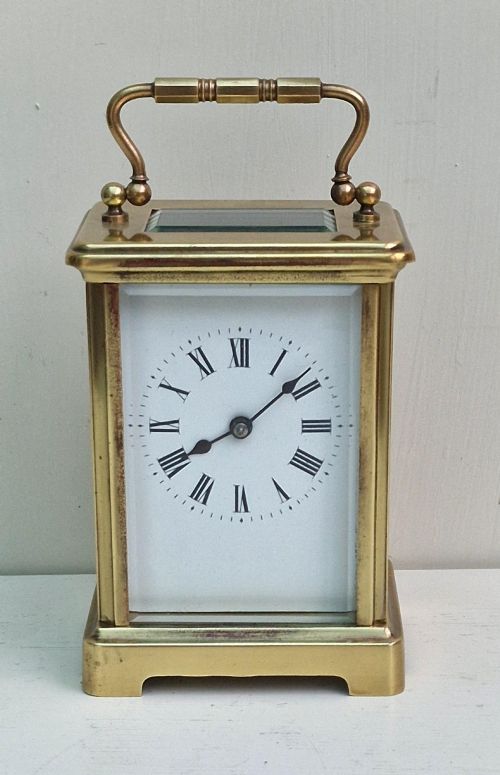
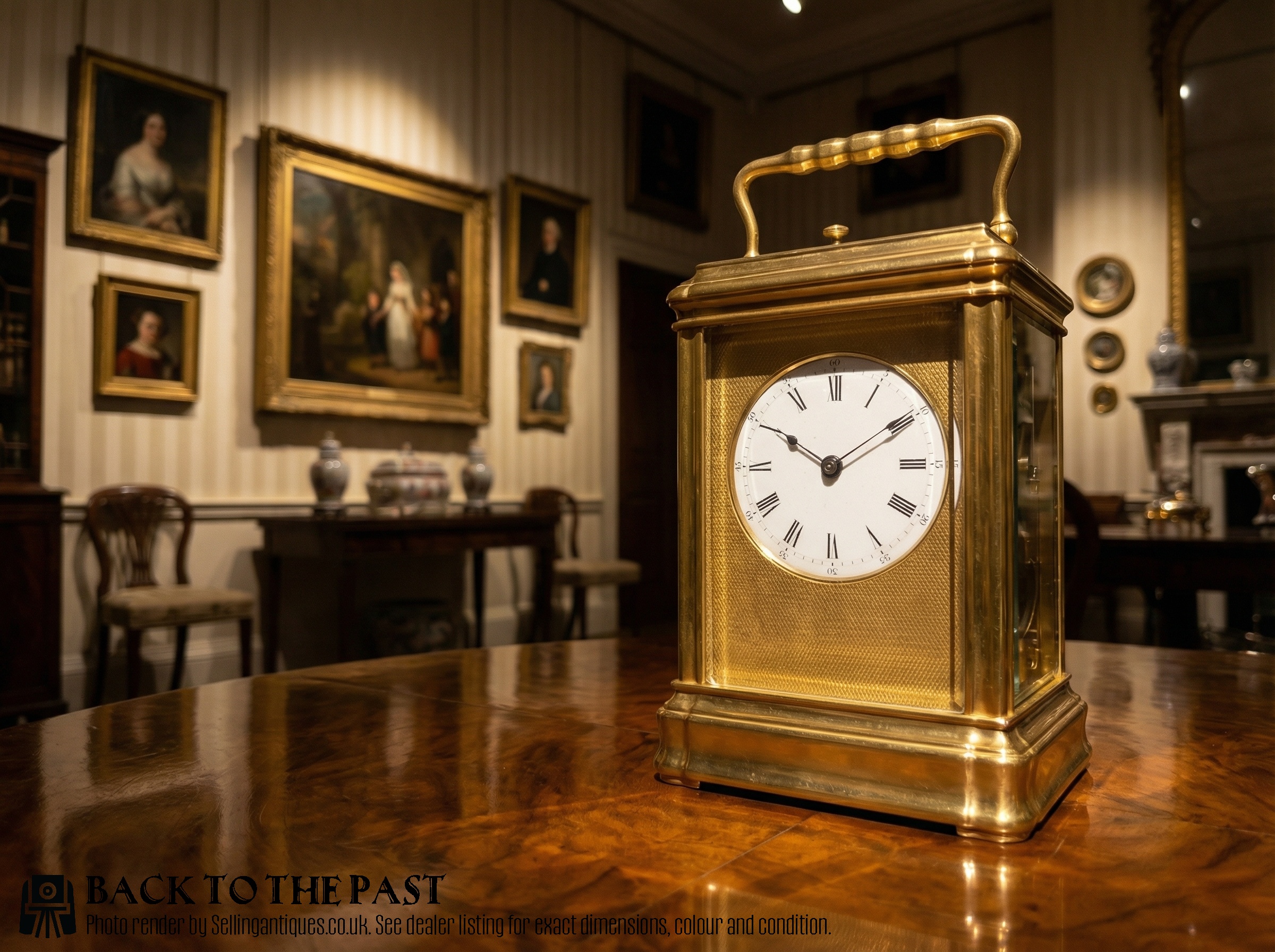
A small spring-driven table clock in a glazed brass case with a handle on top, made from the early 19th century for travelling and then in huge numbers as a desk, bedside and presentation clock.
Antique Carriage Clocks
French work dominates. Of 1,317 listings on Sellingantiques, 506 titles say "french", with Paris and France named in dozens more. The clock you're most likely to meet is a full-size brass or gilt-brass eight-day example from the 1880s to the 1900s: the dated field peaks at the 1890s, then the 1900s, then the 1880s.
Roughly half the titles name what the movement does. Repeating, repeat and repeater together run to well over two hundred, strike appears in 48 and alarm in 58, while 75 are called timepiece, meaning time only with no striking train. Sonnerie is named in 40 and grande sonnerie in 16, so quarter-striking is a small part of the whole.
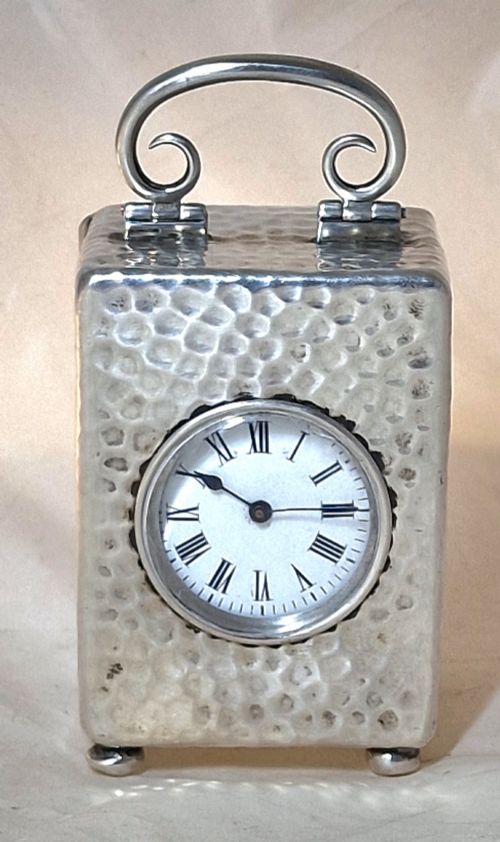
Away from the standard size, 100 titles say miniature, with sub-miniature silver examples and stated heights down to 2 3/4 inches; at the other end sit 51 "large" and 24 "giant". A separate strand of 93 silver and silver-gilt boudoir timepieces carries London and Birmingham hallmarks with dates from 1896 to 1913, in repousse, hammered and engine-turned finishes.
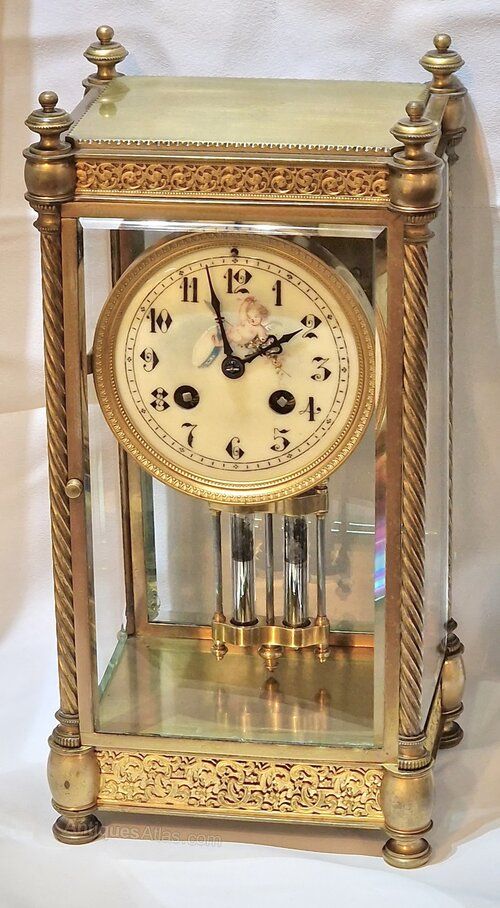
Dating is uneven. A thousand listings carry a clean year, but 223 are placed only as "19th Century" or "Victorian" and another 66 as "Edwardian", so a fifth of the archive is dated by era rather than decade. A few mid-century clocks dated 1950 and 1960 sit at the affordable end. Four-glass and mantel clocks turn up under the heading as a small minority.
Top And Bottom
Complication does most of the work. Grande and petite sonnerie, quarter-repeating, five-minute repeating, calendar and moon-phase clocks cluster at the top of the sampled range, and plain timepieces sit low and middling. The same pattern holds for the handful of English twin-fusee and single-fusee clocks, which occupy the extreme upper reaches.
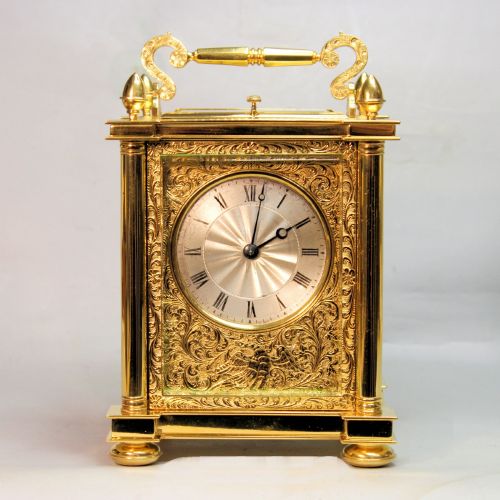
Case treatment separates otherwise similar clocks. Engraved cases appear in 51 titles and enamel in 40, and champleve, cloisonne, porcelain panels, hand-painted work and bronze panels all read well above the plain "brass carriage clock". Recognised profiles count too: gorge is named in 48 titles, with one-piece, corniche, cannelee, bamboo, caryatid and oval also named, while generic "brass cased" sits lower.
A name on the movement lifts a clock, and the unattributed French brass example fills the lower half. Size tells at both extremes, giants at the very top and miniatures reaching high as well. Original travelling boxes, leather cases and matching numbered keys are specified in a run of titles and belong with the better end.
Antique Carriage Clocks Retail Price Guide 2026
Typical UK retail prices for carriage clocks, calculated from the Sellingantiques database of over a million retail prices indexed since 2003. This retail price guide relies exclusively on Sellingantiques data; no external sources or auction records are used, so the figures do not describe the wider market.
Sonnerie striking is named in forty carriage clock titles on Sellingantiques, and grande sonnerie in sixteen.
Drocourt·Henri Jacot·Brunelot·Mappin & Webb·Dent·Leroy·Margaine·Samuel Marti
The Antique Carriage Clocks Glossary
- Timepiece
- A carriage clock that tells the time only, with no striking train. Named in 75 titles.
- Repeating
- A button on top re-strikes the last hour on demand. The commonest movement term in the archive, with repeat and repeater used for the same thing.
- Eight-day
- Runs about a week between windings, and it's the standard duration in this category, written either as eight day or 8 day.
- Alarm
- A separate subsidiary dial and train that sounds at a set time, named in 58 titles.
- Gorge
- The moulded, waisted case profile most associated with the better French makers. Doucine, spelled douchine in some titles, has an ogee-curved top moulding; corniche has a cornice-like top and base.
- Grande sonnerie
- Quarter-striking that sounds hour and quarters at every quarter. Petite sonnerie strikes less at each pass.
Antique Carriage Clocks: Frequently Asked Questions
Are carriage clocks always French?
Not always, but French work dominates. Of the 1,317 listings, 506 titles say "french", with Paris in 58 and France in 49 more.
English is named in only 19 titles, and the English fusee clocks are a handful among the whole archive. They sit at the extreme top of the range.
What does repeating mean on a carriage clock?
It means a button on the top re-strikes the last hour when you press it, useful at night before electric light.
Repeating, repeat and repeater between them appear in well over two hundred titles, so the feature turns up throughout the category.
How old is a typical example?
The dated field runs from 1800 to 1960, but it concentrates hard: the 1890s, 1900s and 1880s account for almost two-thirds of the thousand listings carrying a clean year.
Earlier decades thin out quickly, with the 1850s the earliest to show meaningful numbers. Mid-century clocks dated 1950 and 1960 are present but few, several of them ex-shop stock.
Why are some listed as timepiece rather than clock?
Timepiece is the trade word for a carriage clock with no striking train. It tells the time and does nothing else.
Seventy-five titles use it, and those clocks sit at the low and middle of the range rather than the top.
Do silver carriage clocks turn up?
Yes. Silver appears in 93 titles, a distinct strand of boudoir timepieces often English-cased and hallmarked in London or Birmingham, with sampled dates between 1896 and 1913.
Finishes named include silver gilt, repousse, hammered and engine turned. Some are miniature or sub-miniature, and one shagreen-cased silver miniature turns up.
Which unusual types show up in this category?
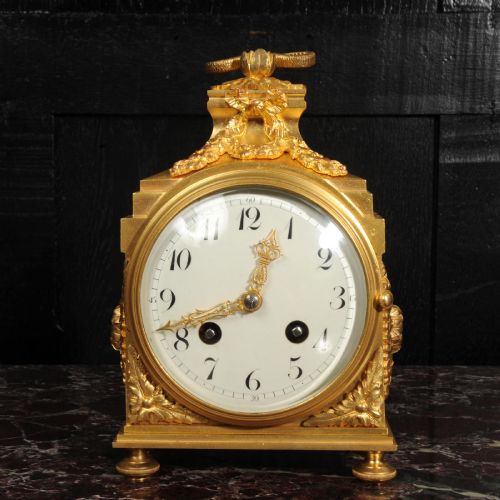
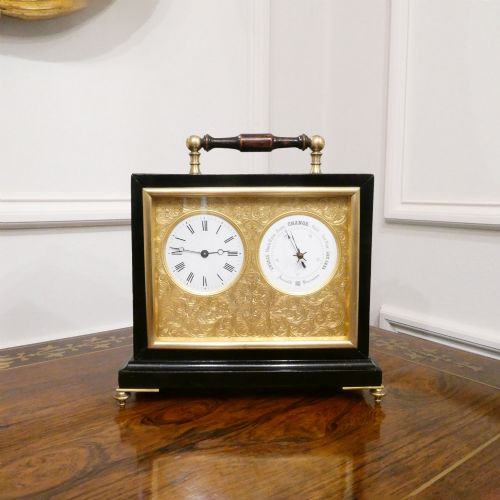
Single appearances include a pendule d'officier, a duplex-escapement clock, a five-minute repeater, a one-year-duration four-glass timepiece, and a compendium with compass and thermometer.
Export and retail routes surface in the titles too: Bombay, Poona, Madras, Calcutta, Rangoon, Philadelphia, New York and Jersey, plus clocks made for the Turkish and Chinese markets.
Around 140 carriage clocks are listed a year on Sellingantiques, and 88 different dealers have handled them.