

Antique English Clocks
English domestic and public clocks, from brass lantern clocks of the 1600s to Art Deco mantel pieces and factory dials, made to keep time in a house, a tavern, an office or a railway station.
What You're Looking At
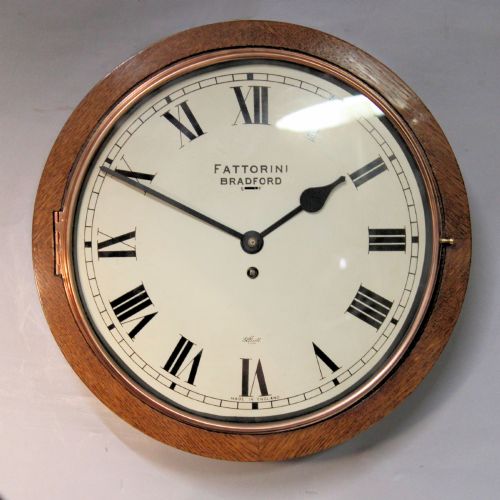
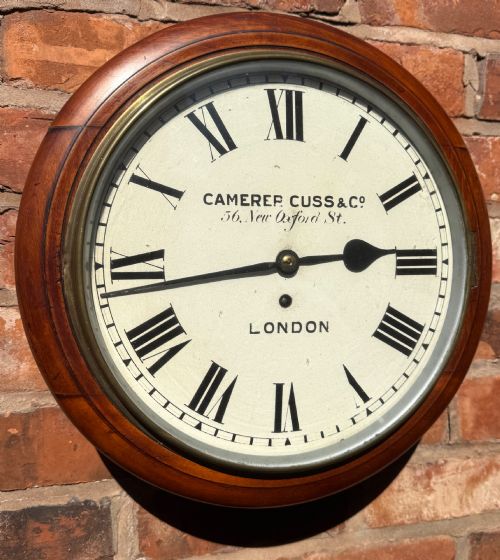
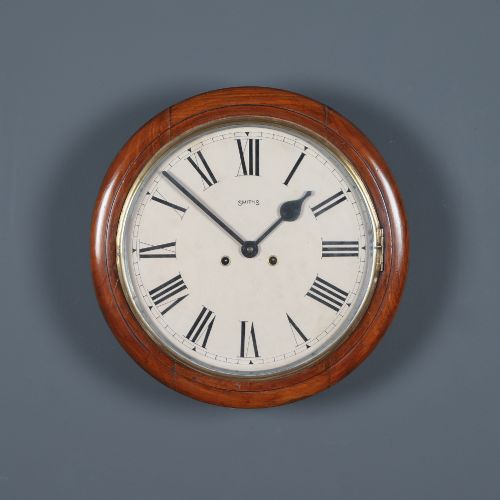
Two things hold this category together: the fusee movement and the wall-hung dial. Fusee is the defining word of the whole archive, and wall and dial run close behind it. The likeliest single encounter is an English fusee wall clock with a circular painted dial in a mahogany or oak case, signed by a provincial maker or retailer.
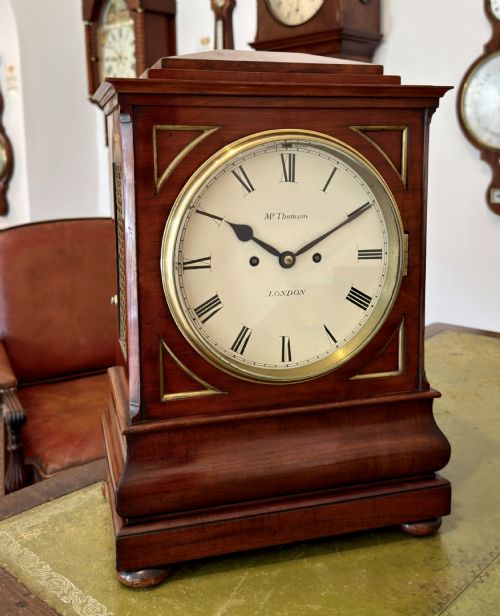
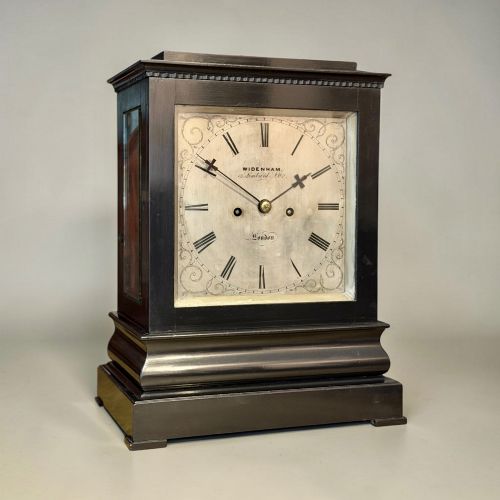
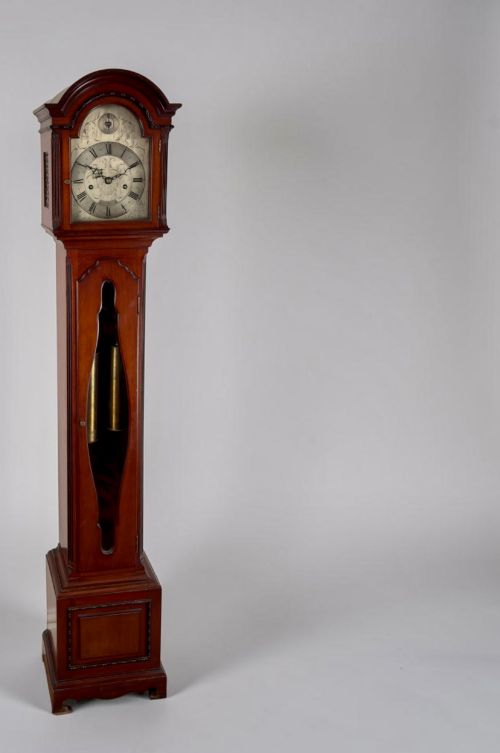
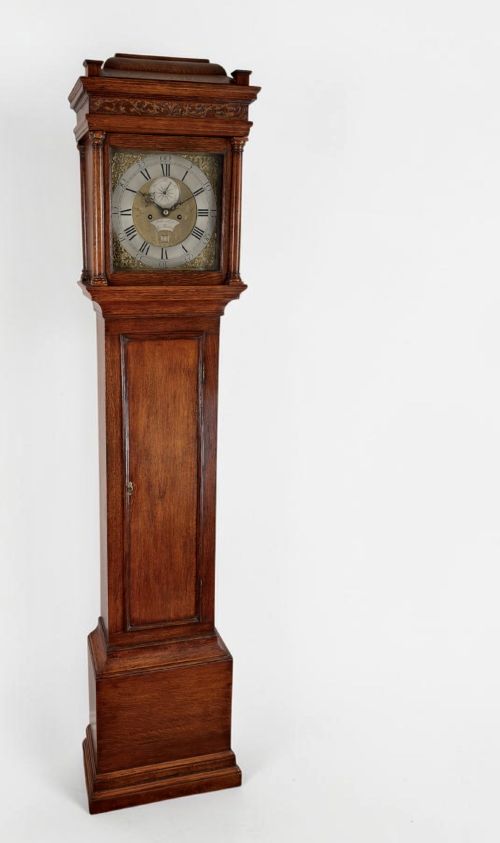
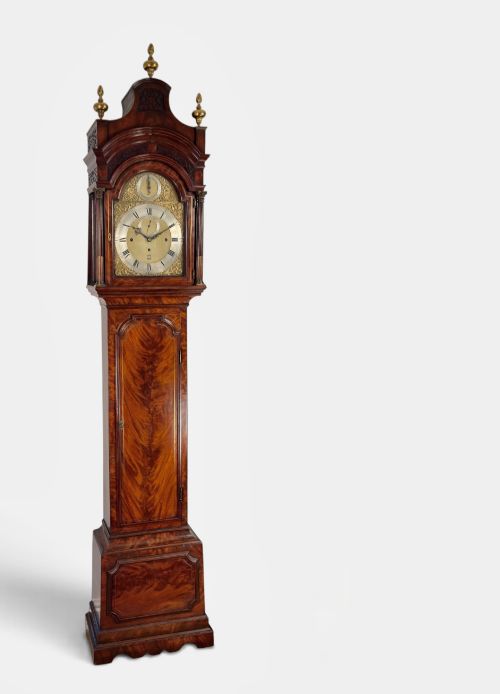
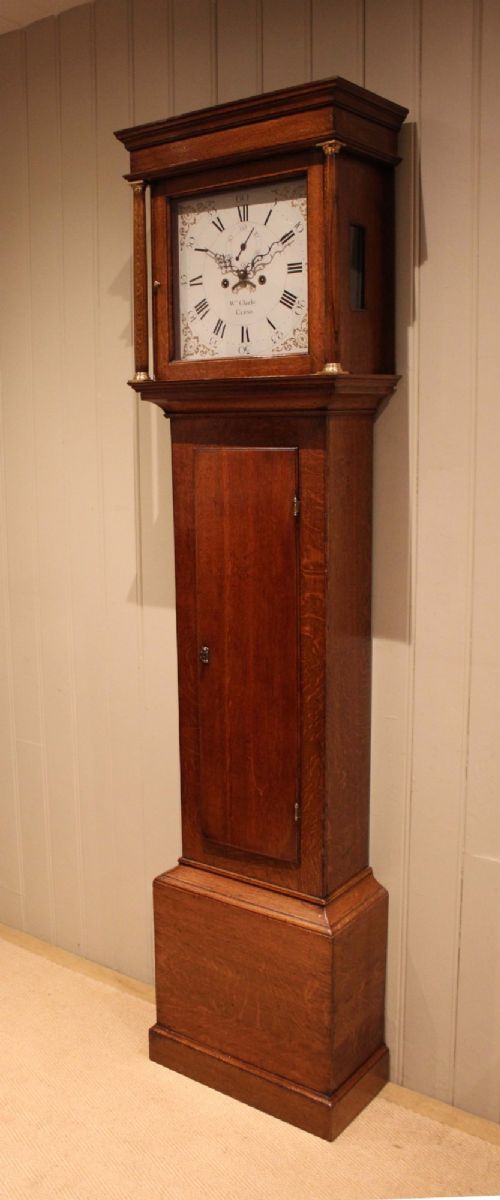
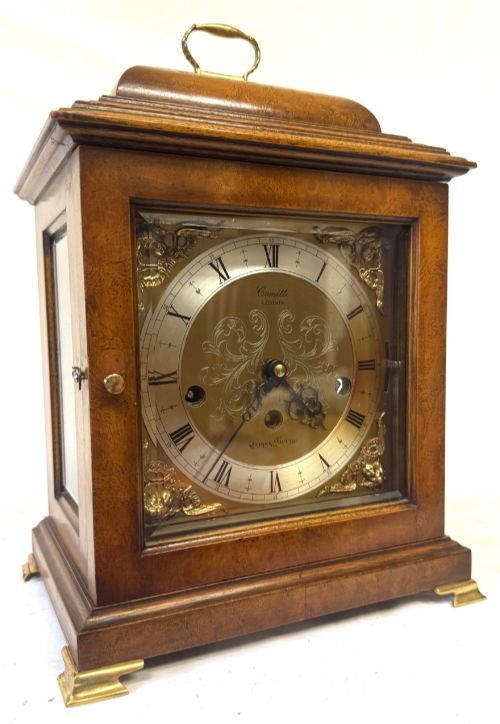
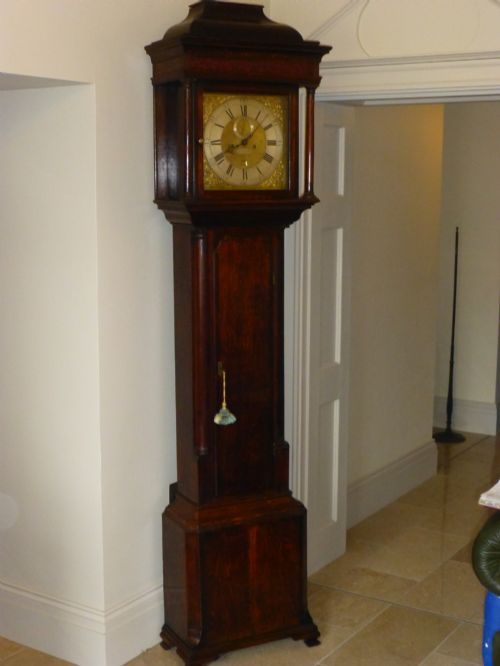
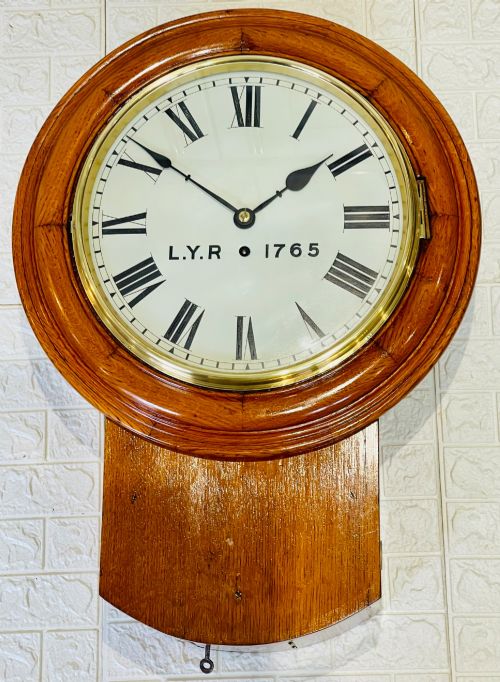
Many of those wall clocks are drop dials, with a box below the bezel housing the pendulum. Dial sizes get quoted in titles more than any other measurement and cluster at 8, 10 and 12 inches, occasionally running up to 14 or 18. '8 day' recurs throughout. Alongside them sit longcase clocks, about one in six of the category, and bracket, table, library and mantel clocks, about one in five.
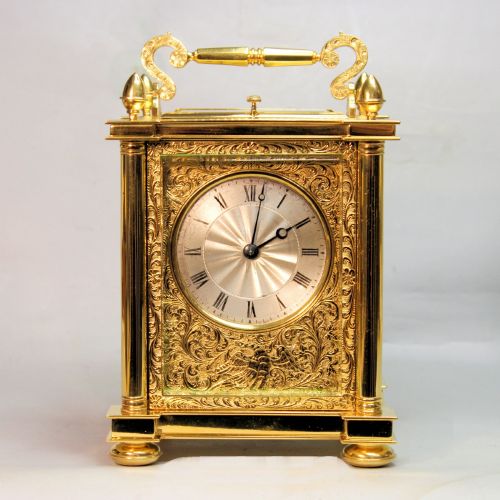
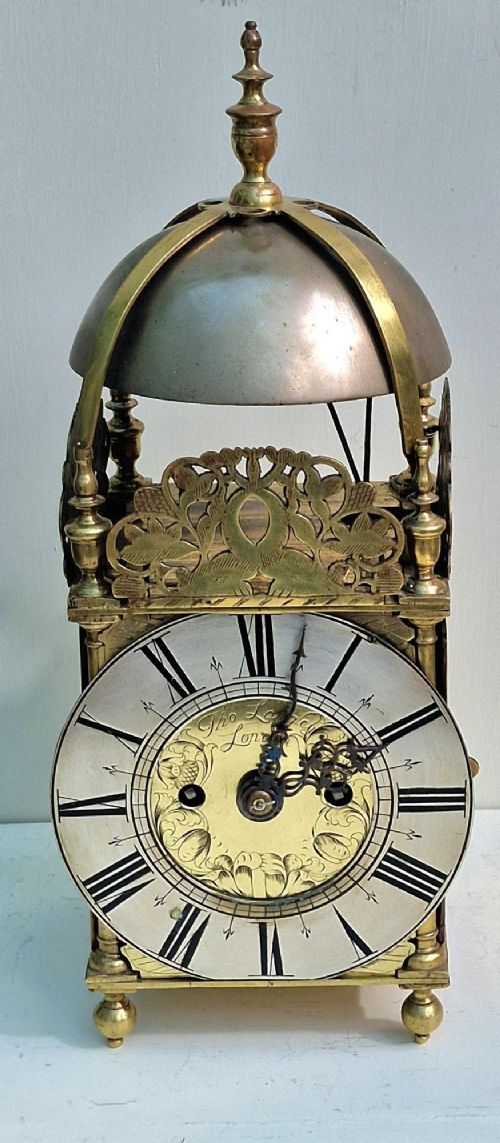
Smaller populations fill in around those: lantern clocks, 27 titles in all and almost every one 17th or early 18th century; skeleton clocks under glass domes; carriage clocks. A separate seam is 20th century, with Art Deco chrome, bakelite, mirror glass and onyx cases, plus factory, GPO, railway, ships' and army-issue wall clocks. English pocket watches also appear under the heading, a small group at the bottom of the range.
Dating is banded more often than exact. Around 406 listings carry a clean year and the field spans 1700 to 1960, but Georgian, Regency, Victorian and '19th Century' account for 270 listings between them and are periods rather than dates. Where years are given they sit in two humps: the long 18th and 19th century run, and a distinct 1920s to 1930s cluster.
What Sets Them Apart
Trains and complication move a clock up. Titles run from single fusee timepieces that tell time only, through twin fusee clocks striking a bell, to triple fusee quarter-chiming on a rack of nine bells. Musical, quarter-repeating, moonphase, automata and regulator clocks all read well above a plain timepiece.
Age and escapement do the same work. Verge escapement, lantern, basket-top and marquetry clocks dated to the 17th century occupy the top of the samples, while 1930s and 1950s cased clocks and mid-century factory dials sit at the bottom. Case timber follows: mahogany leads on count, with oak, walnut and rosewood behind it, and marquetry, ebony, burr walnut, satinwood and japanned cases recur among the highest-priced. Plain oak, chrome and bakelite sit lower.
A signature matters, and London matters most. London appears in 149 titles, and in a larger share of current stock than of the archive as a whole. A signed London longcase or table clock reads differently from an unsigned 'antique bracket clock'. Size cuts the other way than you'd expect on case clocks: miniature grandfathers, small library timepieces and small basket-top table clocks sit high, while 'large' is used mostly of 1930s factory wall clocks.
Retail Price Guide 2026
Typical UK retail prices for english clocks, calculated from the Sellingantiques database of over a million retail prices indexed since 2003. This retail price guide relies exclusively on Sellingantiques data; no external sources or auction records are used, so the figures do not describe the wider market.
English clocks have been listed on Sellingantiques since 2007, with over three hundred through since then.

Dent·Smiths·Perigal & Duterrau
The Antique English Clocks Glossary
- Fusee
- A spring-driven movement with a cone-shaped pulley and a gut line or chain that evens out the pull of the mainspring as it unwinds. The most common word in these titles by a wide margin.
- Drop dial
- A dial clock with a box or 'drop' below the bezel to house the pendulum. Fifty-six titles use the phrase, and it's the shape most people picture as an English wall clock.
- Dial clock
- A round wall clock that is essentially a bezel, dial and movement, with little or no case beneath.
- Timepiece
- In these titles, a clock that tells time only and does not strike. Thirty titles.
- Single, twin, double or triple fusee
- The number of fusee trains. One for timekeeping, two to add striking, three for quarter chiming.
- Lantern clock
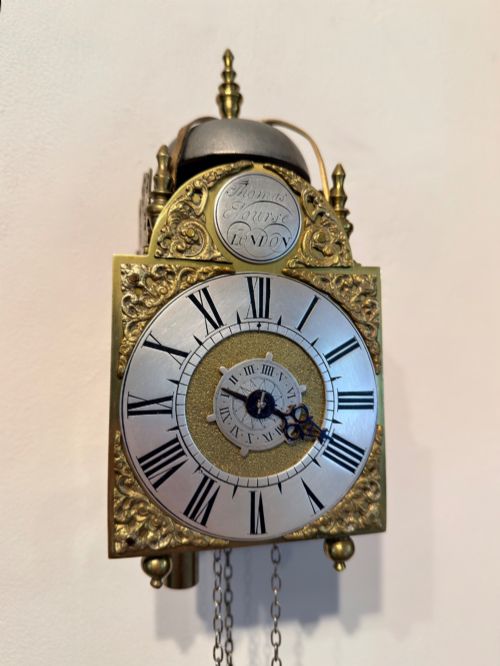
- Early brass weight-driven wall clock with a bell above. Twenty-seven titles, the oldest recurring form in the archive.
Frequently Asked Questions
What does fusee mean on a clock listing?
A fusee is a spring-driven movement fitted with a cone-shaped pulley and a gut line or chain. It evens out the pull of the mainspring so the clock keeps better time as the spring runs down.
It's the single most common word in this category, and it appears in a slightly larger share of current stock than of the archive overall. Chain fusee is called out separately in a number of titles.
Which type turns up most often?
The English fusee wall clock, with a circular painted dial in a mahogany or oak case. Wall appears in 203 titles and dial in 183, and together they make up roughly a third of the category.
Many are drop dials, with a case below the bezel for the pendulum. Longcase clocks are about one in six, and bracket, table, library and mantel clocks about one in five.
How old are English clocks on Sellingantiques?
The dated field runs from 1700 to 1960, and the sampled titles stretch further at both ends. A lantern clock of around 1615 sits at the very top; mid-century factory, ships' and army-issue wall clocks sit at the bottom.
Much of the dating is banded rather than exact. Georgian, Regency, Victorian and '19th Century' cover 270 listings and are period labels, not years.
Are the signatures on dials famous makers?
Mostly not. Only three maker names clear three dealers across the whole archive. The hundreds of other signatures belong to single-dealer provincial makers and retailers.
The wall-clock population reads like a directory of English towns: Kingsbridge, Taunton, Swindon, Minehead, Clevedon, Evesham, Kirkby Lonsdale and dozens more, a signature apiece.
Why are pocket watches in this category?
Thirty-seven titles are English pocket watches, listed under the clock heading. English Lever, half hunter and full hunter all appear, often in silver cases.
They sit almost entirely at the bottom of the range. A pocket watch stand and a watch chain with fob turn up alongside them.
Do railway and factory clocks appear?
Yes, as a small but distinct seam. GWR, LMS, NER, British Railways, the General Post Office, London County Council, the London Passenger Transport Board, RAF and British Army issue all appear on dials.
These belong with the 20th-century group, roughly a sixth of the category, which also takes in Art Deco chrome, bakelite, mirror glass and onyx cases. They sit at the bottom and lower middle of the range.