
Antique Bracket Clocks
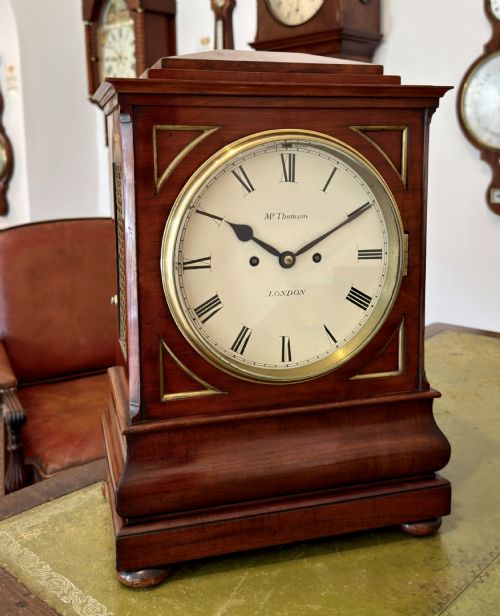
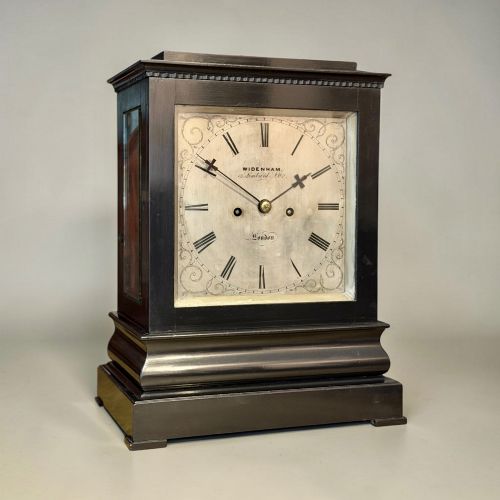
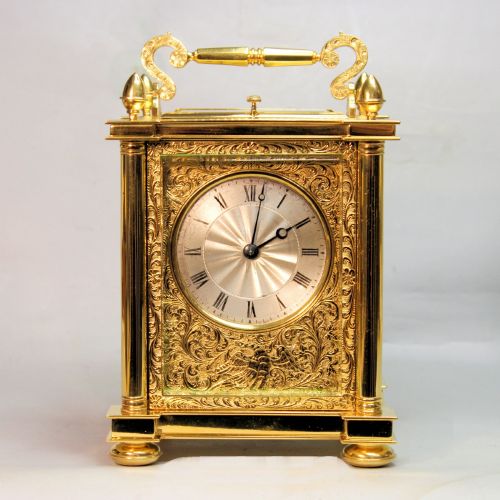
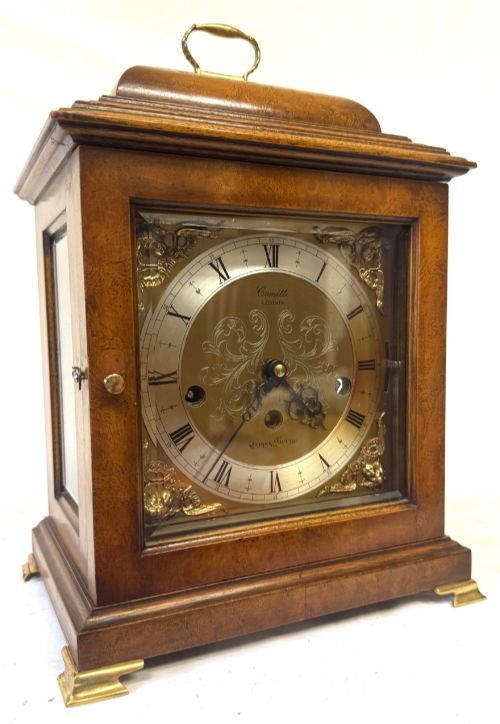
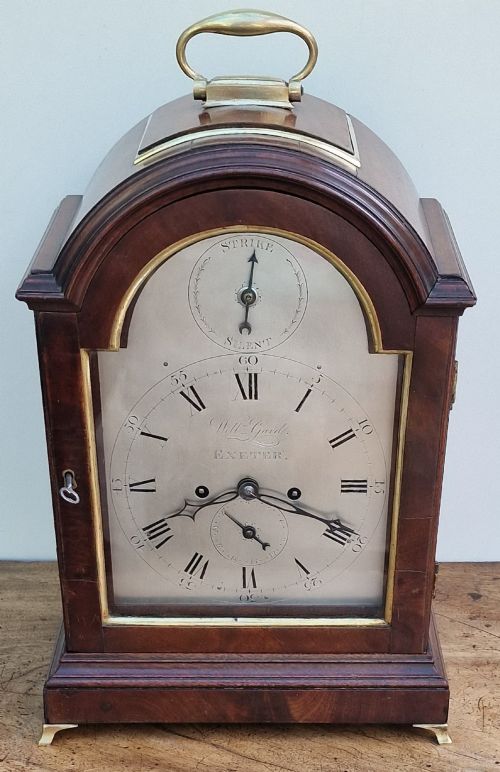
A spring-driven table clock in a wooden or veneered case with a carrying handle and a shaped top, built to stand on furniture rather than hang from the wall.

What They Are
The bracket or table clock is the English spring-driven house clock that appeared in the later 17th century. A coiled spring and a short pendulum let a clock sit on a table or shelf instead of hanging from weights, and many were sold with a matching wall bracket, which is where the name comes from. Only a minority reach market with that bracket still attached.
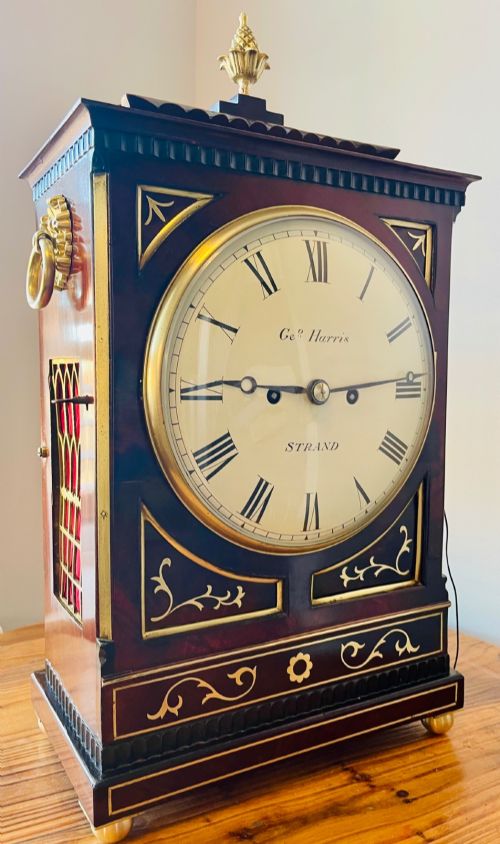
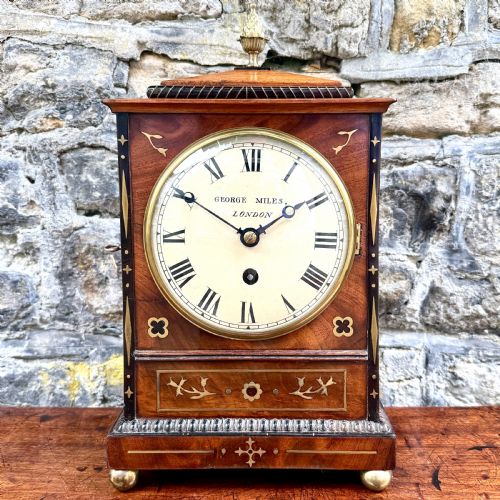
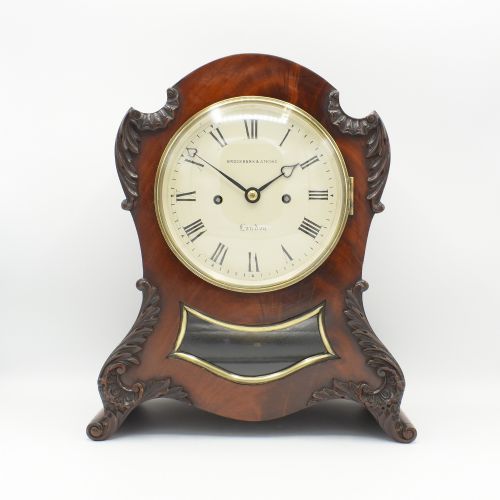
The clock you are most likely to meet on Sellingantiques is a mahogany-cased English one with a fusee movement, dated somewhere in the long 19th century. Mahogany is the commonest case word in the archive and London the commonest place. Regency and Georgian labels outnumber Victorian and Edwardian, though both those words appear as styling as much as dating.
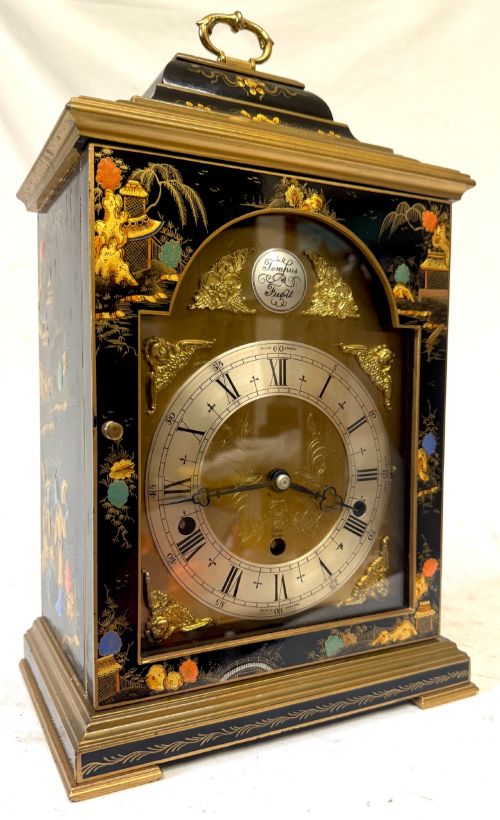
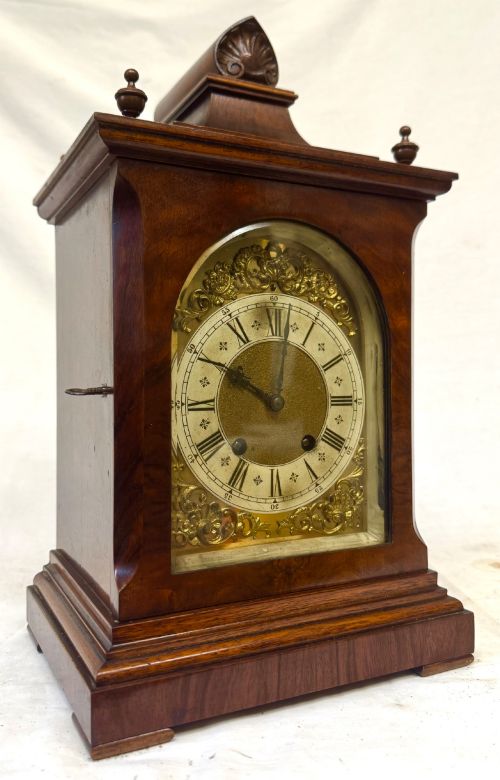
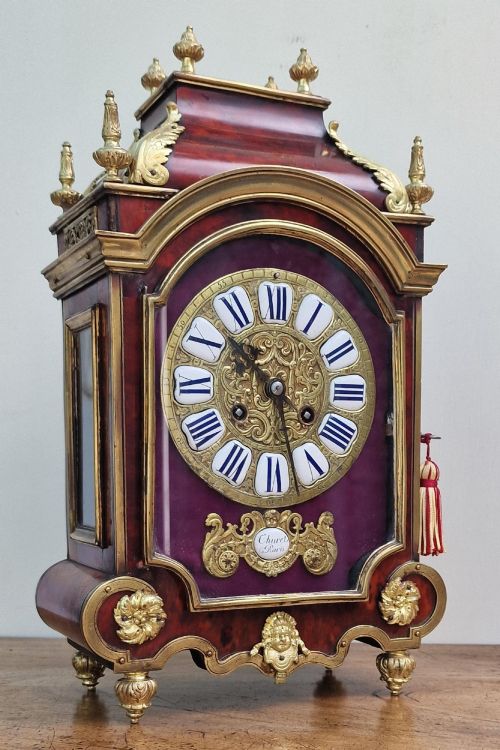
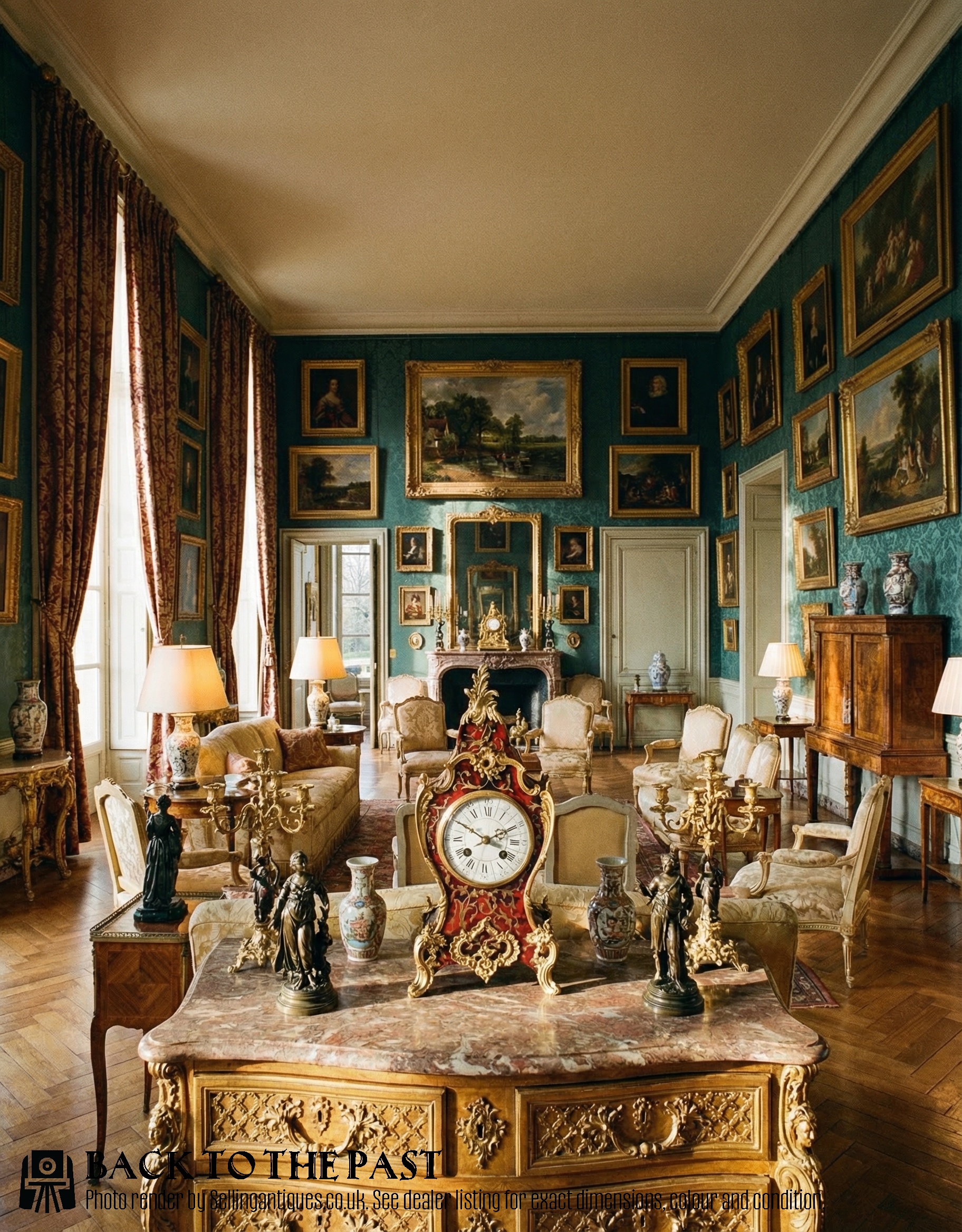
Two other groups sit alongside it. Later Victorian, Edwardian and German chiming cases carry ting-tang quarters or the Westminster chime, and cluster in the 1880s to 1900s. French cases of bracket form make up roughly one in ten to one in seven, largely boulle work in brass and tortoiseshell.
Titles cannot settle on a name. Of 1,117 listings, 217 say mantel, 49 mantle, 86 table and 24 library, and several use three at once. The same clock reaches market under two or three headings, so a bracket clock described as a mantel clock is usually the same object, not a different one.
What Sets Them Apart
Movement does most of the work. Verge escapements appear in 70 titles and sit almost entirely among the 18th-century and Georgian cases, and every one of the highest-priced sampled titles that names an escapement names that one. At the other end, the cheapest titles name no escapement at all. Number of trains pulls the same way: single fusee timepieces sit low and mid-range, twin and double fusee mid to upper, while triple fusee, three-train and racks of eight or nine bells turn up only a handful of times, always near the top.
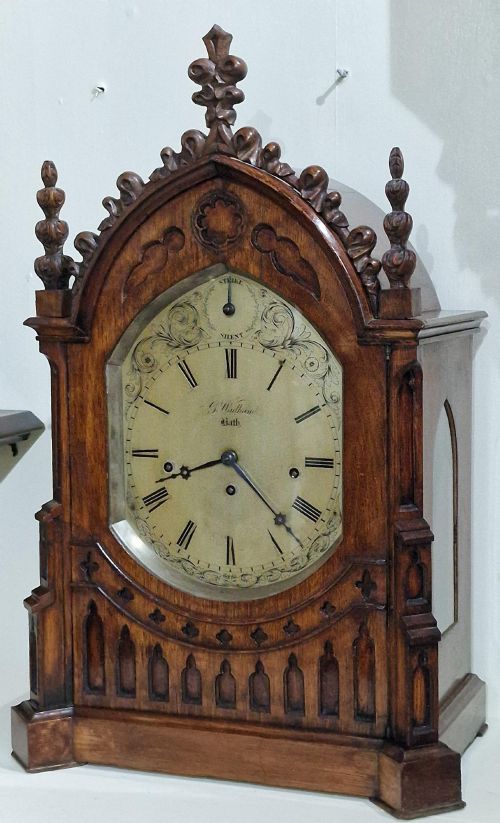
A signature counts, and a London signature counts more. London appears in about a fifth of titles, and named-maker clocks concentrate in the upper half of the range while the lowest are largely unsigned descriptive listings. Four in five titles say nothing about a city at all, so a plain mahogany case with no name on the dial is the ordinary form of the category rather than the exception.
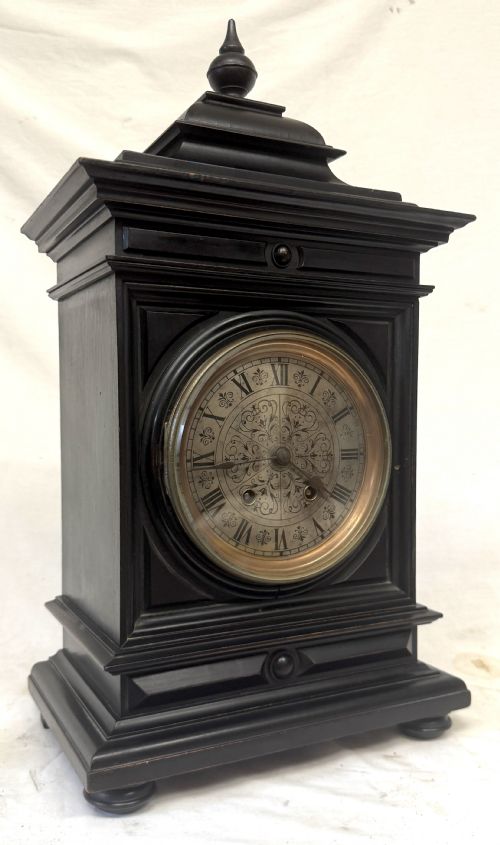
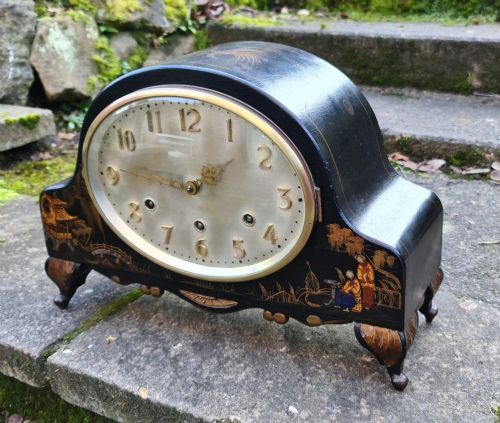
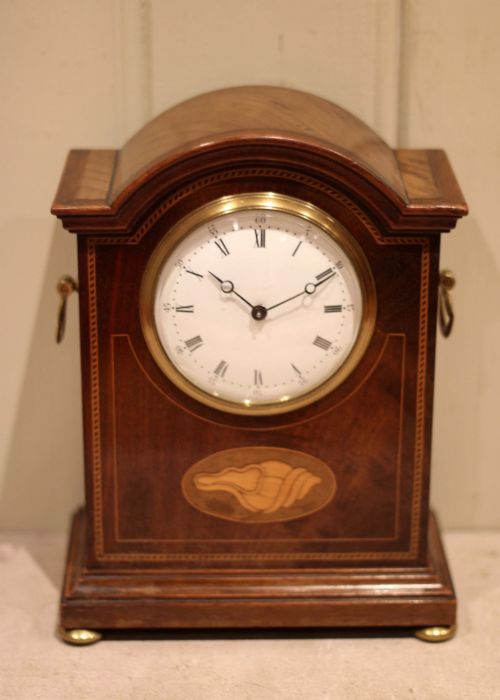
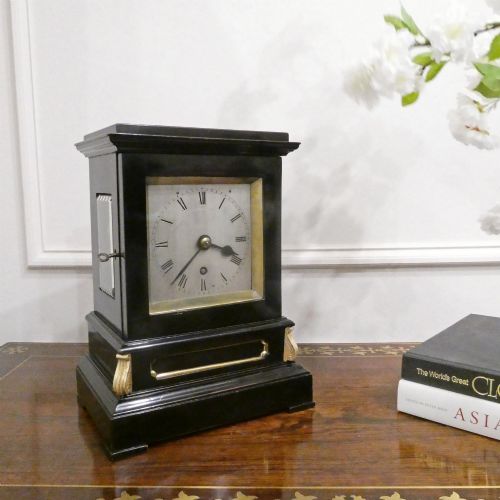
Surface separates the rest. Mahogany is the baseline; rosewood, burr walnut, boulle, ebonised finishes, chinoiserie and brass inlay run across the whole range, while lacquer, tortoiseshell, satinwood and yew turn up only at the top. Small size behaves differently from what you would expect. 'Small', 'miniature' and 'of small proportions' appear 78 times against 26 for large, and genuinely miniature cases sit at both the cheapest and the highest-priced ends.
Retail Price Guide 2026
Typical UK retail prices for bracket clocks, calculated from the Sellingantiques database of over a million retail prices indexed since 2003. This retail price guide relies exclusively on Sellingantiques data; no external sources or auction records are used, so the figures do not describe the wider market.
The most expensive bracket clock ever sold on Sellingantiques was a quarter striking clock by Watson of London, in January 2026.

Lenzkirch·Dent·Barraud·Payne & Co·McCabe·John Taylor of London·Walker and Hall
The Antique Bracket Clocks Glossary
- Fusee
- The tapered, grooved drum-and-line drive that evens out a mainspring's pull as it unwinds. It appears in 224 titles, about a fifth of the category.
- Twin or double fusee
- Two fusees, so the clock strikes as well as goes. Twin fusee appears 55 times and double fusee 46.
- Single fusee
- One train only, a timepiece that does not strike. 'Single' appears 27 times and 'timepiece' 28.
- Verge
- The earliest escapement type in the archive, in 70 titles, almost always on 18th-century and Georgian cases.
- Ting tang
- Quarter striking on two bells or gongs, giving a two-note chime. In 41 titles, against 30 for Westminster and 24 for Westminster chime.
- Pad, bell, chamfer and lancet top
- The case profiles named again and again in titles; 'top' appears 77 times.
Frequently Asked Questions
What does fusee mean on a bracket clock?
It is the drive: a tapered grooved drum with a line running to the mainspring barrel, which evens out the spring's pull as it runs down.
The word is in 224 of the listings, so about a fifth of the category names it outright. Twin or double fusee means two trains, one to go and one to strike.
Are bracket clocks always English?
No. English fusee clocks are the largest single group, but French cases of bracket form run to roughly one in ten to one in seven, largely boulle work in brass and tortoiseshell.
German chiming clocks make up a substantial second group, concentrated in the 1880s to 1900s. Swiss and Dutch cases turn up as single sightings.
Why is it called a mantel clock in some listings?
Because dealers double-label the same object. Of 1,117 listings, 217 say mantel, 49 mantle, 86 table and 24 library, and several use three of those in one title.
Library, table and boardroom are cross-labels for the same case rather than separate types.
Do bracket clocks come with the wall bracket?
Some do, but it is a minority. 'Wall' appears in only 26 of the titles, about two in a hundred.
The bracket is where the name comes from, not something the form depends on. These clocks were made to stand on furniture.
How old is a clock described only as 19th Century?
Take it as a century-wide statement. Only 434 of the 1,117 listings carry a clean year, and '19th Century' is the largest single label at 193 listings, with '18th Century' on 88 more.
Regency and Georgian, at 128 and 116, are used as styling words as well as dates, and appear on later cases made in that taste.
Are small bracket clocks worth less?
Not as a rule. 'Small', 'miniature' and 'of small proportions' occur 78 times against 26 for large, and small cases sit at both ends of the range.
Several of the highest-priced sampled titles are miniature ones.