


Antique French Clocks
French domestic clocks made from the middle of the eighteenth century onward: striking clocks for the chimneypiece and portable brass carriage clocks, built in Paris and the provinces for home use and for export.
What You're Looking At
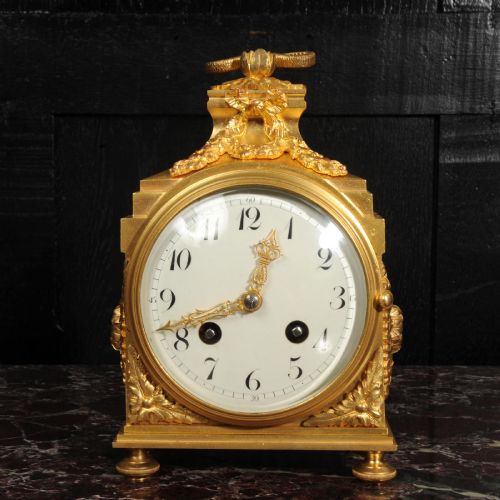
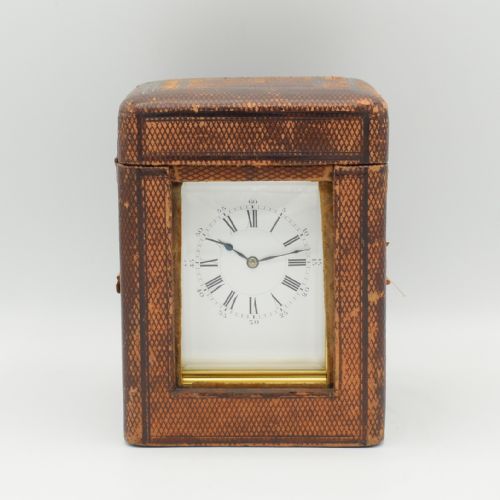
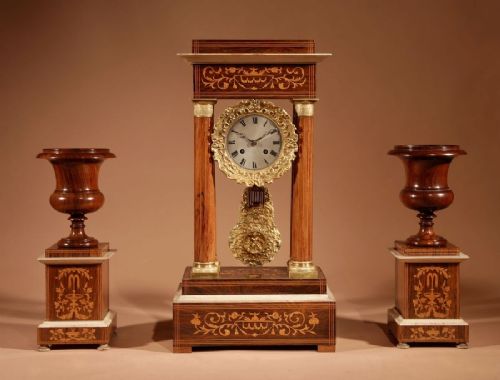
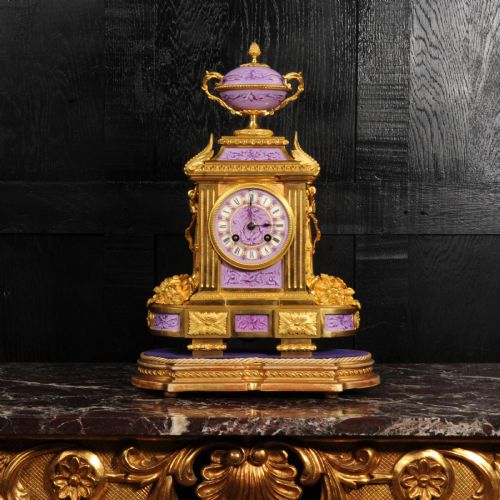
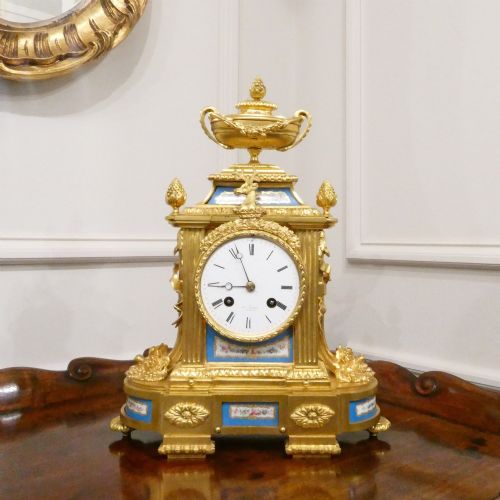
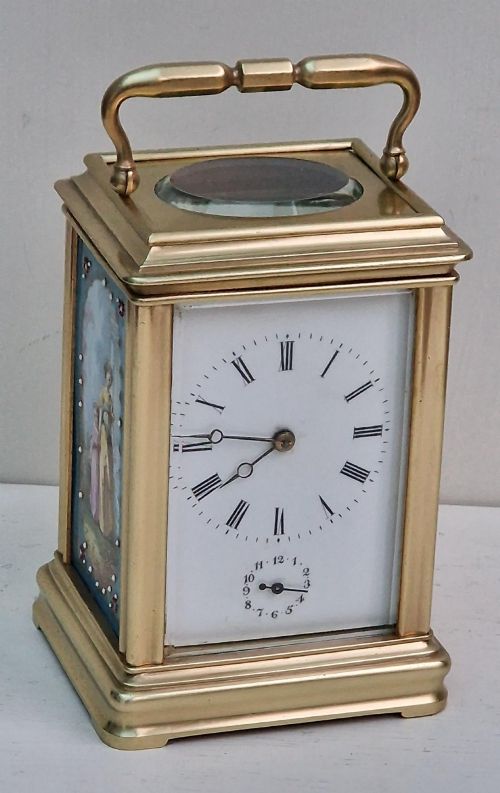
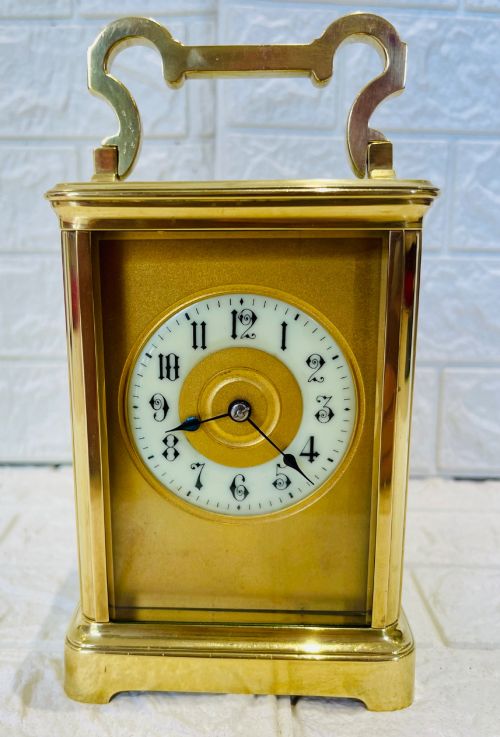
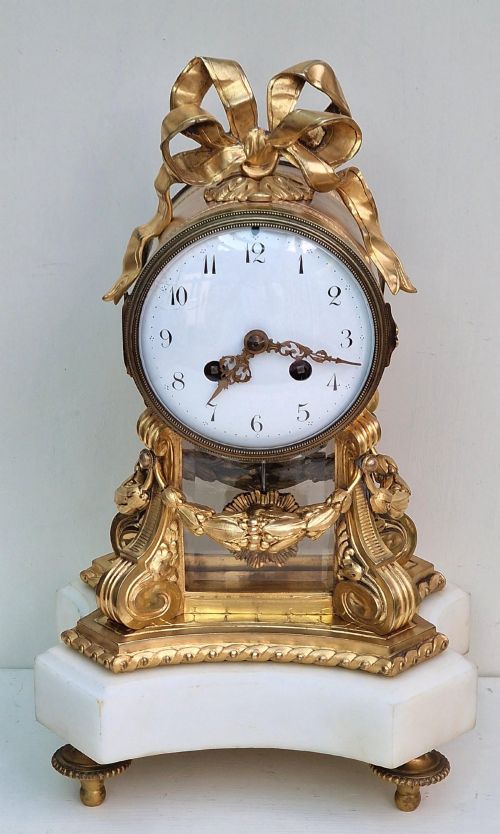
Two forms carry the category. Mantel clocks lead on title counts, usually eight-day striking movements in cases of gilt bronze and ormolu, marble or boulle. Carriage clocks follow close behind, most often described simply as a French brass carriage clock in a glazed case with a handle.
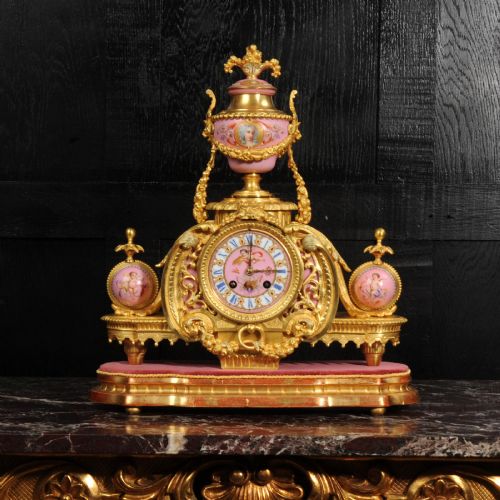
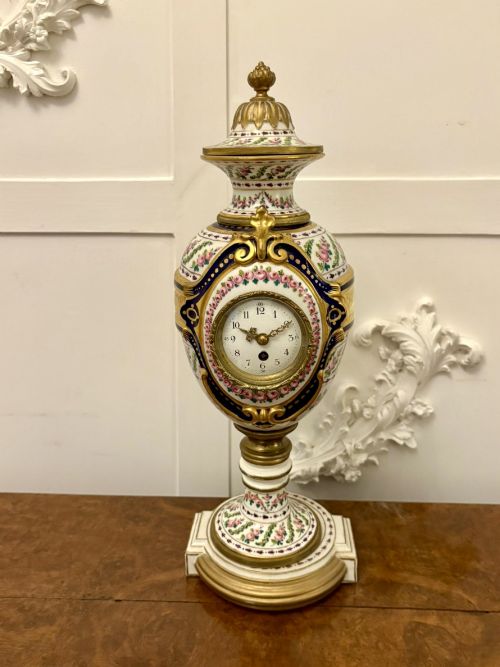
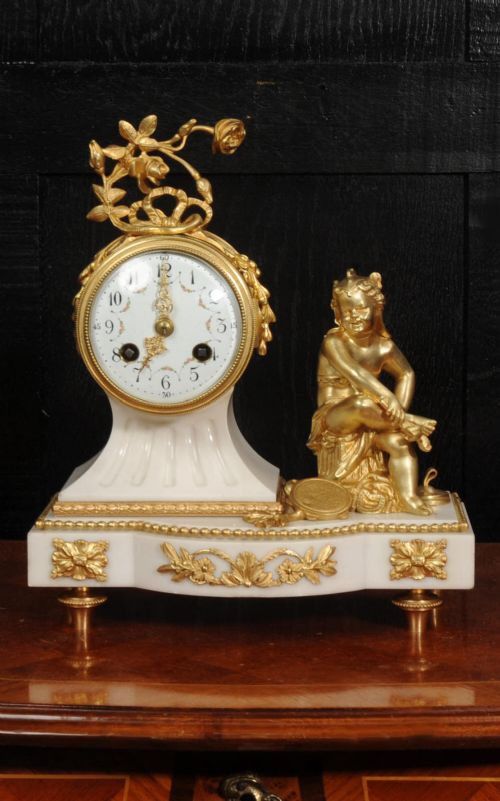
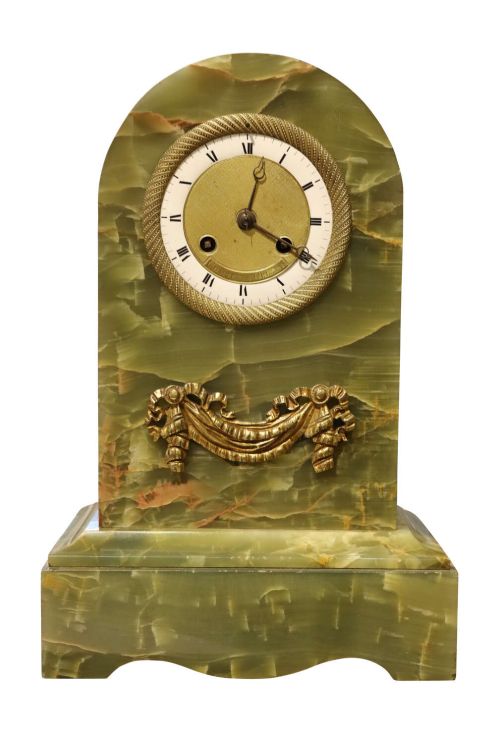
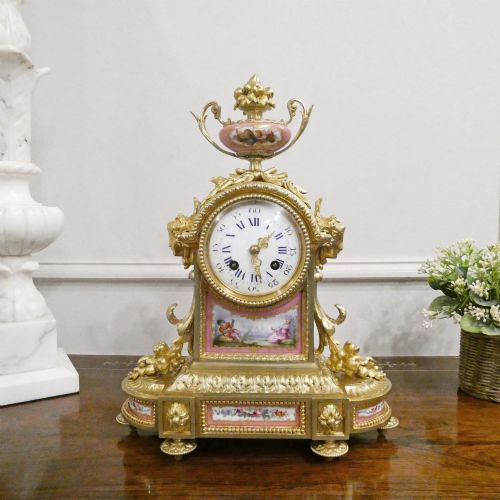
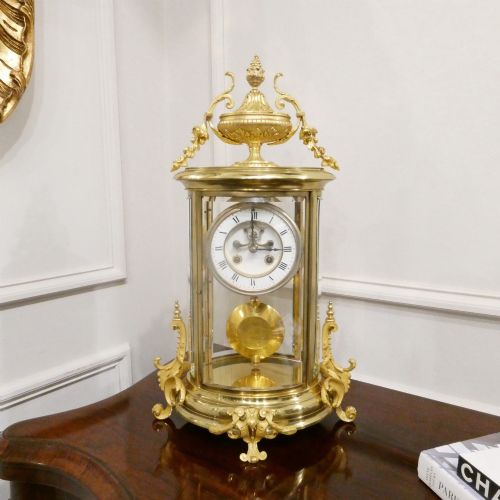
Case material is where the spread shows. Gilt bronze, ormolu and porcelain mounts run through the largest mantel group, with figural, cherub and animal subjects recurring. Black slate and coloured marble make up another sizeable block, boulle tortoiseshell-and-brass another, and four-glass cases, sometimes called crystal regulators, another again. Wall forms such as the cartel and the comtoise turn up, but in small numbers.
Dates entered by dealers run from 1750 to 1960, and the weight sits in the 1860s to 1900s, with the 1890s and 1880s almost level as the busiest decades. Around a fifth of the archive is dated only to a century or a reign rather than a year. A separate twentieth-century tail exists in the 1930s Bakelite, chrome and marble Art Deco clocks and alarms.
Around 255 French clocks are listed on Sellingantiques in a year, handled by 176 different dealers, one of the broadest dealer spreads of any clock form. Odd single forms surface too: a lighthouse clock, a ships-wheel clock, a night timepiece, an officer's campaign clock, a capucine.
Where The Range Sits
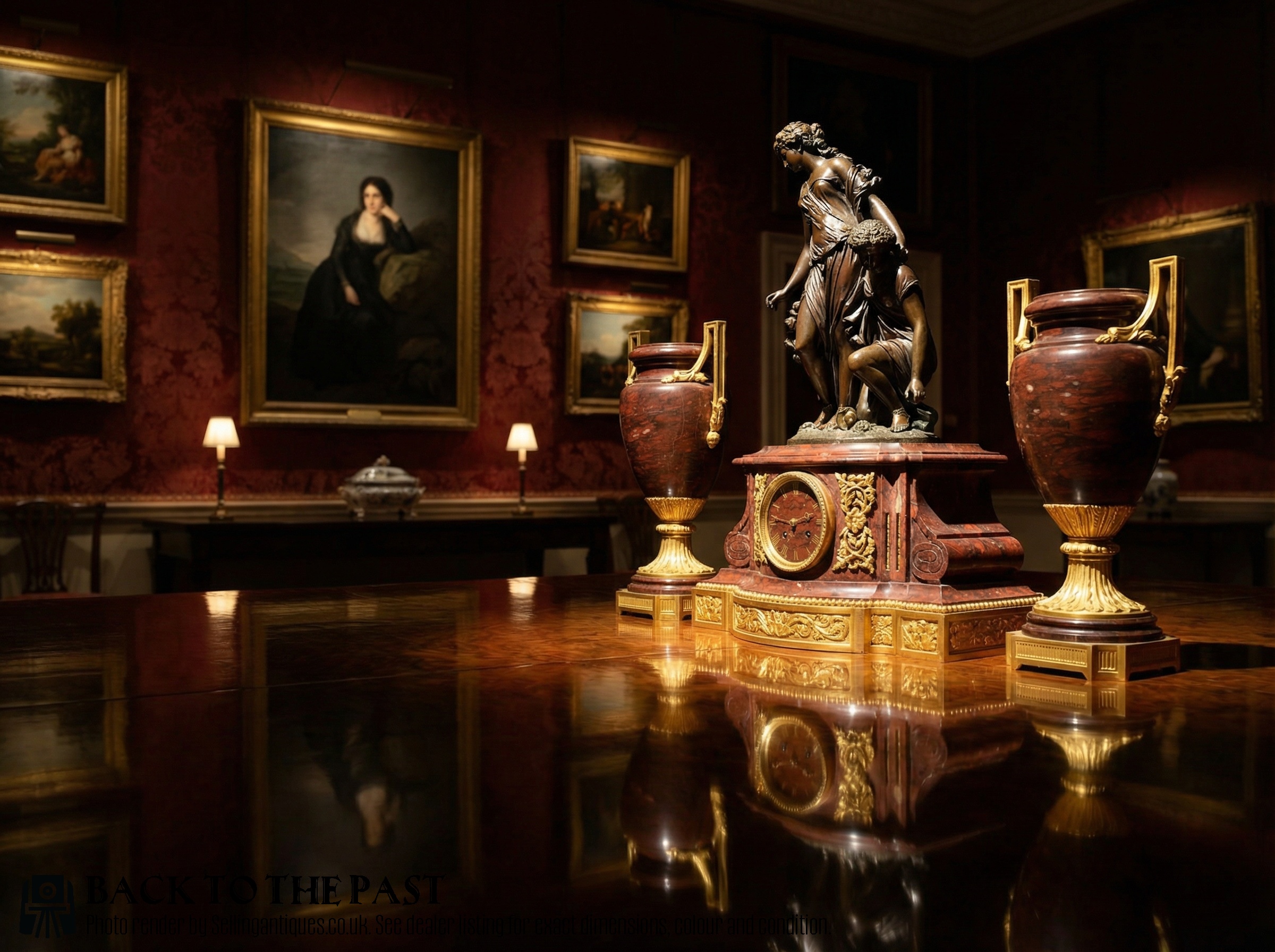
Material sorts the category before anything else. Gilt bronze, ormolu and porcelain-mounted cases cluster at the top, and the very large sets sit above everything: baroque garnitures, figural mantel clocks of exhibition scale, a Louis XV-style ormolu grandfather clock. Plain brass carriage clocks, slate and 1930s Bakelite alarms anchor the bottom.
In a carriage clock the movement does the work. Repeating, striking, alarm and grande sonnerie push a clock upward, and five-minute repeaters appear only at the top of the range. Plain timepieces, which show the time and nothing more, sit lower; 53 titles say so outright.
Two other things count. A named Paris maker on the movement lifts a clock above its unsigned equivalent, and so does completeness: a garniture with its matching candelabra or urns, or a clock still with its original travel case, key or glass dome. Scale matters at both ends, with large and giant examples at the top and miniature carriage clocks spanning the middle.
Retail Price Guide 2026
Typical UK retail prices for french clocks, calculated from the Sellingantiques database of over a million retail prices indexed since 2003. This retail price guide relies exclusively on Sellingantiques data; no external sources or auction records are used, so the figures do not describe the wider market.
19th Century is the period label used most on Sellingantiques for French clocks, with the 1890s next and the 1880s third.
Japy Freres·Samuel Marti·Drocourt·Leroy·Vincenti·Achille Brocot·Charles Hour·Richard & Co Paris·Raingo Freres
The Antique French Clocks Glossary
- Mantel clock
- A shelf clock for a chimneypiece. Dealers spell it both ways, and 261 titles say mantle for the same object.
- Carriage clock
- A portable spring-driven clock in a glazed brass case with a carrying handle on top.
- Ormolu
- Gilded bronze or gilt metal, used for mounts and whole cases. The word appears in 367 titles.
- Four glass
- A mantel clock glazed on all four sides, so the movement is visible from any angle. Often called a crystal regulator.
- Garniture
- A clock sold with matching side pieces, usually candelabra or urns. 104 titles name one.
- Repeating
- Carriage-clock striking that can be sounded again on demand by a button. 87 titles carry it.
Frequently Asked Questions
What is a boulle clock?
Boulle is tortoiseshell inlaid with brass, or brass inlaid with tortoiseshell, worked into the case. It appears in 138 titles on Sellingantiques, and 73 of those are mantel clocks.
The form runs large. One boulle clock in the archive is given as over four feet high, another mantel example at 86cm.
Do all French carriage clocks strike?
No. Some are timepieces, showing the time only, and 53 titles say so.
Among those that do more, striking, repeating and alarm work are all common. Repeating appears in 87 titles, alarm in 67.
Which period do most French clocks come from?
The bulk falls between the 1860s and the 1900s. The 1890s and 1880s are almost exactly level as the busiest decades, with the 1900s close behind.
Pre-1800 dating is uncommon, usually entered as "18th Century" on individual pieces rather than a year. At the other end, the 1930s account for a run of Art Deco Bakelite, chrome and marble clocks.
What is a cartel clock?
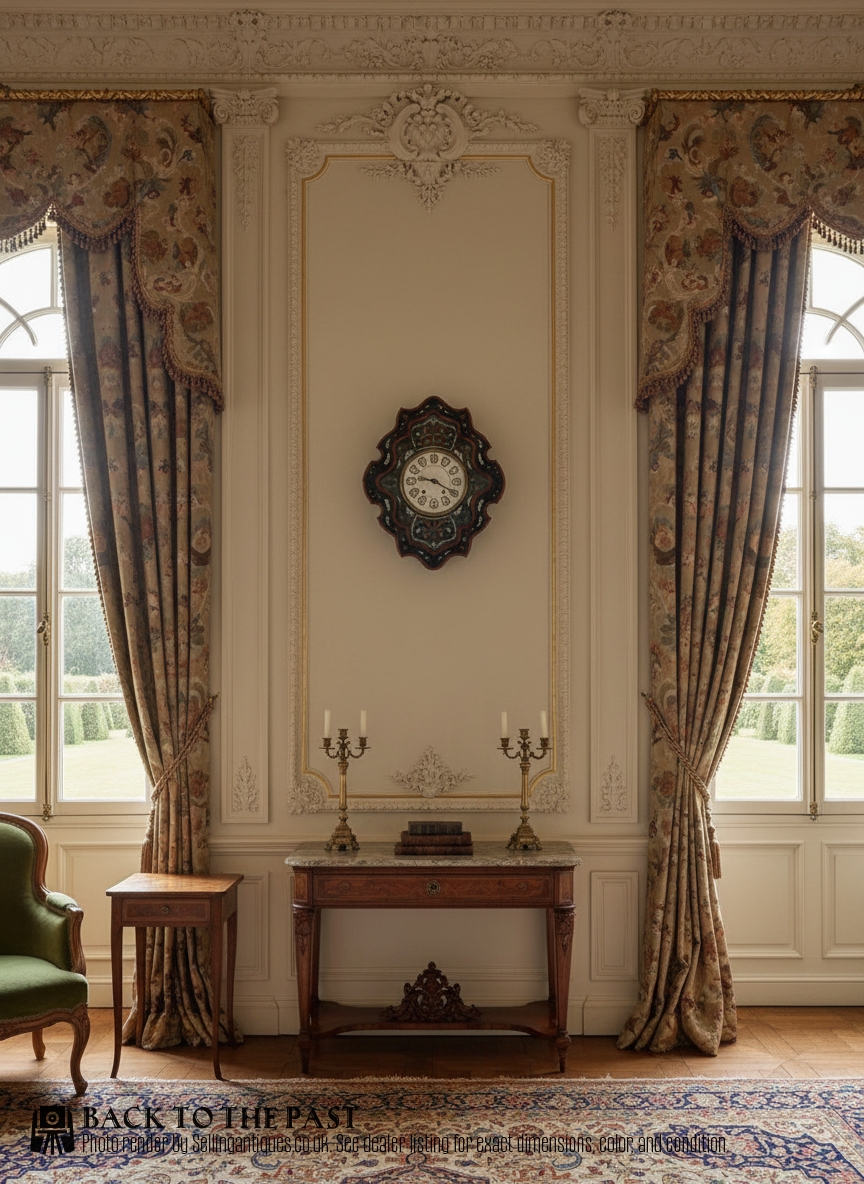
A cartel is an ornate cast wall clock, usually in gilt bronze, hung rather than stood. Sixty-four titles use the term.
Wall forms as a whole are a small minority of the category, alongside comtoise and dial clocks. Sizes can be substantial: one cartel in the archive is recorded at 52 inches.
Why are some listings dated only 19th Century?
Dealers enter a date when the piece supports one. A full 393 listings on Sellingantiques are dated only "19th Century" and a further 178 only "Victorian".
That leaves roughly a fifth of the archive with no single year attached, while 1,802 listings do pin a piece to one.
How does a garniture differ from a single clock?
A garniture is a clock with matching side pieces, most often candelabra or urns, made and sold as a set. 104 titles name one.
Sets that still have their side pieces sit higher in the range than the clock alone, and the same is true of clocks retaining an original case, key or glass dome.