


Antique Dial Clocks
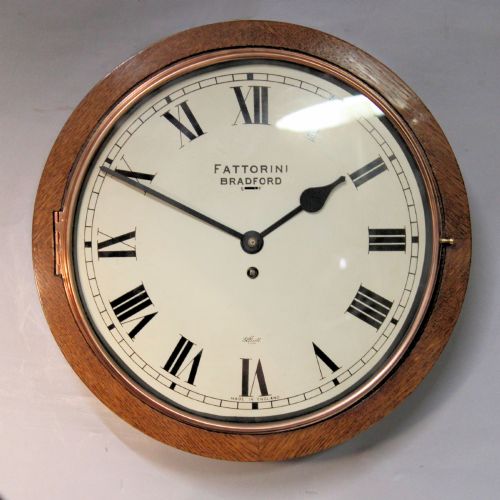
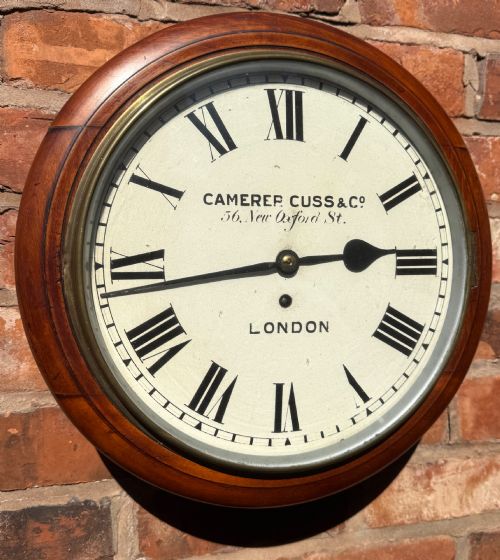
A dial clock is a round-faced English wall timepiece, usually fusee-driven in a turned mahogany or oak bezel and box, made to be read across a tavern, office, schoolroom or station platform.
What Is A Dial Clock?
The round wooden-bezel wall dial grew up in Britain in the eighteenth century as a plain, legible clock for public rooms, where a big circular face mattered more than a carved case. The fusee-driven version became the standard commercial and institutional wall clock through the nineteenth century, and that is the core of this heading.
The form you'll meet most often is a mahogany-cased fusee wall clock with a painted round dial of eight to fourteen inches, single fusee, signed for a provincial retailer. Titles repeat the same shape over and over: a maker or a town name, then "Fusee Dial Wall Clock". Wall, fusee and mahogany are the three commonest words in the whole category.
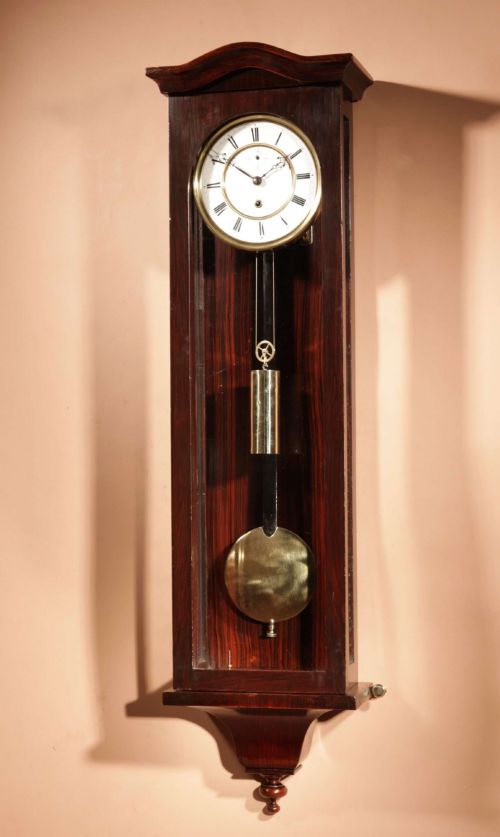
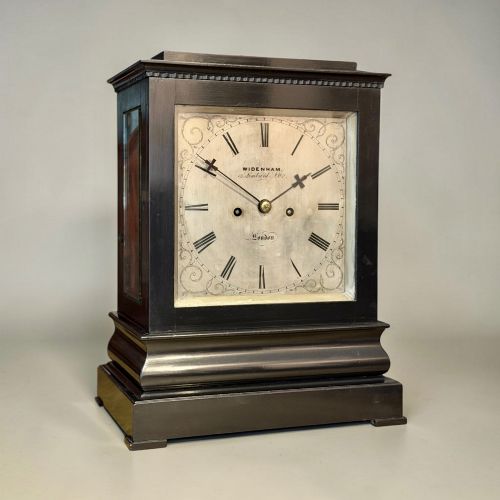
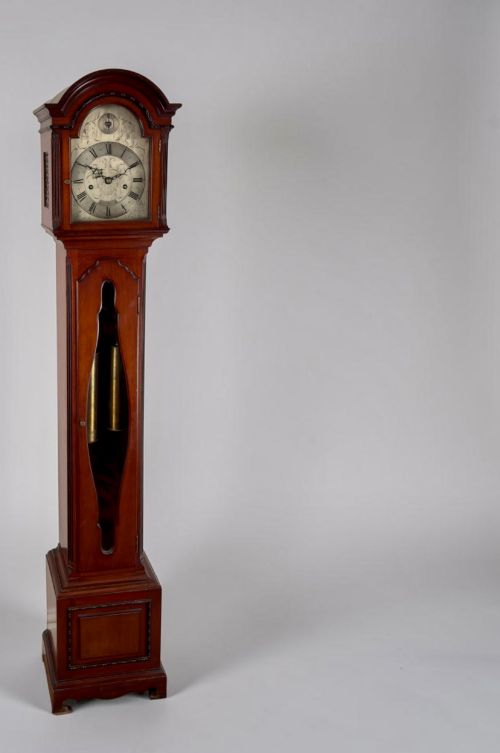
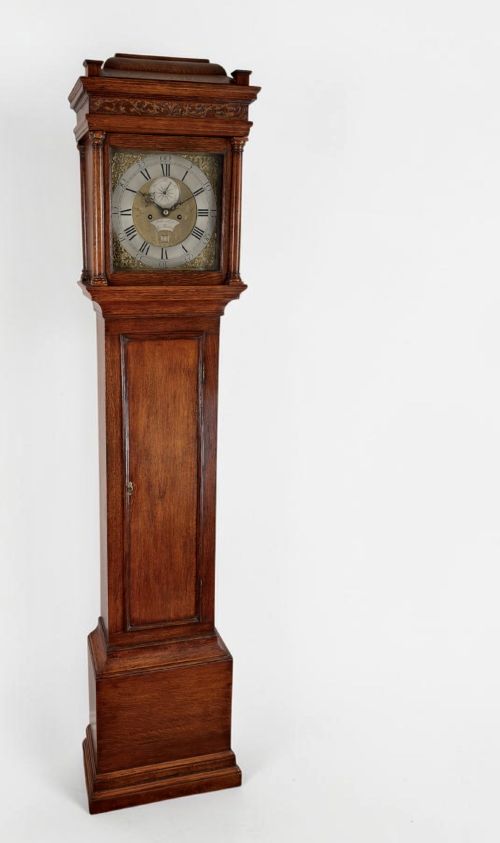
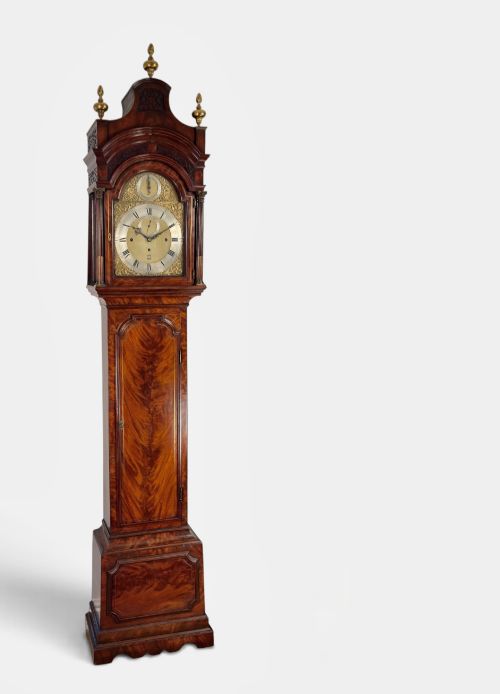
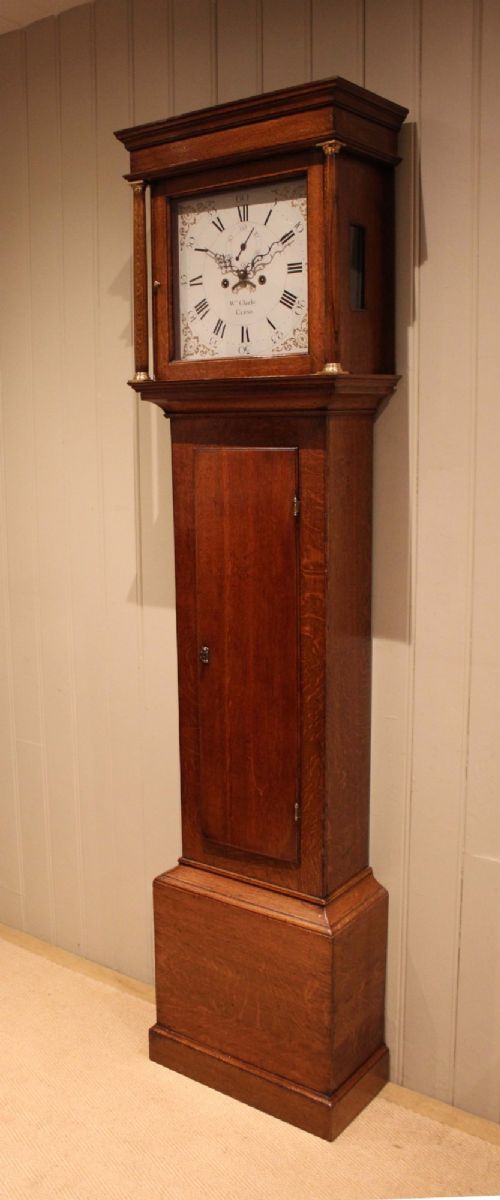
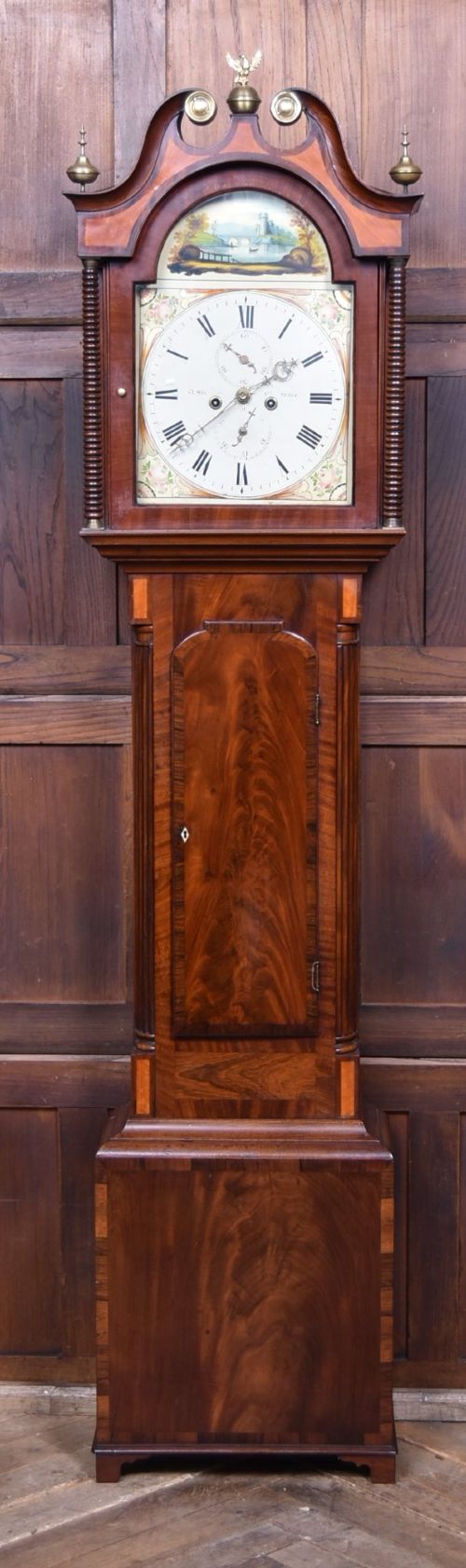
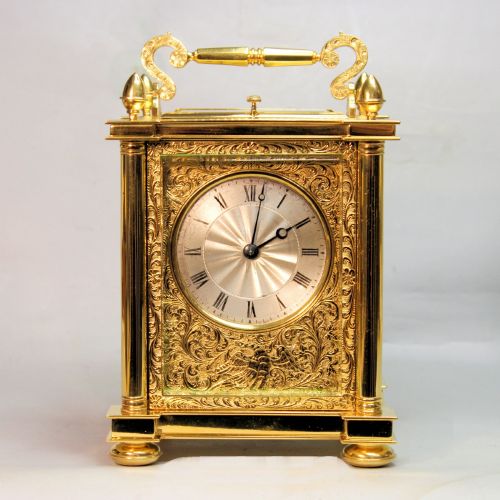
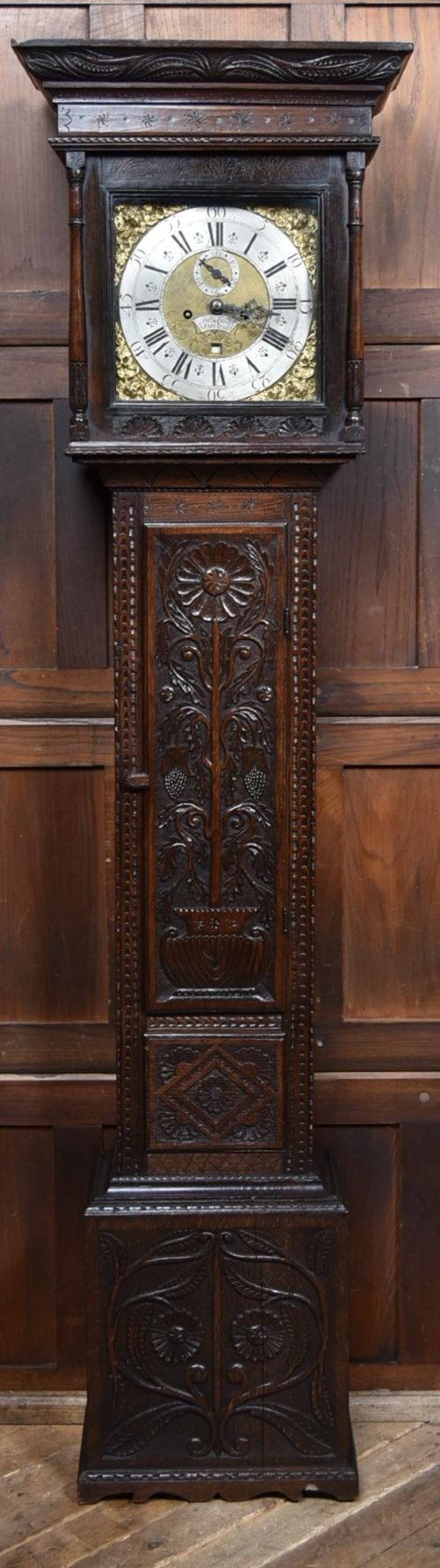
Around that core sit the drop dials and trunk dials, with a boxed extension below the face for a longer pendulum, often octagonal, sometimes rosewood with brass inlay. Longcase and grandfather clocks with named dials, brass, arch, painted or moon, account for about a fifth and dominate the live stock. Carriage clocks make up roughly one in ten, and French and English mantel and bracket clocks about one in eight.
Dating is dealer shorthand as much as fact. The dated field runs from 1700 to 1960, with 917 listings carrying a clean year, but 19th Century, Victorian and Georgian are the entries that come up most, each covering a wide span. Around 228 of these come to market in a year on Sellingantiques, and 172 different dealers have listed one.

What Separates Them
The signature does a lot of the work. London appears in about one in ten titles, and the highest-priced sampled pieces are London-signed longcases and bracket clocks. The volume middle of the fusee dial run carries provincial towns instead, Taunton, Bristol, Pontypridd, Carnforth, Reigate, and plenty carry no name at all.
After that it's trains and treatment. A single fusee timepiece only goes; twin and double fusee striking drop dials, quarter-chiming and musical longcases, and repeating carriage clocks sit far higher. Wooden dials, convex dials, marquetry and figured mahogany turn up almost only in the upper sampled titles, while plain oak school dials cluster at the bottom.
Size cuts both ways. Ten and twelve inches are the everyday diameters; the 7in and 8in dials get flagged as small or dwarf, and 14in, 18in and a single 32in industrial dial get flagged as large or giant, with both ends carrying a premium over the middle. Institutional marks are their own seam, with GWR, GPO, LMS, NER, British Railways, RAF sector and Air Ministry dials all recurring.
Retail Price Guide 2026
Typical UK retail prices for dial clocks, calculated from the Sellingantiques database of over a million retail prices indexed since 2003. This retail price guide relies exclusively on Sellingantiques data; no external sources or auction records are used, so the figures do not describe the wider market.
About 228 dial clocks are listed on Sellingantiques each year, and 172 different dealers have listed one.
Thwaites & Reed·Winterhalder & Hofmeier·Dent·Harrods·Payne & Co·Williams
The Antique Dial Clocks Glossary
- Fusee
- A spring barrel and tapering grooved pulley linked by chain or gut, evening out the mainspring's pull as it unwinds. Named in 514 titles, more than any other movement term.
- Single fusee
- One train, so the clock goes but does not strike. Twin fusee and double fusee mean two trains and a striking clock.
- Drop dial
- A wall clock with a boxed extension below the dial to house a longer pendulum. Trunk dial is the longer-bodied variant, seen twice in the samples.
- Timepiece
- A clock that tells the time without striking, used in 43 titles and often paired with single fusee in the same description.
- Convex dial
- Dial and glass bowed outward rather than flat, sometimes written "bowed dial". A silvered dial is engraved brass finished silver-white.
- Moon dial
- A rotating lunar disc set in the arch of a longcase dial, also called a moon roller; the word appears in 84 titles.
- Gorge case
- The moulded, glazed carriage-clock case named repeatedly through the carriage listings, alongside doucine, oval and mignonette.
Frequently Asked Questions
What does fusee mean on a dial clock?
It's the drive: a spring barrel and a tapering grooved pulley joined by chain or gut, which evens out the pull of the mainspring as it runs down.
The word appears in 514 titles in this category, second only to "wall". Single fusee means one train and no strike; twin or double fusee means the clock strikes as well.
Why are dial sizes always quoted in inches?
Because the dial is the point of the clock, and buyers of round wall dials buy by diameter. Roughly one title in forty states the inch measurement outright.
The sampled spread runs from a 7in dwarf dial through the everyday 8in, 10in and 12in, up to 14in, 18in and a single 32in industrial factory dial. Both ends of that spread get flagged in titles as small or large.
Are longcase clocks really dial clocks?
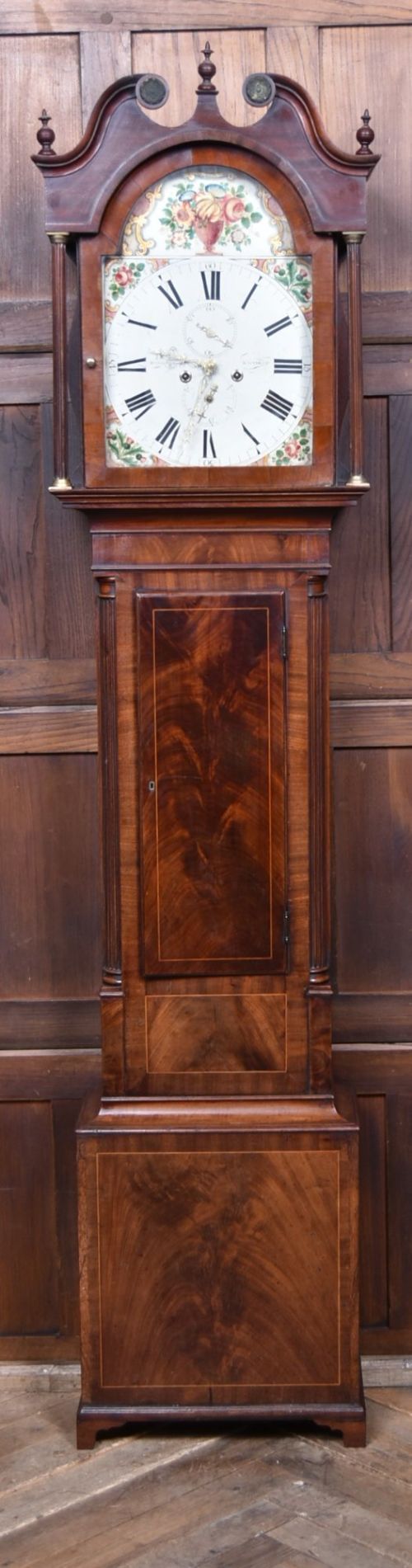
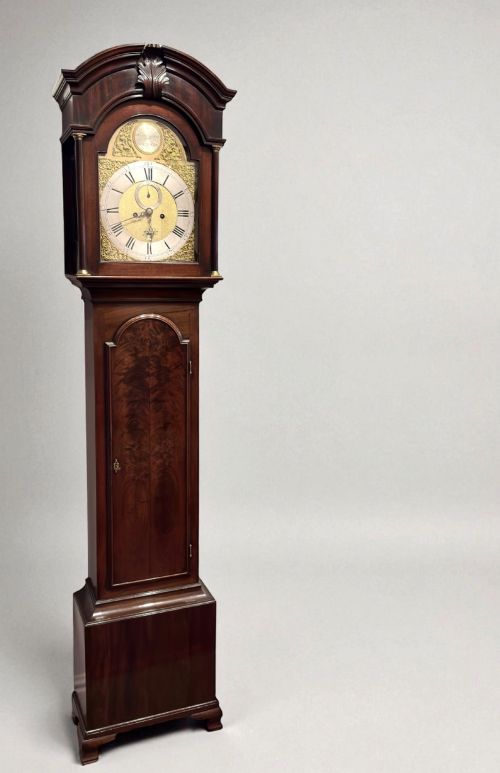
On this heading, yes. Longcase, grandfather and long case together account for about a fifth of listings, entered because the dial itself is what the title describes, brass, arch, painted or moon.
Wall clocks and fusee movements still dominate the sold archive, but longcases dominate the live stock.
What are railway and GPO dials?
Wall dials issued to institutions and marked accordingly. GWR, GPO, GvR, LMS, NER, British Railways, RAF sector and Air Ministry marks all turn up, and "railway" appears in 37 titles.
One sampled austerity example has a Bakelite case dated 1943. Documented issue marks push a clock up the range.
Do foreign clocks appear in this category?
Occasionally, against a heavily English mass. The samples include a Dutch Frisian Stoelklok Schippertje, a Japanese Tokyo wall clock and an Anglo-Swiss station clock.
French mantel and carriage clocks are the larger foreign presence, with "french" in 146 titles.
One eighteenth-century Swedish turret clock face and movement from Rosendal Palace appears once and nowhere else.
Which dial clocks sit at the top of the range?
London-signed longcases and bracket clocks, and the two longcases entered as "Before 1700", the earliest dates anywhere in the archive.
Wooden-dial wall clocks, where the dial itself is timber rather than iron or brass, come up only a handful of times and all sit high. So do automata: rocking-ship longcases, a rocking Father Time chinoiserie case and a moving windmill fusee dial.