
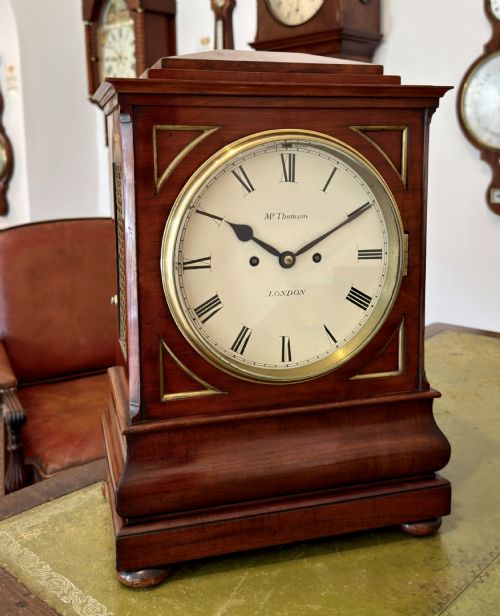
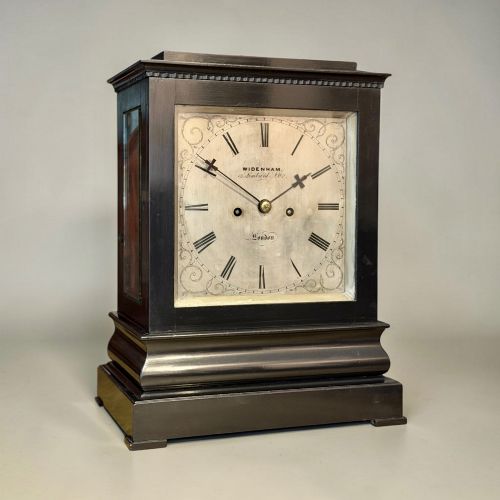
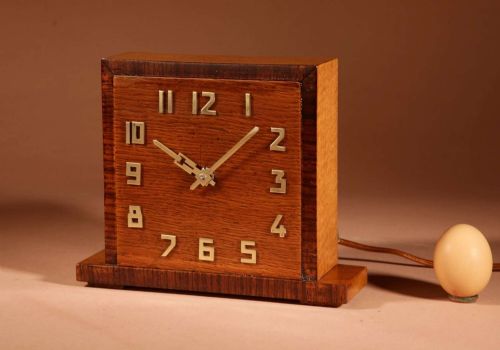

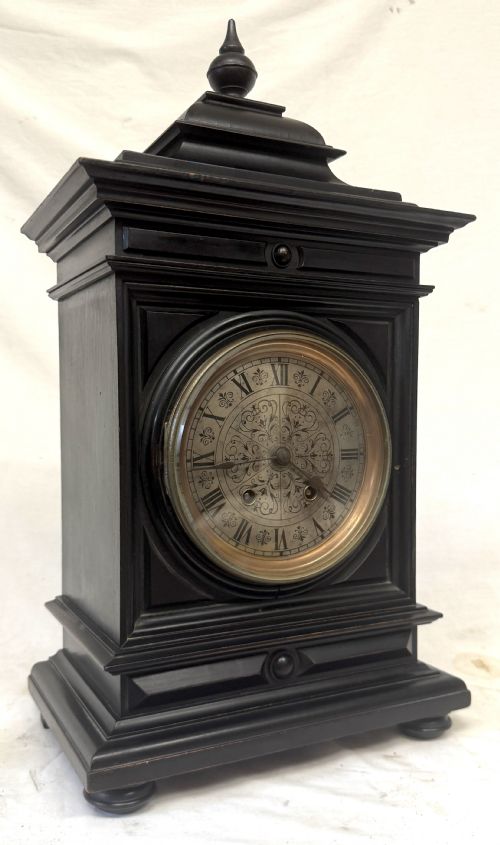
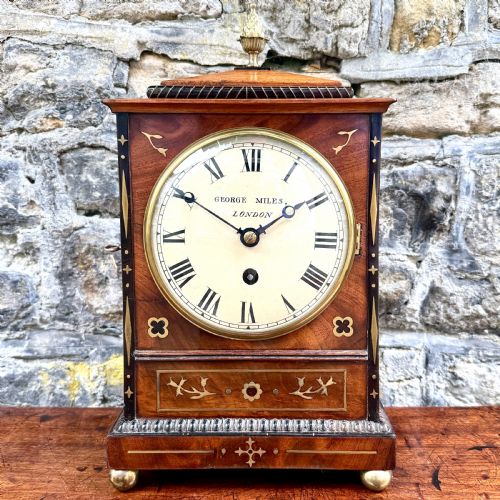
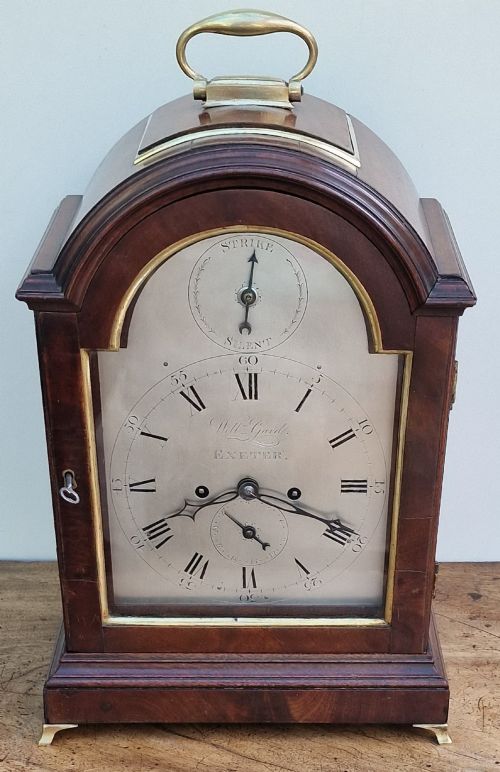
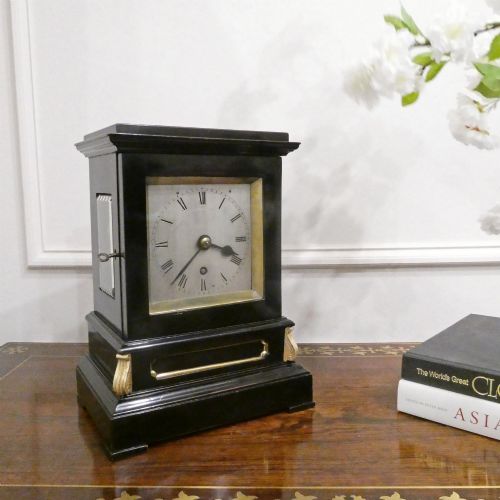
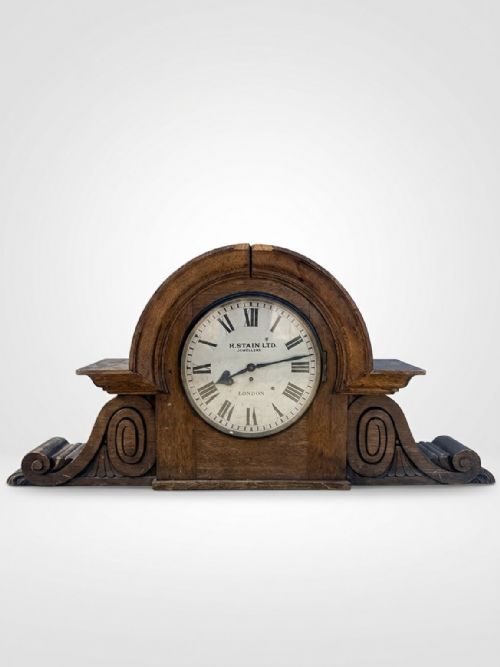
Wooden Mantel Clock
A wooden mantel clock brings domestic timekeeping into the room with timber cases ranging from Georgian mahogany to Art Deco oak.

Wooden Mantel Clock
A wooden mantel clock sits upon a shelf, table or bracket, combining furniture cabinetwork with mechanical or electrical timekeeping. When searching for a wooden mantel clock, collectors encounter forms spanning the eighteenth, nineteenth and twentieth centuries.
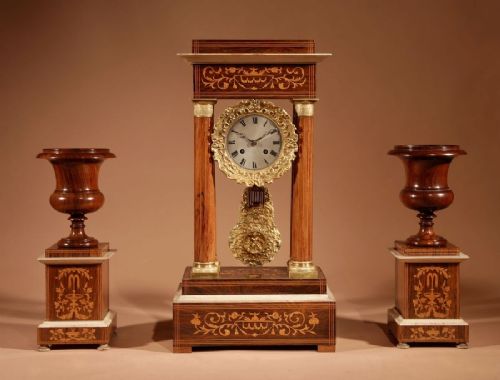
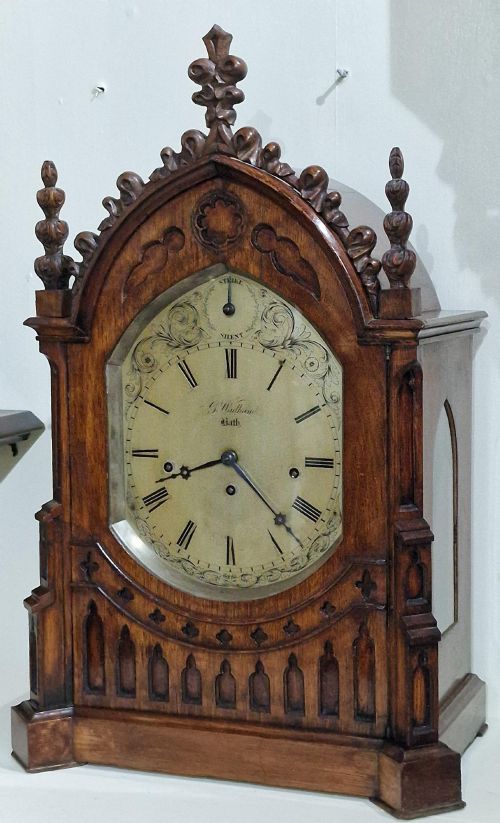
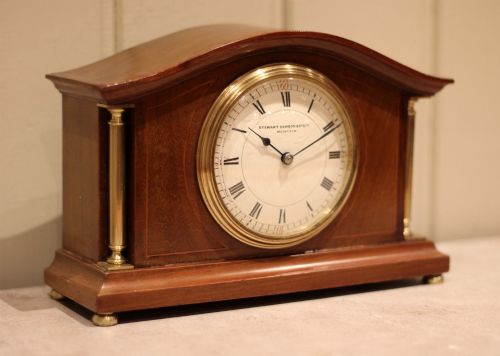
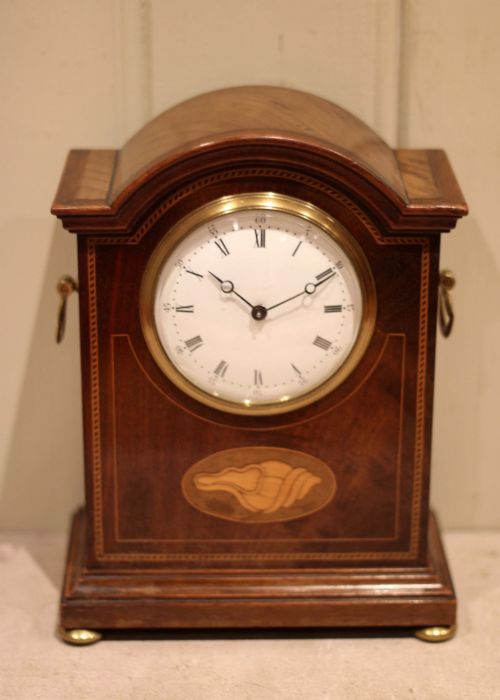
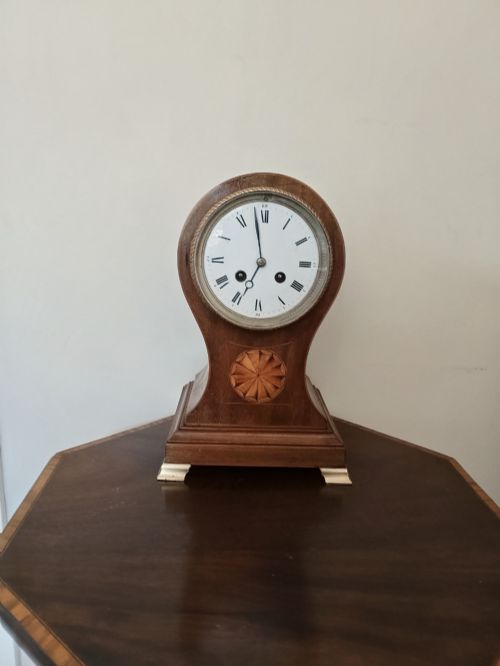
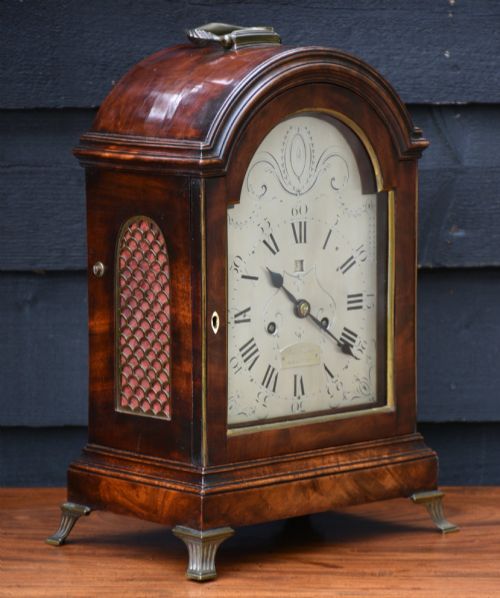
The pieces on this page include bracket clocks, library clocks, portico clocks and balloon cases. Materials span mahogany, walnut, oak, ebonised wood and rosewood, often paired with brass and enamel dials.
Victorian and Edwardian examples dominate the selection, alongside Georgian table clocks and geometric Art Deco designs. Many house striking or chiming movements operating via fusee, spring or electrical systems.
Construction and materials
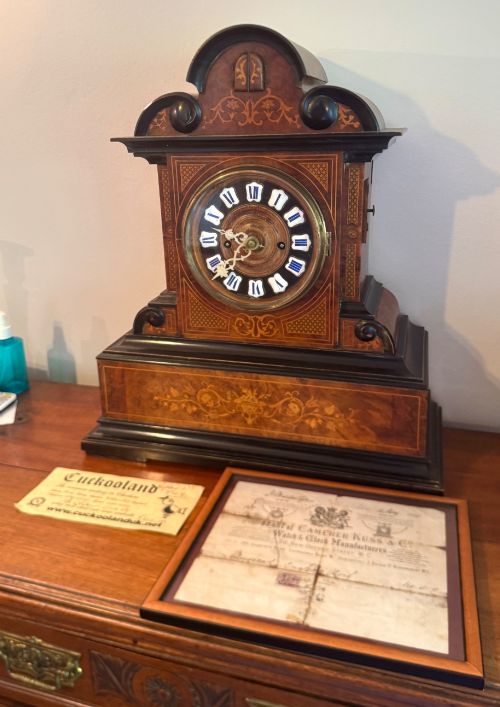
Cabinetmakers constructed the wooden mantel clock using dense hardwoods such as mahogany, walnut and oak, frequently adding marquetry inlay, ebonisation or brass mounts. Dial faces incorporated silvered brass, painted enamel or etched metal, protected beneath glass bezels.
Movements required precision engineering, utilising brass plates, steel pinions and spring or fusee power trains. Many retained mechanical escapements like the verge, while later twentieth-century iterations integrated electrical components.
Wooden Mantel Clock Retail Price Guide 2026
Typical asking prices for wooden mantel clock among the pieces listed under this phrase on Sellingantiques today, from the lower quarter to the upper quarter. They describe what is for sale here now, not the wider market.
Listings feature mahogany, walnut and oak cases housing mechanical and electrical movements from the eighteenth to the twentieth century.
Quality and execution
The distinction between standard production and superior examples lies in the cabinetry and movement refinement. Finely figured timbers, precise marquetry inlay and architectural fretwork elevate a case beyond utilitarian function.
Movement sophistication separates simpler timepieces from complex triple-fusee, quarter-striking or chiming mechanisms. Maker attribution and well-preserved dials further differentiate the collection.
Thomson of London·Widenham of London·H.A.C.·Lenzkirch·George Wadham·William Gard·Mappin & Webb·Walker and Hall·Winterhalder·Barber & North
The Wooden Mantel Clock Glossary
- Bracket clock
- A portable table clock originally designed to sit upon a wall bracket. They frequently feature carrying handles and architectural wooden cases.
- Fusee
- A conical pulley used in clock movements to maintain equal force on the gear train as the mainspring unwinds. This mechanism improves timekeeping consistency.
- Portico clock
- A monumental clock style featuring columns supporting a central housing, popular during the Regency and Empire periods. They utilise polished wood and gilt brass details.
- Verge movement
- An early mechanical escapement controlling the speed of a clock via a crown wheel and pallet foliot. It appears in eighteenth-century bracket clocks.
- Silvered dial
- A brass clock face treated with a silver compound to produce a matte, reflective surface. Numbers and markings are typically engraved and darkened with wax.
Wooden Mantel Clock: Frequently Asked Questions
What is a fusee movement?
A fusee is a conical pulley connected to the mainspring by a cord or chain, designed to equalize the driving force as the spring relaxes.
This mechanical refinement ensures the clock maintains steady amplitude and accurate timekeeping throughout its running cycle.
How do I identify a bracket clock?
Bracket clocks are portable timepieces traditionally constructed with flat bases and carrying handles on top. They were engineered to sit on matching wall brackets or tables.
Cases are typically housed in mahogany, walnut or ebonised wood with glazed access doors revealing brass dials.
Where should I place a wooden mantel clock?
These clocks sit comfortably upon mantelpieces, sideboards, desks and bookcases where the mechanical action can be observed and heard. Stable, level surfaces prevent the pendulum or balance wheel from losing beat.
Direct sunlight and temperature fluctuations should be avoided to protect antique wood veneers and interior springs.
How do I distinguish Georgian from Victorian clocks?
Georgian clocks tend to feature restrained architectural proportions, verge movements and rich mahogany or walnut cases without excessive ornamentation. Victorian and later pieces often incorporate bolder carving, ebonisation, varied chiming trains and mixed wood marquetry.
Maker signatures, dial styles and interior movement layouts further clarify the period of production.