
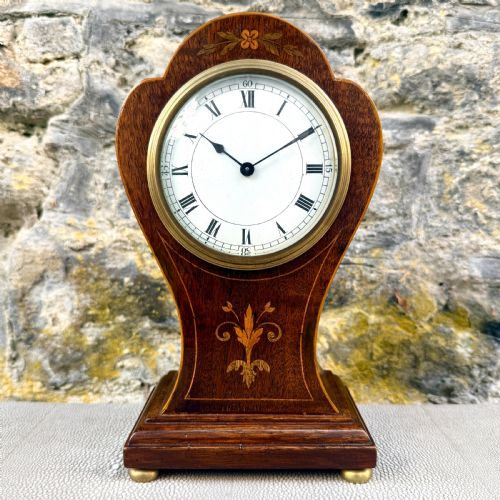
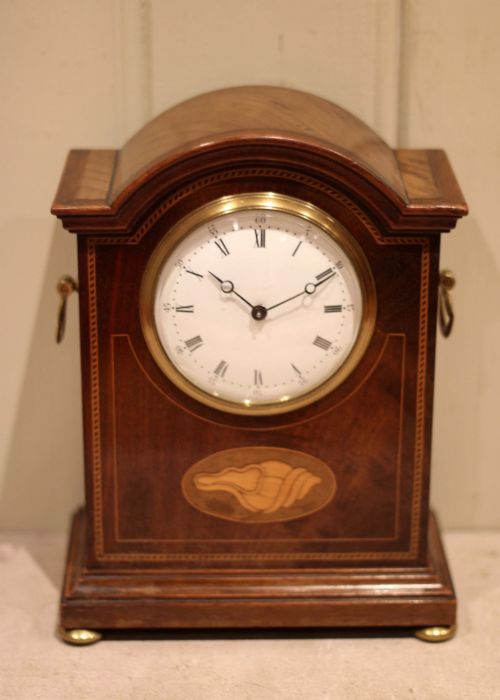
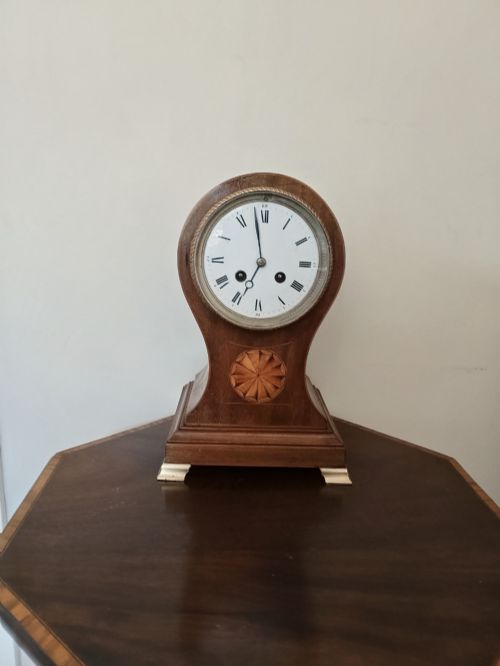
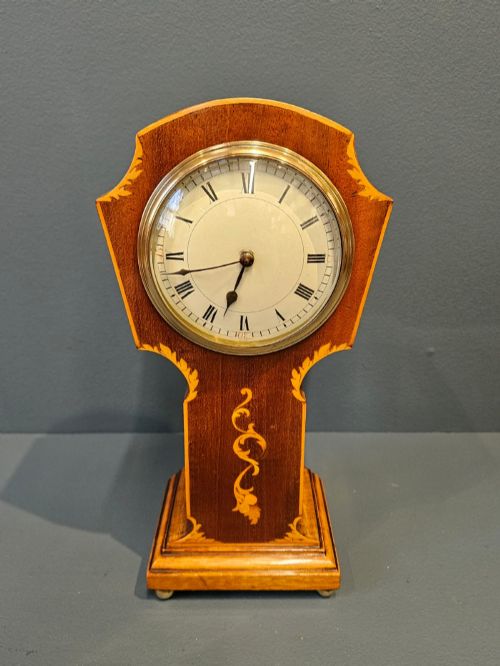


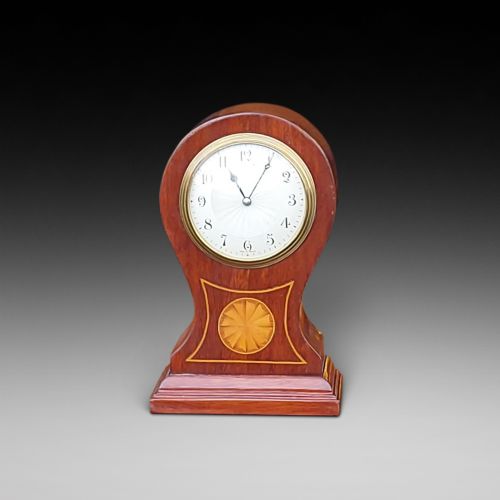


Edwardian Balloon Clock
An Edwardian balloon clock brings graceful curves and polished wood to a mantelpiece, offering a distinctive timepiece shaped like a hot air balloon.
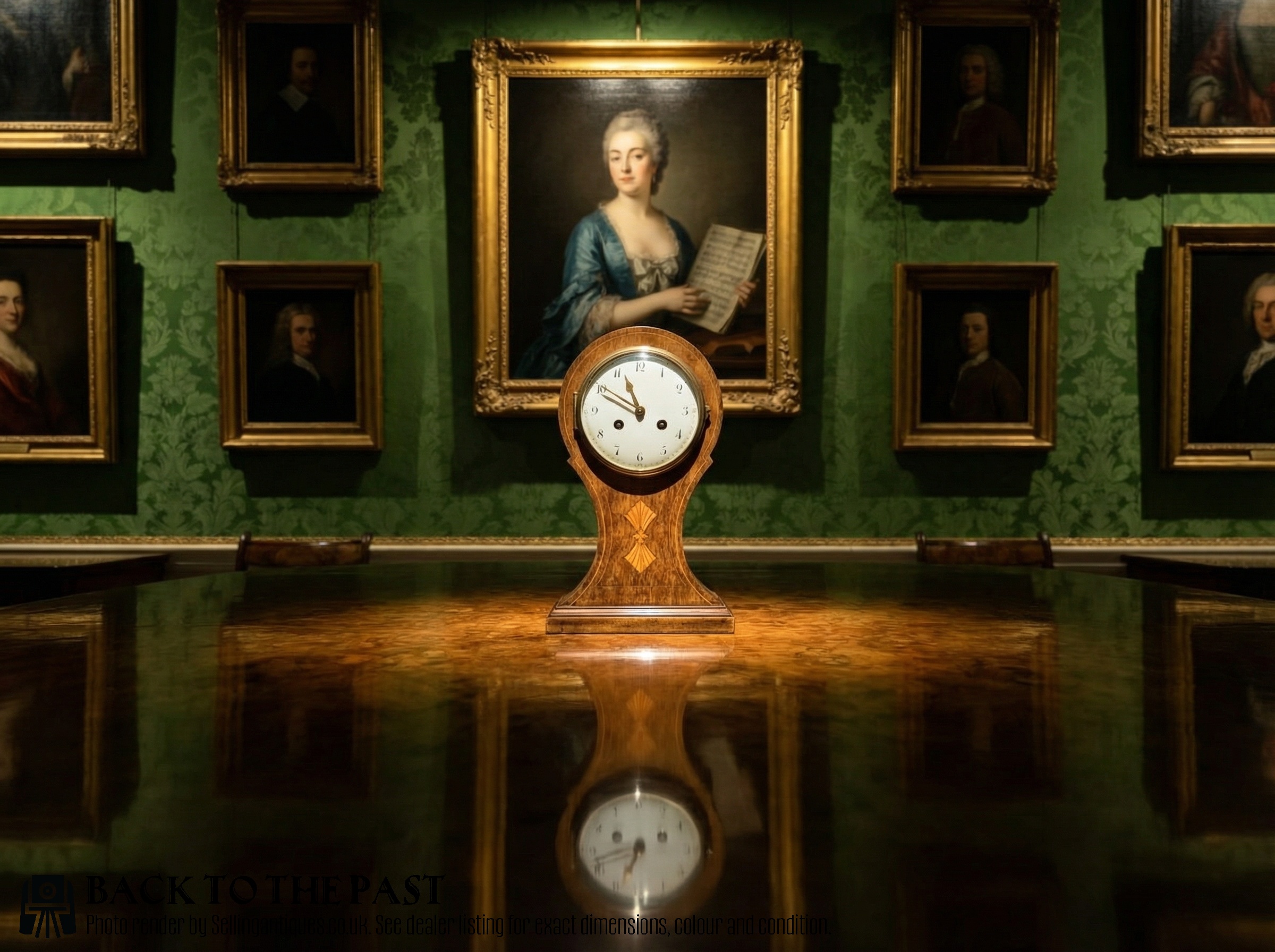
Edwardian Balloon Clock
When you search for an edwardian balloon clock, you encounter domestic timepieces characterised by their ogee or rounded profiles reminiscent of a balloon envelope. These mantel clocks date primarily from the Edwardian period and the late nineteenth century, spanning decades of refined domestic joinery.
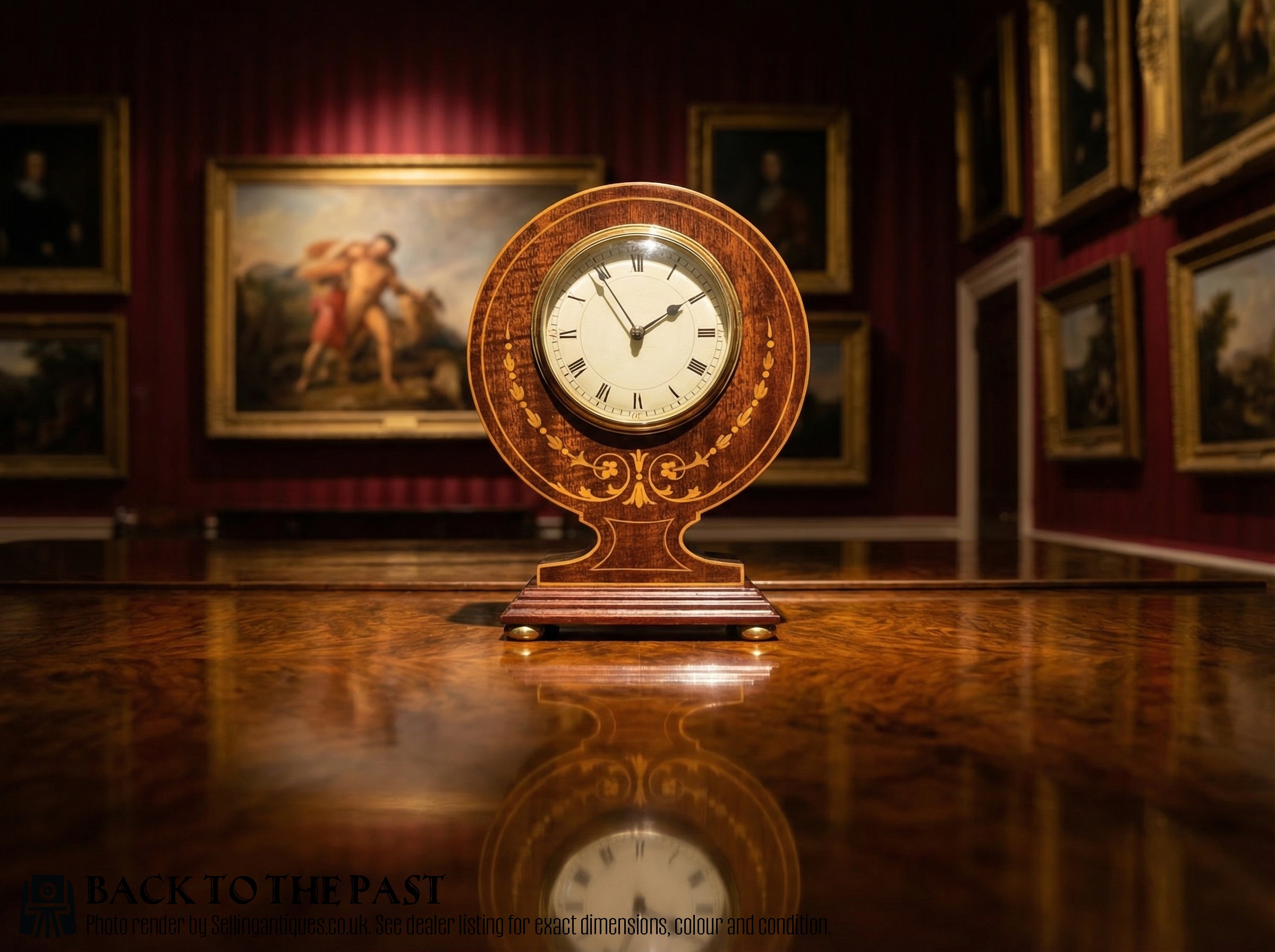
The standard version on this page is constructed from mahogany, frequently featuring decorative stringing or marquetry, and sits upon small brass feet. Variants include oak bodies, French movements, and satinwood inlay depicting shells, sunflowers, or floral motifs.
Most examples function as simple timepieces or feature striking mechanisms designed to mark the hours on bells or gongs. Their silhouette remains consistent, tapering gracefully from a rounded dome down to a stable base.

Factors separating standard pieces from the finest examples
The distinction between ordinary and superior pieces rests largely on the intricacy of the timber work and the quality of the internal movement. Finely executed marquetry, such as detailed floral decorations or crisp herringbone inlay, elevates a clock beyond standard production models.
Subtleties in the proportions of the balloon case and the weight of the brass fittings also signal superior craftsmanship. Original maker signatures on the dial or movement add historical weight, distinguishing workshop-produced items from mass-market alternatives.
Edwardian Balloon Clock Retail Price Guide 2026
Typical asking prices for edwardian balloon clock among the pieces listed under this phrase on Sellingantiques today, from the lower quarter to the upper quarter. They describe what is for sale here now, not the wider market.
French mechanical movements appear alongside English mechanisms in Edwardian balloon clock housings.
L Mumford London·Mappin & Webb·Asprey London·Harrods
The Edwardian Balloon Clock Glossary
- Balloon clock
- A mantel clock featuring a curved, bulbous upper case resembling a hot air balloon. This silhouette became exceptionally popular during the late nineteenth and Edwardian periods.
- Fusee
- A conical pulley used in clock movements to maintain even tension on the gear train as the mainspring unwinds. It ensures more accurate timekeeping throughout the duration of the wind.
- Marquetry
- Decorative patterns formed by fitting contrasting pieces of veneer into a wood background. Edwardian clock cases frequently display boxwood and satinwood marquetry in floral or shell designs.
- Bezel
- A metal ring that holds the glass protecting the clock face in place. On these clocks, the brass bezel is often hinged to allow access for setting the hands.
- Silvered dial
- A clock face made of brass treated with a silver solution to produce a matte metallic finish. Graduations and numerals are typically engraved and darkened for legibility.
Edwardian Balloon Clock: Frequently Asked Questions
How do I wind an edwardian balloon clock?
Most of these clocks use a small key inserted into the dial to tension the spring behind the face. Turn the key gently until you feel resistance, taking care not to overwind the mechanism.
Timepieces typically require a weekly wind, while striking models may need attention slightly more often depending on the gear train configuration.
Where should I place a balloon clock?
These clocks suit flat, stable surfaces such as mantelpieces, sideboards, or desk tops where they can be viewed at eye level. Ensure the placement is away from direct sunlight and moisture to protect the polished wood and veneer.
Because the cases are relatively compact, they fit well in smaller rooms while retaining a strong visual presence.
How do I tell if the movement is original?
Inspect the interior of the case to check that the mounting blocks and screw holes align cleanly with the clock movement. Original movements often bear serial numbers that correspond to marks on the dial or inside the wooden housing.
Signs of altered screw holes or mismatched brass components suggest the movement may have been replaced during its working life.
What is the difference between a timepiece and a striking clock?
A timepiece is built solely to keep and display the time, containing a single train of gears dedicated to the hands. These models require only one winding hole on the dial.
A striking clock includes an additional gear train and hammer mechanism to sound the hours on a gong or bell, requiring a second winding point.