

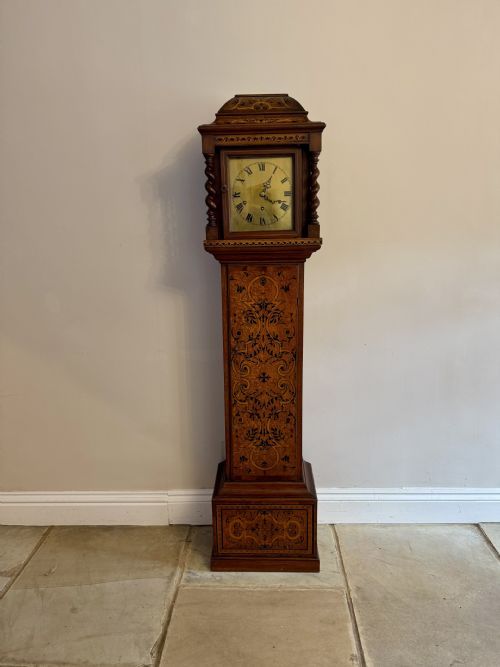
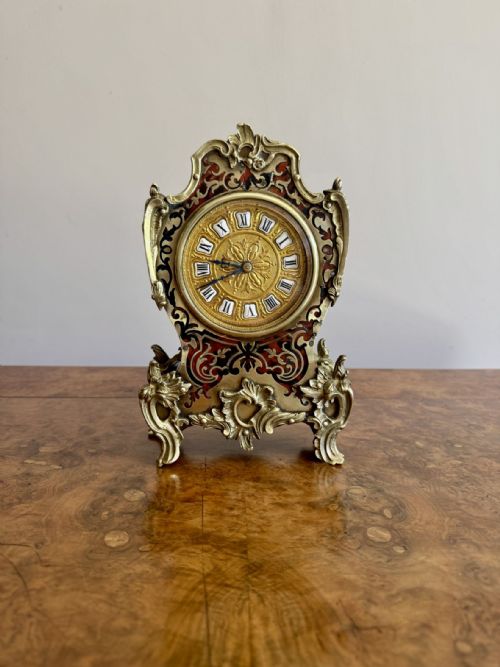

Marquetry Inlaid Clock
A marquetry inlaid clock brings together meticulous woodworking and reliable timekeeping, offering a striking focal point for any room.
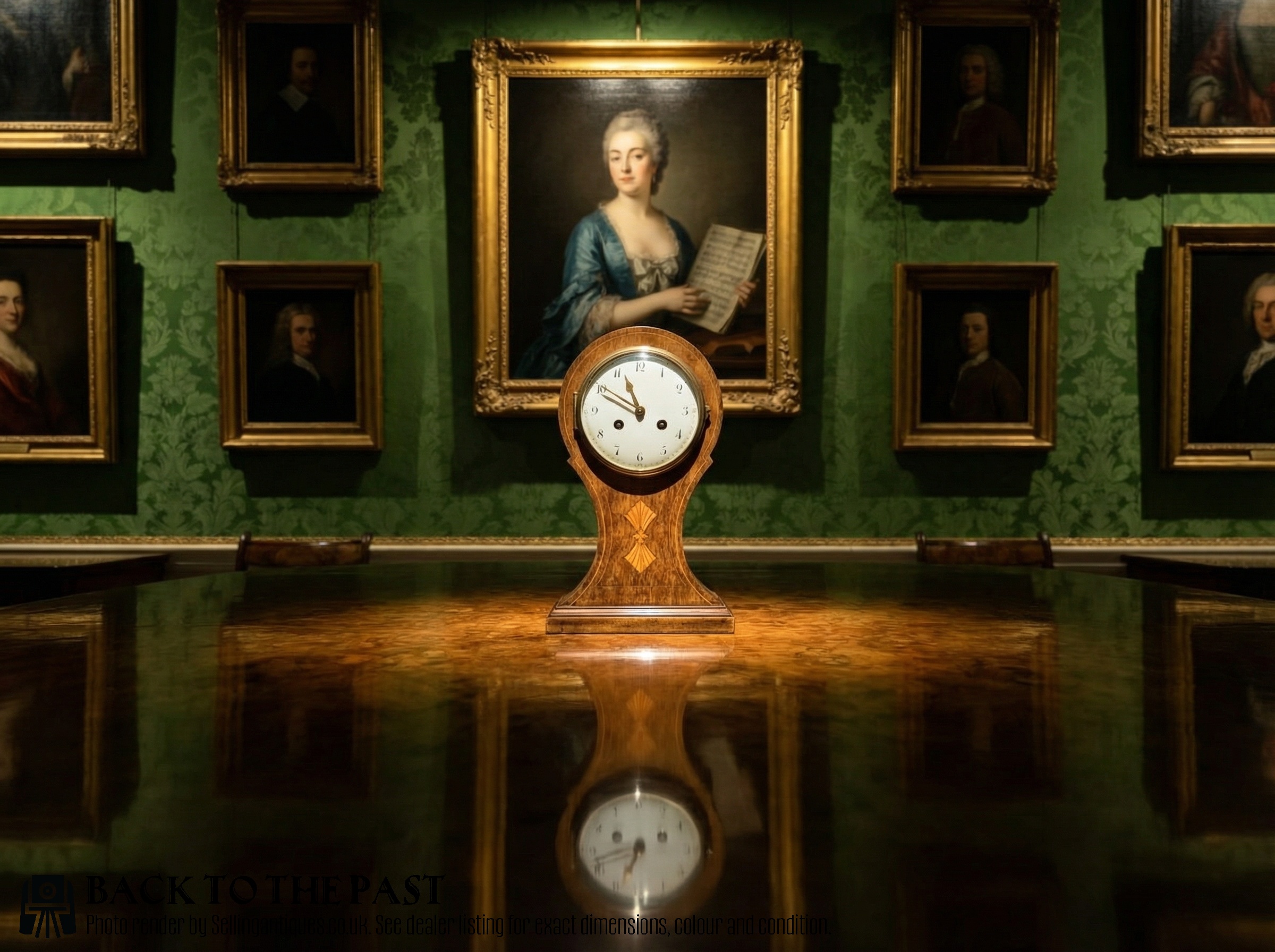
Marquetry Inlaid Clock
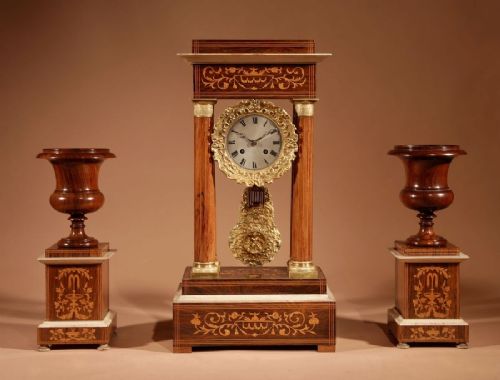
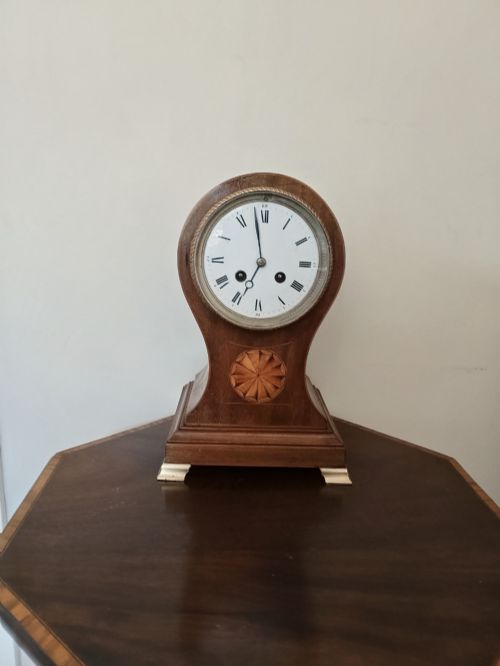
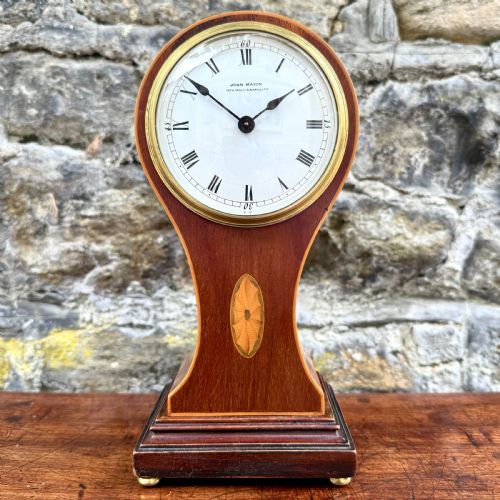
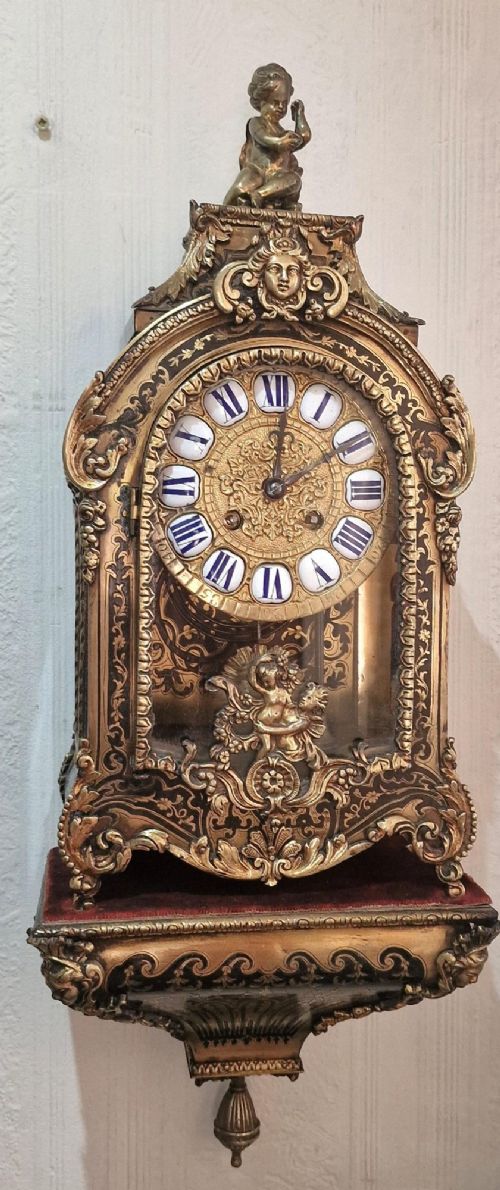
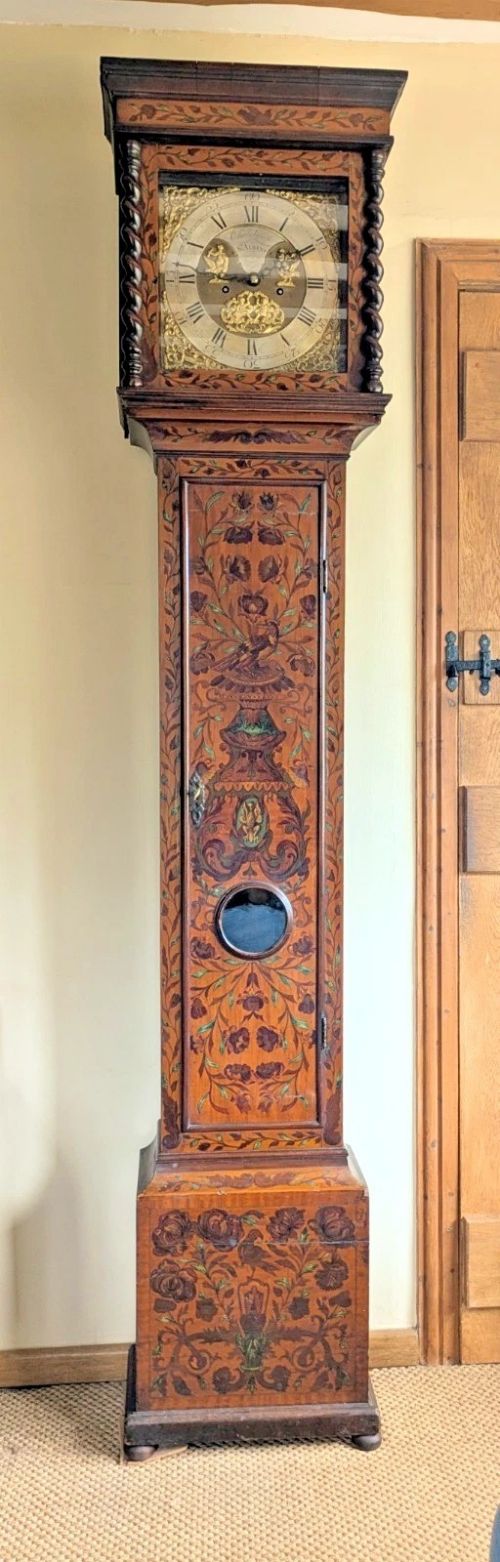
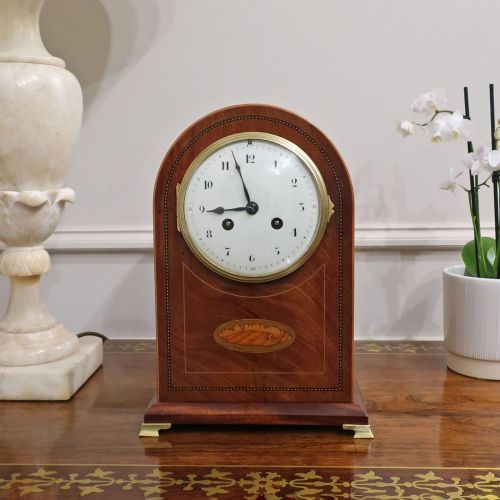
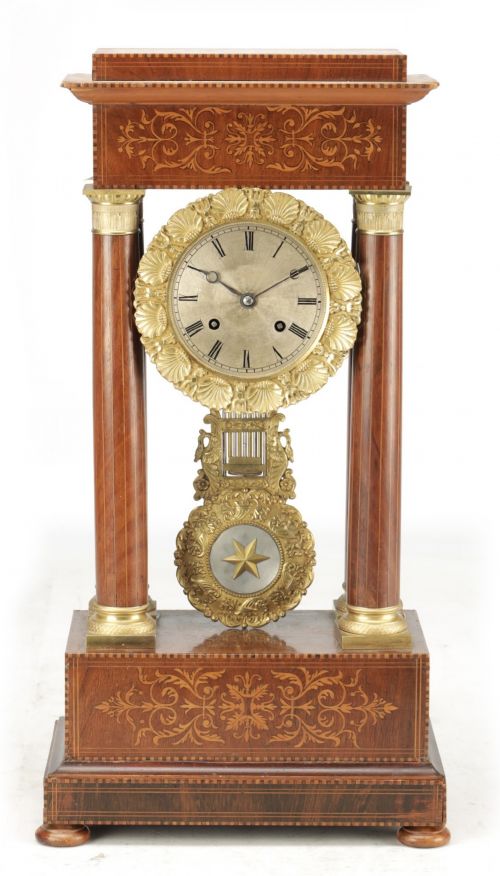
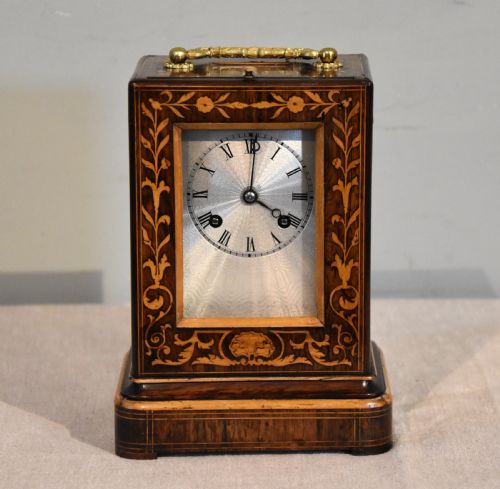
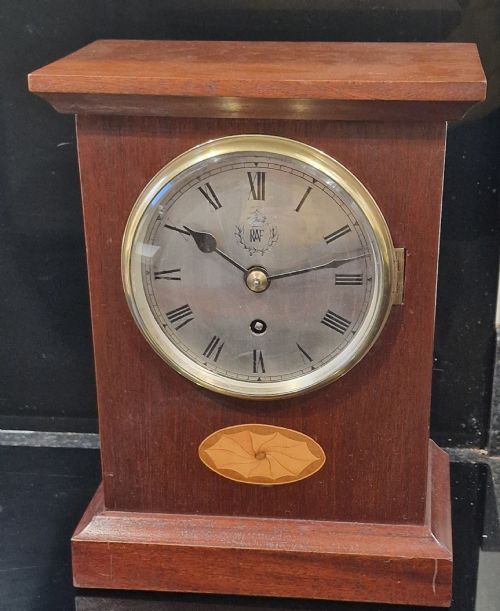
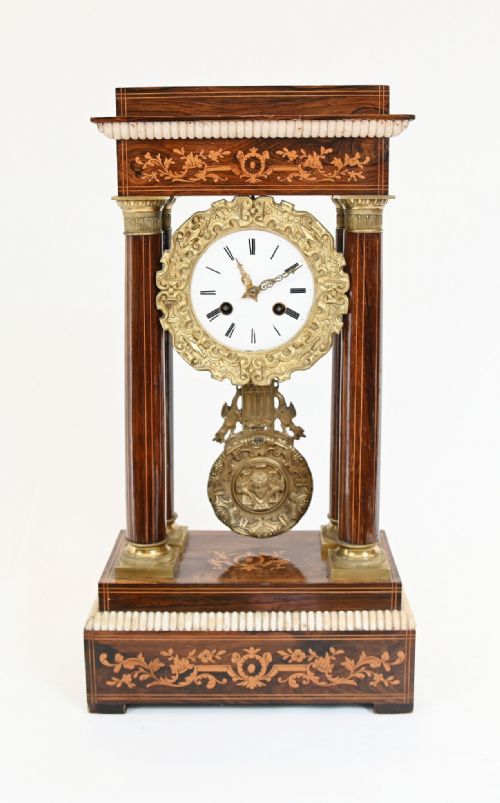
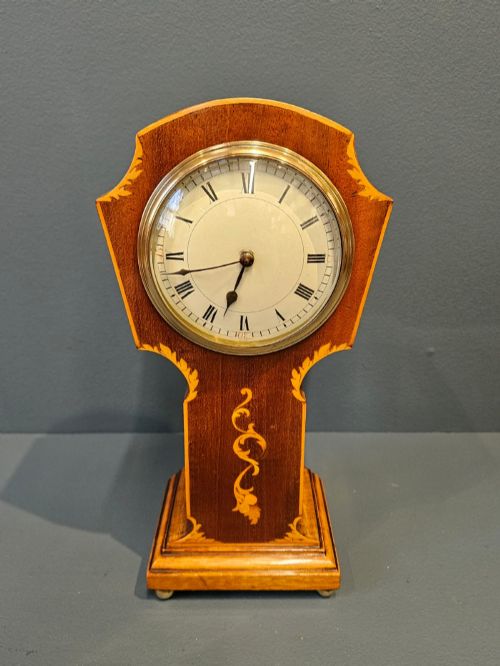
The selection on this page includes French portico clocks, balloon mantel clocks, and grander longcase pieces. These objects served both a domestic purpose and a decorative function in period interiors.
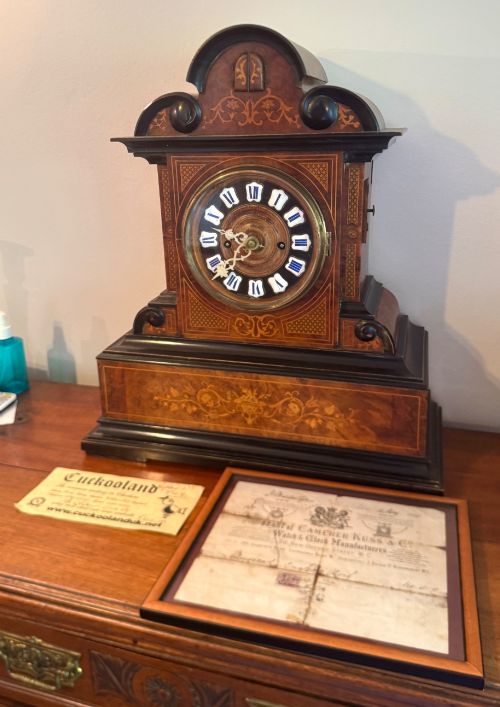
Originating from various European and British workshops, these clocks display distinct regional aesthetics. From simple Edwardian mahogany cases to elaborate French Boulle designs, the variety reflects shifting tastes across centuries.
Materials and construction
Cabinetmakers constructed the carcass from hardwoods such as mahogany, walnut, or oak, applying thin veneers of contrasting timbers like satinwood and lemon wood to create the surface patterns. Brass, ormolu, and tortoiseshell frequently complemented the wooden marquetry, particularly on French mantel and portico pieces.
Movements were mechanically driven, often featuring brass gear trains, enamel dials, and glass bezels. Enamel and silvered metal dials provided clear faces for painted or engraved numerals.
Listings feature mahogany, rosewood, and walnut cases embellished with brass, tortoiseshell, and ormolu.
Markers of quality
Quality rests in the crispness of the timber cutting and the precision of the veneer fit. Superior pieces maintain tight joins across complex floral or geometric patterns without visible gaps or excessive filler.
The sophistication of the internal movement and the reputation of the maker also distinguish finer examples. Original dials, well-cast ormolu mounts, and intact brass fittings elevate a piece above standard production models.
Charles Louch St. Albans·R.A.F Officers·Henri Marc·W. Burton·Thomas A Paris·David Morice·Samuel Marti
The Marquetry Inlaid Clock Glossary
- Marquetry
- The art of applying decorative veneer pieces to a wooden structure to form geometric or pictorial designs. This technique relies on contrasting timber colours to create depth.
- Portico clock
- A monumental clock design featuring architectural columns supporting the movement housing. They frequently incorporate brass, ormolu, and fine wood inlays.
- Fusee
- A conical pulley used in clock movements to ensure even power distribution as the mainspring unwinds. It is a mark of better mechanical reliability.
- Boulle
- A style of marquetry using tortoiseshell and brass inlaid together, named after the French cabinetmaker André-Charles Boulle. It is commonly found on nineteenth-century French mantel clocks.
- Balloon clock
- A mantel clock housed in a rounded, swelling case resembling a hot air balloon. These were popular during the Edwardian and Victorian periods.
Marquetry Inlaid Clock: Frequently Asked Questions
How do I wind my clock?
Most mechanical clocks require a key inserted into the dial holes to tension the mainspring. Care must be taken not to overwind the movement.
Consult the specific winding requirements for fusee or striking mechanisms to avoid damaging the internal gears.
Where should I place a marquetry clock?
Position your clock on a stable, level surface away from direct sunlight and sudden temperature changes. Fluctuating humidity can cause wood veneers to warp or lift.
Wall clocks require secure fixings into solid masonry or wall studs to support their weight safely.
How do I date an inlaid clock?
Examine the timber species, case style, and dial construction to determine the period. Edwardian pieces often feature lighter mahogany, while earlier Georgian and Regency examples use darker rosewood or walnut.
Signatures on the dial or movement backplate frequently provide a maker's name and clues to the production era.
Did these clocks always chime?
Not all marquetry clocks include striking or chiming trains. Many smaller mantel clocks and timepieces are designed simply to record the hours without acoustic output.
Larger longcase and bracket clocks more commonly feature hour-striking or quarter-chiming mechanisms.