



Inlaid Mahogany Timepiece
An inlaid mahogany timepiece brings rich wood and quiet mechanics to a room, offering the refined presence of Edwardian and Victorian design.
What an inlaid mahogany timepiece is
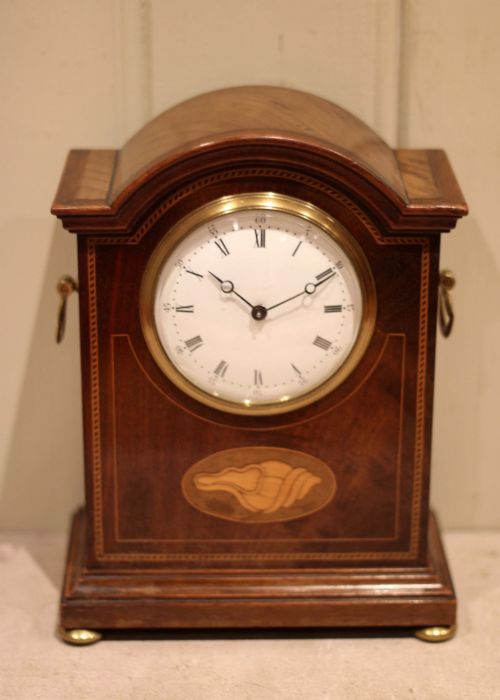
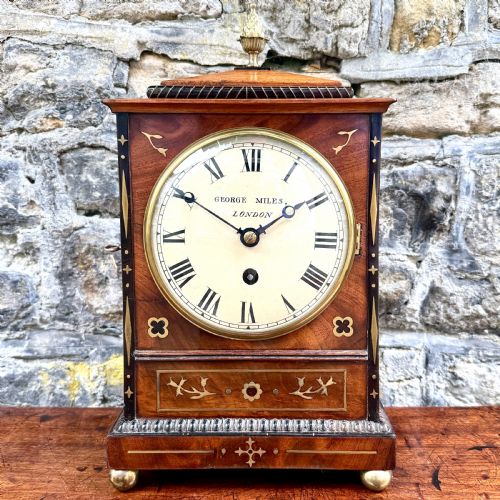
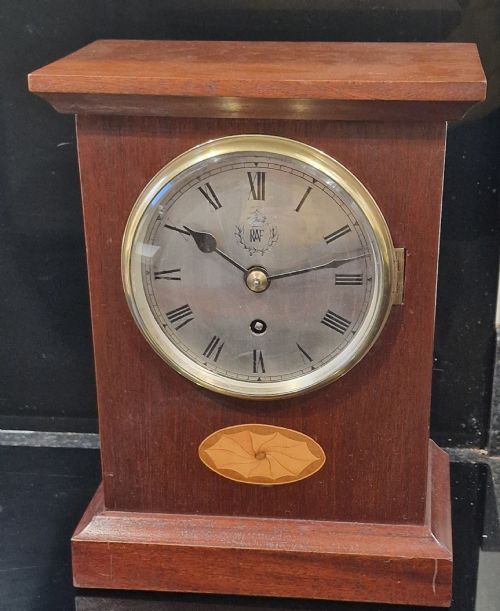
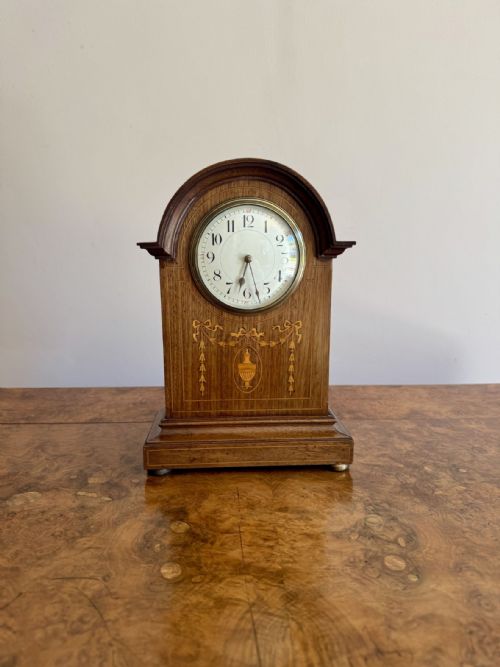
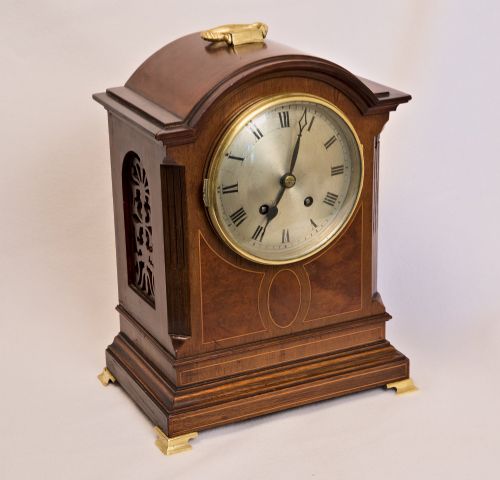
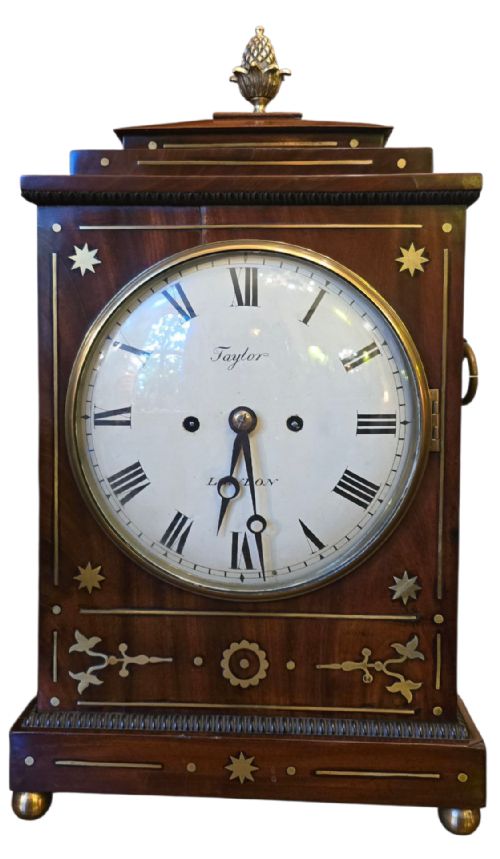
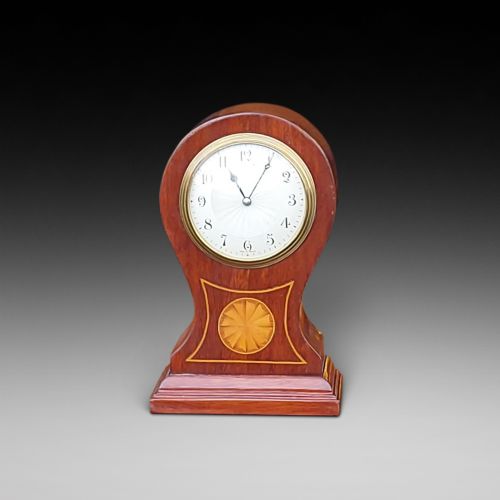
An inlaid mahogany timepiece stands as a classic mantel clock or bracket clock, bringing together rich cabinet timber and delicate stringing. These pieces belong predominantly to the late nineteenth century and the Edwardian period, capturing the domestic taste of those decades.
The form appears most frequently as a mantel clock, often featuring architectural arched cases or refined bracket shapes. French influence also emerges through Art Nouveau designs, blending traditional timber with distinctive continental styling.
When searching for an inlaid mahogany timepiece, buyers encounter both straightforward English Edwardian examples and more elaborate French variations. The shared core remains the use of mahogany bodies enriched with contrasting inlay work.
How they were made
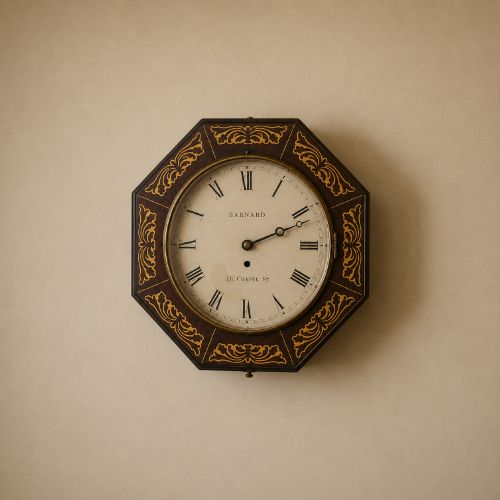
Cabinetmakers constructed the cases using solid mahogany and mahogany veneers, often incorporating lighter timbers such as satinwood and boxwood for decorative banding and stringing. The natural warmth of the wood provides a deep background for precise geometric or organic inlay motifs.
Glass panels protect the enamel dials, while brass fittings such as bezels, feet, and movement plates add metallic structure. These materials combine to create balanced mantel timepieces that rely on traditional joinery and fitting techniques.
Retail Price Guide 2026
Typical UK retail prices for inlaid mahogany timepiece, calculated from the Sellingantiques database of over a million retail prices indexed since 2003. This retail price guide relies exclusively on Sellingantiques data; no external sources or auction records are used, so the figures do not describe the wider market.
The recorded pieces span the late nineteenth century and the opening years of the twentieth century.
What varies in quality
Superior quality in these clocks rests upon the crispness of the cabinetwork and the delicacy of the contrasting boxwood and satinwood inlay. Finer pieces demonstrate precise line work and harmonious proportions that elevate simple architectural forms.
The integration of materials also defines the upper tier, where clear glass, clean enamel dials, and well-cast brass elements work together without visual crowding. Lesser examples rely on heavier proportions and simpler detailing that lack the sharpness of the best workshops.
The Inlaid Mahogany Timepiece Glossary
- Timepiece
- A clock that indicates the time without striking the hours or chiming melodies. This mechanism focuses entirely on reliable timekeeping.
- Mantel clock
- A domestic clock designed to stand upon a fireplace mantelpiece or shelf. These objects combine practical function with decorative cabinet presence.
- Bracket clock
- A portable clock originally designed to sit upon a wall bracket or table. The term persists for substantial mantel timepieces with architectural cases.
- Inlay
- A decorative technique where pieces of contrasting wood, such as satinwood or boxwood, are inserted into recessed portions of the mahogany base. This creates flat patterns and framed borders across the case.
- Enamel dial
- A clock face made by fusing powdered glass onto a metal base at high temperatures. These smooth, glossy surfaces provide a durable background for painted numerals.
Frequently Asked Questions
What is an inlaid mahogany timepiece?
An inlaid mahogany timepiece is a decorative mantel or bracket clock housed in a mahogany wooden case decorated with contrasting wood inlay.
These pieces date from the late nineteenth century and the Edwardian era, functioning primarily as domestic timekeepers rather than striking clocks.
Where should I place a mantel clock?
These clocks find a natural home on mantelpieces, sideboards, or tabletops where their timber cases and enamel dials can be easily viewed.
Keep them away from direct sunlight and damp environments to protect the mahogany veneer and delicate stringing.
How do I identify an Edwardian timepiece?
Edwardian timepieces generally date from around nineteen hundred, displaying characteristic architectural arches or refined bracket shapes.
They frequently combine mahogany with boxwood or satinwood inlay, reflecting the domestic decorative tastes of the period.
Are these clocks strike clocks?
Many of these objects are strictly timepieces, meaning they measure the passage of hours without striking bells or gongs.
This simple mechanical arrangement allows the internal layout to focus purely on steady timekeeping behind the glass bezel.
What materials make up the case?
The primary case material is mahogany, chosen for its rich grain and deep colour when polished.
Cabinetmakers embellished these wooden surfaces using satinwood and boxwood for stringing, alongside brass bezels and glass dial covers.