



Satinwood Inlaid Clock
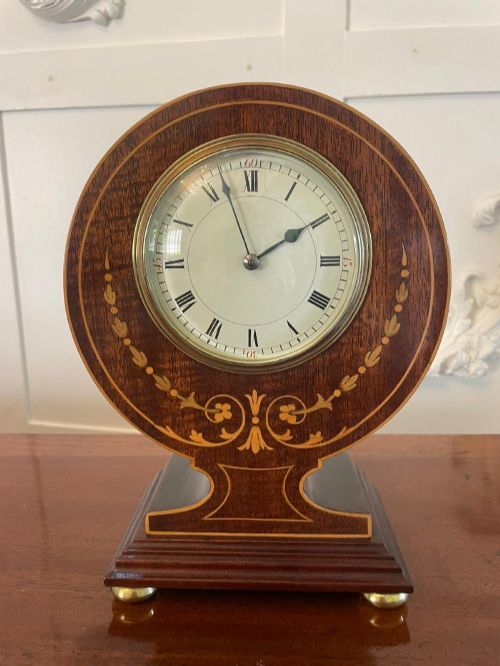
A satinwood inlaid clock brings bright, contrasting timber and delicate stringing into a room.
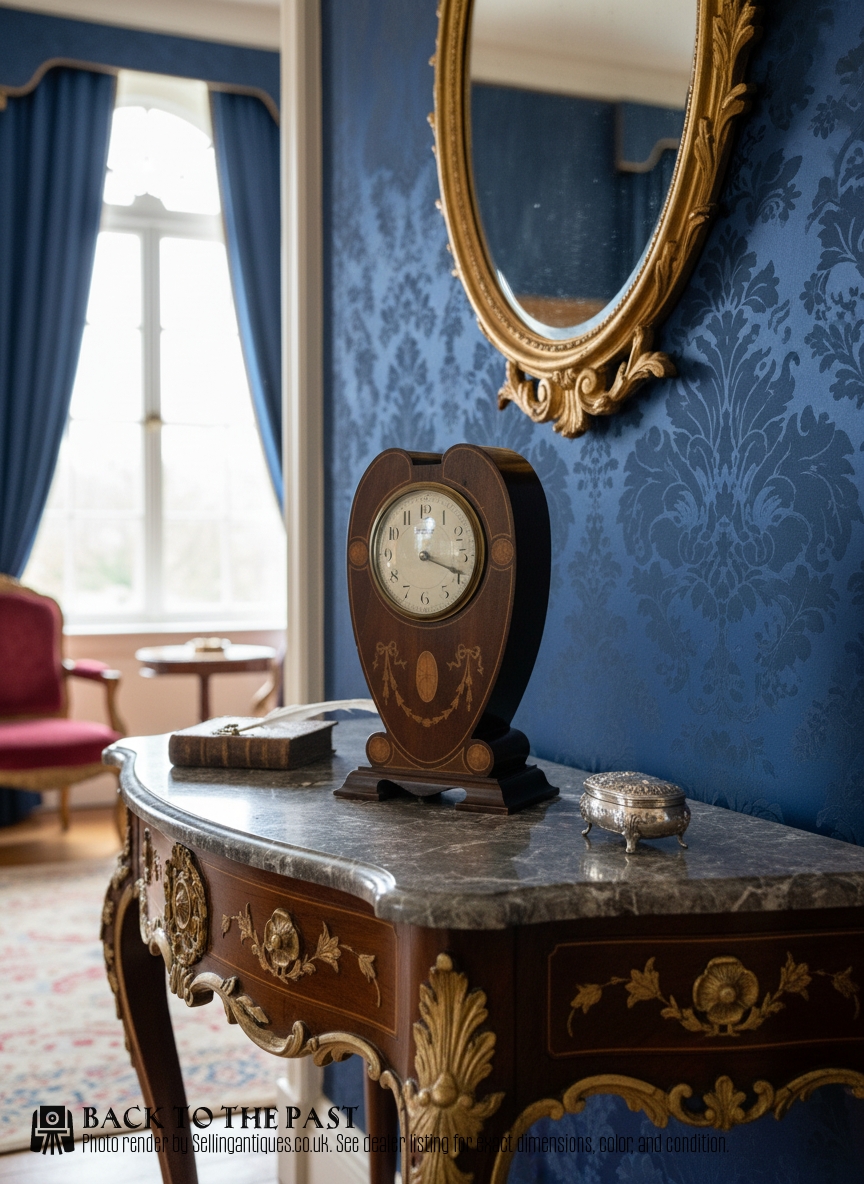
Satinwood Inlaid Clock
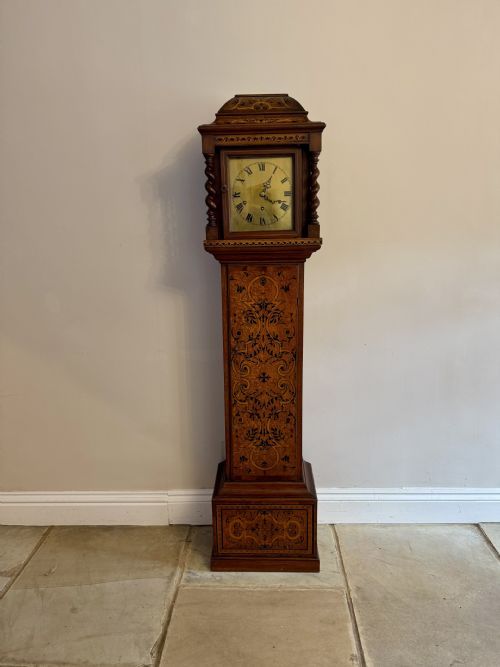
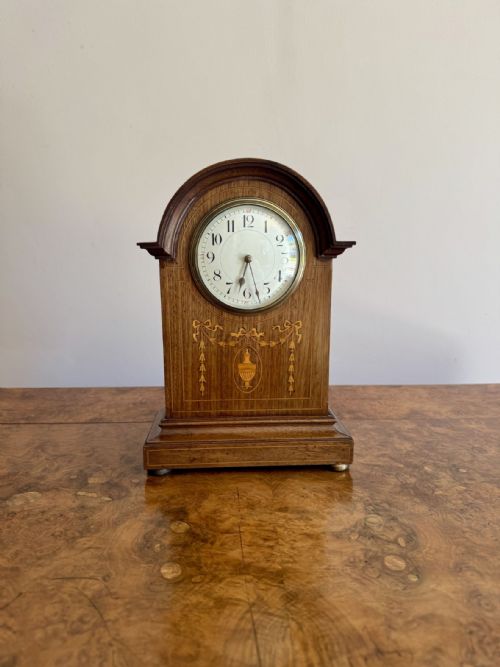
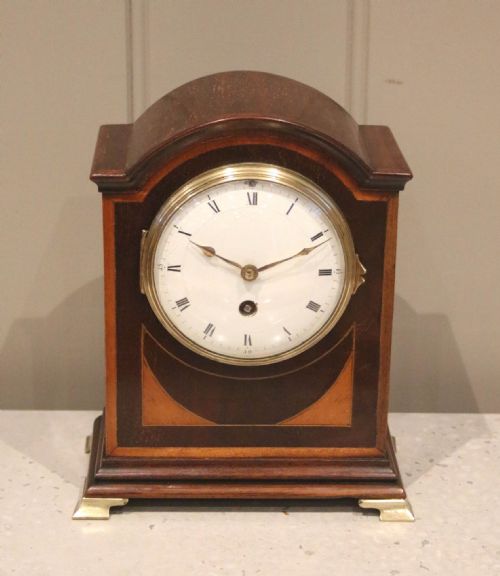
When you search for a satinwood inlaid clock, you encounter upright timepieces fashioned during the Victorian, Edwardian, and nineteen-hundred periods. The pieces appearing here span mantel clocks, bracket clocks, wall clocks, and grander long case or grandmother formats.
Mantel clocks form the core of what you meet on this page, housed in mahogany or solid satinwood bodies. These smaller desk and shelf timepieces often feature contrasting boxwood inlay alongside the pale satinwood veneers.
Taller examples also emerge within the archive and current listings, showing how cabinetmakers applied light wood banded details to vertical tall cases. Whether small portico designs or musical floor-standing versions, the focus remains on the bright grain of the timber.

How they were made
Cabinetmakers constructed these clock bodies using dense timbers like mahogany and walnut as a foundation, applying fine satinwood veneers across the visible surfaces. They introduced contrasting linear elements through boxwood inlay and intricate marquetry motifs.
Glass doors protected the enamel dials, while brass bezels and movement components added metallic structure to the wooden cases. French portico and bracket forms integrated these materials with glazed panels and specialised dial surrounds.
Satinwood Inlaid Clock Retail Price Guide 2026
Typical asking prices for satinwood inlaid clock among the pieces listed under this phrase on Sellingantiques today, from the lower quarter to the upper quarter. They describe what is for sale here now, not the wider market.
Someone commissioned an Edwardian clock specifically inlaid with cheerful painted-wood poppies to brighten up a dark hallway.
What varies in quality
The distinction between standard production and finer execution rests on the precision of the timber matching and the crispness of the inlay work. Finer pieces demonstrate seamless transitions where the satinwood veneer meets darker surrounding woods without chipping or visible filler.
Detailing on the dial and the complexity of the cabinet silhouette also separate the tiers. Simple geometric bandings contrast with expressive pictorial marquetry, such as floral poppy designs or figural Dutch scenes set into the wood.
Mappin And Webb London
The Satinwood Inlaid Clock Glossary
- Satinwood
- A pale, lustrous timber originating from tropical regions, valued for its reflective sheen and smooth texture. Cabinetmakers utilised it extensively for decorative banding and panel veneers.
- Inlay
- A technique where pieces of contrasting wood or other materials are inserted into depressions carved into a solid base to form a pattern. Boxwood and satinwood frequently served this purpose on clock cases.
- Mantel clock
- A portable timepiece designed to sit on the shelf above a fireplace or upon a table. These smaller domestic clocks appeared in diverse architectural styles including Edwardian and French Revival forms.
- Portico clock
- A distinct architectural clock style featuring a classical frame supported by columns. Victorian examples frequently paired rosewood and satinwood within this symmetrical layout.
- Marquetry
- The art of applying veneer pieces to a structure to form decorative pictures or ornamental designs. Craftsmen arranged various coloured woods together before gluing the entire mosaic onto the clock body.
Satinwood Inlaid Clock: Frequently Asked Questions
Where should I place a mantel clock?
These smaller timepieces suit flat surfaces like mantelpieces, sideboards, or desks where their inlaid timber details remain visible. Keep them away from direct sunlight and damp environments to protect the wood and veneer.
Ensure the surface is stable and level to help the mechanical movement keep accurate time without interference.
How do I identify an Edwardian clock?
Edwardian timepieces often exhibit lighter wood finishes, delicate boxwood stringing, and sometimes painted floral or figural motifs embedded in the timber case. They reflect the stylistic transition away from heavier Victorian aesthetics toward brighter, airier domestic objects.
The materials frequently combine mahogany with satinwood veneer panels and clean architectural silhouettes.
What maintenance do wood clock cases need?
Dust the satinwood and mahogany surfaces regularly with a soft, dry cloth to prevent dirt accumulation. Avoid modern liquid polishes containing silicone, which can damage aged timber finishes.
Maintain a stable indoor room temperature to prevent the wood or veneer from expanding and cracking.
Are these clocks mechanical?
Most antique versions operate via traditional mechanical movements requiring regular manual winding with a key. Some desk formats include eight-day goliath pocket watch movements fitted into dedicated wooden travel cases.
Consult individual descriptions to understand the specific winding requirements and movement type.