


Sheraton Revival Clock
These sheraton revival clock pieces combine classical form with Edwardian cabinetwork, bringing refined mahogany and satinwood into any room.
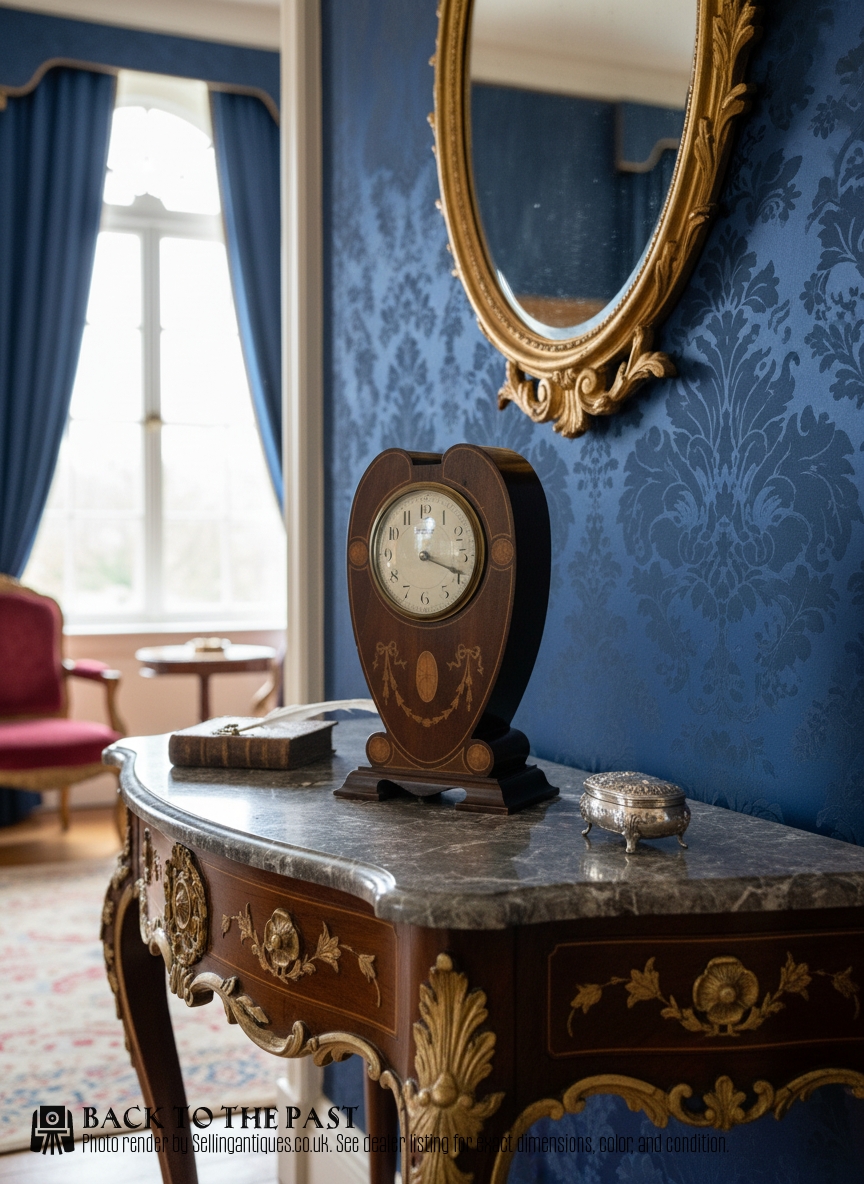
Sheraton revival clock types
A sheraton revival clock draws upon late eighteenth-century proportions while belonging firmly to the Edwardian era. These pieces take the form of mantel clocks and longcase clocks, utilising traditional architectural outlines scaled for domestic interiors.
Mantel clocks dominate the selection, appearing in break arch shapes and inlaid mahogany cases. Alongside these sit taller grandfather clocks, offering a more commanding presence within a hallway or principal room.
Dating primarily from around nineteen hundred, these items reflect an enduring fascination with classic cabinet styles. Collectors encounter Edwardian craftsmanship that reinterprets older aesthetic ideals for modern homes.
Materials and construction
Makers construct these cases predominantly in mahogany, frequently enriched with delicate satinwood inlay work. Brass accents appear on feet, Bezels and dials, providing crisp contrast against the dark timber surfaces.
Enamel dials offer a clear surface for numerals behind protective glass panels. Internal movements drive quarter chiming mechanisms where larger formats permit, integrating precise engineering within ornate wooden housings.
Judging quality
Quality rests upon the precision of the cabinetwork and the subtlety of the timber selection. Finer examples display meticulous inlay and harmonious grain patterns across the break arch or longcase structure.
The sophistication of the internal movement separates standard domestic pieces from finer productions. Clocks featuring quarter chiming capabilities demonstrate a higher tier of horological ambition.
S Smith & Son Of London
The Sheraton Revival Clock Glossary
- Satinwood
- A lustrous, yellowish timber utilised for contrasting stringing and decorative inlay on dark mahogany cases. It brings brightness to Edwardian cabinetry.
- Longcase clock
- A tall floor-standing timepiece housed in a wooden trunk with a weighted pendulum. Often referred to as a grandfather clock.
- Quarter chiming
- A mechanical capability allowing the clock to sound the quarter hours in addition to the full hour. This mechanism requires more complex internal gearing.
Frequently Asked Questions
Where should I place a mantel clock?
These mantel clocks sit comfortably upon wooden surfaces such as sideboards, mantelpieces or bookcases. Their compact proportions allow them to anchor a room without dominating the surrounding furniture.
Ensure the placement is stable and away from direct heat sources to protect the mahogany case and delicate enamel dial.
How do I wind a mechanical clock?
Mechanical clocks require a dedicated key to tension the internal springs or lift the weights gently. Care must be taken not to overwind the movement, stopping as soon as resistance is felt.
Regular setting keeps the escapement balanced and ensures accurate timekeeping across the week.
What defines Edwardian furniture style?
Edwardian design often looks backward to earlier Georgian and Sheraton traditions, reviving classical symmetry and light inlay work. Makers prioritised elegance and domestic refinement.
This era produced lighter, more versatile pieces compared to heavy Victorian furnishings, suiting varied interior schemes.
How do I care for mahogany timber?
Maintain mahogany surfaces by dusting with a soft, dry cloth and avoiding silicone-based polishes. Natural beeswax applied sparingly preserves the sheen of the wood.
Keep the clock away from sudden humidity shifts and direct sunlight to prevent the timber and veneer from drying out.