



Brass Feet Clock
A brass feet clock brings architectural presence to a mantelpiece, combining solid timber cases with polished metal mounts that collectors prize for their weight and craftsmanship.
Brass Feet Clock
When you search for a brass feet clock, you encounter bracket, mantel, and table clocks primarily housed in rich timber cases and raised on metal supports. These timepieces originate from periods spanning the Georgian, Regency, and Victorian eras, as well as Edwardian workshops.
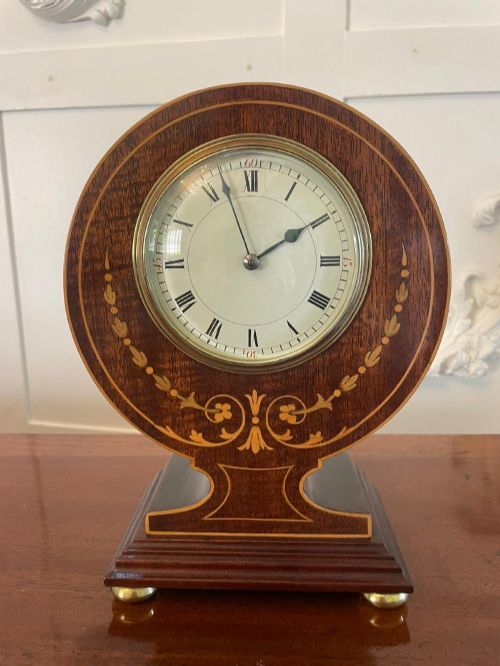
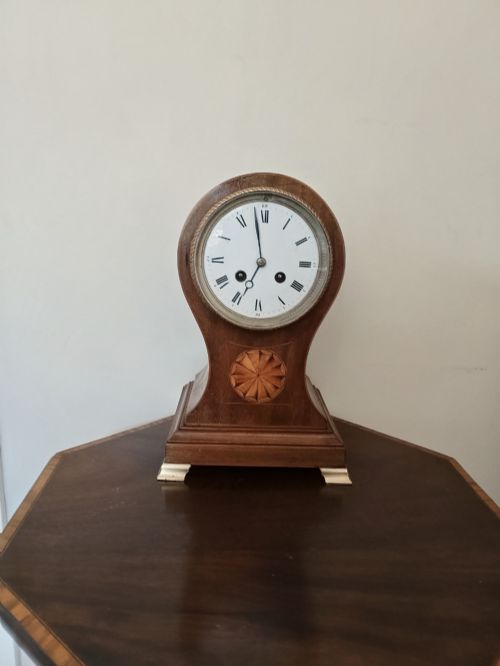
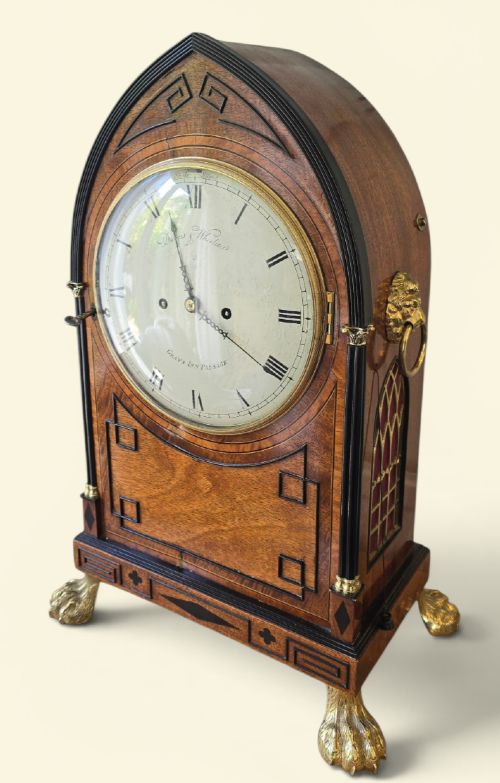
The version you are most likely to meet on this page is a mahogany bracket or mantel clock, often featuring an enamel dial and brass feet. Provincial and London makers produced these pieces in balloon, break arch, and lancet-top forms.
Examples range from compact French striking clocks to robust English fusee movements. Each piece showcases the distinct cabinet-making and horological standards of the nineteenth century.
How they were made
Cabinet-makers constructed the cases from dense hardwoods like mahogany, ebony, and rosewood, frequently incorporating satinwood inlay and fine veneers. These timber bodies house intricate mechanical movements driven by fusee or spring mechanisms.
Dials typically comprise white enamel with black Roman numerals, protected behind glass panels within hinged bezels. Metal mounts, handles, and the characteristic feet are cast and polished in brass to elevate the timber base.
Listings feature woods including mahogany, ebony, rosewood, and satinwood, alongside enamel dials and glass panels.
What varies in quality
The refinement of the timber case and the crispness of the brass casting dictate the standing of the piece. Finer examples display meticulous veneer matching, delicate inlay work, and robust movement engraving by named makers.
Proportion and dial legibility distinguish superior workshop output from standard provincial production. Heavy cast mounts and well-preserved enamel dials separate exceptional specimens from simpler domestic versions.
Bush of London·Desbois and Wheeler·L. Vick of Stroud·Hyde of Salisbury·Louis Recordon·Joseph Jump·Leplastrier of London·Plumbly and Tupman
The Brass Feet Clock Glossary
- Fusee
- A conical pulley used in clock movements to maintain an even pull as the mainspring unwinds. This mechanism ensures consistent timekeeping across the duration of the wind.
- Bracket clock
- A portable table or shelf clock historically designed to sit on a wall bracket. Many examples retain their original brass feet for direct placement on a flat surface.
- Bracket foot
- A small architectural foot projecting from the base corner of a clock case. These supports lift the timber off the surface and often incorporate brass shoes or brackets.
- Enamel dial
- A metal face coated with fused glass powder to create a smooth, white surface. Numerals are painted and fired onto this durable layer.
Brass Feet Clock: Frequently Asked Questions
Where should I place a bracket clock?
These clocks suit sturdy mantelpieces, desks, or dedicated table brackets where their timber cases and polished brass feet remain visible. Ensure the surface is level to keep the pendulum or balance wheel beating evenly.
Keep the clock away from direct sunlight and strong temperature fluctuations to protect the timber veneer and the delicate enamel dial over time.
How do I identify a Regency clock?
Regency pieces often display classical architectural motifs, dark mahogany or ebony veneers, and restrained brass inlay. Look for clean geometric lines that reflect early nineteenth-century design trends.
Maker signatures on the dial or backplate provide further confirmation of the production period.
What is a fusee movement?
A fusee is a mechanical device that equalises the power of the driving spring as it runs down. It uses a cord or chain wrapped around a conical drum to deliver steady force to the gear train.
This system is a hallmark of better quality English clockmaking from the Georgian and Victorian periods.