
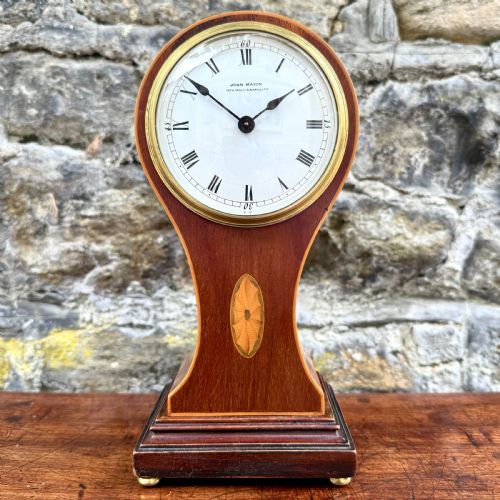

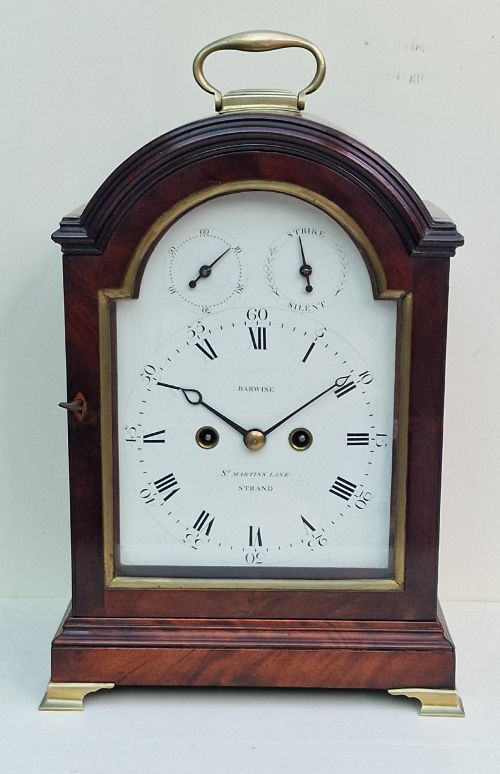
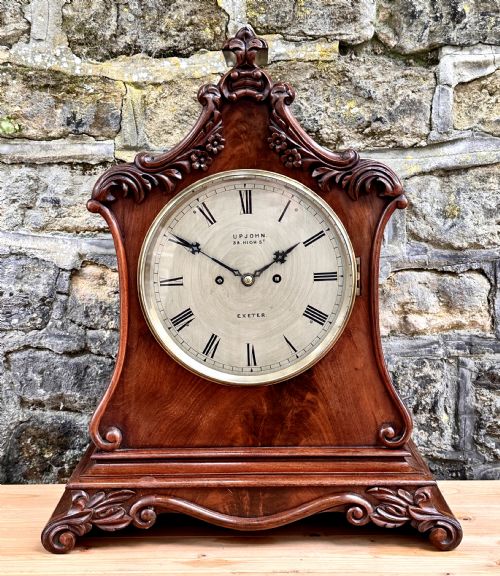
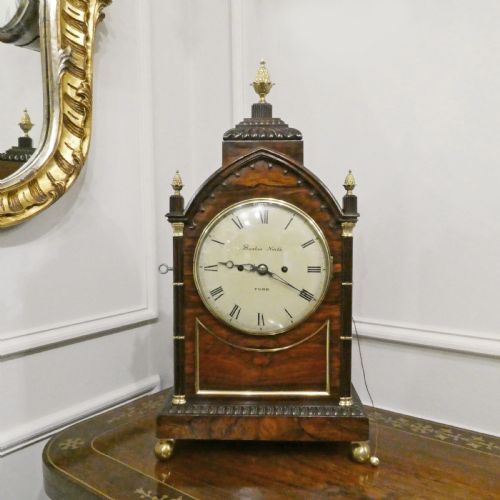
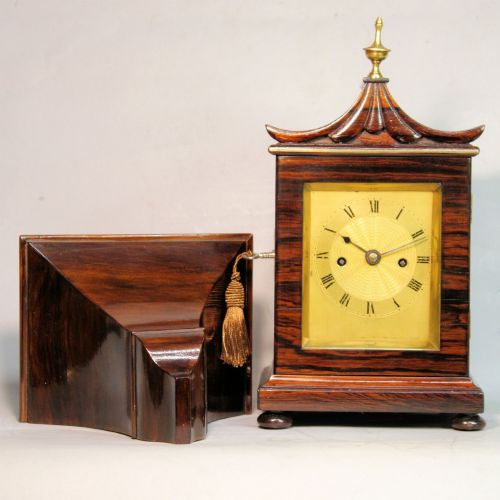
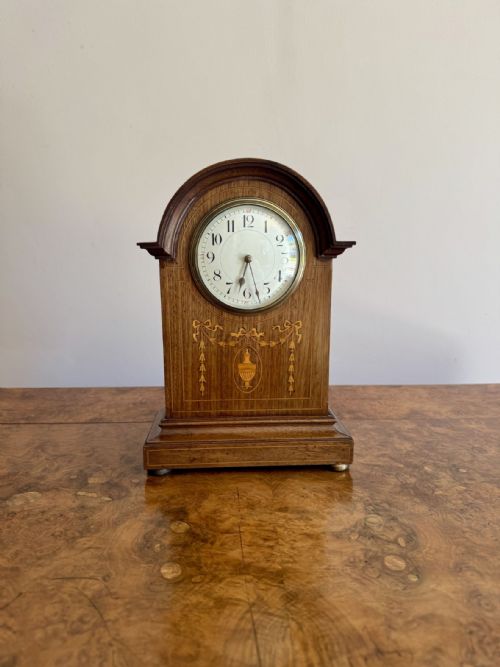

Wood Bracket Clock
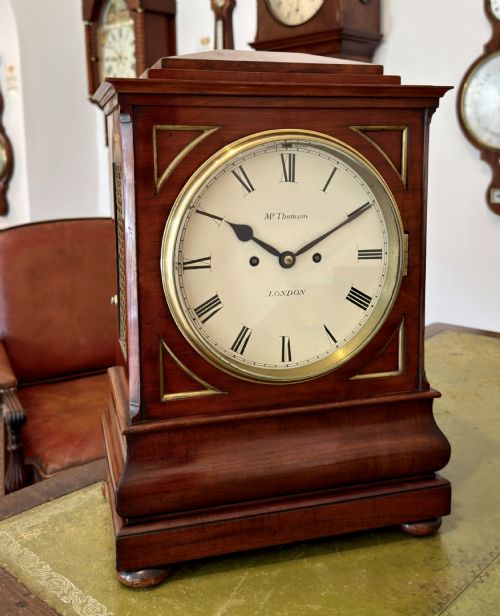
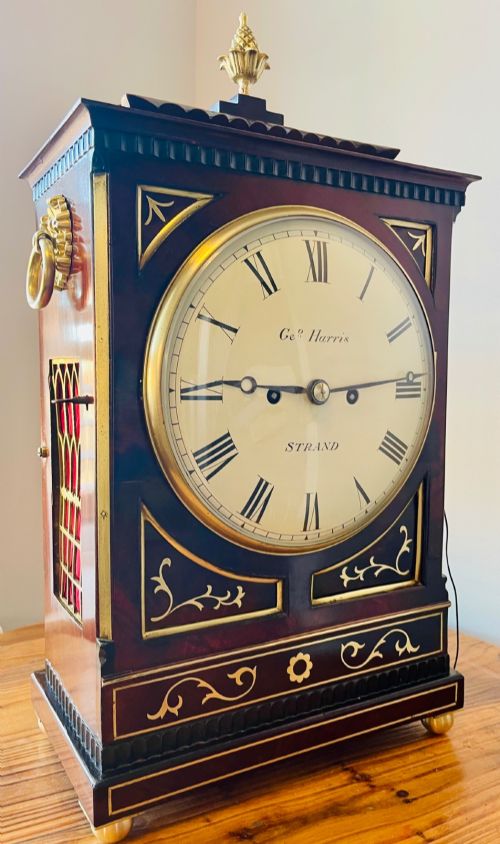
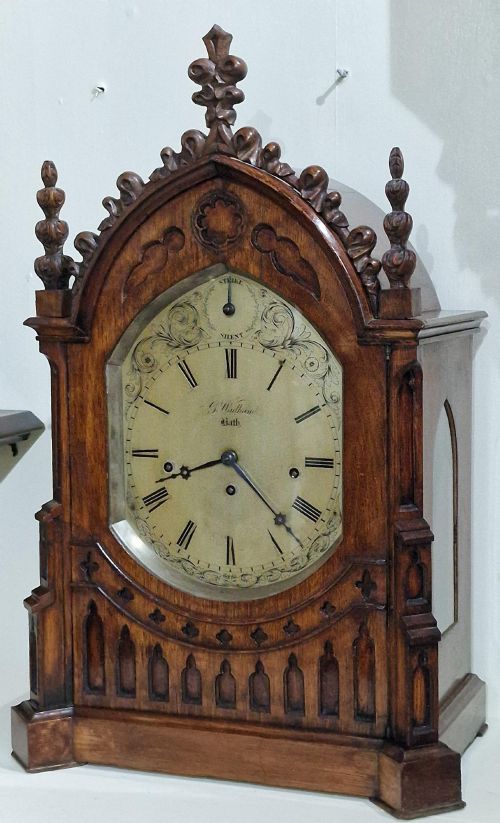
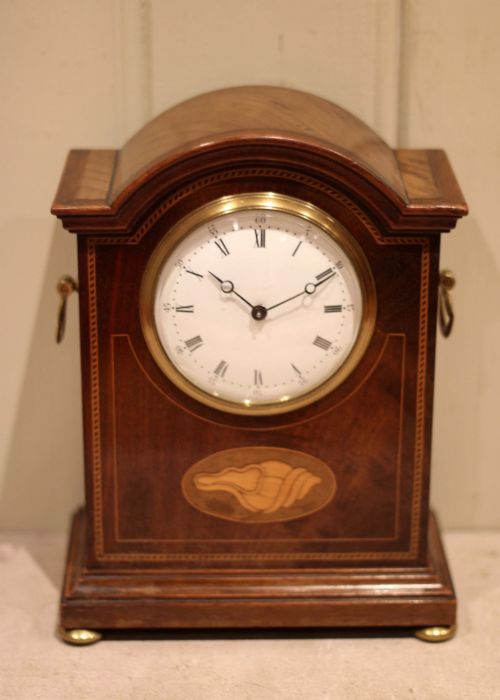
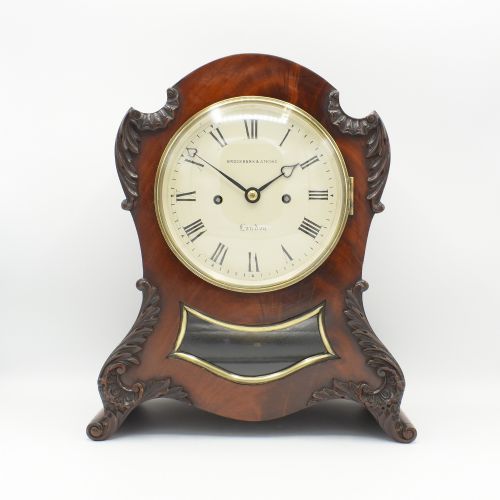
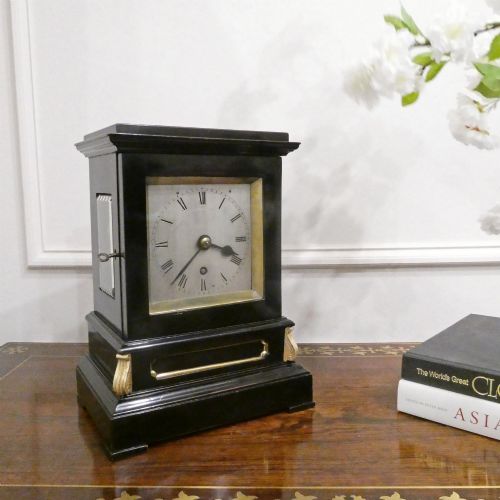
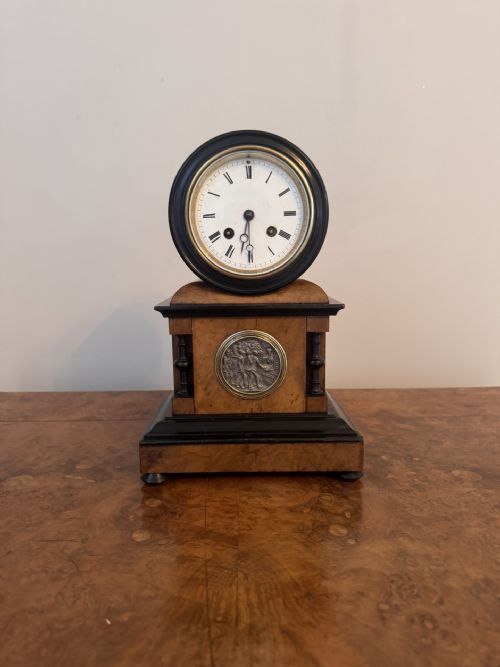
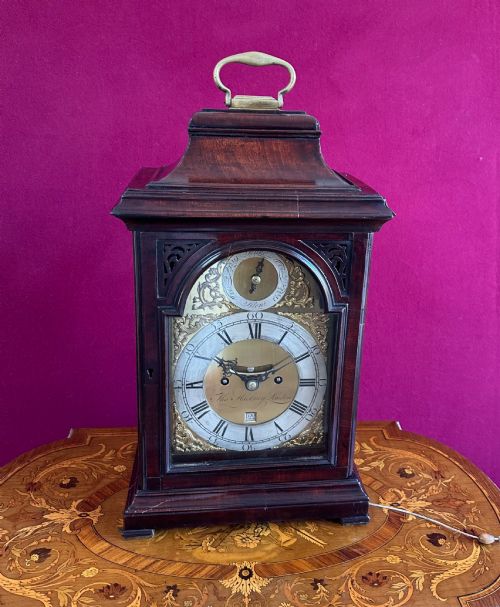
When you search for a wood bracket clock, you enter a field defined by substantial timber cases, brass movements and portable elegance.
Wood Bracket Clock
A wood bracket clock is a portable timekeeper designed to sit securely upon a table, shelf or dedicated wall bracket rather than stand independently on the floor.
The pieces seen on this page span the Georgian, Regency, Victorian and Edwardian eras, with mahogany and rosewood housing forming the core of the selection.
Makers housed these mechanisms in varied architectural silhouettes, from traditional break-arch and chamfer top designs to delicate balloon and inlaid Edwardian mantel variants.
Materials and construction
Cabinet makers utilised dense hardwoods such as mahogany, rosewood, oak and satinwood, often enriching surfaces with brass inlay, gilt bronze mounts or ebonised detailing.
Clockmakers fitted these timber enclosures with intricate brass mechanical movements driven by fusee chains or spring barrels, displaying enamelled or brass chapter rings behind protective glass doors.
Listings feature mahogany, rosewood and ebonised wood across Victorian, Regency and Edwardian eras.
Judging the range
Quality rests upon the crispness of cabinet joinery and the harmonious integration of wood grain, whether simple mahogany or finely figured rosewood.
The sophistication of the internal movement dictates worth, distinguishing standard timepieces from complex triple fusee, chiming or repeating mechanisms signed by accomplished makers.
Thomson of London·Brockbanks and Atkins·Mappin and Webb·Sir John Bennett·John Houghton·Alexander Purvis
The Wood Bracket Clock Glossary
- Fusee
- A conical pulley designed to equalise the pulling force of the mainspring as it winds down. This mechanism ensures consistent timekeeping throughout the running period.
- Bracket clock
- A portable timekeeper originally built with a matching wall shelf for placement in principal rooms. Later examples functioned primarily as substantial mantel clocks.
- Verge escapement
- An early gear mechanism that regulates the release of power in a clock. It produces a distinctive ticking rhythm.
- Ting tang
- A striking mechanism utilising two bells to sound the quarters and hours. It creates a gentle dual-tone chime.
- Chapter ring
- The outer metal circle bearing the hour numerals on a clock face. These are frequently fashioned from silvered or engraved brass.
Wood Bracket Clock: Frequently Asked Questions
What is a fusee movement?
A fusee movement uses a conical pulley system to maintain even tension on the gear train as the mainspring relaxes. This mechanical refinement helps the clock maintain accurate time.
Most high-grade British pieces from the eighteenth and nineteenth centuries employ this system, visible upon opening the back door of the timber case.
Were these clocks meant to travel?
Despite being portable, these timekeepers stayed largely stationary in grand rooms, secured on tables or dedicated wall brackets. Their weight and delicate internal mechanisms made frequent moving impractical.
Carrying handles often fitted to the top of the timber cases served for seasonal repositioning within a residence rather than daily transit.
How do I date a wood bracket clock?
Dating relies on stylistic shifts in timber choice, case silhouette and dial design. Georgian and Regency pieces favour rosewood and brass inlay, while Victorian examples often feature bolder mahogany or ebonised cases.
Signatures inscribed on the brass backplate or dial face offer the most direct path to identifying the maker and approximate decade of production.
Where should I place a bracket clock?
These pieces require a stable, level surface away from direct sunlight, central heating vents and damp walls. A sturdy mantelpiece, sideboard or dedicated wall bracket provides optimal support.
Ensuring the surface is completely flat allows the pendulum or balance wheel to maintain an even beat and keeps the striking train functioning correctly.