



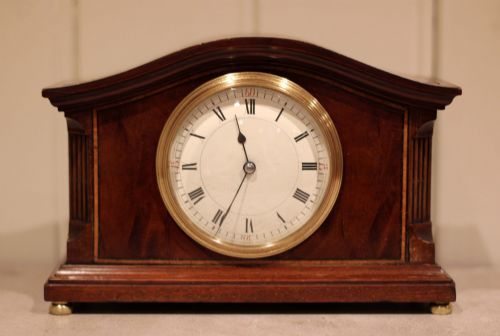
Mahogany Desk Clock
A mahogany desk clock sits properly on timber surfaces, bringing weight and measured movement to a room.

Mahogany Desk Clock
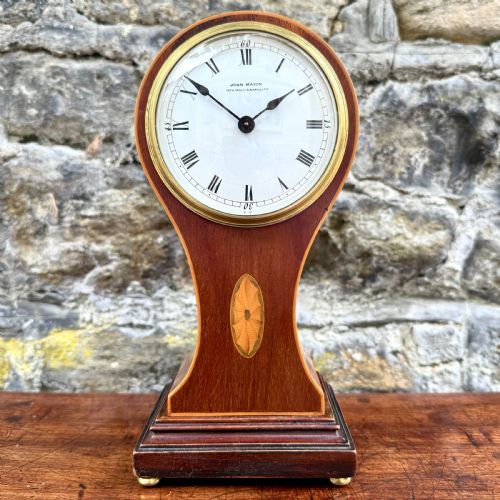
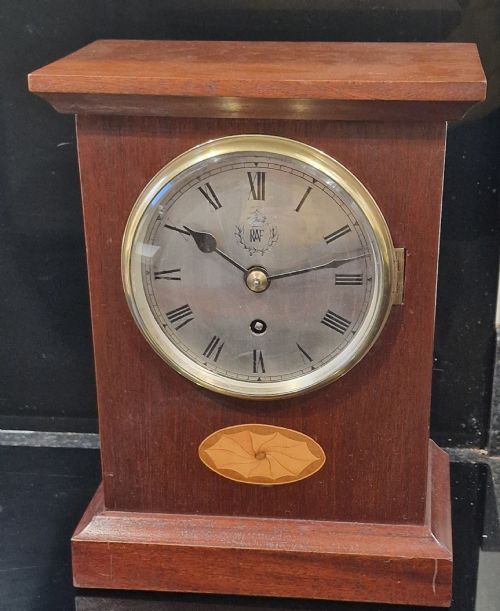
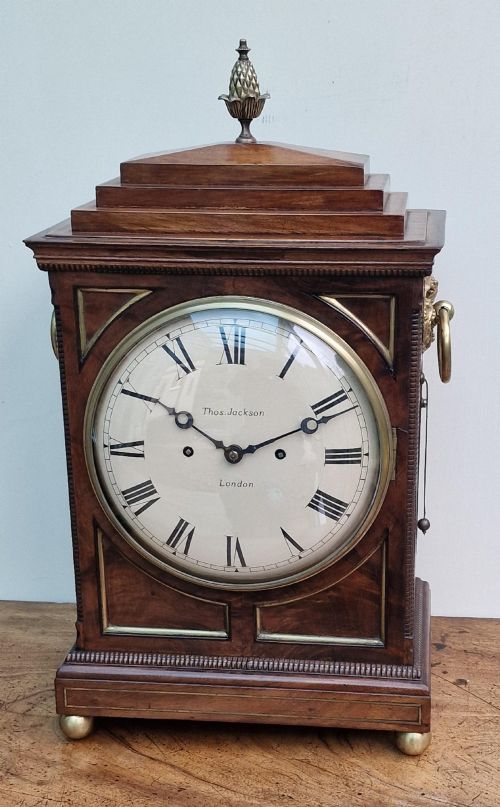
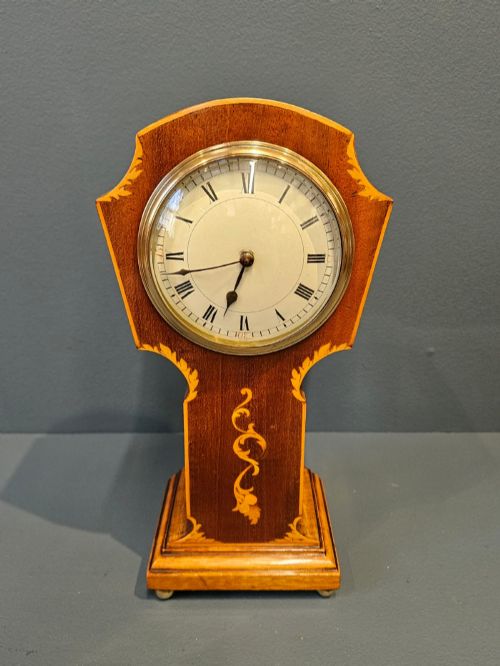
When you search for a mahogany desk clock, you encounter portable timepieces spanning the Georgian, Regency, Victorian, and Edwardian periods. These portable instruments take the form of library clocks, bracket clocks, and balloon or lancet mantel pieces designed for tables and writing surfaces.
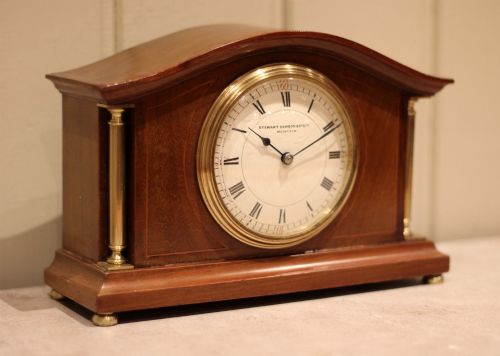
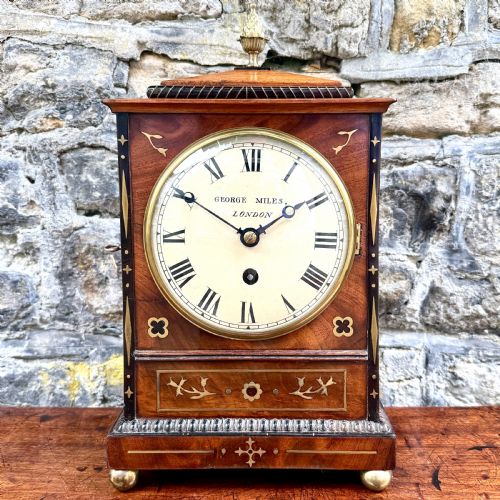
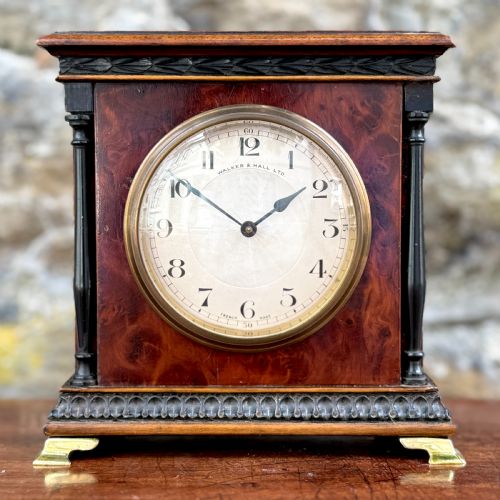
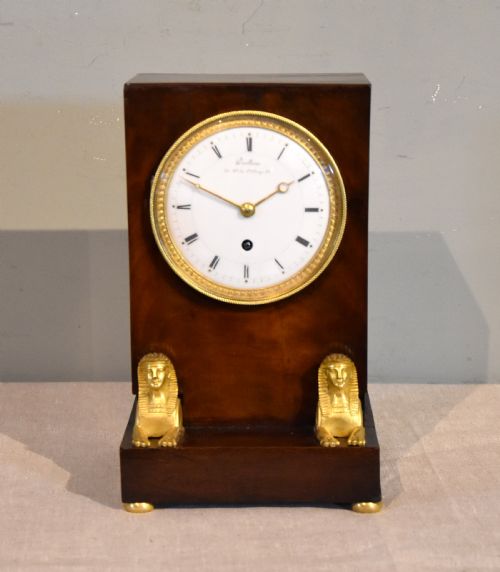
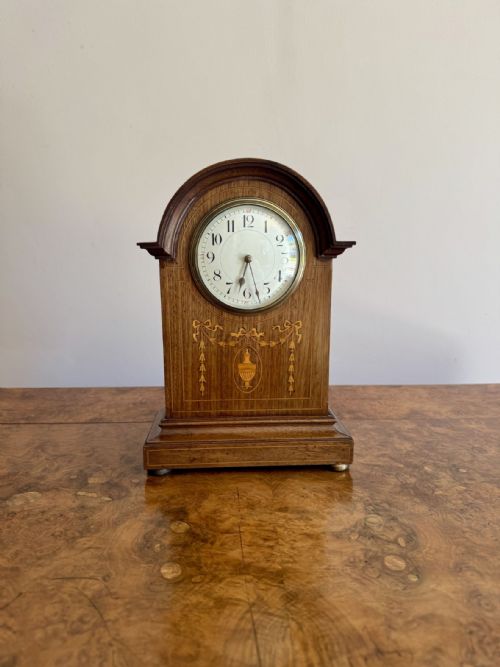
The Edwardian era and the Regency period supply the largest share of specimens on this page, alongside occasional Victorian and early twentieth-century examples. Many incorporate brass mounts, glass panels, or delicate boxwood and satinwood stringing into the timber frame.
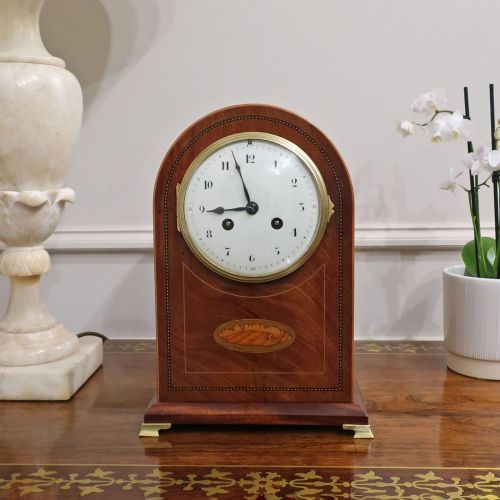
Makers housed these movements in solid or veneered mahogany, frequently deploying architectural shapes such as pad tops and arched cases. They function equally well on a writing desk or a mantelpiece, serving as both utility and ornament.
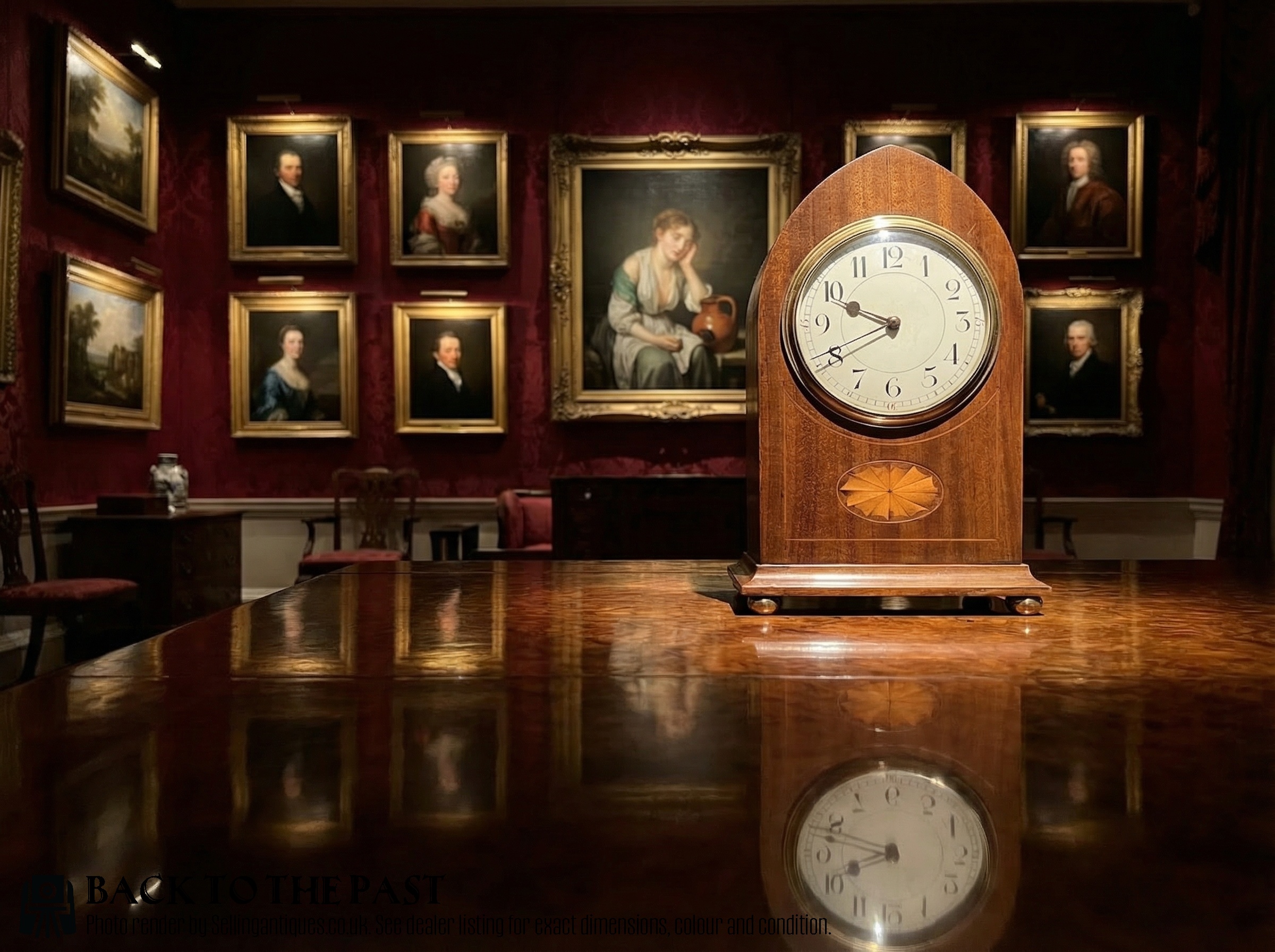
Timber and brass construction
Cabinet makers built the cases using dense mahogany, frequently selecting figured grains for the exterior and reinforcing structural joints with secondary woods. Where stringing appears, craftsmen inlaid contrasting lines of boxwood and satinwood into recessed channels.
Brass formed a critical secondary material, appearing as cast bezels, bracket feet, side handles, and pierced sound frets. Glass panels protected delicate white enamel or silvered dials, allowing light to reach the chapter rings without exposing the mechanism to dust.
Mahogany Desk Clock Retail Price Guide 2026
Typical asking prices for mahogany desk clock among the pieces listed under this phrase on Sellingantiques today, from the lower quarter to the upper quarter. They describe what is for sale here now, not the wider market.
Listed examples span the Regency, Victorian, and Edwardian periods alongside early twentieth-century work.
Assessing craftsmanship and proportion
Quality rests in the harmony of the case proportions and the crispness of any inlay work. Finer specimens display tight mitres, heavy cast brass components rather than stamped sheet metal, and carefully selected mahogany veneers that wrap cleanly around complex case curves.
The integration of the dial and bezel with the wooden housing distinguishes finer pieces from ordinary production. Superior examples maintain original movement signatures and undamaged enamel dials, whereas lesser pieces often show clumsy dial replacements or softened woodwork.
Mappin & Webb·Walker and Hall·Thomas Jackson·Bush of London·W. Burton·Piggin Norwich·Wilkinson Leicester·J Kingerley·Winterhalder & Hofmeier·R Stewart of Glasgow·Dent of London
The Mahogany Desk Clock Glossary
- Fusee
- A conical pulley used in spring-driven clocks to equalize the diminishing power of the mainspring as it unwinds. This mechanism helps the clock maintain a consistent rate throughout its running period.
- Bracket clock
- A portable household clock originally designed to sit on a wall bracket or a table. Many incorporate brass carrying handles on top.
- Stringing
- Thin lines of contrasting wood inlay used to decorate furniture surfaces. Cabinet makers often set boxwood or satinwood stringing into mahogany cases.
- Lancet clock
- A mantel or desk clock featuring a pointed, gothic arch top resembling a lancet window. The curved timber case sits low and stable on a flat base.
- Timepiece
- A clock that indicates the time but does not strike the hours or quarters. These movements focus purely on the going train.
Mahogany Desk Clock: Frequently Asked Questions
How do I wind a fusee desk clock?
Insert the winding key into the dial aperture and turn it steadily clockwise until resistance increases. Stop immediately when you feel tension to avoid over-winding the mainspring.
Most fusee movements require a key rather than a built-in winding mechanism. Take care to support the case while winding to prevent the clock from shifting on polished desk surfaces.
Where should I place a library clock?
Position your clock on a stable desk, sideboard, or table away from direct sunlight and damp environments. Solid mahogany is sensitive to rapid humidity changes.
Ensure the surface is entirely level so the pendulum or balance wheel beats evenly. An unlevel surface causes the clock to lose time or stop altogether.
What is an eight-day movement?
An eight-day movement runs for approximately eight days on a single wind before requiring attention. This design allowed household owners to wind their clocks just once a week.
Most quality desk clocks from the Regency and Edwardian eras utilise this configuration. It reduced wear on the mainspring by requiring fewer interventions per month.
How do I distinguish Regency from Edwardian styles?
Regency cases lean towards architectural severity, heavy brass inlay, and classical restraint. They frequently feature tablet tops, brass bracket feet, and bold rosewood or brass details.
Edwardian interpretations tend to be lighter, drawing on Sheraton revivals with delicate satinwood stringing and elegant bell or balloon silhouettes. The mahogany grain on Edwardian pieces is often brighter and less heavily polished.