


Edwardian Lancet Clock
Edwardian lancet clock pieces combine tall pointed arches with warm mahogany cases, offering classic shelf timekeeping for traditional interiors.
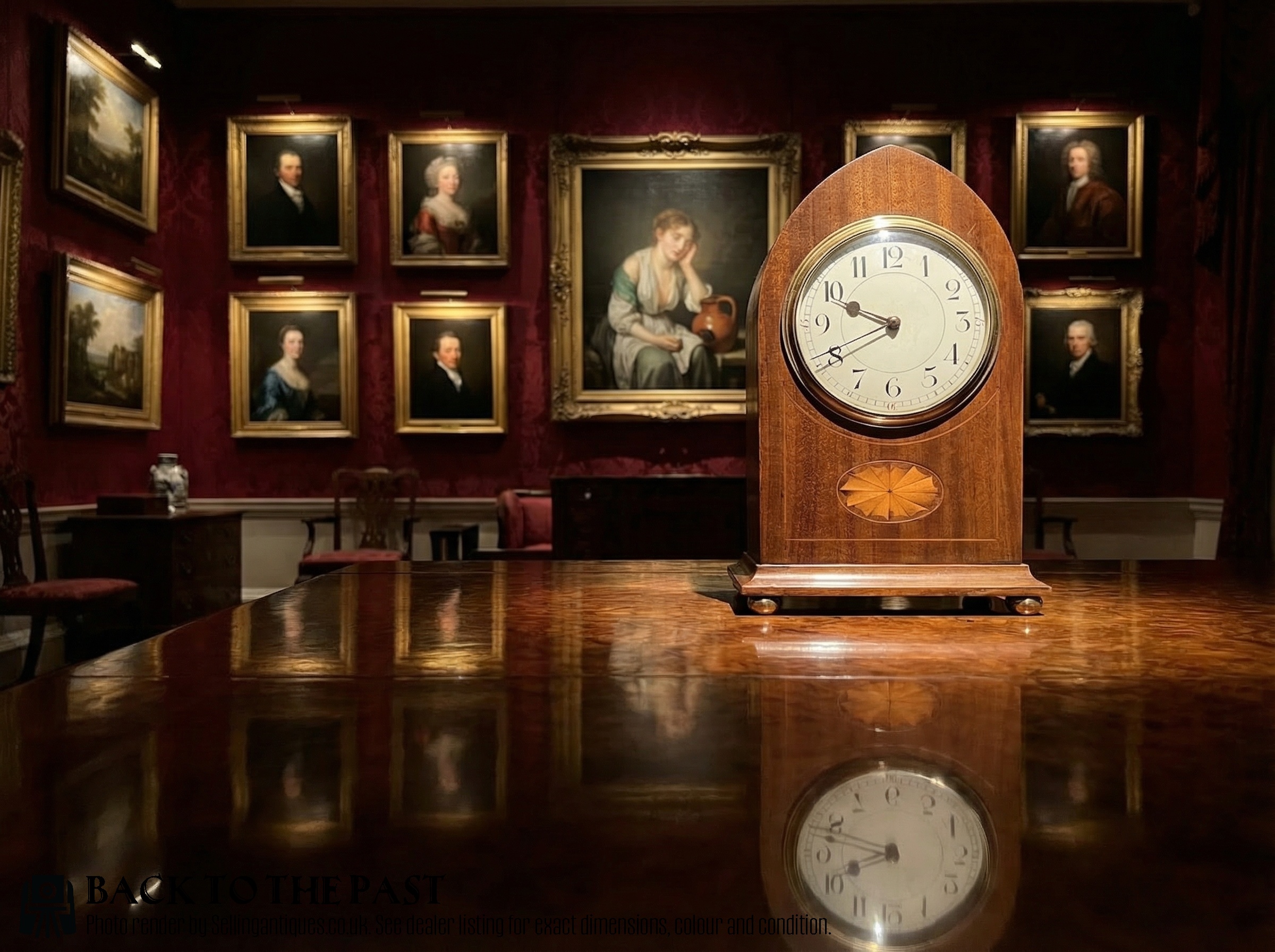
Edwardian Lancet Clock
An edwardian lancet clock takes its name from the sharp, pointed architectural arch of the case, echoing the lancet windows of Gothic churches. Buyers search for this specific silhouette when seeking a formal yet slender timepiece for a mantelpiece or desk.
The version most commonly met here is a compact table clock housed in mahogany, often accented with delicate inlay. Pieces span from small timepieces to larger striking mantel variants produced around the turn of the twentieth century.
Markers of Quality
The refinement of the cabinetwork distinguishes standard examples from superior pieces, particularly in the precision of the satinwood inlay and the selection of figured mahogany veneer. Clean lines along the pointed arch demonstrate skilled carpentry.
Movement sophistication also plays a role, with single fusee mechanisms and striking or ting tang functions representing more complex engineering than simple timepieces.
Edwardian Lancet Clock Retail Price Guide 2026
Typical asking prices for edwardian lancet clock among the pieces listed under this phrase on Sellingantiques today, from the lower quarter to the upper quarter. They describe what is for sale here now, not the wider market.
Listings feature mahogany predominantly, alongside alternative timber cases in oak and rosewood.
W. Burton·W&H
The Edwardian Lancet Clock Glossary
- Lancet top
- A case shape featuring a sharply pointed arch reminiscent of Gothic architectural windows. This silhouette defines the entire form.
- Fusee
- A conical pulley mechanism designed to maintain even tension on the clock train as the mainspring unwinds. It ensures consistent timekeeping.
- Ting tang
- A striking movement configuration that sounds two notes on the quarters and the appropriate hour on the, usually, lower note. This chime style originated in Germany.
- Inlay
- Contrasting wood such as satinwood or boxwood set flush into the mahogany case for decoration. It adds linear detail to the arch front.
Edwardian Lancet Clock: Frequently Asked Questions
How do I set the time?
Move the minute hand gently in a clockwise direction until it reaches the correct hour. Avoid turning hands backwards on striking models to prevent damage to the gear train.
Allow the movement to complete its strike sequence before advancing the hands further if the clock possesses a chiming function.
Where should I place it?
Position the clock on a stable, level surface such as a mantelpiece, shelf, or heavy wooden table. A solid foundation helps the pendulum or balance wheel maintain a regular beat.
Keep the piece away from direct sunlight, radiators, and damp areas to protect the mahogany veneer and delicate inlay work from warping.
How do I wind the clock?
Insert the appropriate winding key into the dial arbour and turn it smoothly until you feel resistance. Do not overwind the mainspring.
Support the case gently with your free hand while winding to prevent the clock from shifting position on its shelf.
What maintenance is needed?
Dust the exterior mahogany case regularly with a soft, dry cloth to preserve the polish. Avoid using liquid polishes or chemical sprays.
Consult a professional horologist for periodic oiling and cleaning of the internal mechanical movement to ensure reliable operation over time.