
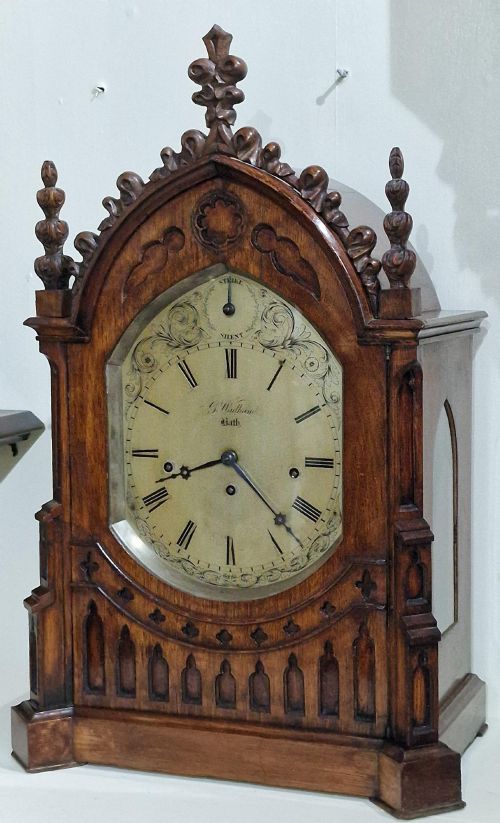
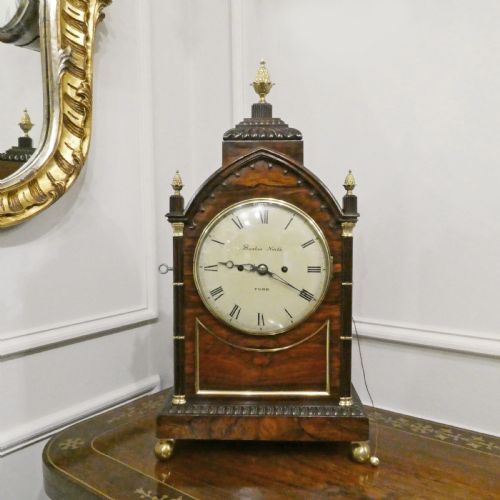
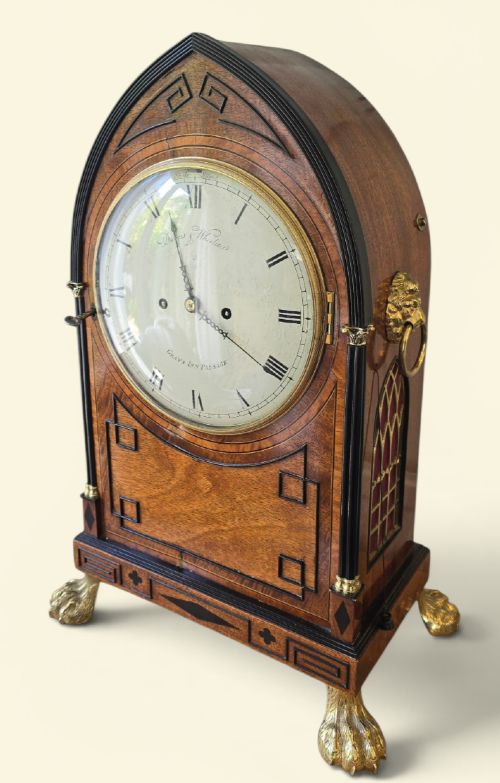


Gothic Arch Mantel Clock
These gothic arch mantel clock pieces bring architectural form and precision timekeeping into rooms that favour traditional woods and striking dials.
What a gothic arch mantel clock is
When you search for a gothic arch mantel clock, you encounter architectural timepieces shaped by pointed arches and lancet profiles. These clock forms emerge primarily from nineteenth century workshops during the Victorian and Edwardian periods, reflecting historical revival movements.
The most common versions met on this page take the form of lancet top mantel clocks and bracket clocks executed in mahogany or rosewood. They sit upon flat bases or bracket feet, housing white enamel dials protected behind bevelled glass doors.
Makers working in this style during the William IV and Regency transitions also produced robust wooden cases inlaid with boxwood stringing. Each piece serves as both a functional timepiece and a sculptural object for the mantelpiece or table.
How they were made
Cabinetmakers constructed these clock cases using dense hardwoods such as mahogany, rosewood, and oak, frequently embellished with delicate boxwood inlay. The characteristic arched silhouette required precise sawing and joinery to shape the tapered lancet tops without splitting the timber grain.
Movements relied on complex brass gear trains, ranging from single fusee configurations to triple fusee mechanisms capable of striking bells. White enamel dials received hand-painted numerals and minute markers, fitted securely behind hinged brass bezels and glass covers.
Retail Price Guide 2026
Typical UK retail prices for gothic arch mantel clock, calculated from the Sellingantiques database of over a million retail prices indexed since 2003. This retail price guide relies exclusively on Sellingantiques data; no external sources or auction records are used, so the figures do not describe the wider market.
What varies in quality
The distinction between standard domestic clocks and finer examples lies in the complexity of the internal movement and the sophistication of the case timber. Triple fusee mechanisms operating on bells represent a higher tier of horological ambition compared to simpler single fusee setups.
Cabinetwork quality separates ordinary production from superior pieces through the selection of well-figured rosewood or mahogany veneers and crisp boxwood stringing. The legibility of the enamel dial and the precision of the cast brass bezels complete the overall standard.
George Wadham Bath·Barber North of York·Wilkinson Leicester
The Gothic Arch Mantel Clock Glossary
- Lancet top
- A tall, pointed arch shape resembling a medieval window arch. This silhouette defines the vertical thrust of the clock case.
- Fusee
- A conical pulley used in clock movements to maintain an even pull as the mainspring unwinds. It ensures consistent timekeeping accuracy across the power reserve.
- Bracket clock
- A portable timekeeper originally designed to sit on a wall bracket or table. Many examples feature carrying handles or flat bases.
- Enamel dial
- A metal face coated with fused glass powder to create a smooth, white surface. Numerals are painted onto this glossy plane.
Frequently Asked Questions
How do I wind a fusee clock?
Wind the movement using a matching key inserted into the dial arbor, turning it carefully until resistance stops the motion. Avoid over-winding to protect the internal mainspring.
Ensure you handle the key with a steady hand so the delicate brass teeth and fusee chain remain undamaged during the process.
What is a single fusee movement?
A single fusee movement uses one conical drum and chain to equalise the power delivered from the mainspring to the gear train. This mechanism improves accuracy as the spring runs down.
Clocks with this system generally tell time without striking bells or chimes on the hour.
Where should I place a mantel clock?
Position your clock on a level surface away from direct sunlight, draughts, and dampness to protect the wooden case and movement. A sturdy mantelpiece or side table works best.
Check that the surface does not vibrate when people walk past, as stability is crucial for correct pendulum or balance wheel operation.
How do I identify the period of a clock?
Examine the timber selection, case silhouette, and dial construction for clues pointing to Victorian, Edwardian, or earlier Regency design traits. Inlay styles and brass fittings also help date the piece.
Maker signatures inscribed on the backplate or painted across the enamel dial provide further historical context.