
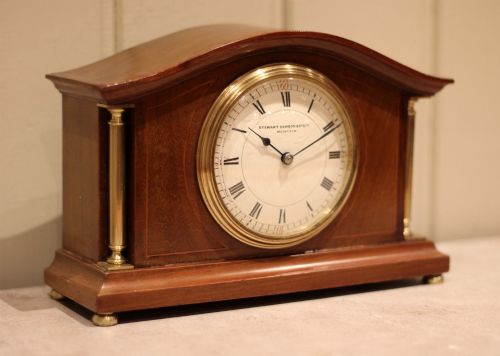
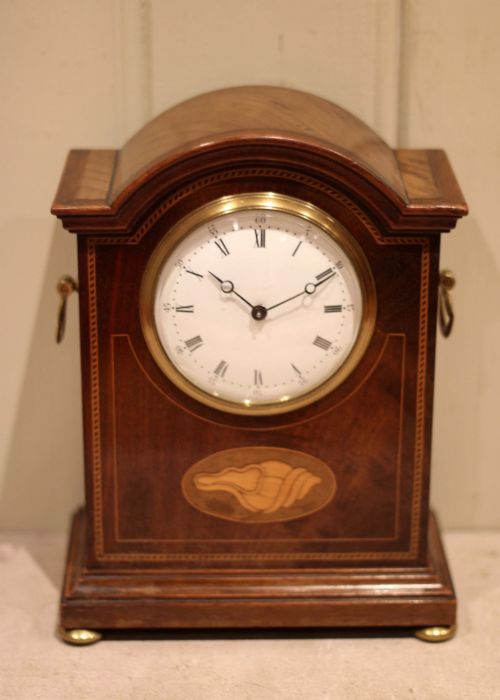
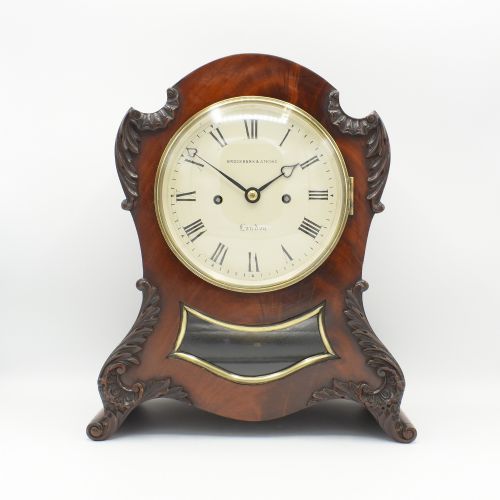
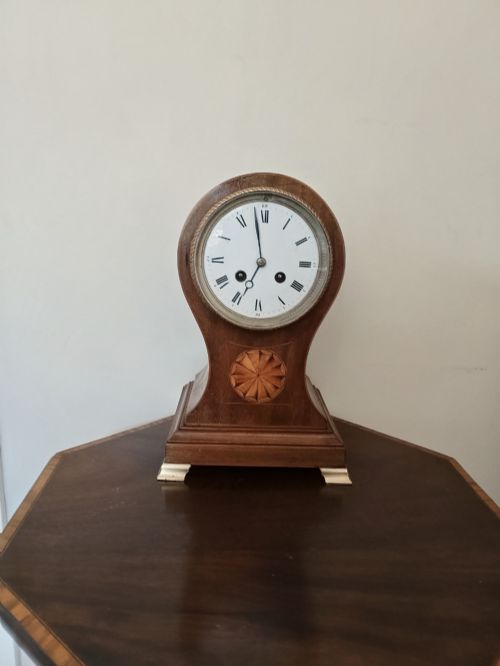


Mahogany Shelf Clock
A mahogany shelf clock brings warmth and mechanical precision to a mantel, table or wall.
Mahogany Shelf Clock
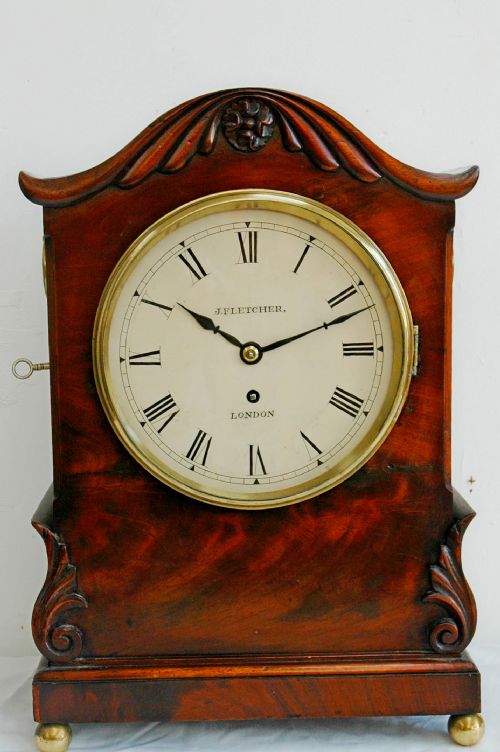
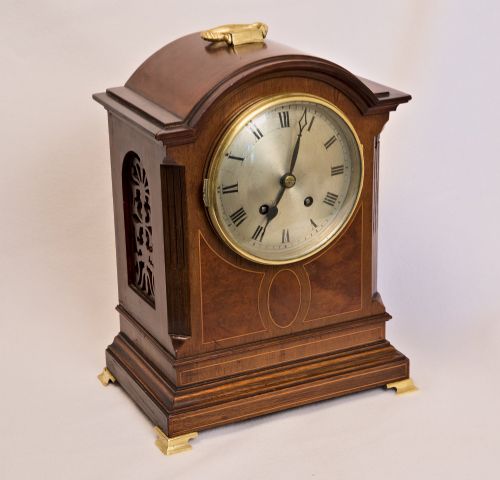
A mahogany shelf clock combines rich cabinet timber with a mechanical movement designed for domestic use. These timekeepers sit on mantelpieces, brackets and shelves, serving both a practical and a decorative function in a room.
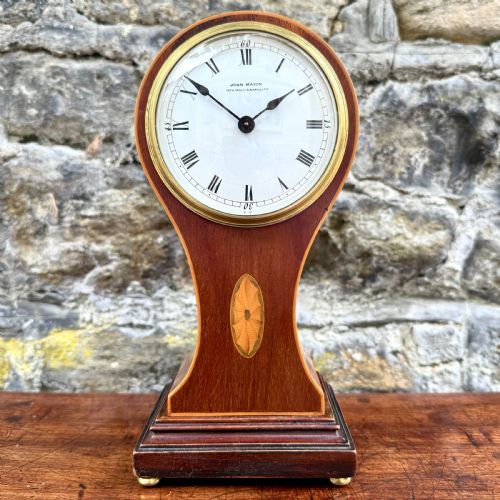
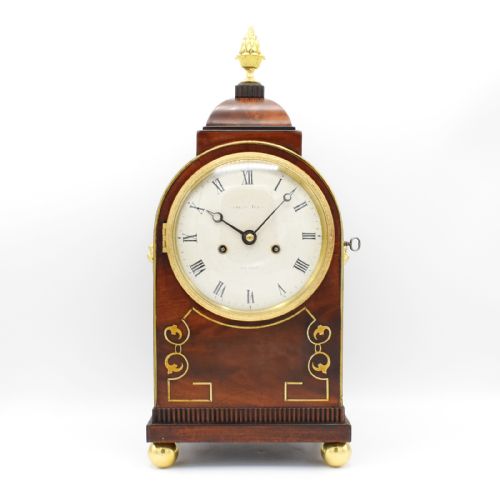
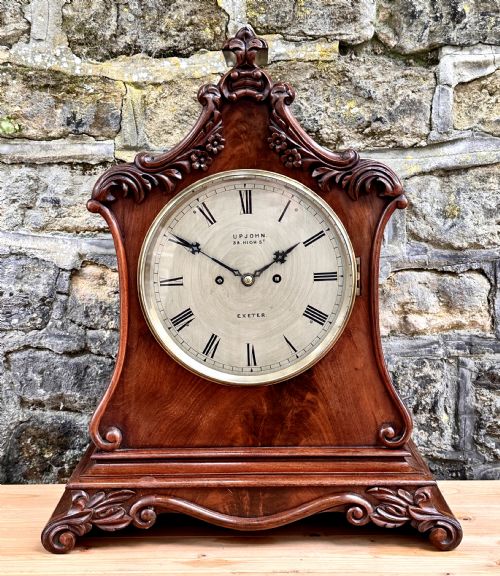
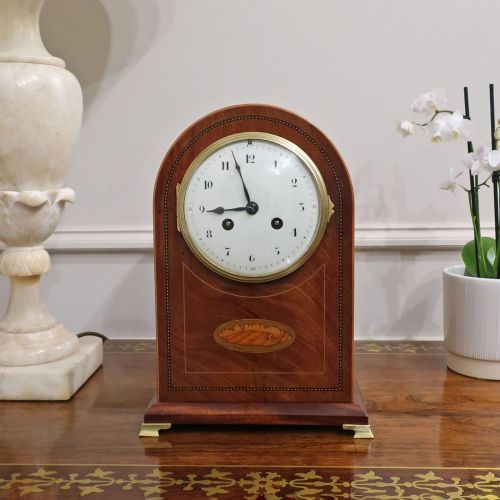
The pieces appearing here span several decades and stylistic revivals, with Edwardian and Victorian examples forming a large share of the selection. Alongside traditional mantel clocks, the group includes wall clocks and compact table timepieces.
Origins vary across English, French and American workshops, bringing distinct regional dial designs and movement types to the selection. Formats range from understated architectural shapes to balloon and pagoda silhouettes.

How they were made
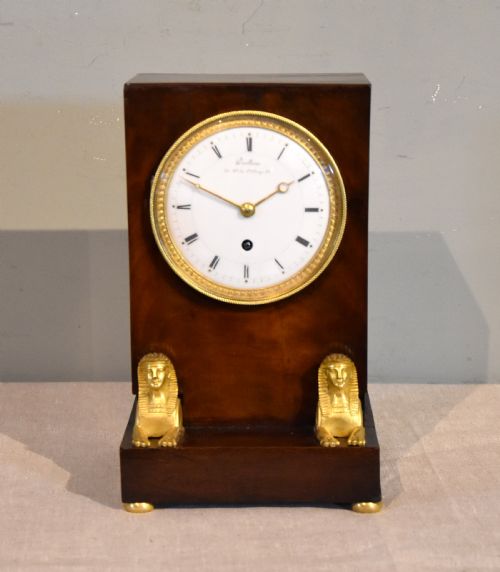
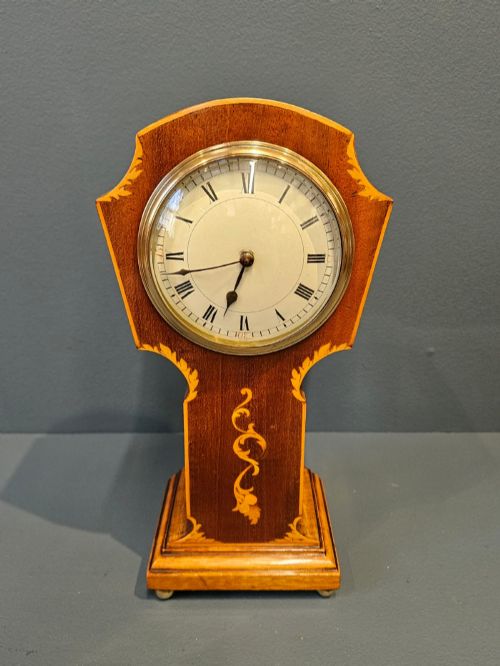
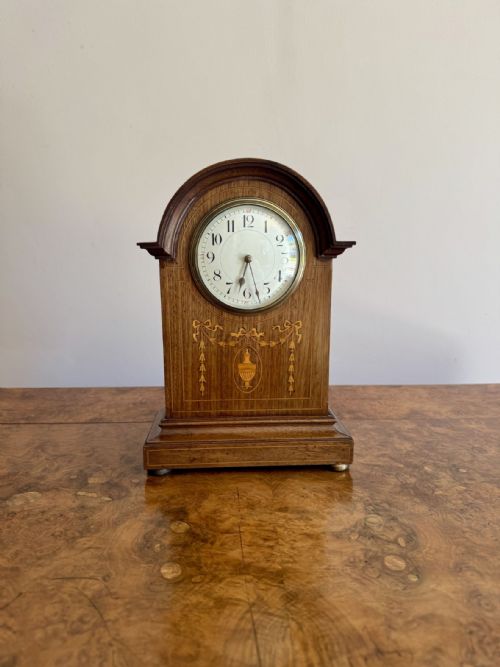
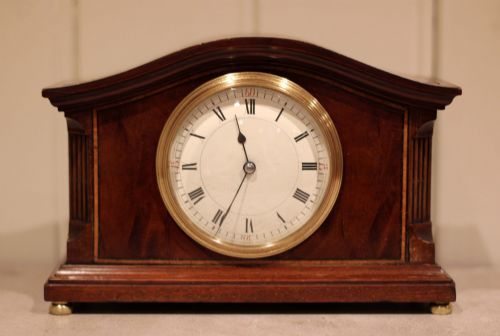
Cabinetmakers constructed the housing primarily from solid mahogany or utilised mahogany veneers over secondary woods. Many cases incorporate boxwood, satinwood or brass inlay, alongside ormolu mounts and glass viewing panels.
Movement assembly involved brass gear trains, escapements and coiled or bell strike mechanisms. Enamel or painted metal dials display Roman or Arabic numerals, protected behind hinged bezels and glazed doors.
Mahogany Shelf Clock Retail Price Guide 2026
Typical asking prices for mahogany shelf clock among the pieces listed under this phrase on Sellingantiques today, from the lower quarter to the upper quarter. They describe what is for sale here now, not the wider market.
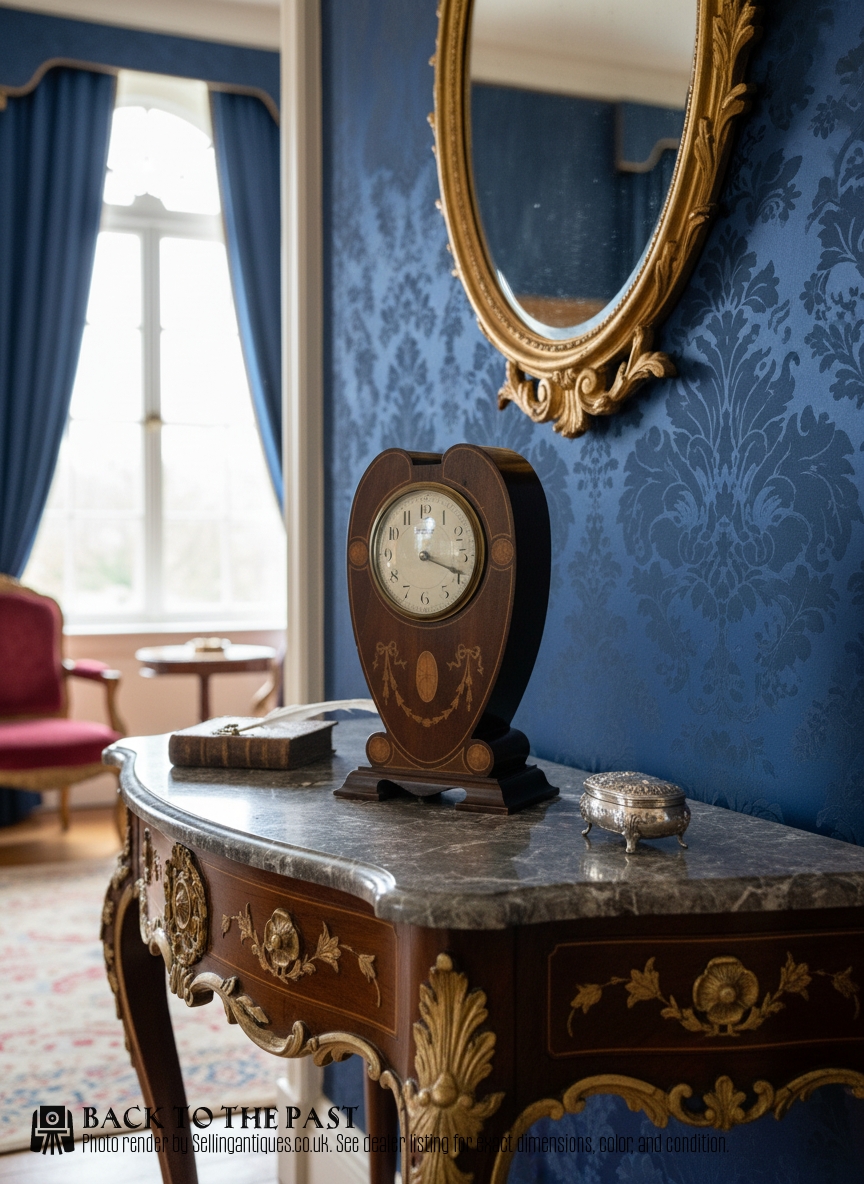
One Edwardian mahogany mantel clock arrives complete with inlaid poppies, offering a floral rebellion against strict Victorian solemnity.
What varies in quality
The refinement of the cabinetwork sets examples apart, seen in the crispness of wood inlay, carved details and proportions. Finer cases balance timber grain patterns with restrained brass accents rather than heavy ornamentation.
Movement execution and signature markings also define the tier of a piece. High-grade clocks house robust, finely finished gear trains produced by established makers or precision workshops.
Brockbanks and Atkins·Charles Pratt London·Piggin Norwich·Barrett London·J Kingerley Manchester·Junghans
The Mahogany Shelf Clock Glossary
- Fusee
- A conical pulley connected to the mainspring by a chain or cord, designed to equalise the force of the spring as it winds down.
- Bracket clock
- A portable timepiece originally designed to sit upon a dedicated wall bracket, typically featuring a brass carrying handle.
- Timepiece
- A clock that indicates the time but does not possess a striking or chiming mechanism.
- Ormolu
- Gilt bronze ornamentation applied to the cabinet case for decorative contrast.
Mahogany Shelf Clock: Frequently Asked Questions
How do I wind a mahogany shelf clock?
Winding requires a matching key inserted into the dial winding holes, turning gently until resistance increases. Care must be taken not to overwind the mainspring.
Striking clocks should be allowed to complete their sequence if interrupted during winding to avoid damaging the internal rack and snail mechanism.
Where should I place a shelf clock?
These clocks require a level, stable surface away from direct sunlight, dampness and intense heat sources. Wooden mantelpieces and secure wall shelves are traditional locations.
A stable foundation ensures the pendulum or balance wheel maintains an even beat for accurate timekeeping.
How do I tell an Edwardian clock from a Victorian one?
Victorian examples often display heavier proportions and deeper mahogany tones, frequently incorporating elaborate brass details or architectural pediments. Edwardian pieces generally lean towards lighter inlaid decoration using satinwood and boxwood.
Arts and Crafts or Art Nouveau influences also appear in Edwardian designs, introducing floral motifs or stylized copper elements.
What is the difference between a timepiece and a striking clock?
A timepiece measures and displays hours and minutes without sounding an alarm or chime. They contain simpler movements focused solely on tracking time.
Striking clocks include an additional gear train and hammer system to ring bells or gongs on the hour or half-hour.