
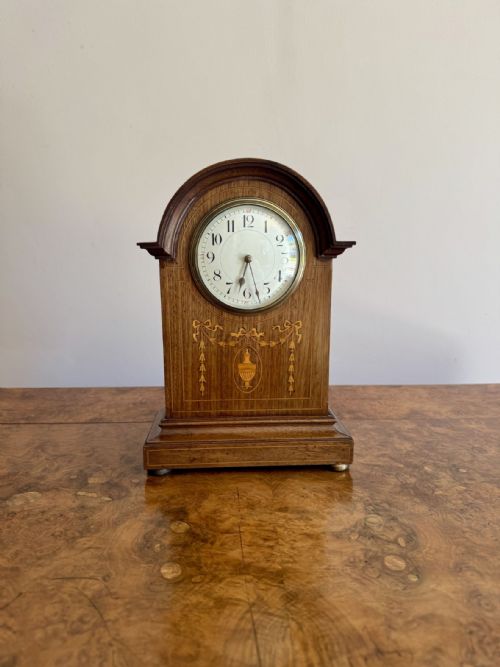
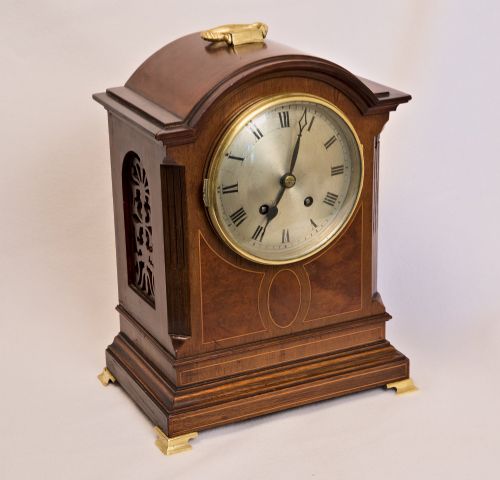


Edwardian Inlay Clock
An edwardian inlay clock brings a refined combination of cabinetmaking and timekeeping into domestic spaces.
Edwardian Inlay Clock
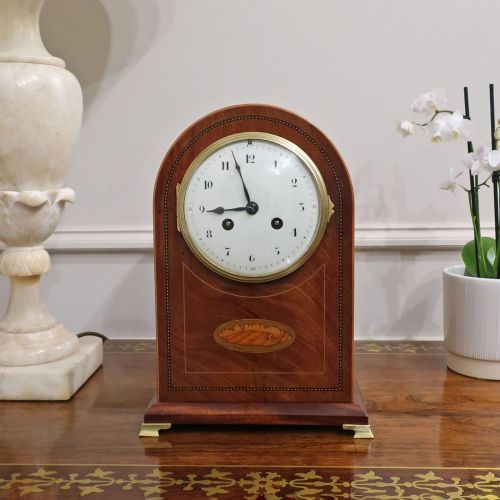
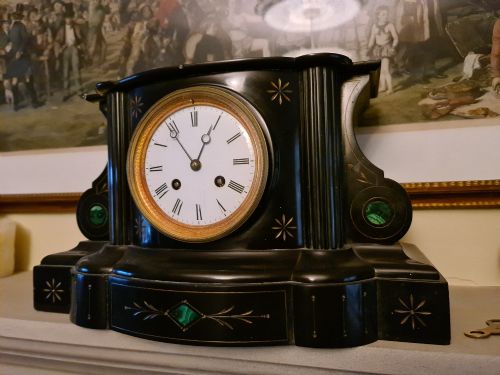
When searching for an edwardian inlay clock, collectors encounter domestic timepieces produced around the turn of the twentieth century, predominantly taking the form of mantel clocks alongside larger longcase and wall variations. These pieces reflect the aesthetic preferences of the Edwardian period, often drawing upon earlier Victorian, Arts and Crafts, or Art Nouveau design vocabularies.
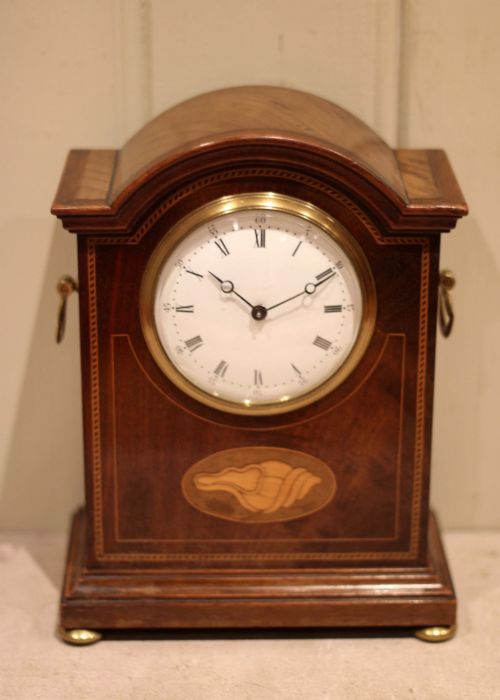
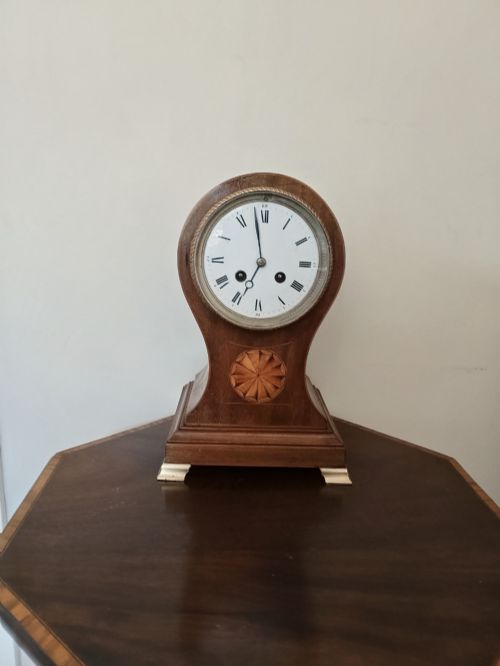
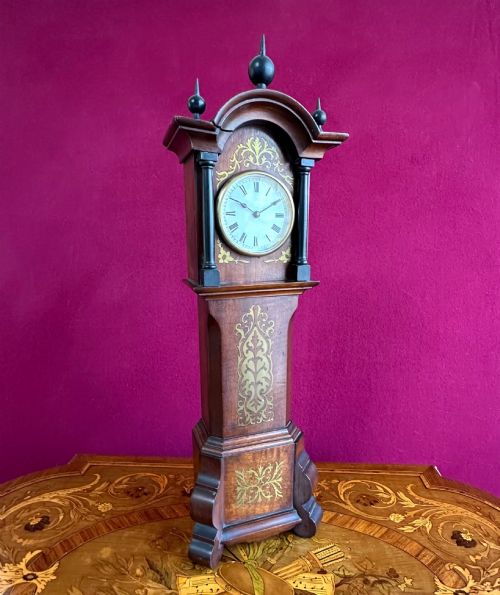
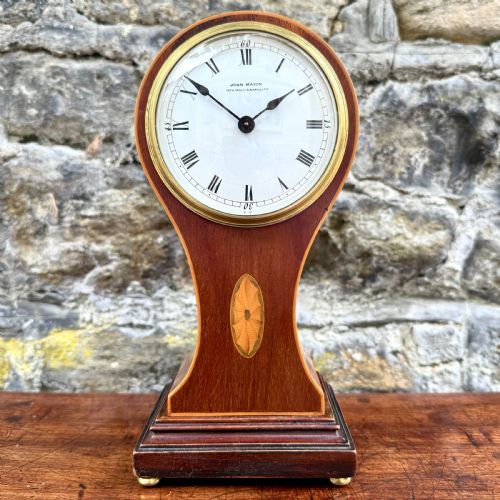
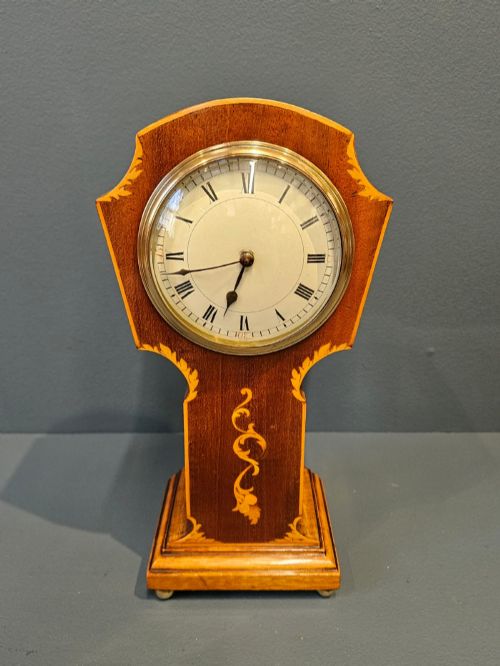
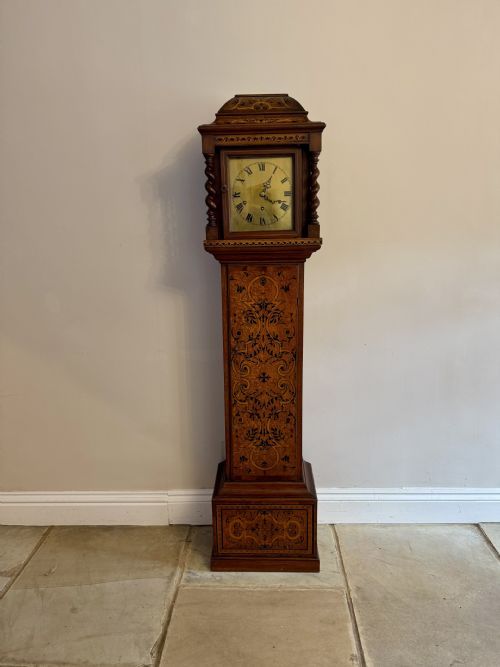
The prevailing format on this page is the mahogany mantel clock, frequently designed with lancet, balloon, or arch tops. Alongside these smaller domestic items, occasional tall longcase clocks and miniature grandfather variants appear, bringing similar decorative stringing and marquetry motifs to larger floor-standing formats.
How They Were Made
Cabinetmakers utilised solid or veneered mahogany and oak as the primary structural timbers, frequently selecting satinwood and boxwood for contrasting decorative elements. These lighter woods formed delicate stringing lines and pictorial marquetry motifs, such as sunflowers or poppies, set directly into the darker case surfaces.
Internal mechanical movements, ranging from simple timepieces to striking and chiming eight-day mechanisms, were typically housed behind glazed brass bezels and enamel or silvered metal dials. German and French movements frequently supplemented British manufacture within these decorative timber housings.
Listings feature mahogany, oak, and rosewood cases enhanced by boxwood and satinwood inlay work.
What Varies In Quality
The standard of an edwardian inlay clock rests upon the precision of the cabinetwork and the complexity of the internal movement. Superior examples display crisp, flush wood marquetry without gaps or lifting veneers, combined with robust mechanical engineering capable of musical chiming or sustained striking.
Proportion and material selection further distinguish the range, as finer specimens integrate carefully matched timber grains with substantial brass fittings and clearly painted enamel dials. Lesser pieces rely on simplified mechanical trains and minimal surface decoration.
W. Burton·W&H·Junghans·Dent of London
The Edwardian Inlay Clock Glossary
- Marquetry
- Decorative woodwork where small pieces of veneer are assembled to form pictorial patterns on a surface. This technique allows for complex floral designs across the front of clock cases.
- Stringing
- Thin lines of contrasting timber inlaid into shallow channels on a cabinet surface. It creates geometric borders that outline the shape of the clock case.
- Fusee
- A conical pulley connected to the mainspring by a chain or cord to equalise the power delivered to the gear train as the spring unwinds. This mechanism improves the timekeeping accuracy of the clock.
- Mantel clock
- A portable clock designed to stand on the shelf above a fireplace. These domestic timepieces range from simple wooden cases to architectural architectural designs.
- Ting tang
- A striking mechanism that sounds two different notes on the quarters or hours using two hammers and bells or gongs. It provides an alternative to standard hour-striking setups.
Edwardian Inlay Clock: Frequently Asked Questions
What is an edwardian inlay clock?
An edwardian inlay clock is a domestic timepiece manufactured around the early twentieth century featuring decorative contrasting wood inlays on timber cases. These objects combine period cabinetmaking skills with mechanical clockwork movements.
Most examples appear as mantel clocks in mahogany or oak, though taller longcase formats also exist. They served both practical timekeeping and decorative roles within Edwardian rooms.
How do I wind an eight day clock?
Eight-day clocks require winding approximately once a week using a matching key inserted into the dial holes. Care must be taken not to overwind the mainsprings to avoid internal damage.
Many surviving Edwardian models utilise this eight-day duration to reduce the frequency of handling the movement. Regular gentle winding preserves the tension in the brass springs.
Where were these clocks made?
Production centres for these timepieces included Britain, France, and Germany during the late nineteenth and early twentieth centuries. British cabinetmakers frequently housed movements imported from continental European workshops.
As a result, many surviving pieces combine British mahogany cases with German or French mechanical movements. Retailers and makers often sourced components internationally before final assembly.
How do I care for a wooden clock case?
Wooden clock cases benefit from stable indoor environments away from direct sunlight and rapid temperature fluctuations. Applying occasional mild wax helps protect the polished mahogany or oak surfaces.
Harsh chemical cleaners should be avoided to prevent damage to the delicate satinwood and boxwood inlay work. Mechanical servicing by a professional horologist every few years ensures the internal gear train runs smoothly.