
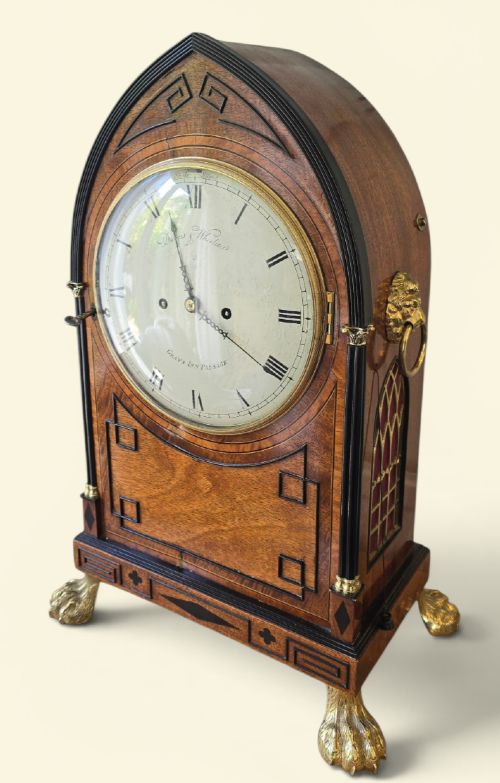


Antique Lancet Clock
An antique lancet clock brings architectural elegance to a mantelpiece, defined by its characteristic pointed arched top reminiscent of a Gothic window.
Antique Lancet Clock
When you search for an antique lancet clock, you encounter striking timepiece forms spanning the Georgian, Regency, Victorian, and Edwardian eras. These domestic timekeepers take their name from the pointed lancet shape of their wooden cases, which house mechanical clockwork driven by springs or weights.
Most examples appearing on this page take the form of mantel clocks or bracket clocks constructed with architectural dignity. You also find larger variants, including table clocks and longcase clocks sharing the same distinctive arched silhouette.
Originating across periods from the early nineteenth century through to nineteen hundred, these pieces reflect changing domestic tastes while maintaining their signature profile. Makers from London and the provinces housed precise movements within these distinctive wooden housings.
How they were made
Cabinetmakers constructed the architectural cases primarily from mahogany, often selecting timber with rich grain patterns or burr figures. Workshops embellished these wooden housings using delicate boxwood, ebony, and satinwood inlay to define the lancet arch and base.
Glass doors protect the enamel dials, which feature Roman or Arabic numerals driven by internal brass movements. Fusee movements, single or twin, regulate the power delivery to ensure steady timekeeping across the hours.
Listings feature mahogany cases enhanced with boxwood, ebony, and satinwood inlay across Georgian, Regency, and Edwardian periods.
What varies in quality
The sophistication of the timber work and precision of the brass inlay set finer examples apart from simpler production. Subtle stringing in boxwood or contrasting ebony demonstrates cabinetmaking skill on the lancet case.
The reputation of the maker inscribed on the dial or movement influences the standing of the piece. London makers and documented provincial watchmakers added considerable substance to the clock through the execution of their mechanical movements.
Desbois and Wheeler·Cording·W Burton·Wilkinson Leicester·Ganthony·James McCabe
The Antique Lancet Clock Glossary
- Lancet top
- An arched, pointed case shape resembling a Gothic lancet window. This architectural silhouette defines the entire genre.
- Fusee
- A conical pulley used in spring-driven clocks to maintain even force on the gear train as the mainspring unwinds. This mechanism improves timekeeping consistency.
- Bracket clock
- A portable domestic clock historically designed to sit on a bracket or table. Many lancet clocks fall into this functional category.
- Enamel dial
- A fused glass-on-metal clock face providing a smooth, durable surface for painted numerals. These faces require careful handling to prevent chipping.
- Single fusee
- A movement driven by one fusee mechanism governing time only, without striking the hours.
Antique Lancet Clock: Frequently Asked Questions
How do I wind an antique lancet clock?
Use the appropriate winding key on the dial apertures, turning gently until you feel resistance. Avoid over-winding to protect the internal spring mechanism.
Ensure the key matches the square arbor precisely to prevent slipping and wear on the components.
Where should I place a lancet clock?
Position your clock on a stable, level mantelpiece or shelf away from direct sunlight and drafts. A solid surface ensures the pendulum or balance wheel operates evenly.
Keep the clock clear of exterior damp walls and temperature extremes to preserve the mahogany case and internal metalwork.
How do I tell a Georgian lancet clock from an Edwardian one?
Georgian and Regency lancet clocks often feature simpler, heavier mahogany cases with understated brass inlay. Their movements reflect earlier hand-finished craftsmanship.
Edwardian examples frequently display lighter satinwood inlay and refined proportions, reflecting the revival of Sheraton styles around nineteen hundred.
Did these clocks always have striking movements?
Not all lancet clocks strike the hours. Many examples are timepieces designed purely to record the time without a bell or gong.
Striking variants incorporate additional gear trains and hammers, often noted in descriptions as striking or ting tang movements.