
Antique Inlaid Clock
An antique inlaid clock brings together precision horistry and cabinetwork across Georgian, Regency, and Edwardian periods.
Antique Inlaid Clock
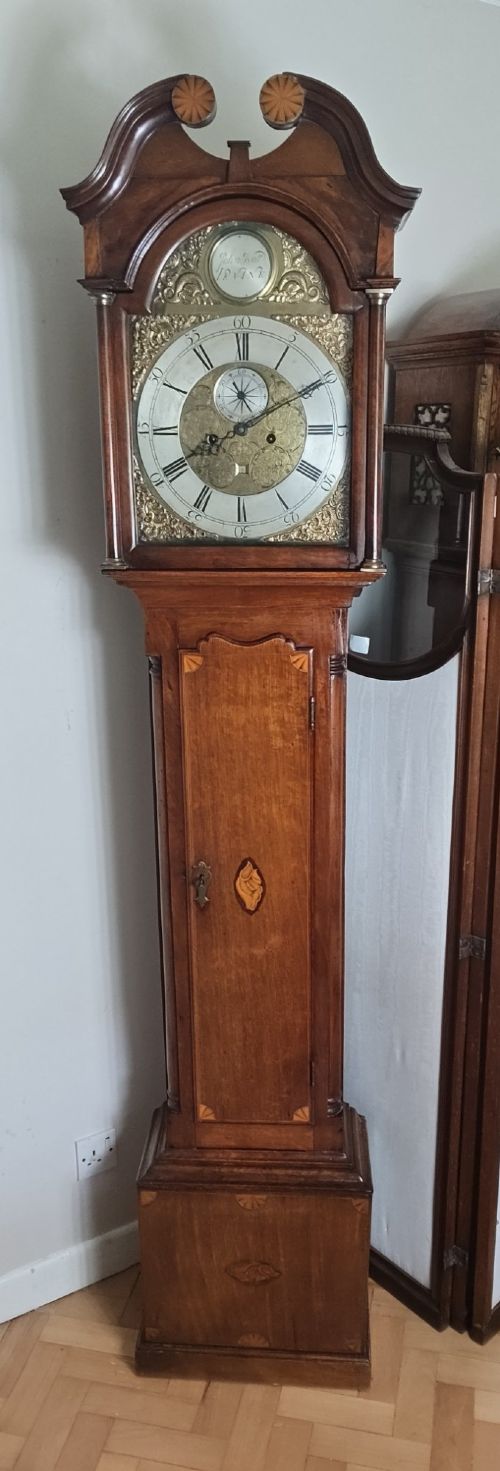
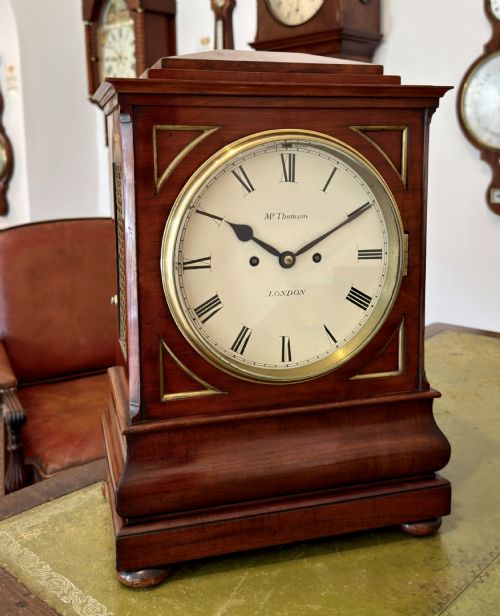
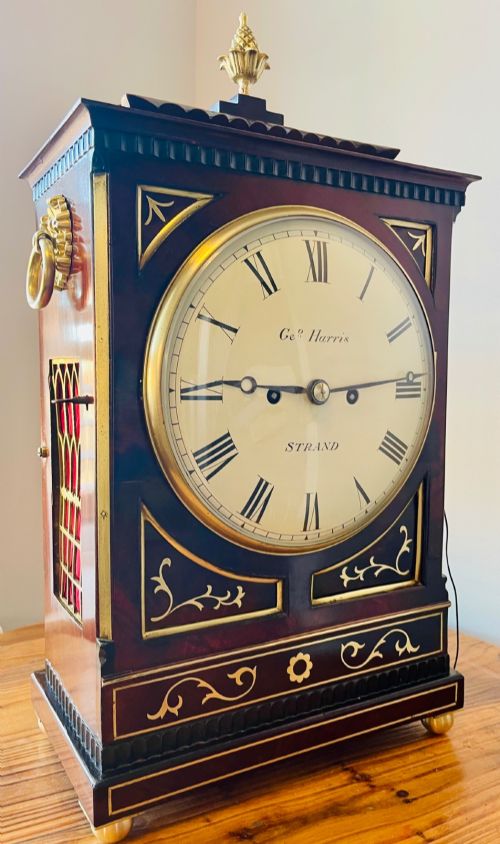
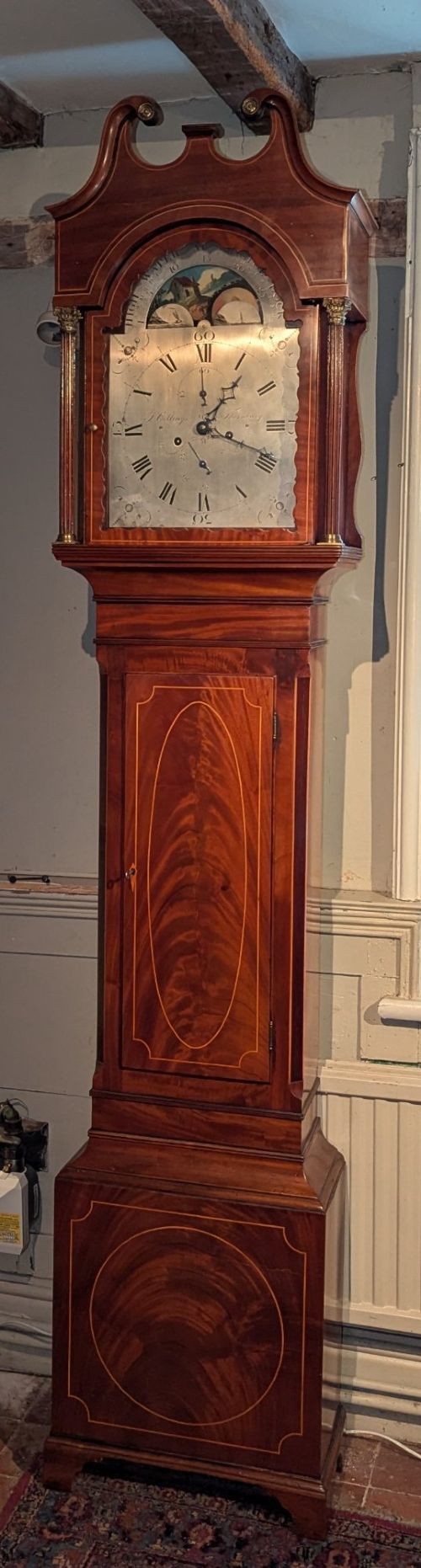
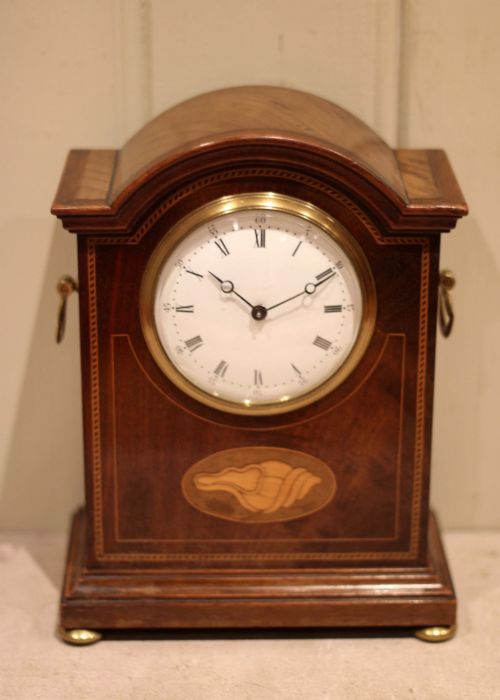
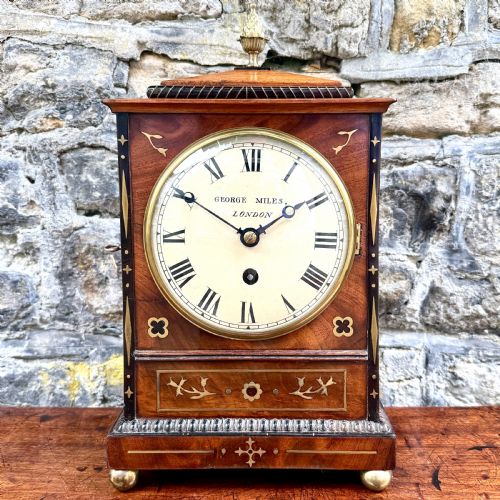
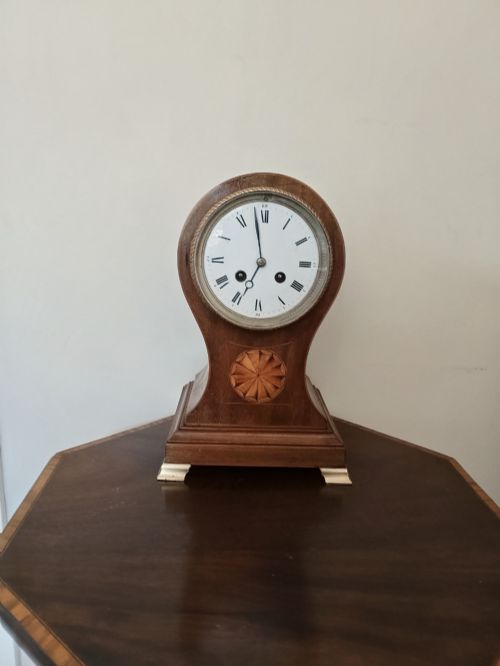
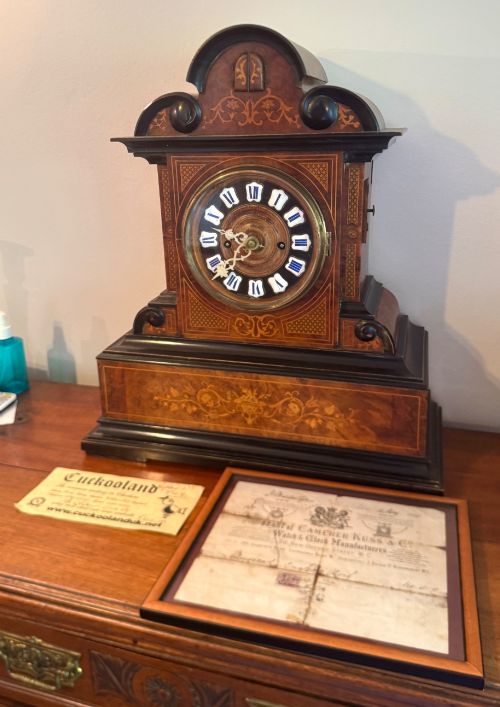
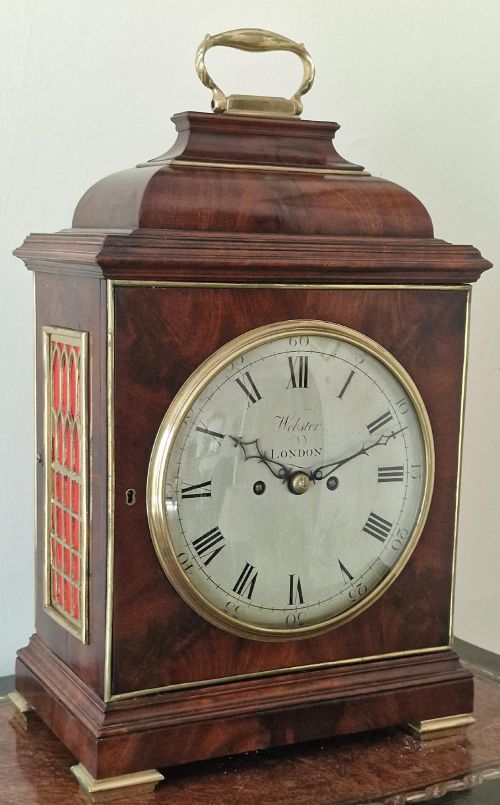
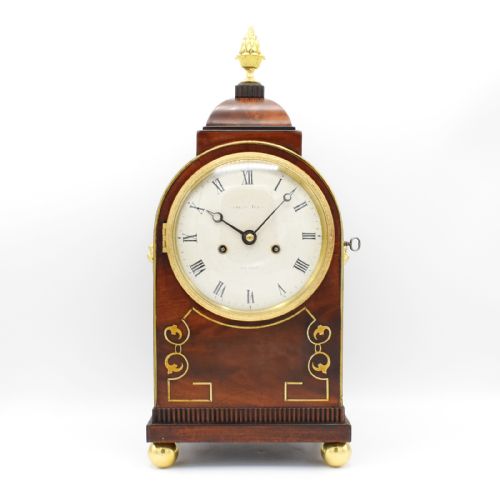
When searching for an antique inlaid clock, collectors encounter several distinct formats ranging from towering longcase grandfather clocks to compact mantel, bracket, and wall timepieces. The most frequently met examples on this page are mahogany mantel and bracket clocks dating from the Georgian, Regency, and Edwardian eras.
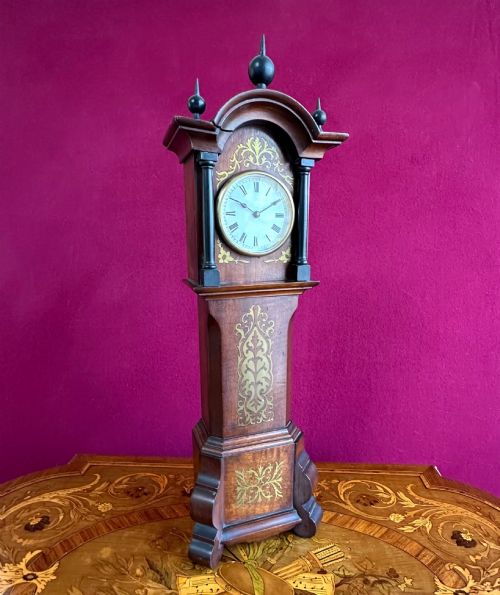
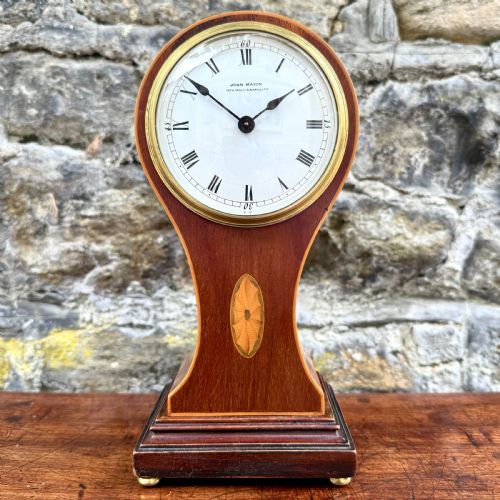
Tall case pieces include grandfathers and grandmothers featuring moon dials and brass faces alongside arched hoods. Smaller desk and library clocks sit comfortably on furniture, often displaying compact balloon or portico silhouettes.
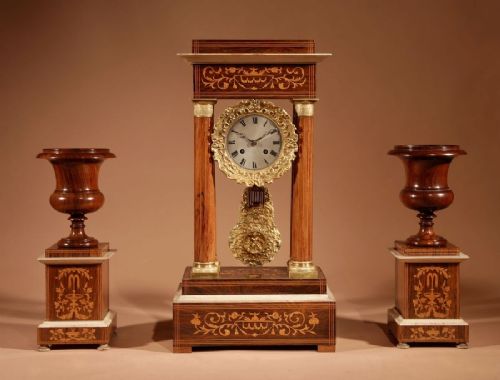
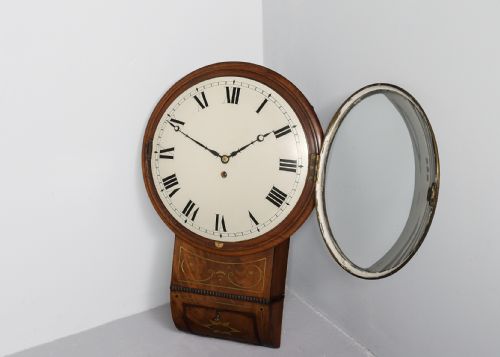
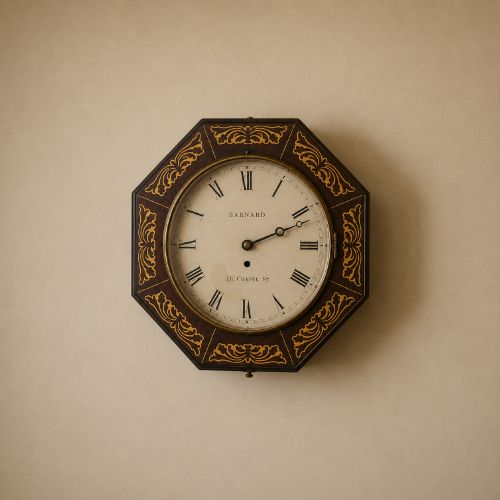
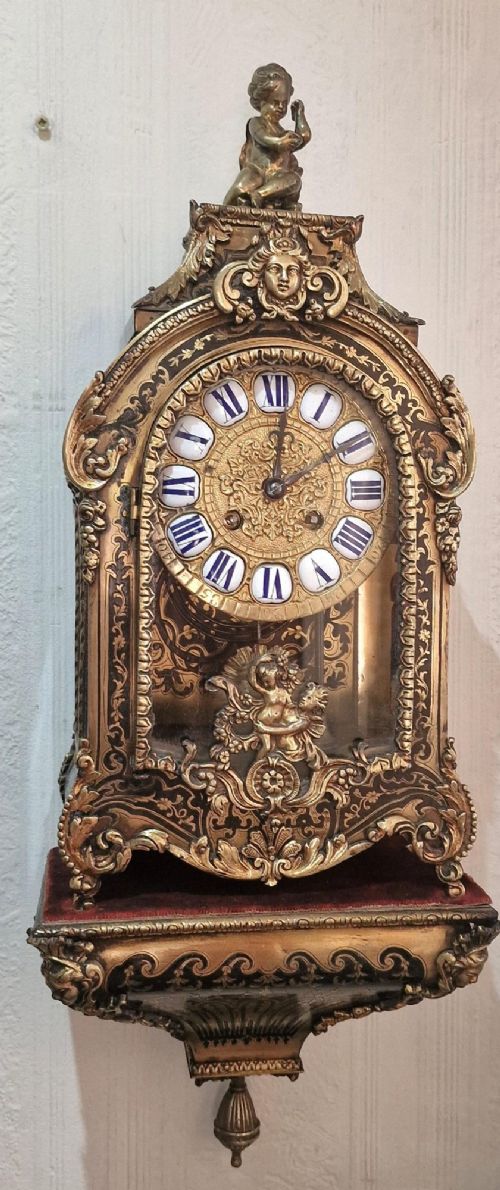
French mantel clocks introduce alternative regional aesthetics, frequently utilising boulle work with tortoise shell, brass, and ormolu mounts. Wall variations span octagonal fusee dials, drop dial wall clocks, and elaborate marquetry wall brackets.
Materials and construction
Makers constructed the primary carcases and cases using dense hardwoods like mahogany, rosewood, and walnut, frequently accented by contrasting veneers of satinwood, boxwood, lemon wood, and ebony. Inlay techniques incorporated delicate paterae, marquetry motifs, and stringing set directly into the timber surfaces.
Horological movements relied on brass components, glass face covers, and enamel dials, while high-end French and English pieces added ormolu mounts, mother-of-pearl, and metal wire detailing. Fusee movements governed accurate timekeeping in many English bracket and wall clocks, driven by chains or cords linked to a conical drum.
Some provincial makers hid their workshop signatures deep inside the wooden case, leaving a secret greeting for future horologists.
Distinguishing quality
The refinement of the cabinetwork dictates the standing of an antique inlaid clock, particularly the crispness of the contrasting wood veneers and the complexity of the marquetry patterns. Superior examples display seamless integration of satinwood or boxwood lines into deep flame mahogany or rosewood carcases.
Movement sophistication and signature provenance elevate certain pieces above standard production, especially those housing original fusee mechanisms or bearing inscriptions from notable London and provincial clockmakers. Ormolu mounts, cast brass bezels, and well-executed enamel dials further separate utilitarian timepieces from exceptional decorative works.
Thomson of London·Charles Pratt London·Charles Louch St. Albans·George Orpwood·Bush of London·L. Vick of Stroud·Samuel Chave Taunton·Thomas Reynolds Oxford·John Denbigh Merton Park·Harford Bristol·Darling Edinburgh·R Stewart of Glasgow·Dent of London·Winterhalder & Hofmeier·Mappin & Webb London
The Antique Inlaid Clock Glossary
- Fusee
- A conical pulley connected to the mainspring by a chain or cord, designed to equalise the drive force as the spring unwinds. This mechanism ensures consistent timekeeping accuracy across the duration of the wind.
- Marquetry
- Decorative veneer work formed by fitting pieces of various coloured woods, shells, or metals into a planned design. Craftsmen apply these intricate patterns directly onto clock bodies and panels.
- Paterae
- Small, flat circular or oval decorative ornaments carved or inlaid with radial motifs. They appear frequently on Georgian and Regency furniture and clock cases.
- Bracket clock
- A portable table clock originally designed to sit on a wall bracket to aid sound projection and visibility. Later versions functioned primarily as mantel timepieces.
- Portico clock
- A mantel clock styled after classical architectural porticos, typically featuring columns supporting a central pediment housing the dial. These architectural pieces often incorporate ormolu mounts and exotic woods.
Antique Inlaid Clock: Frequently Asked Questions
What is a fusee movement?
A fusee movement uses a conical gear to maintain even tension on the geartrain as the mainspring loses power.
This mechanical refinement helps older clocks keep more accurate time between windings.
How do I identify a Georgian clock?
Georgian examples typically feature rich mahogany cases, brass dials with engraved spandrels, and restrained inlay work.
Proportions remain classic and architectural, reflecting the dominant design tastes of the eighteenth century.
Where should I place a bracket clock?
Bracket clocks suit heavy sideboards, desks, or dedicated wall shelves where their detailed woodwork remains visible.
Keep them away from direct sunlight and exterior doors to protect delicate veneers and internal mechanics.
What distinguishes French mantel clocks?
French pieces often incorporate ornate ormolu mounts, boulle work with tortoise shell, and symmetrical portico shapes.
Cabinetmakers utilised exotic woods like rosewood alongside gilt bronze to achieve decorative flamboyance.