
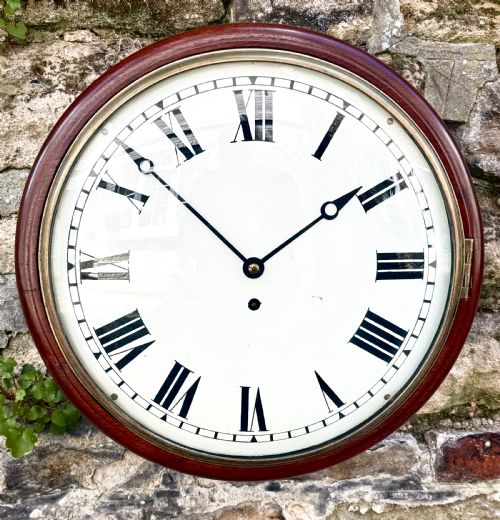
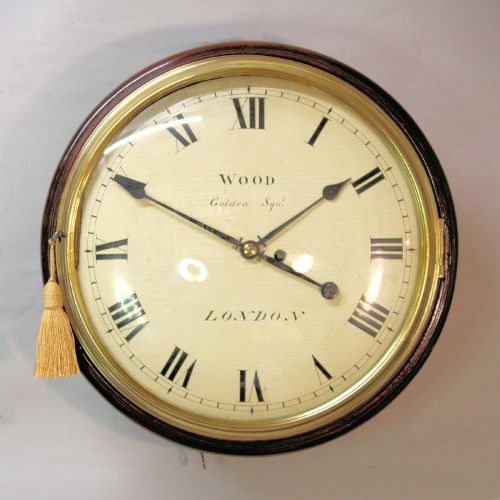
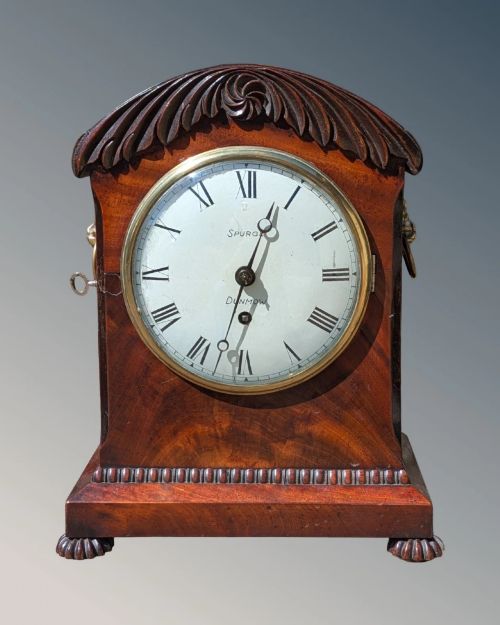


Regency Mahogany Fusee Clock
A regency mahogany fusee clock brings the precise engineering of the early nineteenth century into a room through rich timber and steady mechanics.
Regency Mahogany Fusee Clock
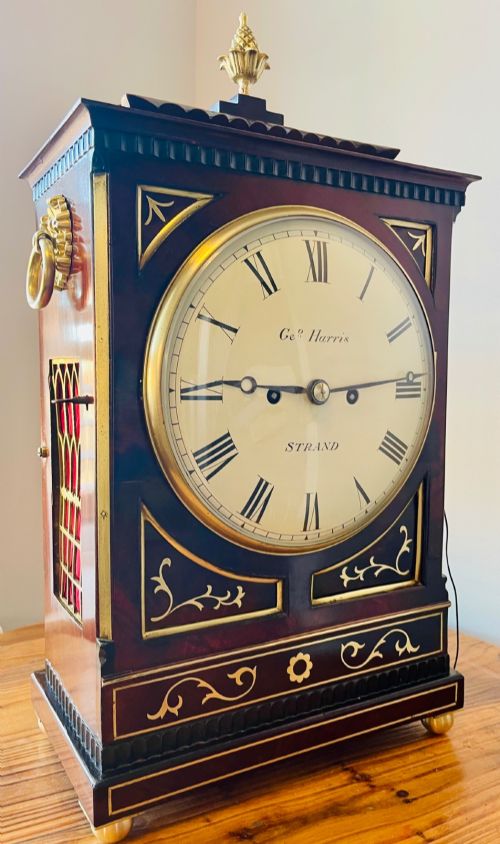
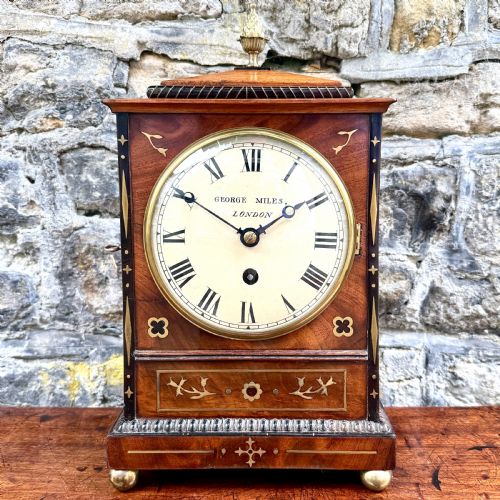
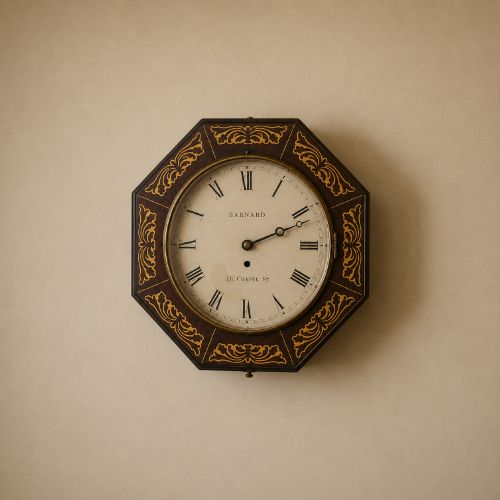
A regency mahogany fusee clock combines dense tropical timber with a specialised chain-driven movement designed to keep even tension as the mainspring unwinds. These timepieces appear primarily as table models, library bracket clocks, or wall-mounted dial clocks originating from the Georgian, Regency, and Victorian periods.
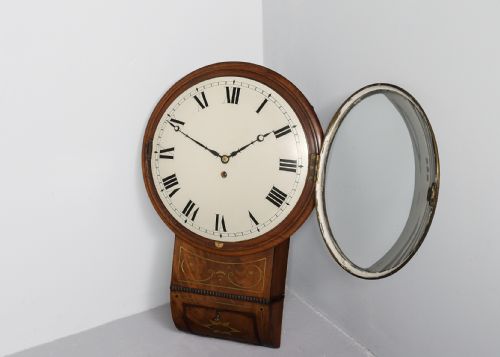
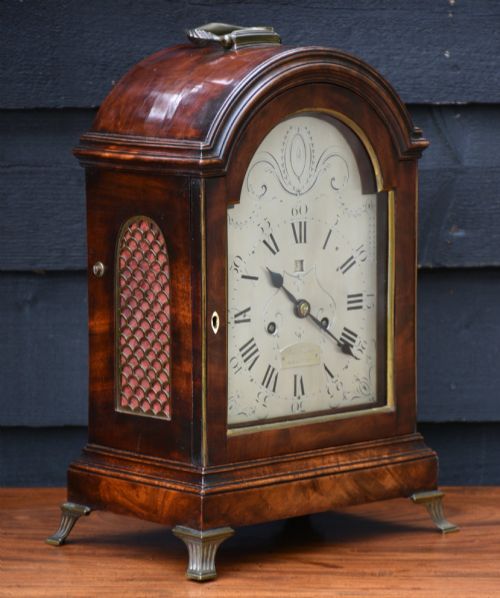
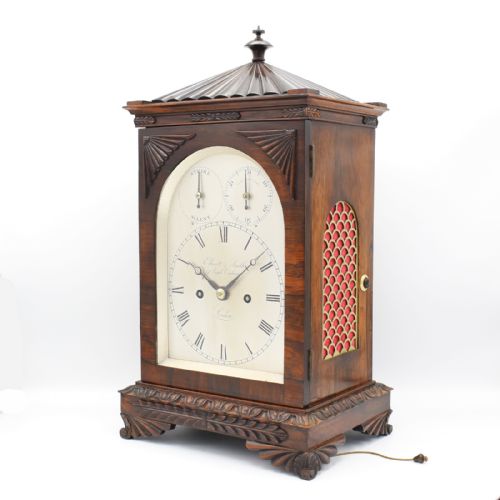
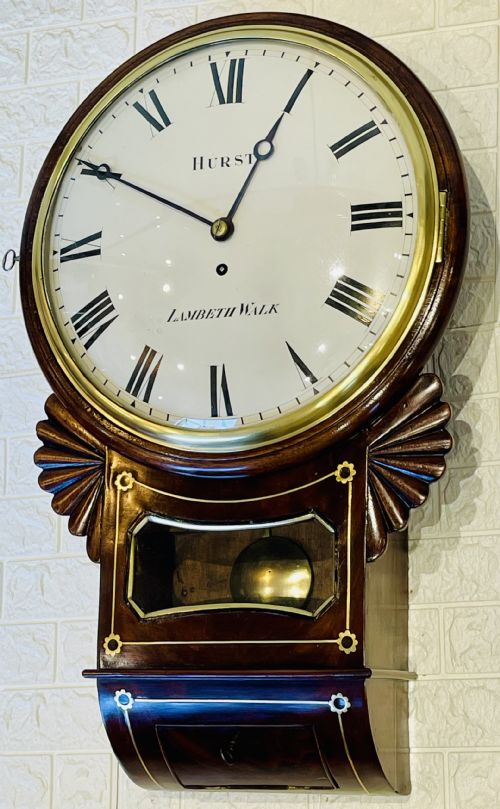
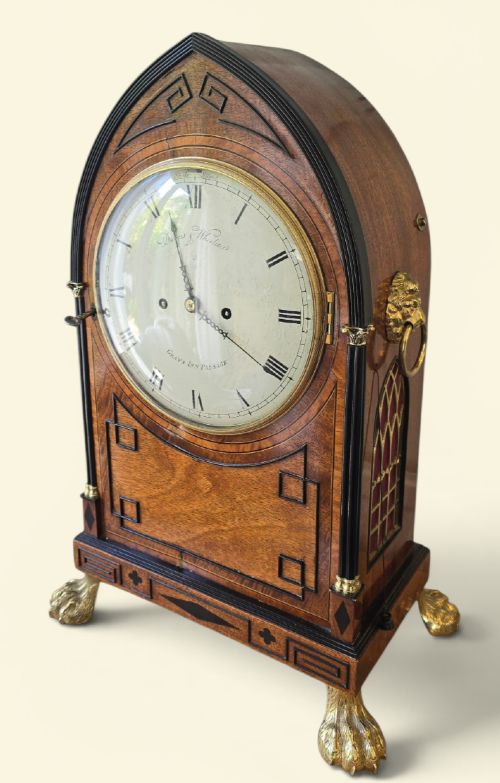
The wall-mounted versions frequently feature drop dials and convex wooden faces, whilst the bracket clocks display architectural forms such as lancet, pad, and pagoda tops. Makers during these eras housed the mechanisms in robust mahogany cases, often accented with brass inlay or ebony details.
Most examples date from the early nineteenth century, constructed by provincial and London makers to serve domestic or institutional spaces. Buyers seek these pieces for their mechanical reliability and the warm patina developed by the mahogany over generations.
How They Were Made
Cabinet makers built the housing from solid mahogany, frequently utilising brass inlay, silvered metal dials, and glass bezels to protect the face. The cases required precise joinery to house the heavy brass movements without warping.
The fusee mechanism itself relies on a cone-shaped pulley connected to the mainspring barrel by a fine steel chain or cord. This clever engineering equalizes the diminishing force of the spring as it runs down, ensuring constant power delivered to the escapement.
Early clockmakers occasionally signed hidden internal brass plates, leaving secret signatures for future generations to discover during repairs.
What Varies in Quality
The refinement of the movement engraving and the precision of the fusee cut dictate the mechanical tier of each piece. Better workshop output shows through crisp tooth formation on the wheels and signed backplates bearing the maker's name.
Cabinet work separates standard production from superior examples, seen in the selection of figured mahogany veneer, the weight of cast brass bezels, and the subtlety of wood inlay. The integration of striking or repeating complications adds further mechanical distinction.
Barnard·Barwise, London·Ellicott & Smith·Desbois & Wheeler·Spurge Dunmow·Cording of London·Thomas Connold of Alysham·Taylor of London·John Wilson·Kleyser of London·Budgen Croydon·Osborn of Kingsbridge·James Tupman·Thomas Lindey·Chadwick of Liverpool·Edwin Fisher·George Younge
The Regency Mahogany Fusee Clock Glossary
- Fusee
- A conical pulley that equalizes the uneven pull of a mainspring as it unwinds. This mechanical device is central to achieving accurate timekeeping in antique clocks.
- Bracket clock
- A portable table clock designed to sit on a bracket, shelf, or mantelpiece. Many feature carrying handles on top and glazed side panels.
- Drop dial
- A wall clock featuring an extended wooden case below the dial to accommodate the pendulum swing. This form became popular in public spaces and hallways.
- Silvered metal
- A brass dial plate treated with a silver solution to create a matte white metallic finish. The numerals and maker details are then engraved and filled with black wax.
- Lancet top
- An architectural case design shaped like a Gothic arch. This silhouette appears frequently on mantel and bracket clocks from the early nineteenth century.
Regency Mahogany Fusee Clock: Frequently Asked Questions
What is a fusee clock?
A fusee clock uses a conical pulley and chain system to regulate the power transmitted from the mainspring to the gear train. This mechanism ensures that the force driving the clock remains even from the moment of full wind until it runs down.
Such systems represent a high standard of horological engineering from the Georgian and Regency periods. They appear in both portable table formats and wall-mounted dial designs.
How do I wind my clock?
Winding requires inserting a matching key into the winding hole on the dial and turning it gently until resistance indicates the mainspring is fully tensioned. Care must be taken not to overwind the mechanism, which can damage the internal components.
Most single-fusee timepieces require attention every eight days. Keeping to a regular winding schedule helps maintain consistent tension within the movement.
Where should I place a bracket clock?
Bracket clocks need a stable, level surface away from direct sunlight, draughts, and damp walls. Placing them on a sturdy mantelpiece or dedicated wall bracket ensures the pendulum swings evenly without interference.
Because these clocks rely on gravity and precise balance for the escapement to function properly, a level foundation is essential for accurate timekeeping.
How do I date a mahogany clock?
Dating relies on examining the case style, timber characteristics, dial materials, and the signature of the maker engraved on the movement backplate. Regency and Georgian examples often display distinct architectural proportions and brass inlay patterns.
Changes in dial construction, such as moving from painted wood to convex brass or silvered metal, provide further clues to the decade of manufacture.