
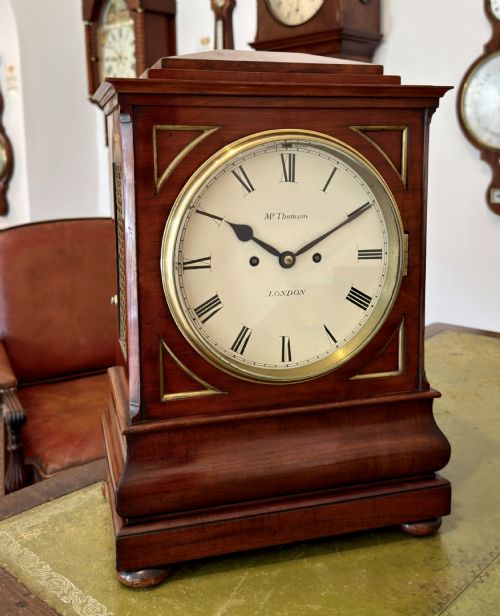
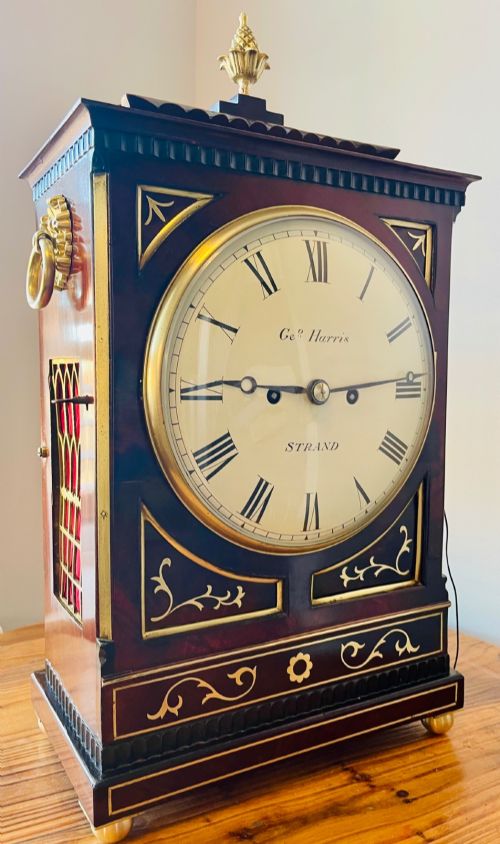
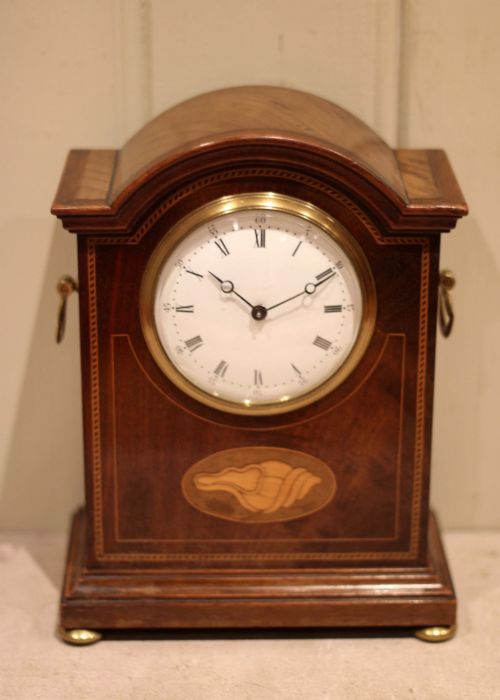
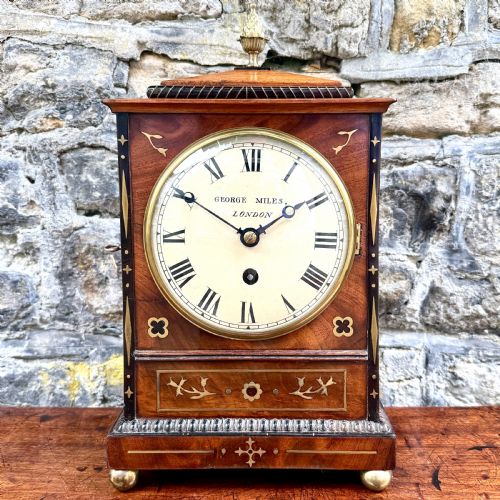

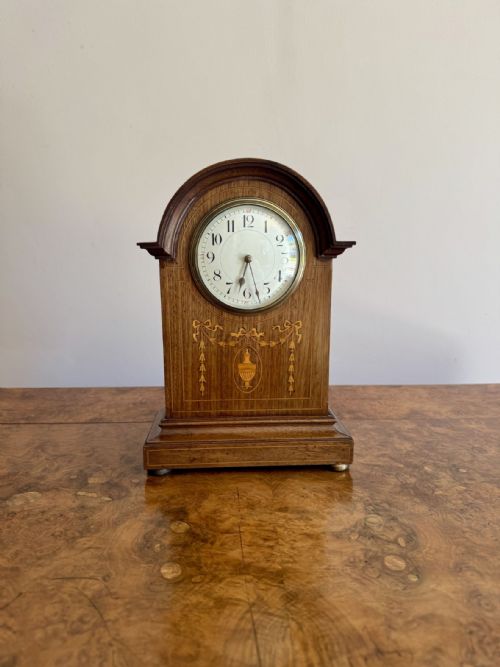


Inlaid Mahogany Table Clock
An inlaid mahogany table clock brings warmth and mechanical precision to a room, uniting rich timber and delicate stringing.
Inlaid Mahogany Table Clock
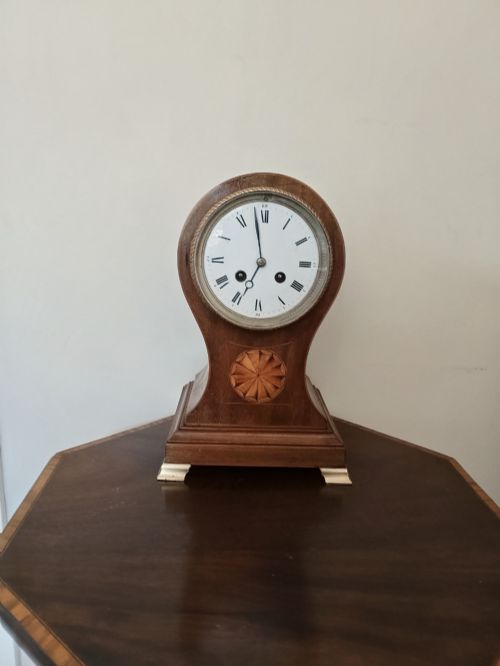
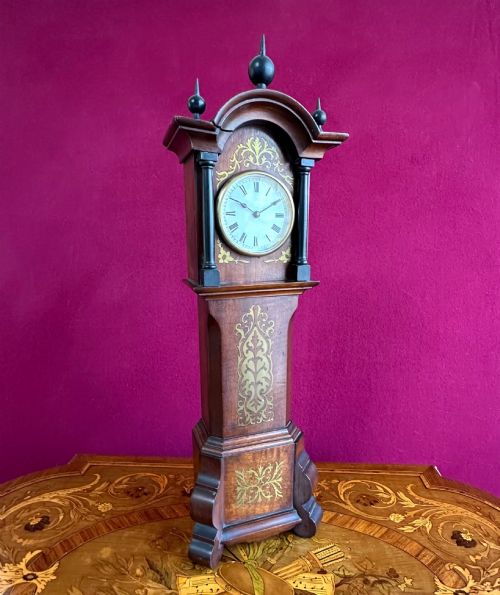
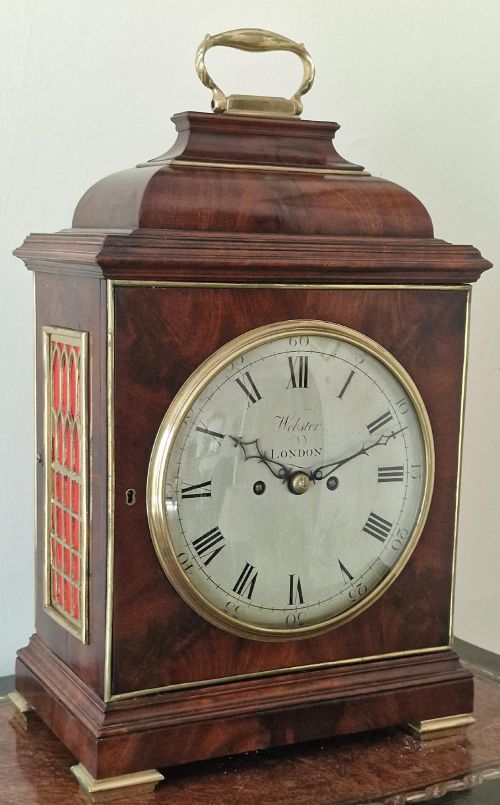
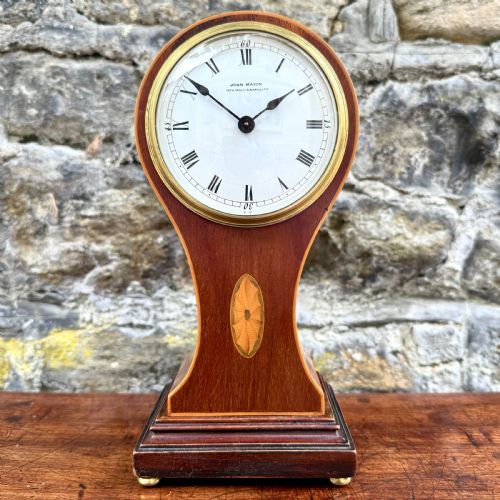
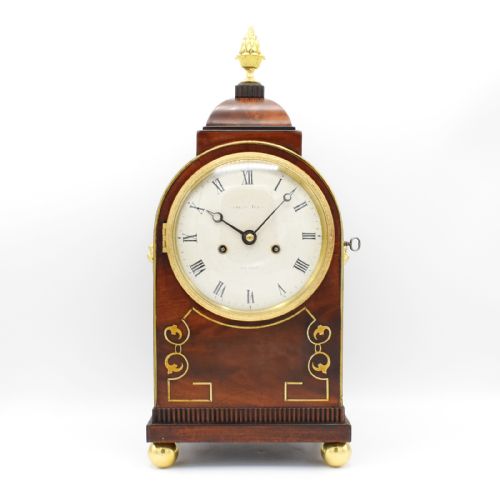
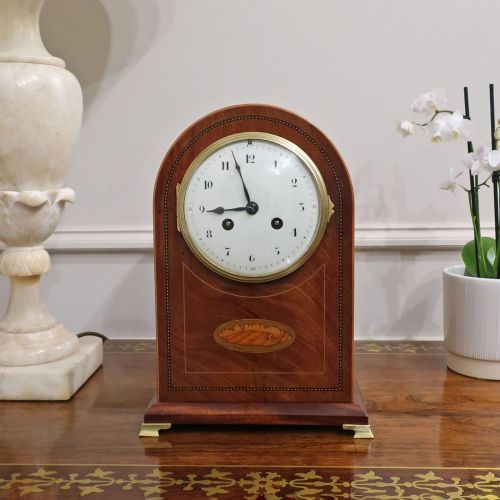
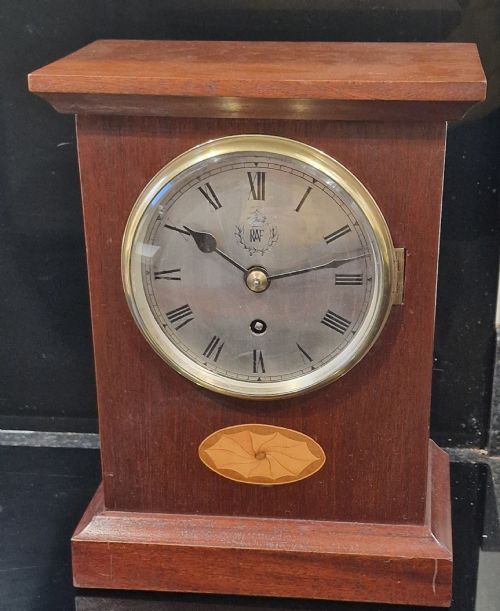
An inlaid mahogany table clock combines rich cabinet timber with contrasting stringing, forming a compact timepiece designed for placement on a mantel, shelf or bracket. When you search for an inlaid mahogany table clock, you encounter forms spanning the Georgian, Regency, Victorian and Edwardian periods.
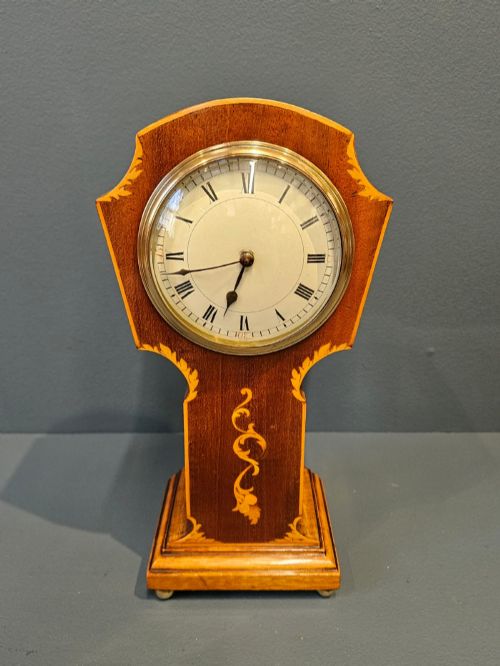
The assortment includes architectural bracket clocks, arched timepiece mantel clocks and delicate balloon or lancet shapes. English makers such as those from London and provincial workshops dominate the pieces, alongside continental examples.
Dial designs vary from painted enamel to silvered metal, often protected behind a glazed brass bezel. The timber displays the deep reddish-brown tone characteristic of mahogany, brightened by lighter inlay work.
Materials and construction
Makers utilised solid mahogany and mahogany veneers over secondary woods for the cases, building structures designed to house delicate gear trains securely. The timber received polish and wax to bring out the natural grain and depth of the wood.
Contrasting woods such as boxwood and satinwood were cut into thin strips for inlay and stringing, often forming geometric borders or classical motifs around the dial and base. Brass fittings, including bracket feet, carrying handles and bezels, complemented the timber surfaces.
Movements relied on brass plates, steel pivots and gear wheels, frequently driven by fusee mechanisms or spring-driven striking trains. Enamel or silvered dials carried the numerals, while glass protected the hands and face.
Several examples carry charming labels from provincial makers who clearly expected their clocks to outlive them by generations.
Distinguishing quality
The standard of an inlaid mahogany table clock rests on the crispness of the cabinetwork and the finesse of the joinery. Sharp corners, tightly fitted door closures and precisely laid stringing indicate a higher grade of manufacture.
Movement finishing dictates the mechanical standing, where well-engraved backplates, solid brass framing and signed dials separate standard workshop output from exceptional horology. The harmony between the proportions of the wooden case and the scale of the dial remains crucial.
Preservation of original surfaces, including the depth of the mahogany patina and intact inlay work, elevates certain examples above those with heavy modern intervention.
Thomson of London·Webster, London·Charles Pratt London·George Orpwood·Bush of London·L. Vick of Stroud·Thomas Moss·Cording of London·Bryson, Edinburgh·W. Burton·Wilkinson Leicester·Barrett London
The Inlaid Mahogany Table Clock Glossary
- Fusee
- A conical pulley connected to the mainspring by a cord or chain, designed to equalise the torque as the spring unwinds. This mechanism helps the clock maintain a steady rate throughout its run.
- Bracket clock
- A portable timekeeper originally designed to sit on a wall bracket or table. These pieces often feature sturdy wooden cases with carrying handles on top.
- Stringing
- Fine inlay work consisting of narrow strips of contrasting wood inserted into grooves in the surface of the primary timber. It creates delicate decorative borders on the clock case.
- Bezel
- The metal ring, often hinged and glazed, that holds the glass protecting the clock face. It swings open to allow hand setting and winding.
- Timepiece
- A clock that measures and indicates the time without including any striking or chiming mechanism. These movements focus purely on keeping time.
Inlaid Mahogany Table Clock: Frequently Asked Questions
How do I wind an antique clock?
Wind the clock using the appropriate key inserted into the winding holes on the dial, turning gently until you feel resistance. Take care not to overwind the mainspring.
Ensure you turn the hands in the correct direction as specified by the movement type, avoiding rapid adjustments that might damage the internal gear train.
Where should I place a table clock?
Position the clock on a stable, level surface away from direct sunlight, dampness and extreme temperature fluctuations. A sturdy mantelpiece or wooden sideboard serves well.
A stable foundation ensures the pendulum or balance wheel maintains an even beat, allowing the movement to keep accurate time without interference.
How do I tell a Georgian clock from an Edwardian one?
Georgian examples often display robust architectural proportions with classical bracket feet and heavy mahogany cases. Edwardian pieces tend to feature lighter satinwood stringing and elegant balloon or lancet silhouettes.
Examining the dial construction, keyhole placement and interior movement signatures also helps assign a reliable period to the piece.
Why does my clock stop running?
Clocks frequently stop due to being slightly out of beat on an uneven surface, or because the movement requires cleaning and oiling. Dust accumulation in the gear train can also halt the mechanism.
If basic leveling does not restore the beat, consult a professional horologist rather than attempting mechanical repairs yourself.