
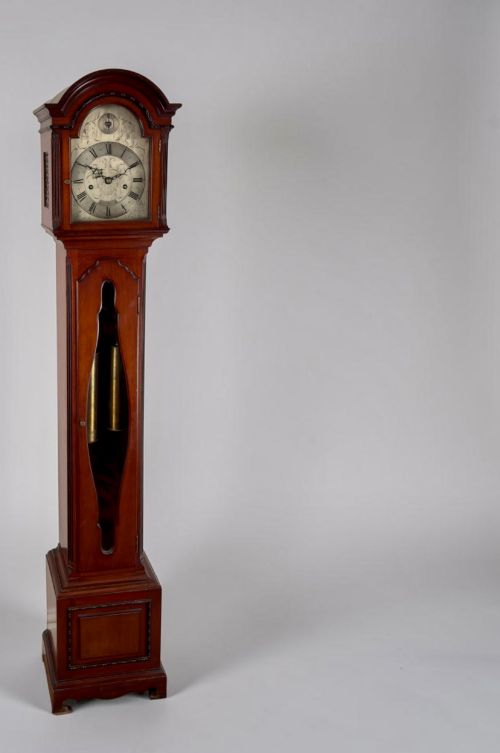

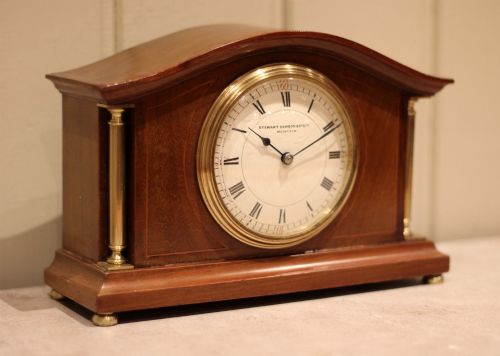
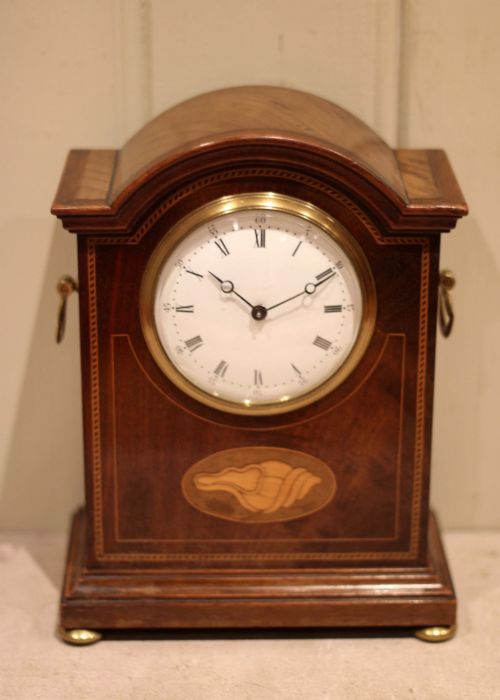
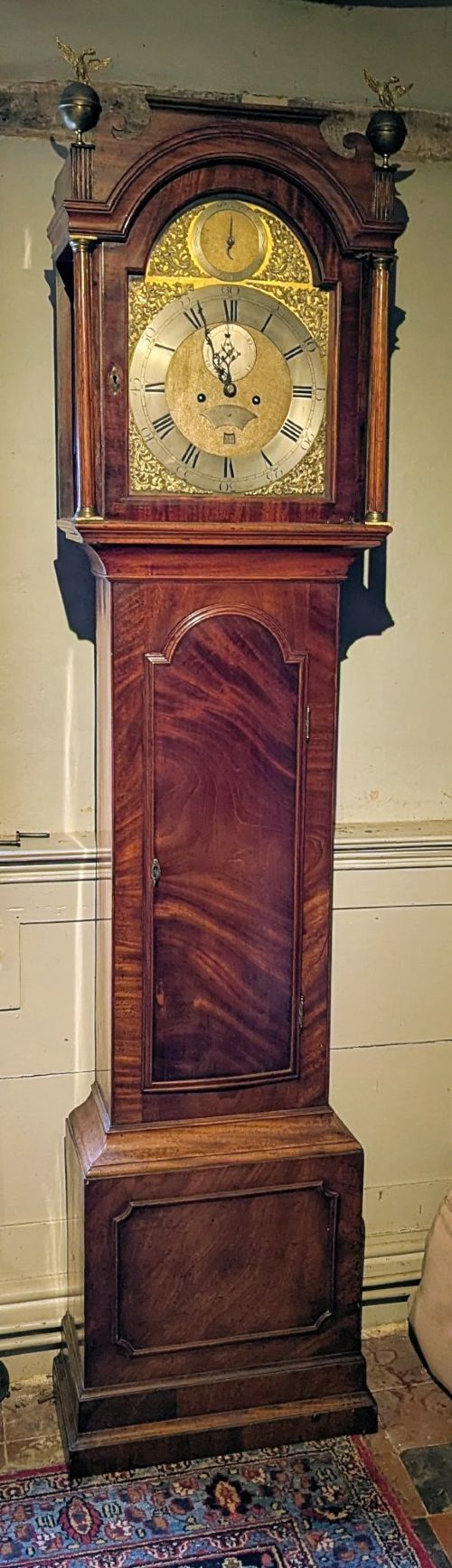
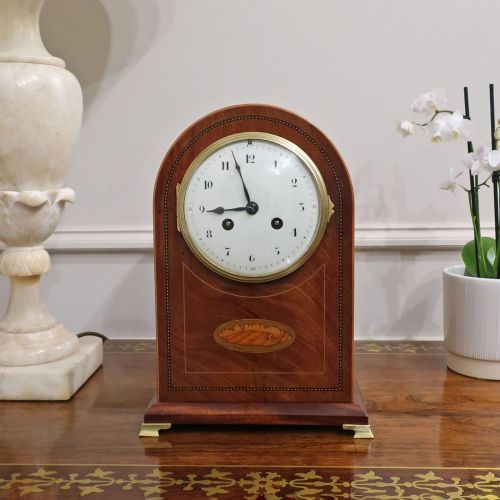

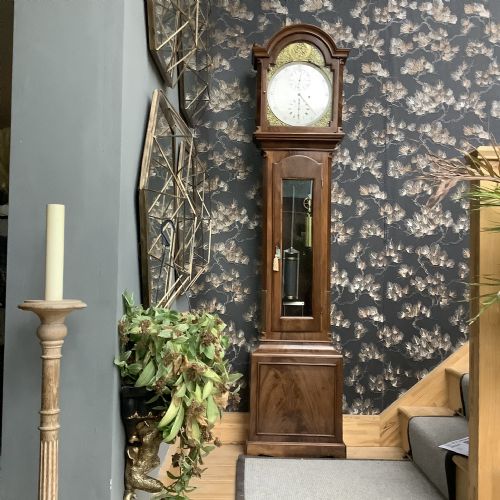
Arched Mahogany Clock
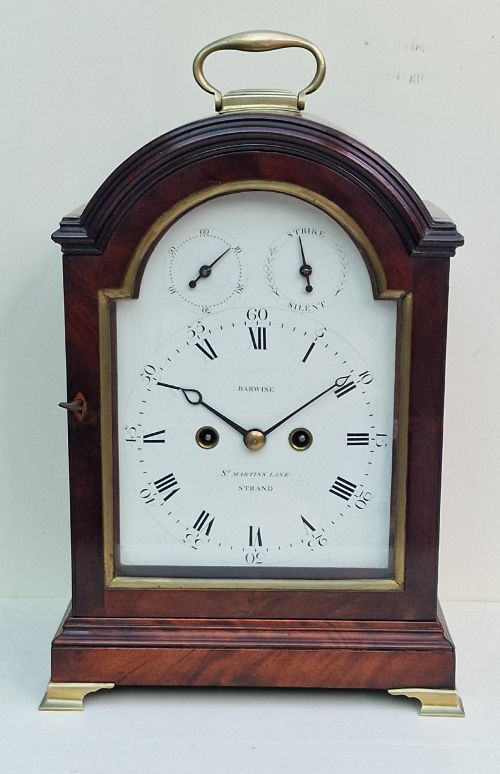
An arched mahogany clock brings the warmth of figured timber and brass dialwork into a room, offering enduring timekeeping from Georgian and later periods.

Arched Mahogany Clock
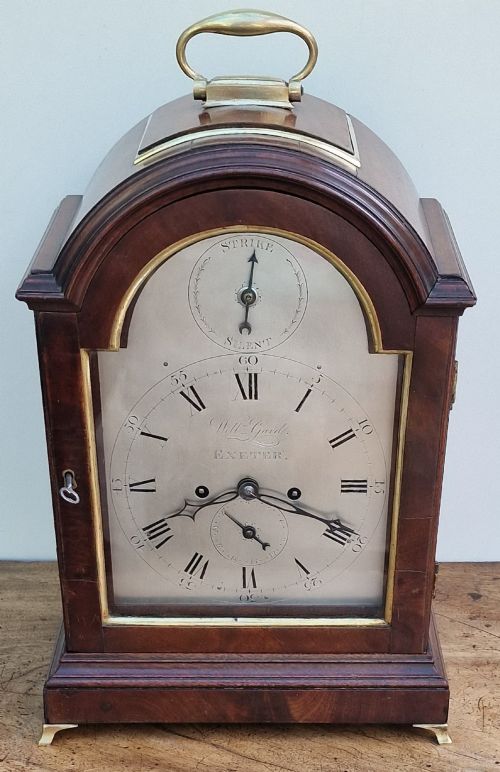
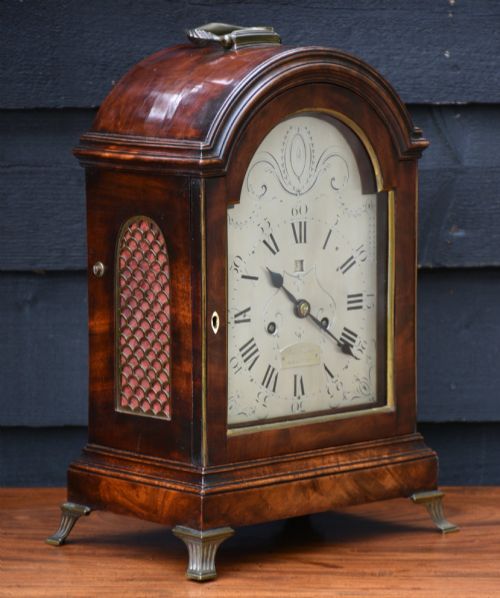
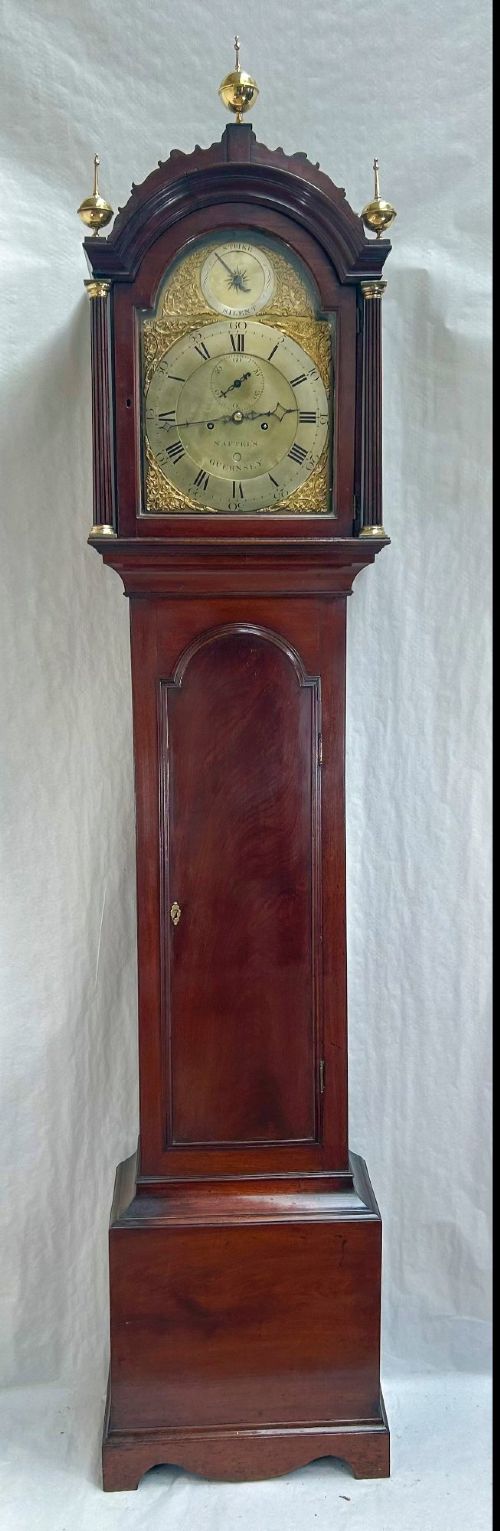
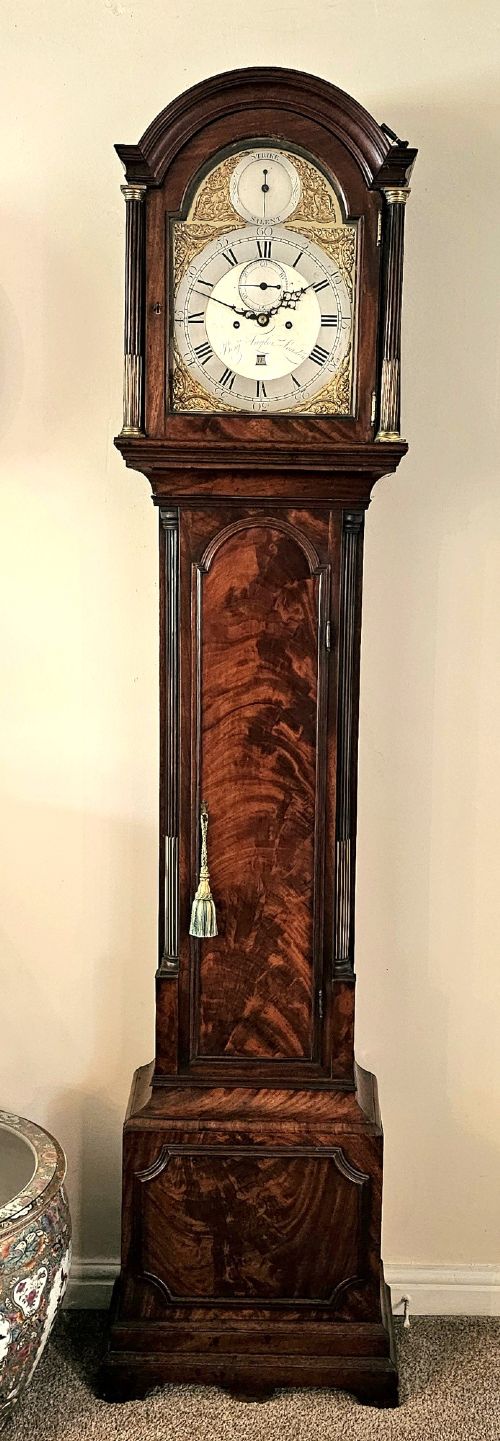
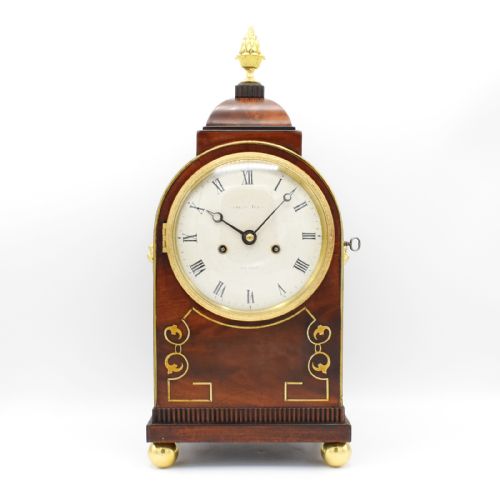
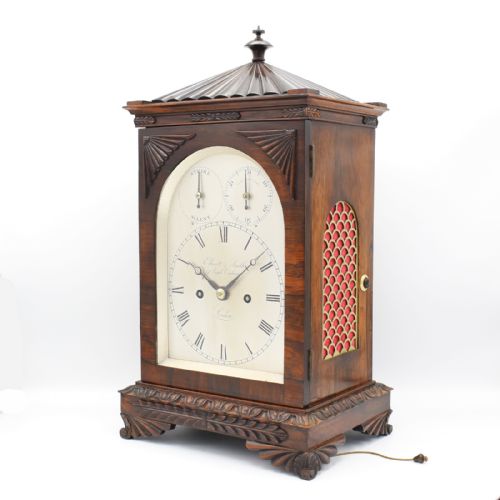
When you search for an arched mahogany clock, you encounter a variety of forms spanning tall floor-standing longcase models to smaller mantel and bracket clocks designed for tables or shelves.
The evidence shows tall longcase and grandfather clocks alongside compact Edwardian and Victorian mantel pieces, each defined by an arched wooden top above the dial.
Georgian examples feature prominent London and provincial makers, while later Edwardian and Victorian pieces offer smaller domestic scales in solid or inlaid mahogany.
Materials and Construction
Cabinetmakers utilised solid mahogany, flame mahogany veneers and contrasting satinwood stringing to build the arched cases, housing movements driven by brass and steel components.
Faces combine brass chapter rings and spandrels with painted iron dials, often incorporating moon rollers or subsidiary seconds rings.
Glass protects the dial, fitted within hinged doors on bracket clocks and longcase hoods.
Arched Mahogany Clock Retail Price Guide 2026
Typical asking prices for arched mahogany clock among the pieces listed under this phrase on Sellingantiques today, from the lower quarter to the upper quarter. They describe what is for sale here now, not the wider market.
Listings feature clocks from the Georgian, Regency, Victorian, and Edwardian periods, utilising brass, enamel, glass, and flame mahogany.
Assessing Craftsmanship and Detail
Quality rests in the depth of the mahogany grain and the precision of the brass dial engraving, where London makers often achieved sharper execution than provincial workshops.
The complexity of the movement, from simple timepieces to eight-day striking or quarter-chiming mechanisms, separates standard domestic clocks from higher-tier examples.
Gillett & Johnston of Croydon·James Field of Hempstead·Benjamin Taylor·Desbois & Wheeler·James Tregent of London·Handley & Moore Of London
The Arched Mahogany Clock Glossary
- Longcase clock
- A tall pendulum clock enclosed in a wooden case, commonly known as a grandfather clock. These floor-standing pieces often feature arched hoods.
- Bracket clock
- A portable table or shelf clock historically placed upon a matching wall bracket. Many feature arched mahogany cases with carrying handles.
- Fusee
- A conical pulley used in spring-driven clocks to maintain even power as the mainspring unwinds. This mechanism ensures consistent timekeeping accuracy.
- Spandrel
- The decorative corner ornament on a clock dial, typically cast in brass. They evolved from ornate scrollwork in the Georgian era to simpler designs later.
- Moon roller
- A rotating dial mechanism displaying the lunar phases behind a shaped arch. This feature appears on select 18th and 19th-century longcase clocks.
Arched Mahogany Clock: Frequently Asked Questions
How do I wind an eight day clock?
An eight-day clock requires winding approximately once a week using a matching key inserted into the winding holes on the dial face. Care must be taken not to over-wind the movement.
Depending on the specific gear train, some models feature separate arbors for the timekeeping, striking and chiming functions.
Where should I place a bracket clock?
A bracket clock sits securely on a sturdy mantelpiece, sideboard or dedicated wall bracket away from direct sunlight and drafts. Level placement ensures the pendulum beats evenly.
Solid mahogany cases require stable room temperatures to prevent timber movement over time.
How do I date an arched mahogany clock?
Dating relies on stylistic clues in the mahogany case, the shape of the arch, and the signature of the maker inscribed on the dial. Georgian pieces display different dial proportions compared to Edwardian versions.
Records of recorded makers help narrow down the period of production.
What is a ting tang movement?
A ting tang striking mechanism sounds two different notes on the quarters or hours, typically using two bells or gongs. This system is found on various Victorian and German bracket clocks.
The arrangement provides an audible chime without a full hour-count strike.