
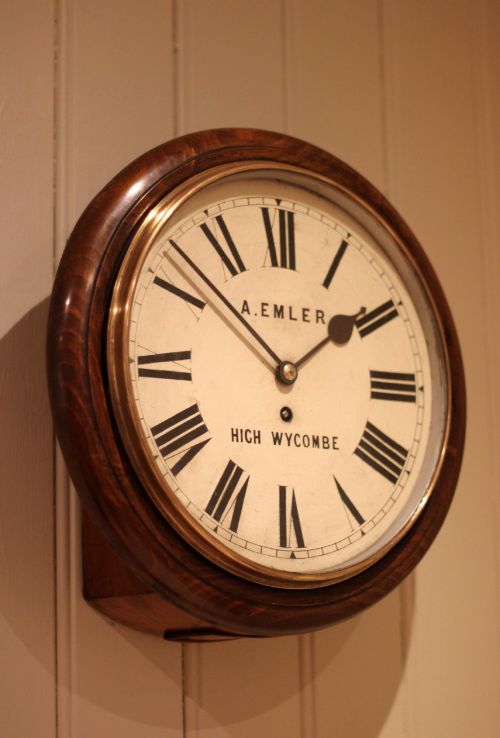
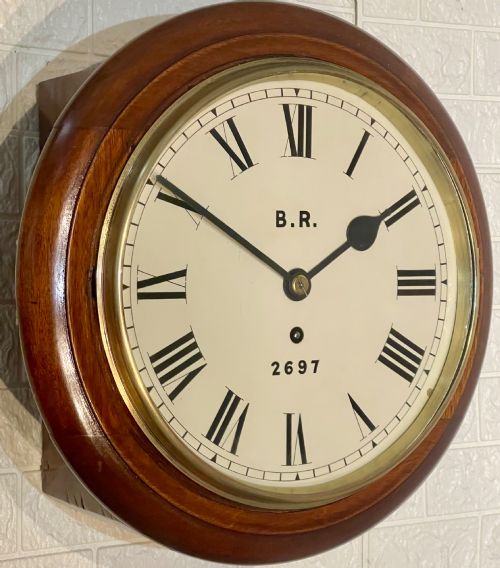
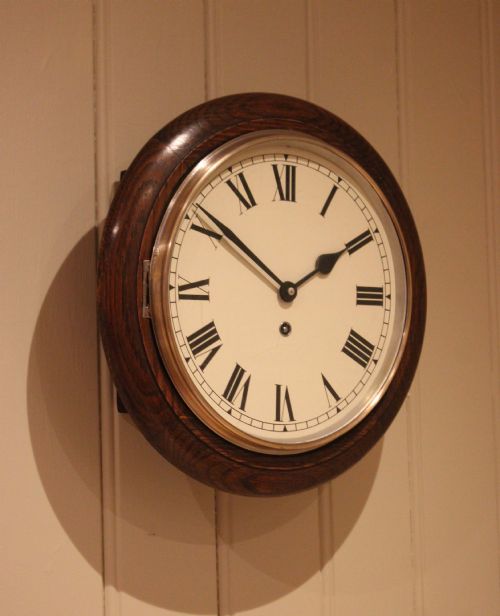
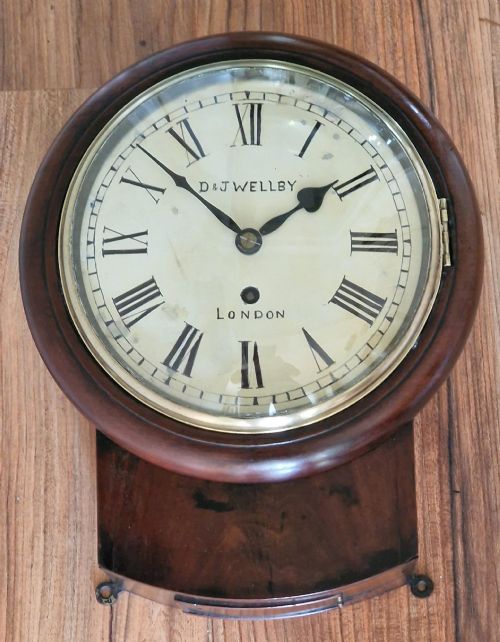
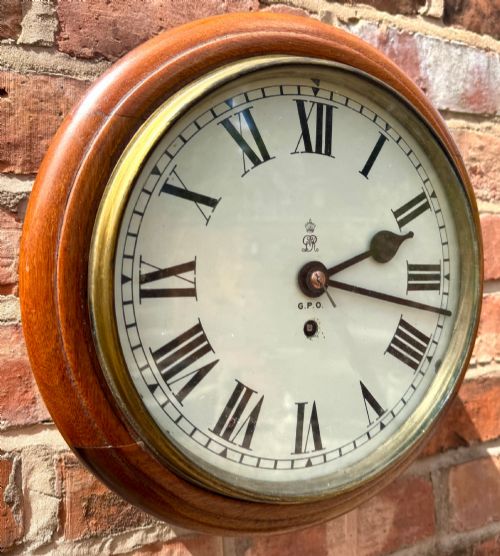
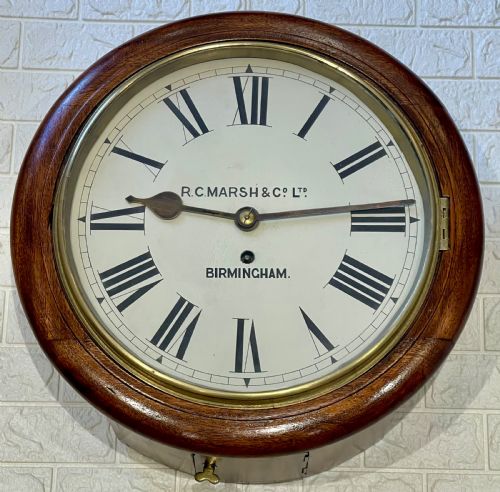
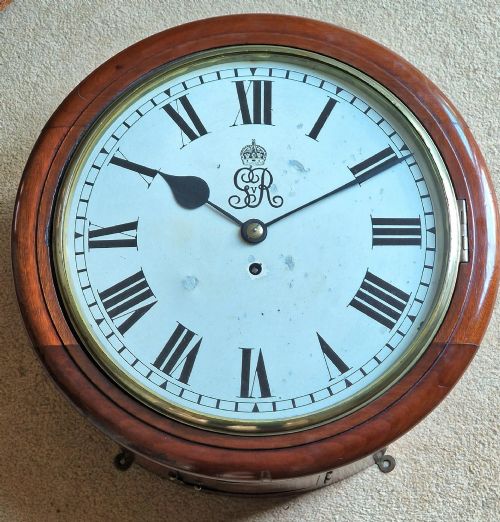


Edwardian Fusee Clock
An Edwardian fusee clock combines steady timekeeping with clean cabinet work, bringing a reliable mechanical movement into any room.
Understanding Edwardian fusee clocks
The edwardian fusee clock sits in a lineage of timepieces that includes Victorian examples, nineteenth century pieces, and later twentieth century production up to nineteen thirty. These items appear as wall clocks, station clocks, railway clocks, office clocks, school clocks, drop dial clocks, and mantel clocks.
Buyers will encounter wall mounted dial clocks alongside cabinet versions designed for shelves or mantels. Woods such as mahogany, oak, and satinwood inlay form the primary housings, paired with brass bezels, convex glass, and steel components.
Materials and construction
Cases utilise solid oak and mahogany, sometimes enhanced with satinwood inlay and fitted with protective glass over convex dials. Metal elements involve brass for bezels and dials, alongside steel within the mechanical movements.
Makers housed the single or double chain fusee movements inside robust wooden enclosures designed for daily institutional or domestic use.
Retail Price Guide 2026
Typical UK retail prices for edwardian fusee clock, calculated from the Sellingantiques database of over a million retail prices indexed since 2003. This retail price guide relies exclusively on Sellingantiques data; no external sources or auction records are used, so the figures do not describe the wider market.
Listings feature mahogany, oak, brass, and glass across Victorian and Edwardian periods.
What separates the finest examples
Quality rests on the crispness of the cabinet work, from the joinery of the mahogany or oak cases to the precision of the satinwood inlay. The integration of maker signatures, whether painted on the dial or engraved on the movement, elevates an ordinary timepiece into a documented work.
The sophistication of the movement itself, moving from single fusee configurations to more complex double chain fusee systems, marks the distinction between standard utilitarian timekeepers and superior library or office clocks.
W. Burton·Balbiani Brookley·Wyatt Bournemouth·Goldsmiths Silversmiths London
The Edwardian Fusee Clock Glossary
- Fusee
- A conical pulley used with a cord or chain to equalize the driving force of the mainspring as it unwinds. This mechanism ensures consistent timekeeping accuracy throughout the power reserve.
- Drop dial
- A clock design where the circular dial sits above an elongated wooden case that drops down to house a pendulum. This form became standard for railway, station, and office timepieces.
- Convex dial
- A clock face curved outward toward the viewer to reduce glare and improve legibility from various angles in a room. It is typically protected by a hinged glass door in a brass bezel.
- Single fusee
- A movement driven by one mainspring regulated by a single fusee cone and chain. Most standard wall and mantel clocks rely on this efficient setup.
Frequently Asked Questions
What is a fusee clock?
A fusee clock is a timepiece driven by a spring connected to a conical pulley, which regulates the power to ensure even timekeeping as the spring runs down. This mechanical arrangement distinguishes them from standard wound clocks.
They appear frequently in wall mounted dial formats and mantel versions across Victorian and Edwardian periods.
How do I wind my clock?
Winding requires inserting the key into the dial aperture and turning it gently until resistance indicates the mainspring is fully tensioned. Care must be taken not to overwind antique movements.
Consult the specific single or double fusee mechanism requirements before applying tension to the chain.
Where were these clocks used?
These timepieces served primarily in railway stations, post offices, schools, and offices, as well as domestic parlours and libraries. Their clear dials made them practical for public viewing.
Railway and GPO wall clocks were built to withstand heavy daily use in busy environments.
Are mahogany and oak cases original?
Mahogany and oak served as the standard timbers for these clock cases during the nineteenth and early twentieth centuries. Satinwood inlay frequently decorated the finer Edwardian examples.
Matching the timber grain and construction style helps confirm the integrity of the housing.