
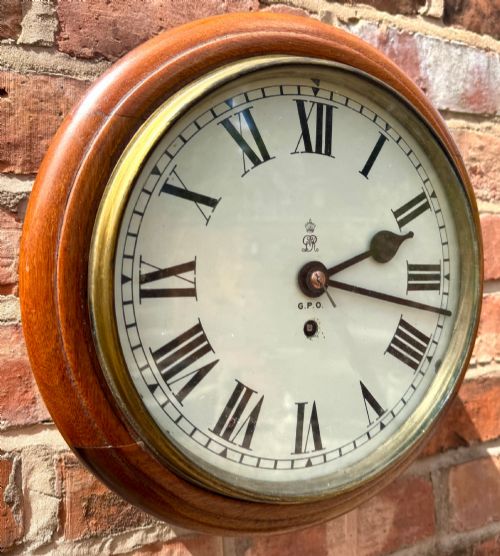
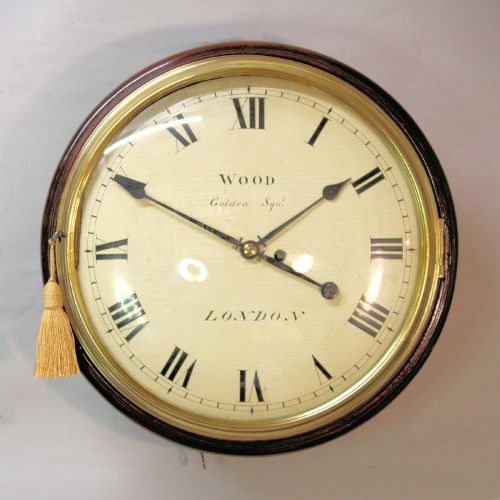


Single Fusee Wall Clock
A single fusee wall clock brings precise timekeeping and distinct period character to a room, driven by a reliable chain or cord movement.
Single Fusee Wall Clock
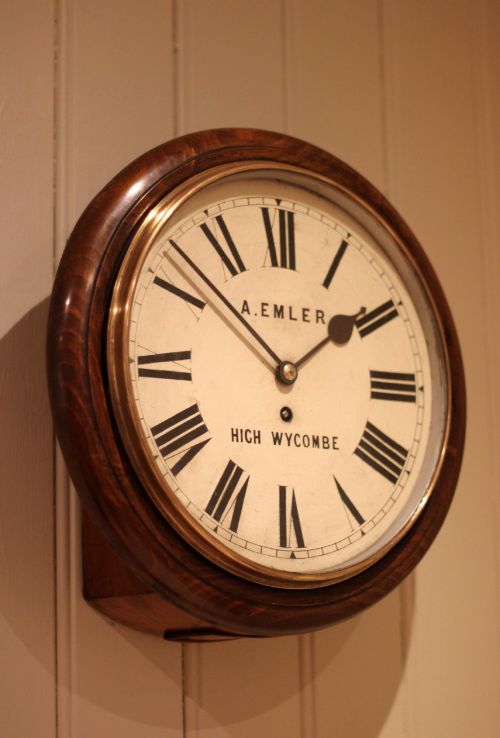
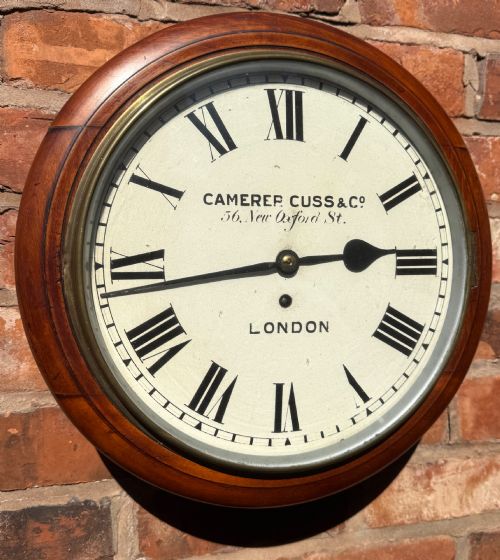
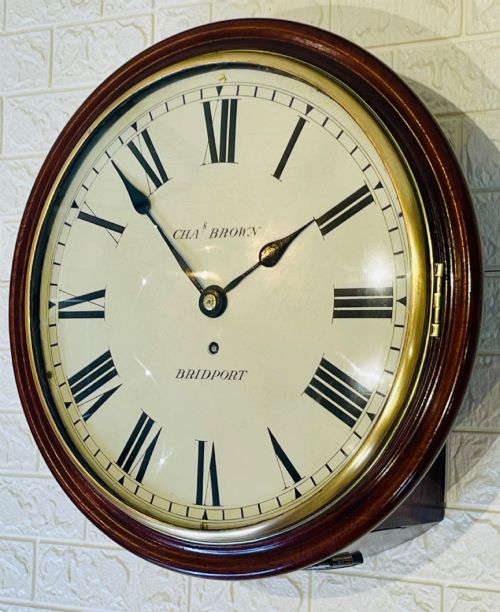
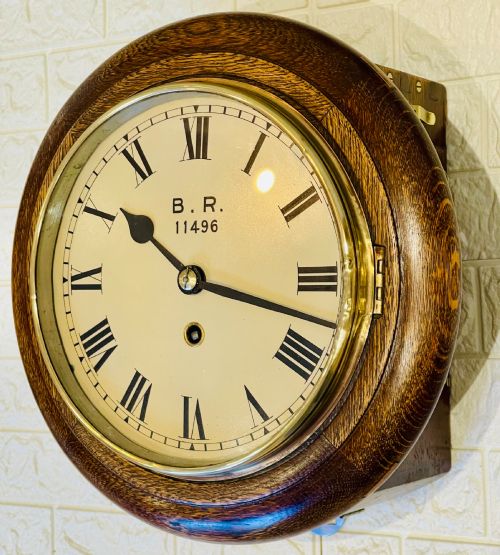
A single fusee wall clock is an intentional timepiece designed to maintain steady driving power through its conical pulley as the mainspring unwinds. When you search for a single fusee wall clock, you encounter circular dial faces housed in wooden frames intended for wall mounting in domestic, public or railway spaces. The versions you meet most frequently on this page date from the nineteenth century and the Victorian era, alongside Georgian, Regency and mid-twentieth-century examples.
Many of these wall clocks originate from specific makers, railways or postal services across England, bearing regional town names such as London, Weymouth, Bridport or Manchester on their dials. The forms range from standard round dial variants to drop dial designs featuring extended lower cases to accommodate the pendulum swing.
How They Were Made
The construction of these pieces relies heavily on durable hardwoods like mahogany, oak, beech and walnut for the cases and bezels. Cases frequently incorporate brass fittings and glass doors or covers to protect the dial face, while iron and painted wood or metal form the components of the dials themselves.
The driving mechanism utilises a single chain or cord wrapped around a conical fusee drum, paired with an anchor escapement and a pendulum. Dial faces are painted or constructed from wood, with applied numerals and maker inscriptions applied by hand.
Single Fusee Wall Clock Retail Price Guide 2026
Typical asking prices for single fusee wall clock among the pieces listed under this phrase on Sellingantiques today, from the lower quarter to the upper quarter. They describe what is for sale here now, not the wider market.
Origin locations recorded on dials include London, Weymouth, Bridport, Manchester, Carlisle, Portsmouth and regional railway networks.
What Varies in Quality
The standard of a single fusee wall clock rests in the crispness of the movement assembly and the proportion of the timber case. Superior examples display finely figured mahogany, walnut or polished oak with tight joints and clean sight lines around the bezel.
Dials show variation in craftsmanship, with hand-painted lettering and clean wooden or metal faces outperforming simpler, worn substitutes. The integration of stamped case numbers, original maker signatures on the dial and well-preserved brass components elevate the overall execution of the piece.
Camerer Cuss And Co·John Walker·Sly Weymouth·Webster·Wyatt Bournemouth·Astral Of Coventry·H Williamson·Orson Melton Mobray
The Single Fusee Wall Clock Glossary
- Fusee
- A conical pulley connected to the mainspring by a chain or cord. This ingenious device ensures even tension is delivered to the gear train as the spring winds down.
- Drop dial
- A clock case that extends downwards beneath the main dial circle. This shape accommodates a longer pendulum swing and often provides access to the movement via a lower side or front door.
- Bezel
- The ring, usually hinged and glazed, that holds the glass protecting the clock face. In these pieces, bezels are commonly made of brass or wood and swing open for hand setting.
- Dial
- The visible face of the clock where the hours are marked. Materials include painted iron, wood and brass, frequently signed with the retailer or maker's name and town.
- Anchor escapement
- A mechanical linkage that controls the release of the gear train and gives the pendulum its steady impulse. It is the component responsible for the characteristic ticking sound.
Single Fusee Wall Clock: Frequently Asked Questions
How do I wind a single fusee wall clock?
Winding requires inserting the key into the small aperture on the dial face and turning it carefully until resistance is felt. Care must be taken not to overwind the mechanism.
Most single fusee clocks are eight-day movements, meaning they need attention once a week to maintain accurate timekeeping.
Where were these clocks originally used?
These timepieces served widely in domestic hallways, public offices, railway stations and postal sorting rooms. Railway and GPO examples often bear specific institutional stampings on their cases.
Their clear dials and reliable movements made them ideal for public spaces where accurate time was essential.
How do I tell a Georgian clock from a Victorian one?
Georgian and Regency examples often feature distinct wood dials or particular Sheraton style bezels characteristic of the early nineteenth century. Victorian models frequently utilise mahogany or rosewood cases with standardised drop dial or round configurations.
Examining the internal movement pillars, case timber and dial inscriptions helps confirm the manufacturing period.
Can I hang a wall clock on any wall?
These heavy wooden and brass clocks require secure fixing directly into solid masonry or substantial wall studs. Hanging them from a sturdy screw or bracket ensures the case remains plumb and the pendulum swings freely.
If the clock is tilted, the escapement will become uneven, causing the movement to stop.