
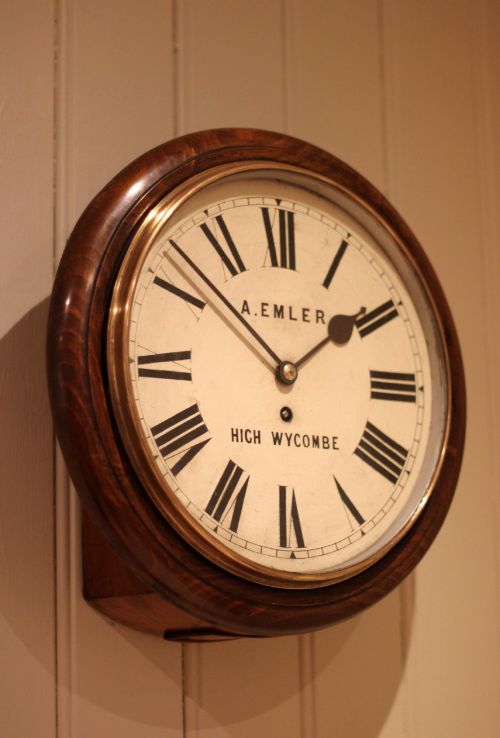
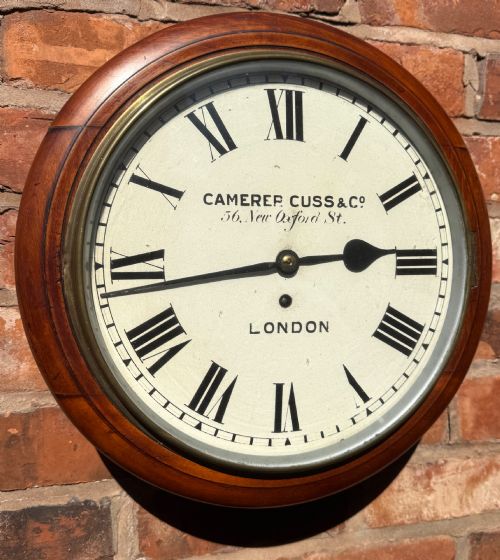

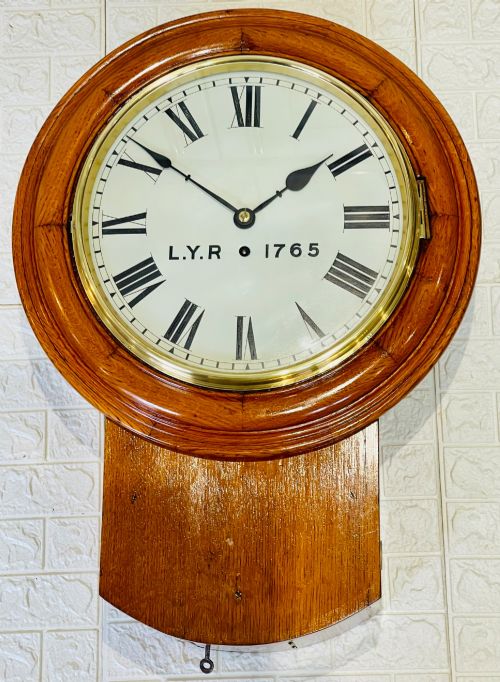
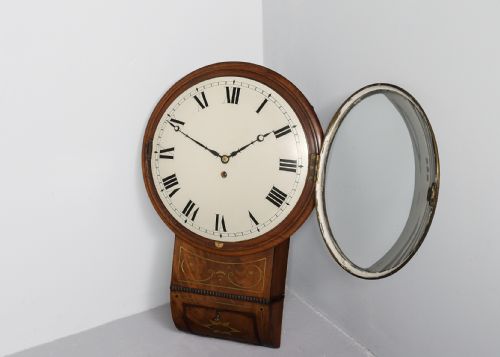
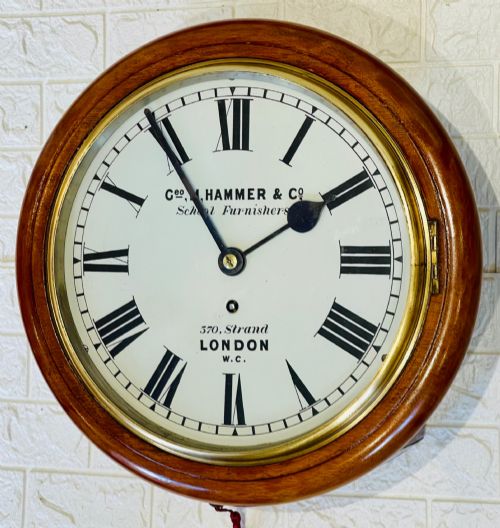
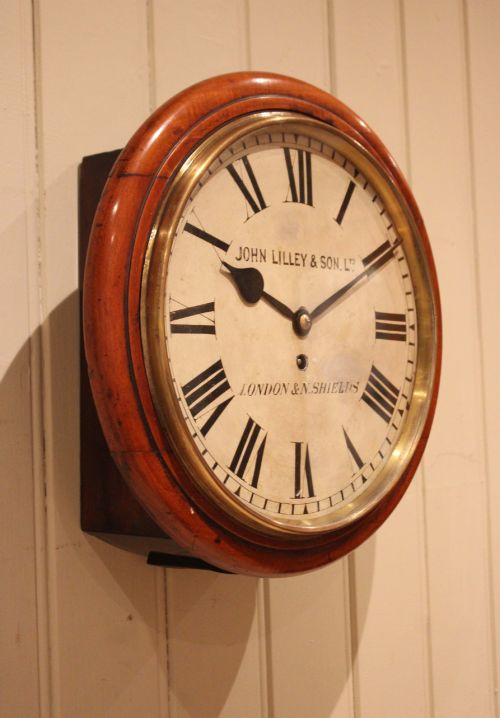
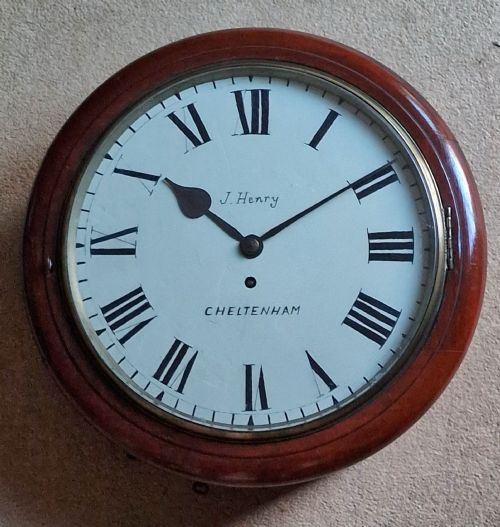
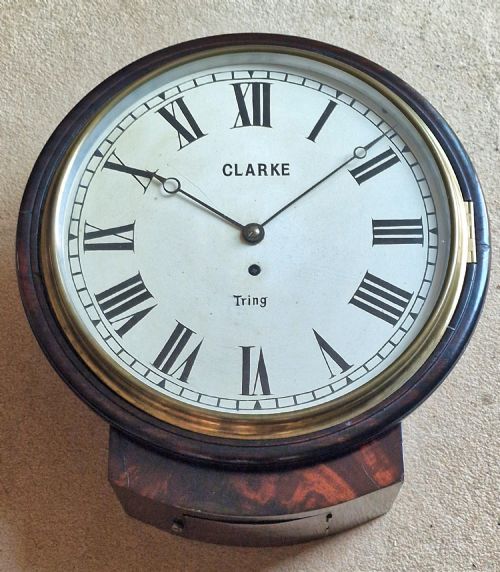
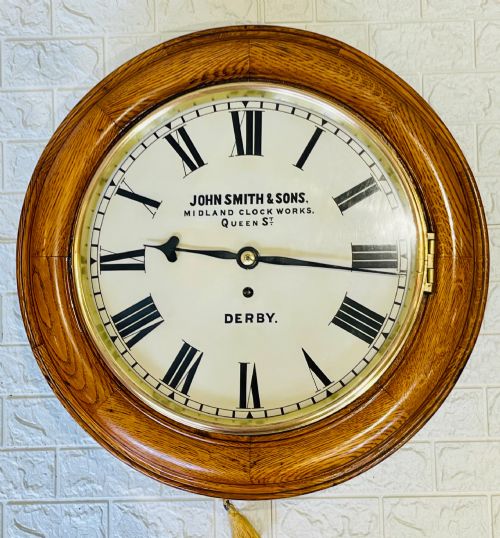
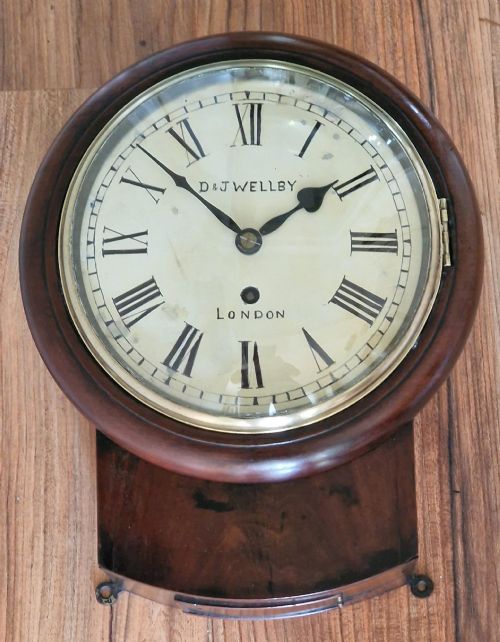
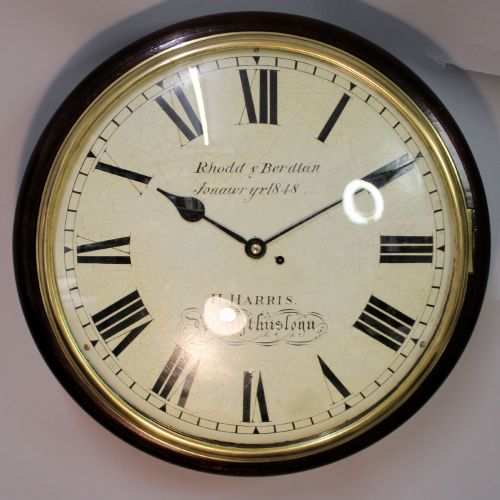
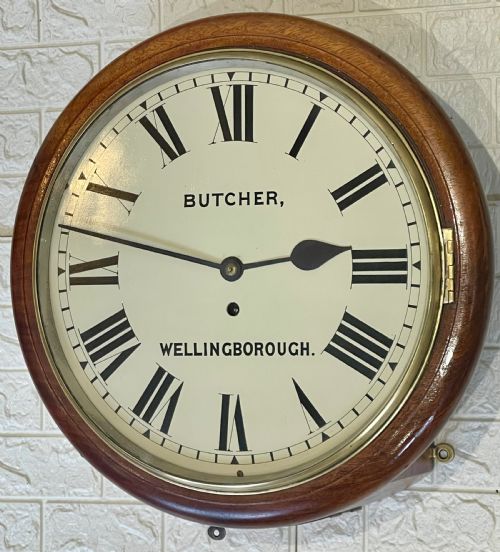
Victorian Fusee Wall Clock
A victorian fusee wall clock delivers mechanical precision and handsome timber casework to any room.
Victorian fusee wall clocks
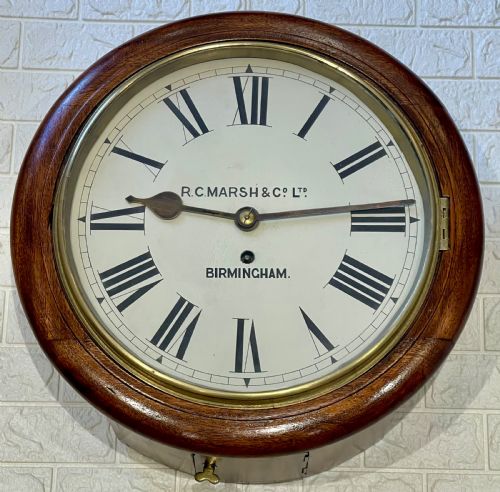
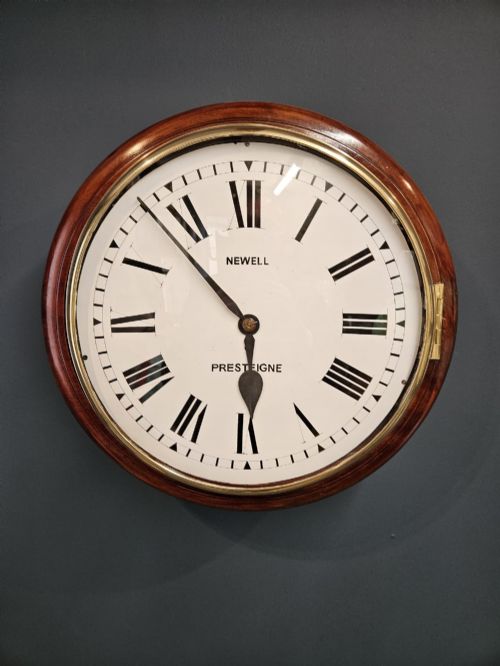
A victorian fusee wall clock brings dependable nineteenth century timekeeping into domestic and public spaces. These round or drop dial instruments hang securely on walls, combining clear painted faces with robust timber cases.
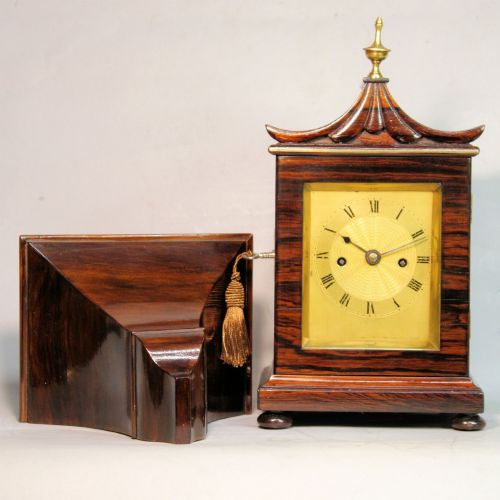
The version most commonly met on this page is the single fusee wall clock housed in mahogany or rosewood. Examples range from plain dials intended for railway stations and offices to grander drop dial models bearing maker signatures from London and regional towns.
Quality factors
The standard of timber selection and case joinery separates basic office clocks from refined domestic pieces. Finely figured mahogany or rosewood veneers and well-executed mother of pearl inlay indicate higher workshop status.
Movement execution and dial clarity also define value. Crisp engraving on signed movements, heavy brass plates, and well-proportioned convex dials demonstrate superior horological craftsmanship.
Retail Price Guide 2026
Typical UK retail prices for victorian fusee wall clock, calculated from the Sellingantiques database of over a million retail prices indexed since 2003. This retail price guide relies exclusively on Sellingantiques data; no external sources or auction records are used, so the figures do not describe the wider market.
The inventory records regional English makers from London, Scotland, and Wales alongside London workshops.
L Morris Islington·J C Ralls Clevedon·Dent·Reynolds and Sons·Fraser·Boyce of Exmouth·Martin of Swansea·J Bromwich Dudley
The Victorian Fusee Wall Clock Glossary
- Fusee
- A conical pulley connected to the mainspring by a cord or chain. This device maintains even torque as the spring relaxes.
- Drop dial
- A clock case featuring a circular dial at the top and an extended lower trunk below. This lower section often accommodates a pendulum box.
- Convex dial
- A clock face that curves outward toward the viewer. This shape reduces glare from windows and gas lighting.
- Twin fusee
- A movement equipped with two fusee mechanisms, typically separating the timekeeping train from the striking train.
Frequently Asked Questions
How do I wind my wall clock?
Insert the winding key into the small hole on the dial face and turn it gently until resistance increases. Stop winding immediately when you feel this tension to avoid damaging the mainspring.
Most eight day movements require winding once a week on the same day. Keep the key in a safe place nearby so you maintain a regular routine.
Where should I hang a fusee clock?
Choose an interior wall that is stable and free from heavy vibrations such as slamming doors or busy stairwells. Plasterboard walls require secure fixings anchored directly into studs.
Ensure the clock hangs at a comfortable eye level for daily viewing and easy access during weekly winding. Avoid placing the case in damp rooms or areas exposed to direct sunlight.
How do I make the clock keep accurate time?
Adjust the small regulating nut situated beneath the pendulum bob to correct running speed. Turn the nut upward to make the clock run faster or downward to make it run slower.
Allow the movement a full day to settle after making any adjustment before testing accuracy again. Small temperature shifts in your room may require occasional minor tweaks.
How do I tell an early clock from a later one?
Examine the timber casework, dial materials, and movement construction details closely. Early pieces often utilise solid mahogany frames and robust brass plates with distinctive hand-cut wheel teeth.
Later Victorian examples may incorporate veneered cases or factory-produced components alongside painted iron dials. Maker signatures recorded on the dial or movement backplate also help date the piece.