




Drop Trunk Wall Clock
A drop trunk wall clock offers dependable timekeeping housed in a handsome case designed to hang securely in public rooms and hallways.

What They Are
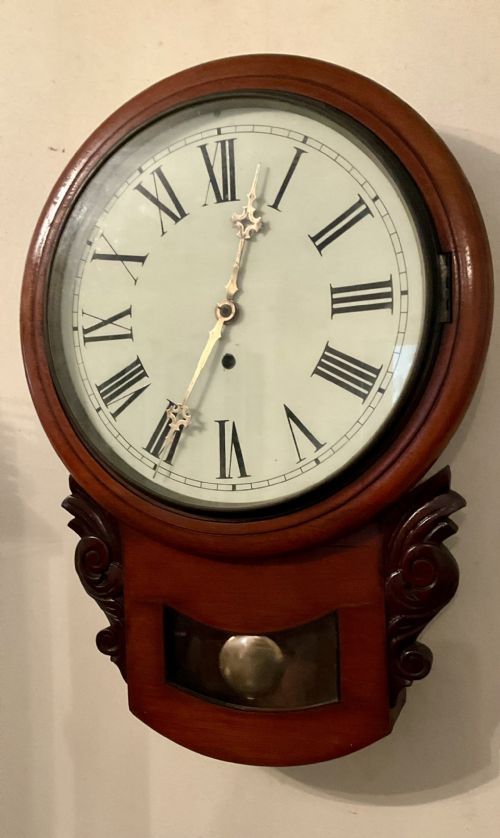
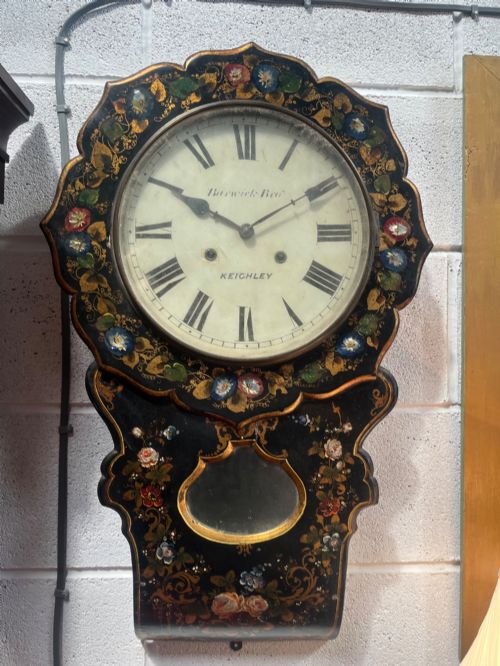
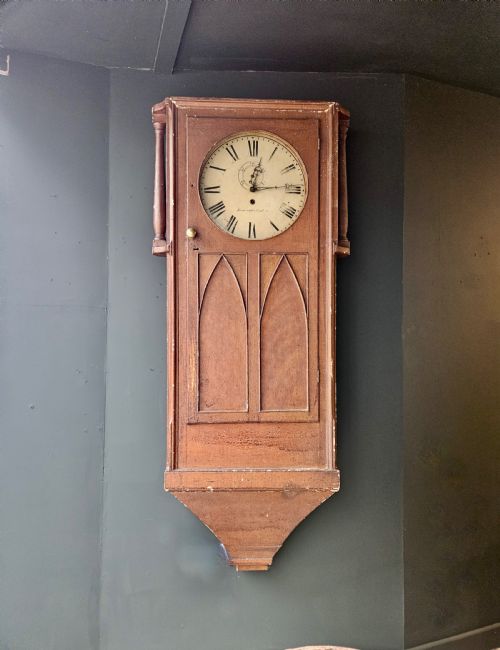
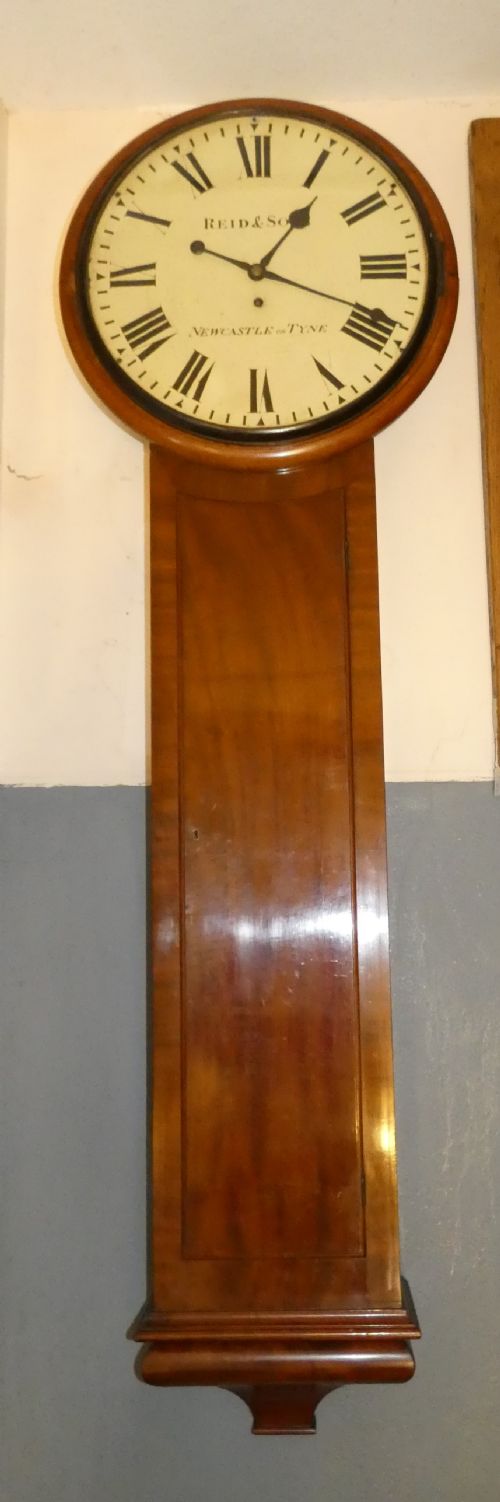
A drop trunk wall clock combines a circular dial housing with an extended lower wooden case designed to enclose a pendulum. These timepieces date primarily from the nineteenth century, including Victorian examples and specific years such as eighteen sixty and eighteen ninety.
The objects seen here take the form of wall clocks originating from English workshops. Makers such as J.W. Enock of Warwick, Webb of Frome, and Halliday & Rich of Bridgwater produced these sturdy instruments for domestic and commercial interiors.
Buyers will encounter regional variations, including Norwich style weight-driven models alongside fusee timepieces. Mahogany and oak dominate the available forms, often accompanied by rosewood or brass details.

How They Were Made
Cabinetmakers utilised solid timbers such as mahogany, oak, and rosewood to construct the cases, occasionally incorporating mother-of-pearl inlay or brass bezels around the glazed dial covers. The timber was selected for strength and stability to support heavy mechanical movements.
Inside the case, iron and brass components formed the gear trains for fusee or weight-driven mechanisms, paired with enamel dials for clear legibility. These movements were assembled by hand to ensure reliable timekeeping over eight-day intervals.
Retail Price Guide 2026
Typical UK retail prices for drop trunk wall clock, calculated from the Sellingantiques database of over a million retail prices indexed since 2003. This retail price guide relies exclusively on Sellingantiques data; no external sources or auction records are used, so the figures do not describe the wider market.
What Varies in Quality
The refinement of the timber case and the precision of the dial marquetry separate standard examples from finer works. Rosewood inlay and carefully figured mahogany distinguish elevated cabinetmaking from simpler utility clocks.
The reputation of the maker inscribed on the dial or movement influences the standing of the piece. Signed works from established regional centres carry the mark of specialised horological skill.
J.W. Enock of Warwick·Webb of Frome·Halliday & Rich of Bridgwater
The Drop Trunk Wall Clock Glossary
- Drop dial wall clock
- A clock featuring a circular dial attached to a shorter or extended lower trunk case. This configuration protects the descending pendulum.
- Fusee timepiece
- A mechanism using a conical pulley and chain to maintain equal force as the mainspring unwinds. This system improves accuracy across the duration of the wind.
- Enamel dial
- A face made by fusing powdered glass onto a metal plate at high heat. It provides a durable, glossy surface for painted numerals.
- Weight driven
- A clock powered by descending weights rather than a coiled spring. This method requires vertical space within the trunk case.
Frequently Asked Questions
How do these clocks mount to the wall?
These clocks are designed to hang securely from sturdy wall fixings using brackets or reinforced mounting points located within the wooden case.
The weight of the timber and internal movement requires solid anchorage to support the vertical drop trunk safely.
What is a fusee movement?
A fusee movement employs a conical drum and a cord or chain to regulate the power delivered from the mainspring.
This clever mechanical device ensures even tension reaches the gear train as the spring unwinds over the course of the week.
Are these clocks weight driven or spring driven?
The selection includes both fusee spring-driven examples and weight-driven mechanisms, such as Norwich style wall clocks.
Buyers should examine the interior specifications to understand which power source drives the pendulum.
How do I care for the timber case?
The mahogany, oak, and rosewood surfaces require gentle dusting and occasional application of appropriate furniture wax to nourish the grain.
Avoid placing the clock in direct sunlight or near heat sources to protect the polished wood and enamel dial from damage.