
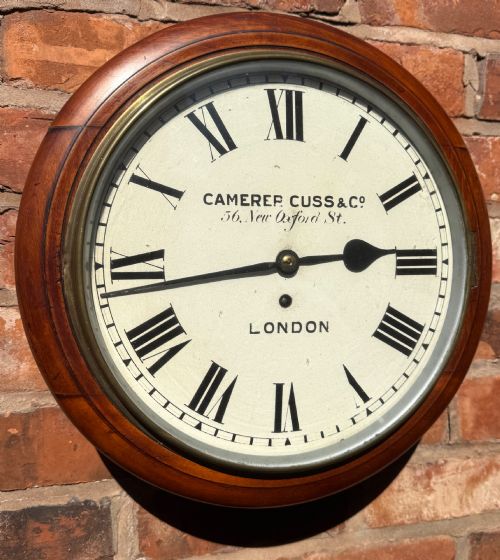
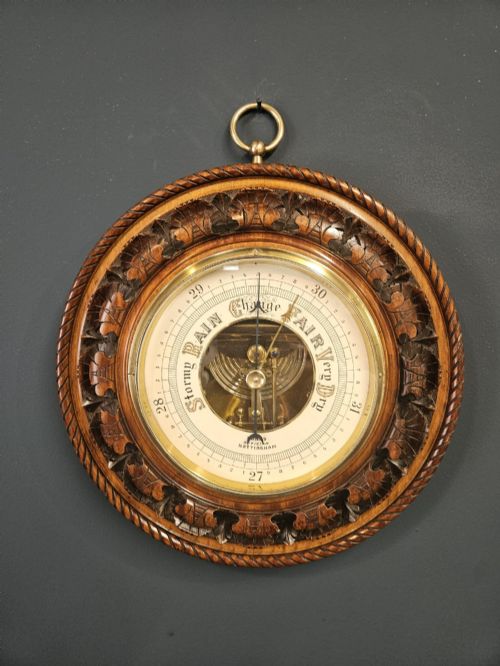

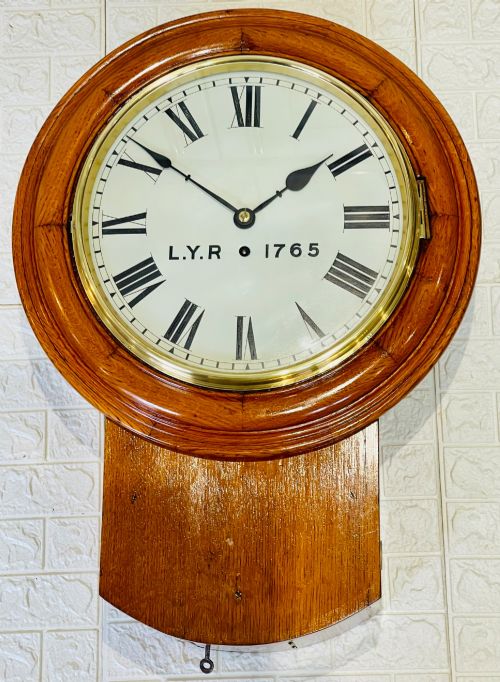
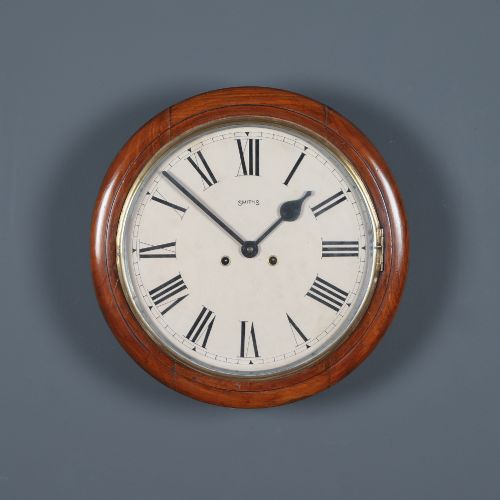
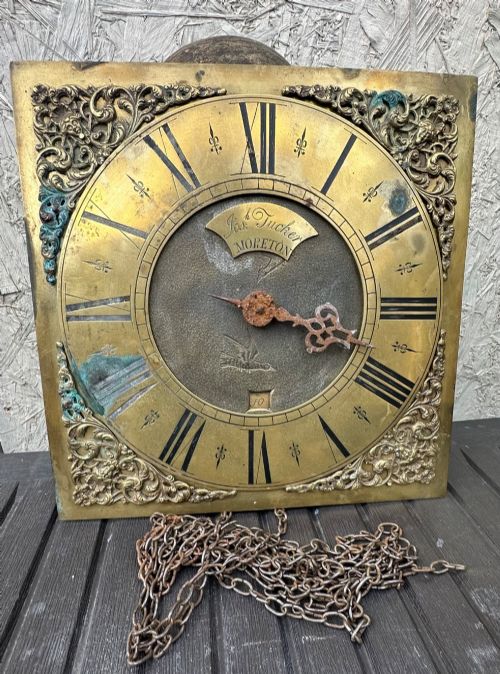
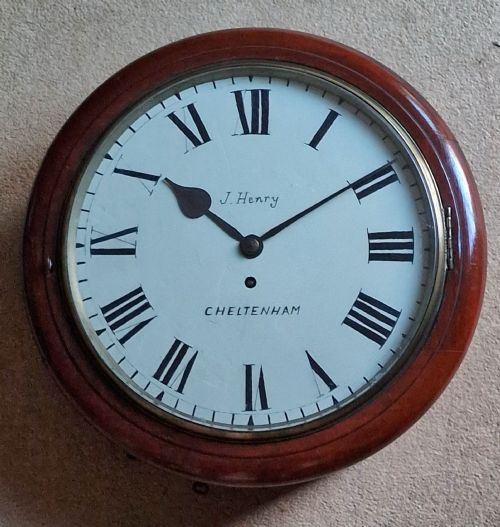
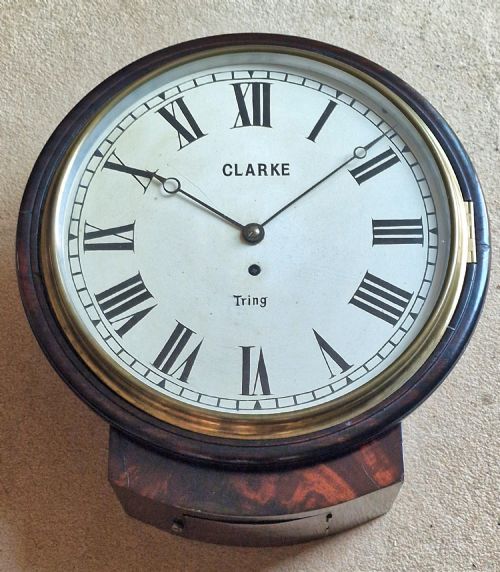
Brass Dial Wall Clock
A brass dial wall clock brings timekeeping into the room with weight and presence, turning the wall into a focal point of mechanics and material.
What these clocks are
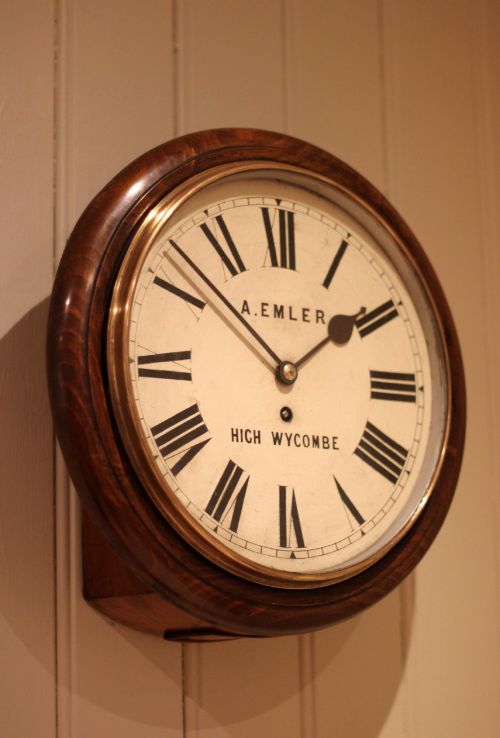
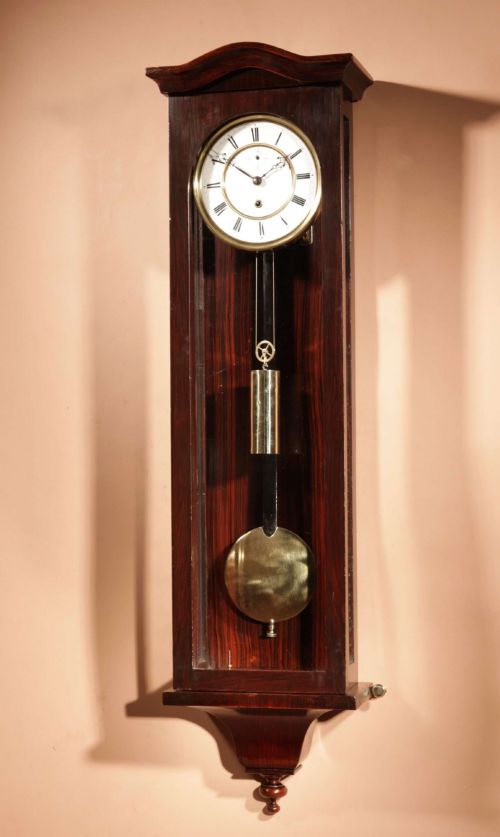
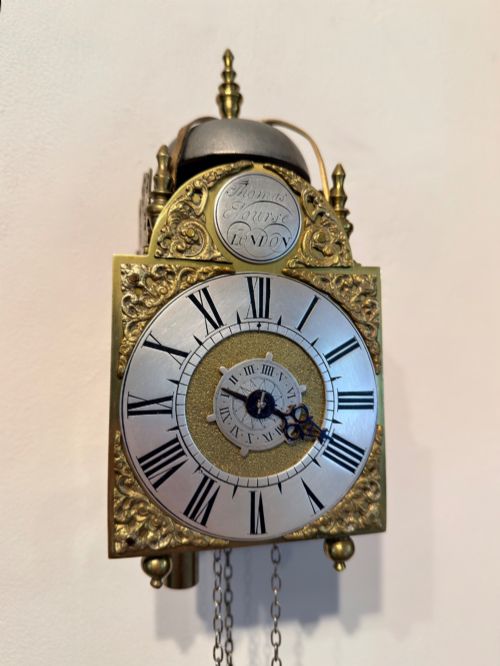
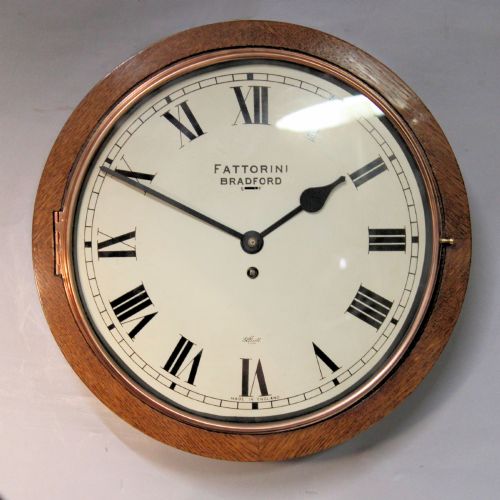
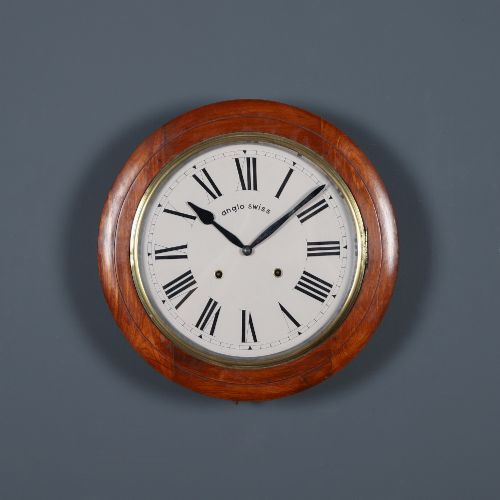
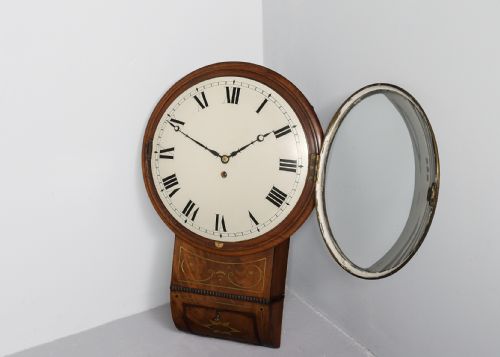
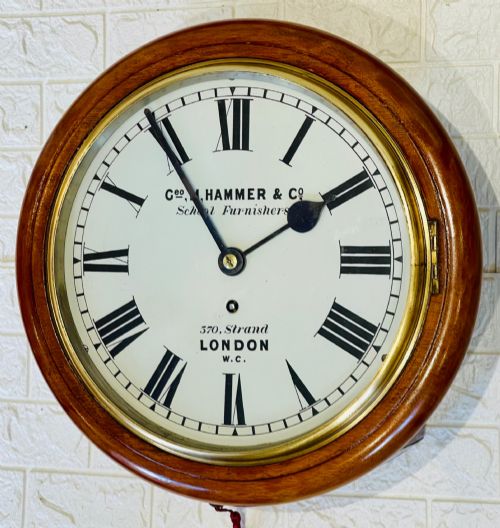
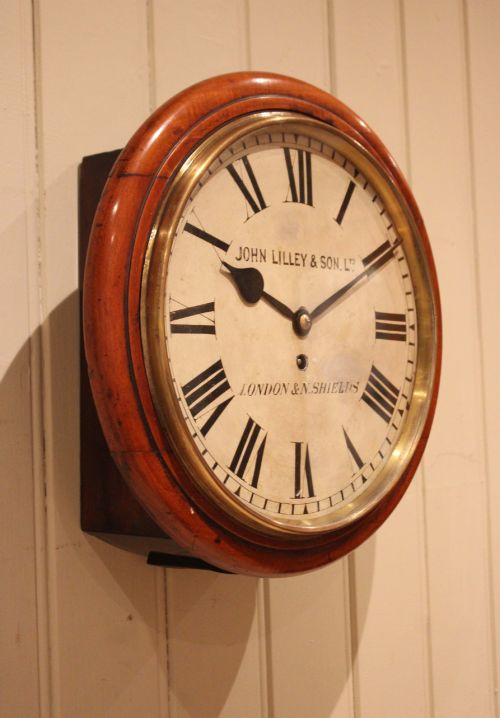
A brass dial wall clock is a timekeeper designed to mount directly onto a wall, featuring a prominent metal face surrounded by a timber or gilt case. The pieces appearing here span centuries of domestic and public timekeeping, running from early Georgian examples to later Edwardian and 1920s variations.
The assortment includes regional weight-driven drops, fusee movements housed in mahogany or oak, and ornate Dutch staart clocks or carved giltwood cartel clocks. Simpler school clocks and ships clocks with brass casing also appear alongside more intricate makers' signed works from the eighteenth century onward.
How they were made
Casework relies on solid hardwoods such as mahogany and oak, frequently enhanced with brass inlay, mother-of-pearl accents, or carved giltwood. Dials are constructed from brass, often featuring engraved numerals, silvered chapter rings, or convex glass protection.
Movements are driven by weights or fusee mechanisms, harnessing springs and chains to regulate the eight-day striking or chiming trains. Specialised housing like the "A" frame fusee or hooded wall clock construction protects the internal brass gears from dust and environmental changes.
Retail Price Guide 2026
Typical UK retail prices for brass dial wall clock, calculated from the Sellingantiques database of over a million retail prices indexed since 2003. This retail price guide relies exclusively on Sellingantiques data; no external sources or auction records are used, so the figures do not describe the wider market.
Some clocks feature mother-of-pearl inlay that catches the room's evening light long after the pendulum has stopped its quiet swing.
What varies in quality
Quality rests upon the crispness of the brass engraving on the dial, the depth of the cabinet work, and whether the movement retains its original components. Maker attribution adds weight, particularly when signed on the dial or movement plate by established regional horologists.
Materials dictate the visual anchor, from plain oak school cases to finely figured mahogany with intricate brass stringing or rich giltwood carving. The sophistication of the striking or chiming mechanism further separates standard domestic clocks from higher-tier pieces.
Henry Deykin, Worcester·William Webster London·Thomas Lindey of Bristol·Parkinson & Bouts
The Brass Dial Wall Clock Glossary
- Fusee
- A conical pulley used in clock movements to maintain an even pull as the mainspring unwinds. This ensures consistent timekeeping accuracy across the power reserve.
- Cartel clock
- An ornate wall clock set within a carved wood or gilt metal frame, popular during the eighteenth century. These pieces function as much as decorative wall sculpture as timepieces.
- Drop dial
- A wall clock design where the dial sits above an extended wooden trunk that houses the pendulum. This form accommodates the drop needed for the pendulum swing.
- Chapter ring
- The circular band on a clock dial that bears the hour numerals. In better examples, this ring is separately silvered and engraved.
- Staart clock
- A traditional Dutch wall clock featuring a visible pendulum swinging beneath the main case. The name derives from the Dutch word for tail.
Frequently Asked Questions
How do fusee wall clocks work?
A fusee movement uses a conical drum paired with a cord or chain to equalize the decreasing power of the mainspring as it unwinds. This mechanical ingenuity provides steady force to the gear train for more accurate timekeeping.
Most examples found on walls are eight-day movements, meaning they require winding once a week using a dedicated key. The system ensures the clock runs at a consistent speed from full wind down to the final hours.
Where should I hang a wall clock?
These clocks require a structurally sound wall capable of supporting the combined weight of the timber case and internal movement. Plasterboard alone is rarely sufficient, so fixing directly into studs or masonry is essential.
Position the clock away from direct sunlight and damp environments to protect the wood case and the brass components. Height placement should allow comfortable access for weekly winding and pendulum adjustment.
What is a school clock?
A school clock is a sturdy, practical wall timekeeper designed for institutional spaces like classrooms, offices, and railway stations. They typically feature simple wooden cases, straightforward dials, and reliable fusee movements.
While utilitarian in origin, these clocks offer a clean aesthetic that suits modern interiors. Their robust construction made them enduring survivors of heavy daily use.
How do I date an antique wall clock?
Dating relies on examining the casework style, dial materials, and the construction of the internal movement. Georgian and Regency pieces often display fine mahogany veneers and brass inlay, while Victorian examples lean toward bolder school clock formats.
Signatures on the dial or backplate provide direct links to active makers and working periods. Hardware construction details, such as hand-cut screws and pillar shapes, offer further confirmation of the era.