

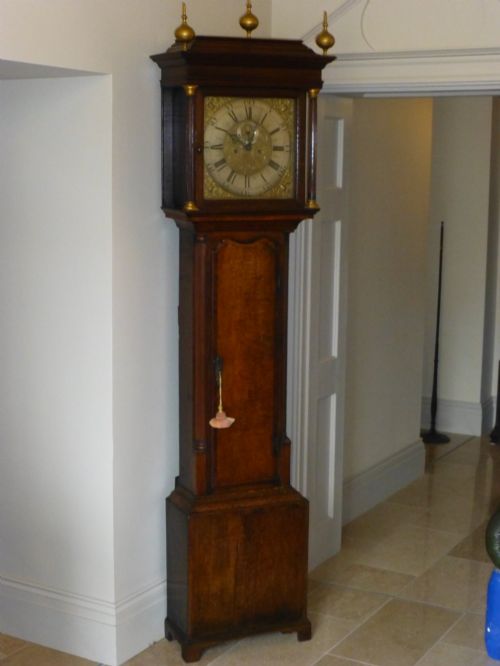
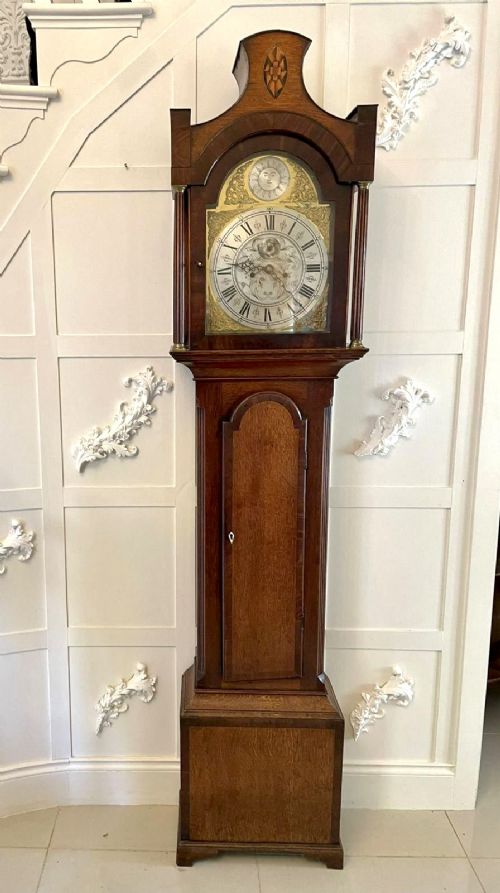
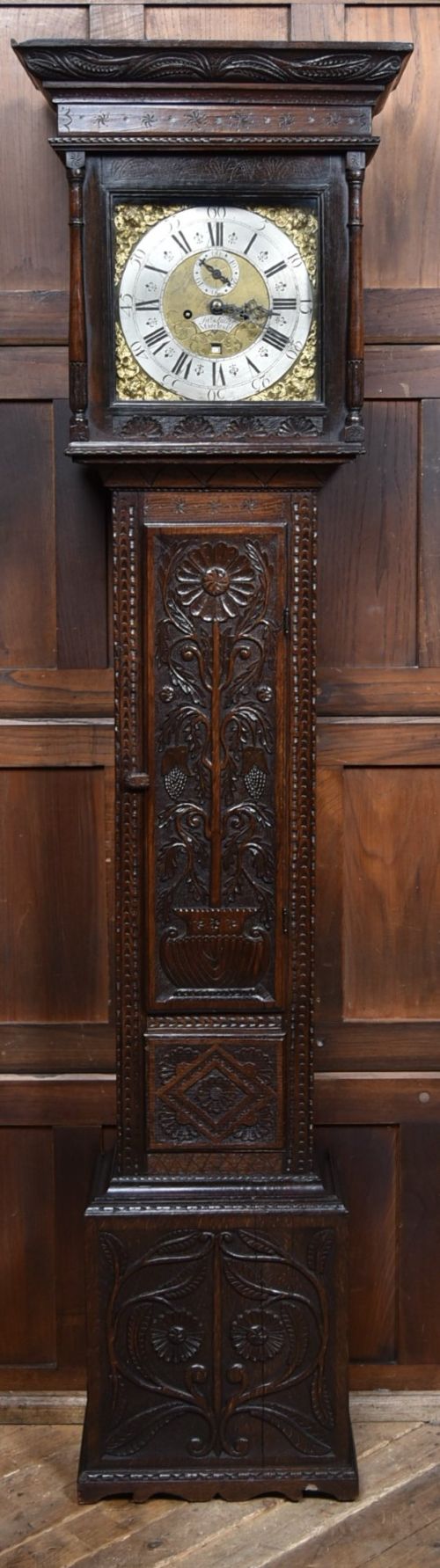
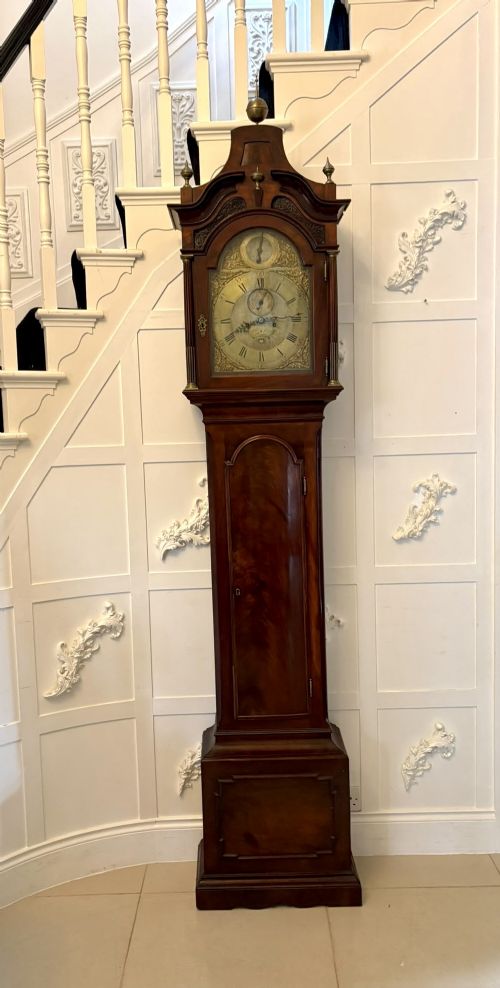


Antique Brass Face Clock
An antique brass face clock brings the rhythmic tick and warm metallic glint of past centuries straight into a room.

Antique Brass Face Clock
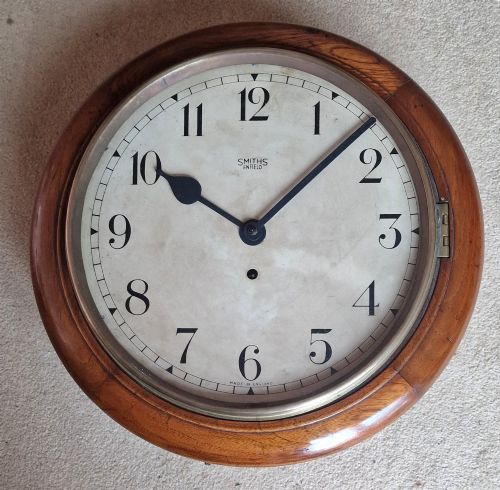
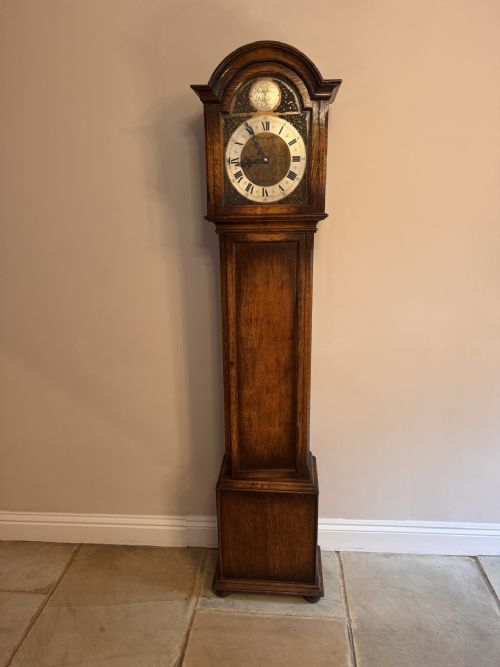
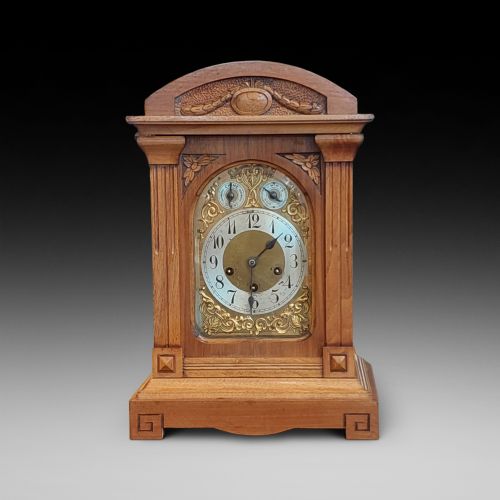
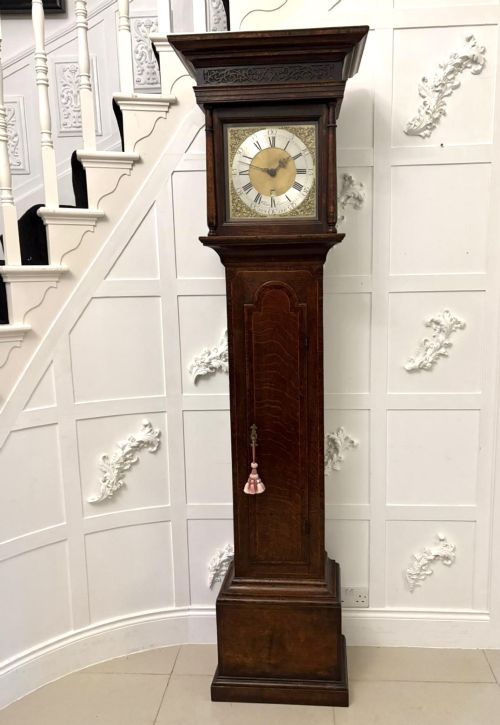
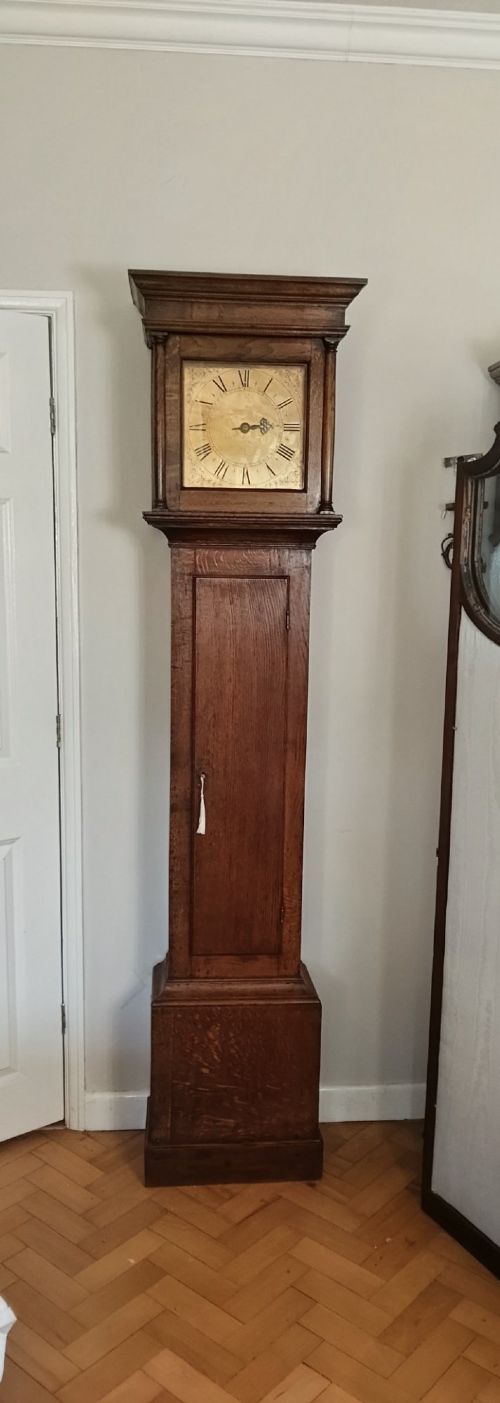
An antique brass face clock encompasses tall floor-standing timepieces, wall dials and mantel pieces featuring metallic dials. Buyers searching for an antique brass face clock most commonly encounter eighteenth-century and nineteenth-century longcase clocks housed in timber cases.
The selection ranges from early Georgian oak grandfather clocks to smaller Edwardian grandmother clocks and mahogany bracket pieces. Makers inscribed their names directly onto brass dials, recording regional workshops across Britain.
Tall examples dominate the forms, alongside smaller wall-hung dials and compact mantel variations. Oak and mahogany provide the primary housing for these brass-faced mechanisms.
Materials and Construction
Clockmakers shaped brass for the chapter rings and decorative spandrels, pairing the metal with cast iron and steel within the movement. Timber specialists constructed tall floor cases and wall housings using native oak, mahogany, walnut and burr oak.
Dials received engraved lettering and ornamentation, often framed by glass doors in mahogany or oak hoods. Movements relied on brass gear trains driven by weights or springs housed inside the timber trunk.
Antique Brass Face Clock Retail Price Guide 2026
Typical asking prices for brass face clock among the pieces listed under this phrase on Sellingantiques today, from the lower quarter to the upper quarter. They describe what is for sale here now, not the wider market.
Some timepieces recorded high water lunar phases, tracking the tides alongside the hours.
Assessing Quality and Finish
Superior examples display crisp engraving upon the brass dial and fine cabinetry with matched mahogany veneers or figured oak grain. Better movements bear the signature of known regional makers and maintain intricate mechanical complications like moonphases or chimes.
Proportion dictates the elegance of tall pieces, where slender waists and well-balanced brass dials separate standard production from exceptional provincial work. The integration of original brass spandrels, chapter rings and matching timber hoods indicates superior preservation.
Jn° Smith, Macclesfd·Smith of Chester·Joseph Gibson Ecclefechan·William Betagh, Dublin·D. Munsey of Cambridge·David Morice of Auchtermuchty·Samuel Young Nantwich·John Pollard of Crediton·Richard Northen·Robert Thomson Bo-ness·James Draycot Wells·John Taylor London·Standring of Bolton
The Antique Brass Face Clock Glossary
- Spandrel
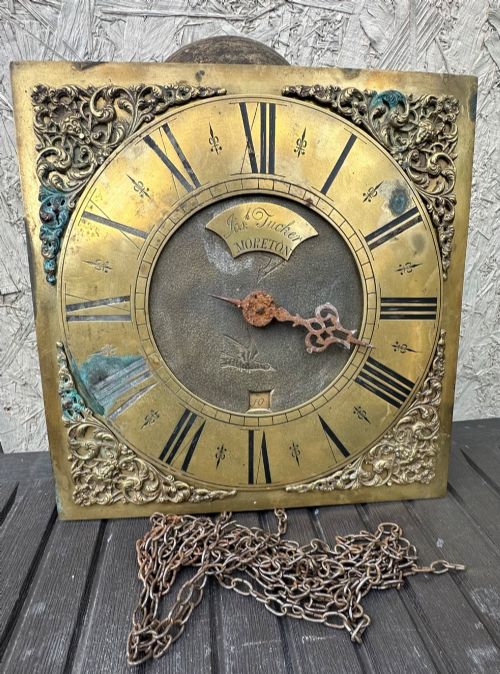
- The decorative corner piece set outside the chapter ring on a brass dial. These cast brass ornaments evolved in style from floral scrolls to rococo cherubs across different decades.
- Chapter ring
- The circular band on a clock dial that bears the hour and minute numerals. It is normally engraved upon the brass face and filled with dark wax.
- Longcase clock
- A tall floor-standing timepiece enclosed in a wooden case with a weighted movement. Often called a grandfather clock, it relies on suspended weights hanging inside the trunk.
- Bracket clock
- A portable table or mantel clock originally designed to sit upon a wall bracket. These pieces feature brass carrying handles and glass side panels.
- Dial
- The visible face of the clock where time is indicated by hands. Brass dials feature engraved inscriptions naming the maker and place of work.
Antique Brass Face Clock: Frequently Asked Questions
How do I wind an antique longcase clock?
Most eight-day longcase clocks require a key to wind the weights up via winding holes on the brass dial face. Take care not to over-wind the movement beyond the designated stop.
Ensure the weights descend freely inside the trunk without catching on the pendulum rod or case sides.
What is the difference between a grandfather and a grandmother clock?
Grandfather clocks are tall floor-standing longcase timepieces measuring over six feet in height. Grandmother clocks are scaled-down versions produced during later periods such as the Edwardian era.
Both styles utilise brass dials and weight-driven or spring-driven movements housed in wooden trunks.
How do I date an antique brass face clock?
Examine the style of the brass spandrels in the corners of the dial, the shape of the clock hands and the timber used in the case. Maker signatures inscribed on the brass face often reference known working periods.
Arch-topped brass dials typically indicate eighteenth-century or later Georgian origins, while square brass dials frequently point to earlier periods.
Where should I place a longcase clock at home?
Position the clock against a solid interior wall away from direct sunlight, damp areas and heating vents. Timber cases respond to stable room temperatures and humidity.
The clock must stand level on a firm floor to ensure the pendulum swings evenly and keeps accurate time.