

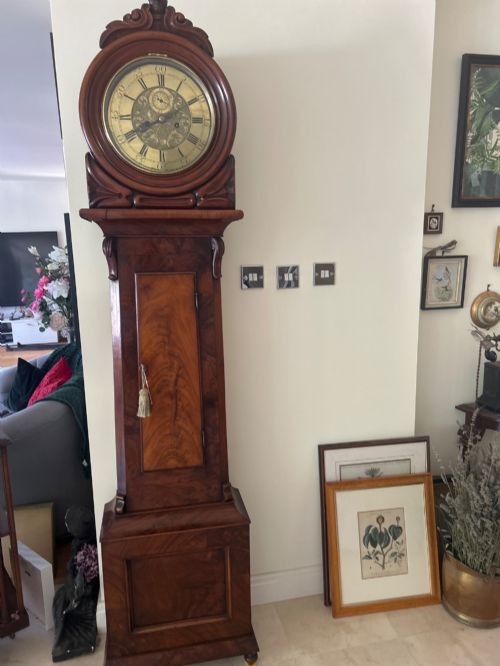
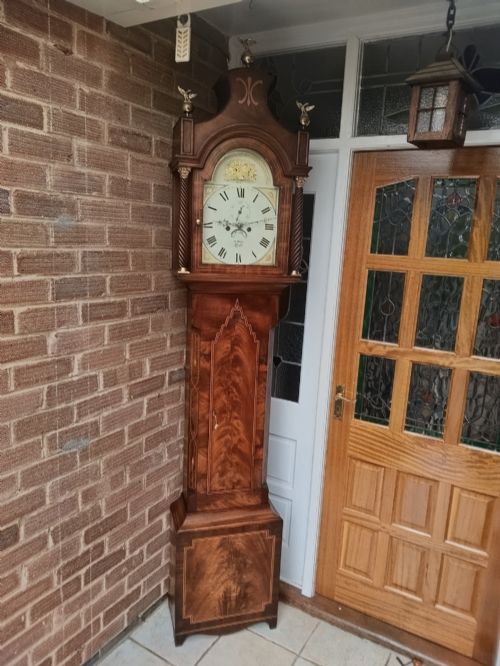

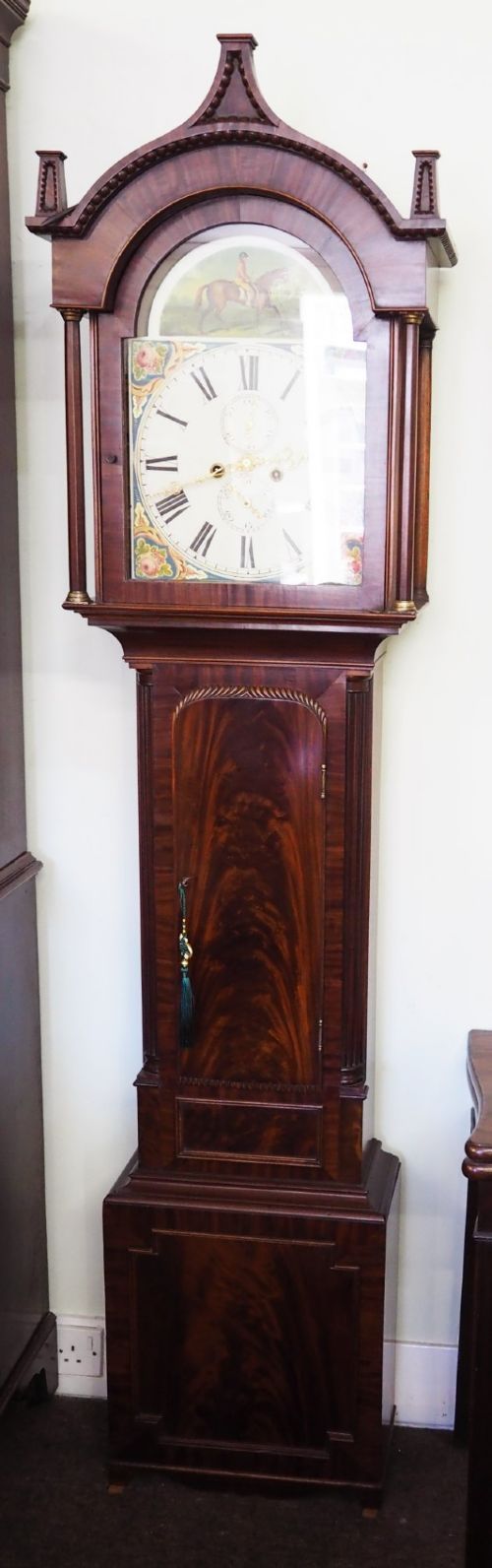


Regency Grandfather Clock
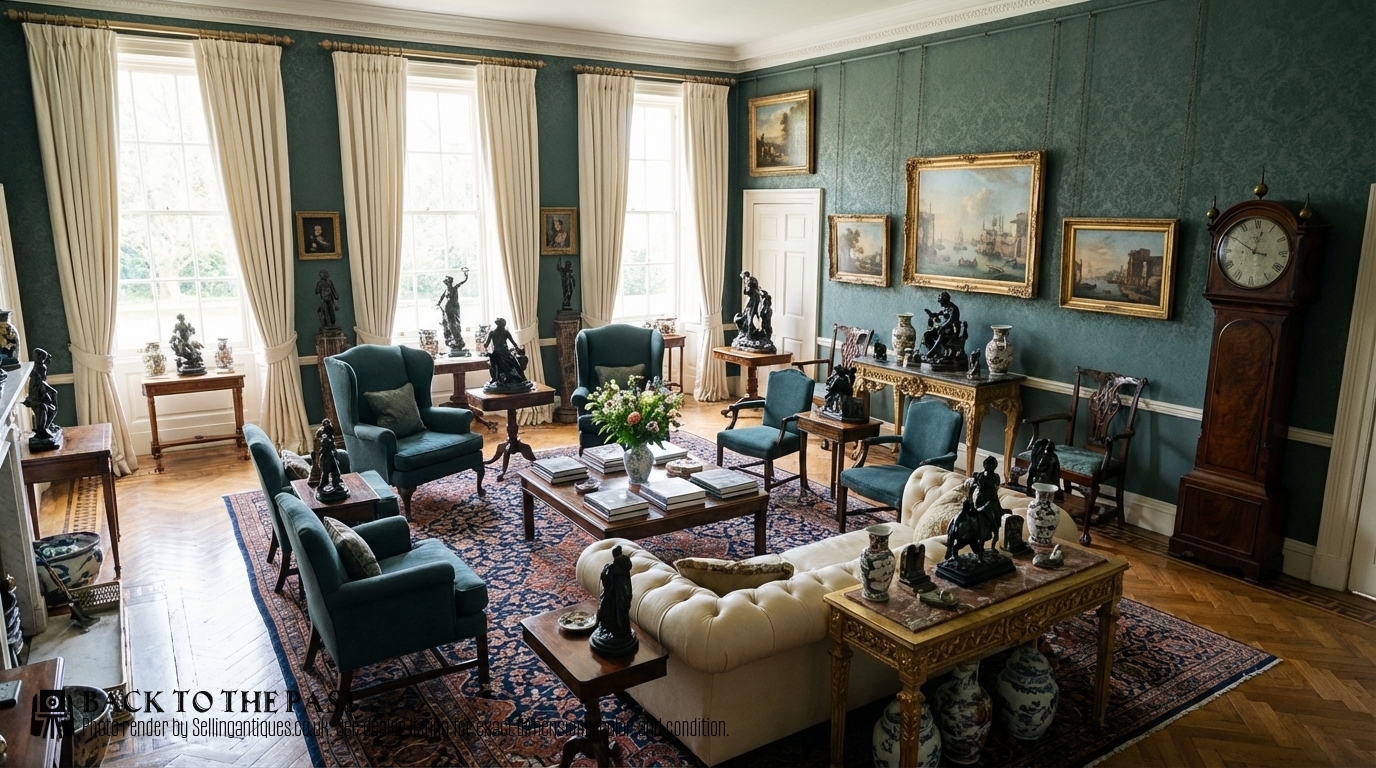
A regency grandfather clock brings a commanding presence to a room, housing precision movement inside a tall wooden case.
Regency Grandfather Clock
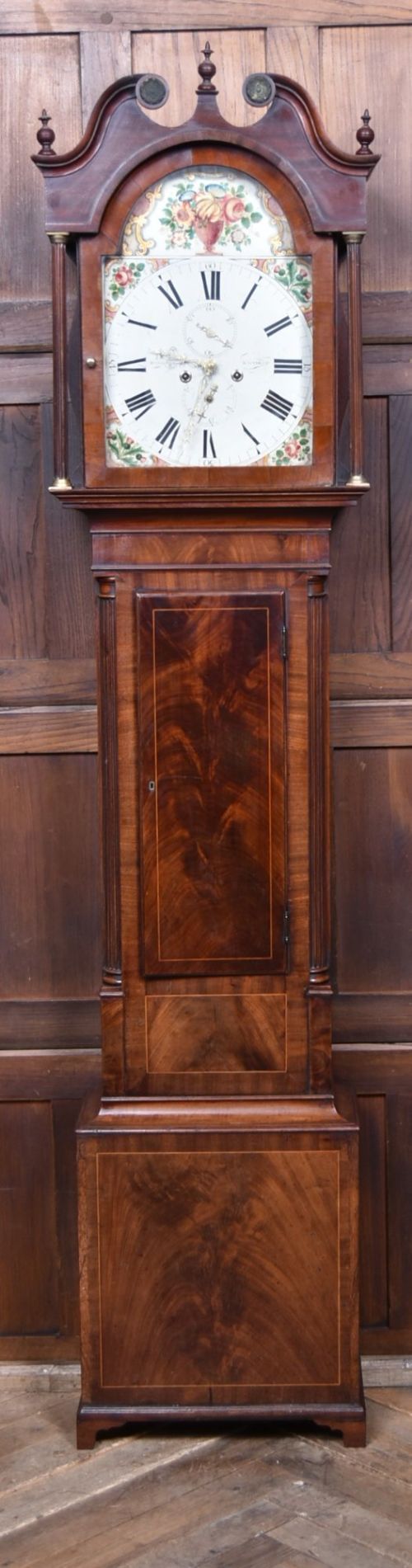
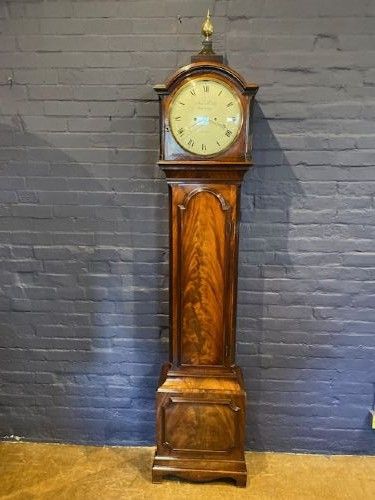
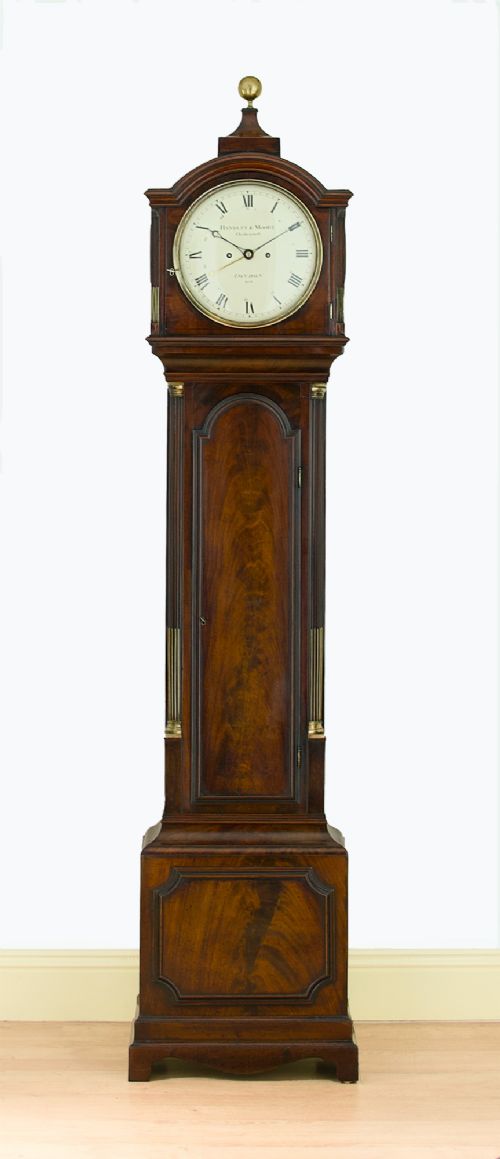
A regency grandfather clock takes the form of a tall floor-standing timekeeper, frequently referred to in period records as a longcase clock. The pieces recorded here span the late eighteenth through the mid nineteenth century, with strong representation from the Regency and Georgian eras.
Makers working across London, provincial English towns, and Scottish burghs produced these pieces in substantial numbers. Mahogany and oak dominate the timber choices, often finished with flame mahogany veneer and intricate inlay work.
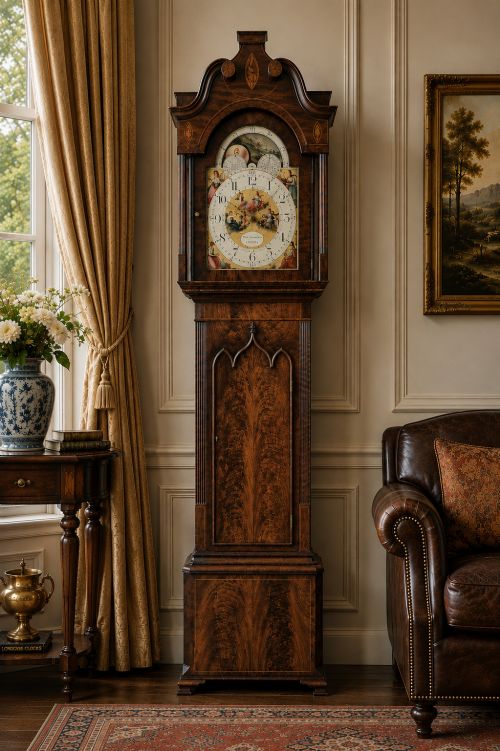
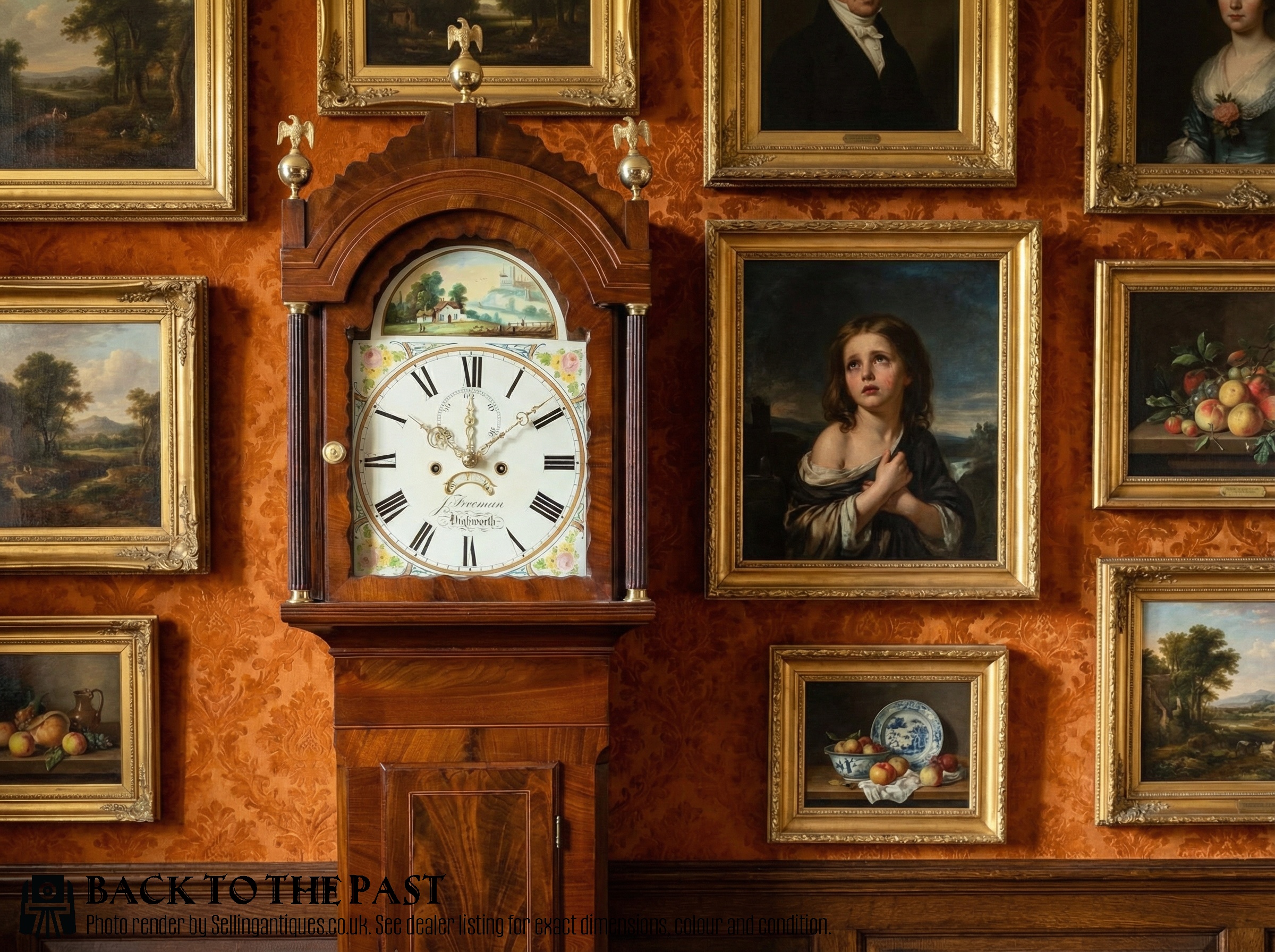
Dials appear in brass, enamel, and painted iron, sometimes featuring moonphase complications or rocking automata. Regional variations range from Scottish drumhead designs to London Gothic revival architectural cases.
How they were made
Cabinetmakers constructed the tall cases using solid oak or mahogany, frequently applying figured flame mahogany veneers to the trunk doors and plinths. Brass dial fittings, inlaid stringing, and glass door panels completed the exterior assembly.
Clockmakers fitted mechanical brass and iron movements, incorporating painted iron or enamel dials with subsidiary seconds and calendar rings. Weights suspended on lines or chains drove the eight day or lesser duration gear trains.
Regency Grandfather Clock Retail Price Guide 2026
Typical asking prices for regency grandfather clock among the pieces listed under this phrase on Sellingantiques today, from the lower quarter to the upper quarter. They describe what is for sale here now, not the wider market.
Regional workshops from London to Scottish burghs produced longcase clocks with distinct architectural hood styles.
What varies in quality
The refinement of the cabinetwork dictates much of the standing, separating simple provincial oak cases from sophisticated London architectural examples with flame mahogany veneer. Figured timbers and precise inlay demonstrate the cabinetmaker's skill.
Movement complexity and the reputation of the signing maker heavily influence the tier of the piece. Signatures from established London and regional watchmakers denote workshops of higher ambition.
James McCabe·Handley And Moore·Samuel Kellett·William Moon·David Morice·Parkinson And Frodsham·Dwerrihouse And Carter·William Chisholm·Ganthony Of London·Perigal Bond Street·John Morse·Robert Bryson
The Regency Grandfather Clock Glossary
- Longcase clock
- The formal term for a grandfather clock, describing a tall floor-standing timekeeper enclosed in a wooden case. These pieces protect the hanging weights and pendulum from dust and disturbance.
- Flame mahogany
- Timber cut from the fork of the mahogany tree where the branch meets the trunk, yielding a distinctive branching grain pattern. Cabinetmakers used veneers of this wood on prominent surfaces.
- Drumhead clock
- A style featuring a circular dial housing mounted atop a tapered wooden trunk, particularly prevalent in Scottish production. This form departs from the traditional square or arched hood.
- Regulator
- A precision timekeeper designed for exact time measurement, often featuring a simplified dial layout with a central minute hand and subsidiary dials for hours and seconds.
Regency Grandfather Clock: Frequently Asked Questions
What is a regency grandfather clock?
A regency grandfather clock is a tall mechanical timekeeper produced during the early nineteenth century. These instruments combine architectural wooden cases in mahogany or oak with brass gear movements.
Cabinetmakers and horologists collaborated to build pieces that served as both accurate timekeepers and central furnishings in domestic interiors.
How do I wind the clock?
Winding involves using a specialised key to raise the heavy lead or iron weights suspended inside the trunk. Inserting the key into the winding holes on the dial and turning it carefully draws the cords upward.
Most examples require this maintenance routine every eight days to keep the pendulum swinging and the gear train operating continuously.
Where should I place it?
These tall instruments require a stable, level floor against a secure interior wall free from dampness and heavy foot traffic. Placing the case away from direct sunlight protects the polished wood and veneer surfaces.
A solid foundation ensures the pendulum swings evenly and the escapement maintains accurate timekeeping without interference.
How do I tell periods apart?
Dating relies on stylistic clues within the woodwork and the construction of the dial. Earlier pieces often display square brass dials and simpler oak cases, while Regency examples favor arched painted iron dials and flame mahogany veneers.
Signatures inscribed on the dial or movement backplate often provide direct links to recorded makers and active working dates.