

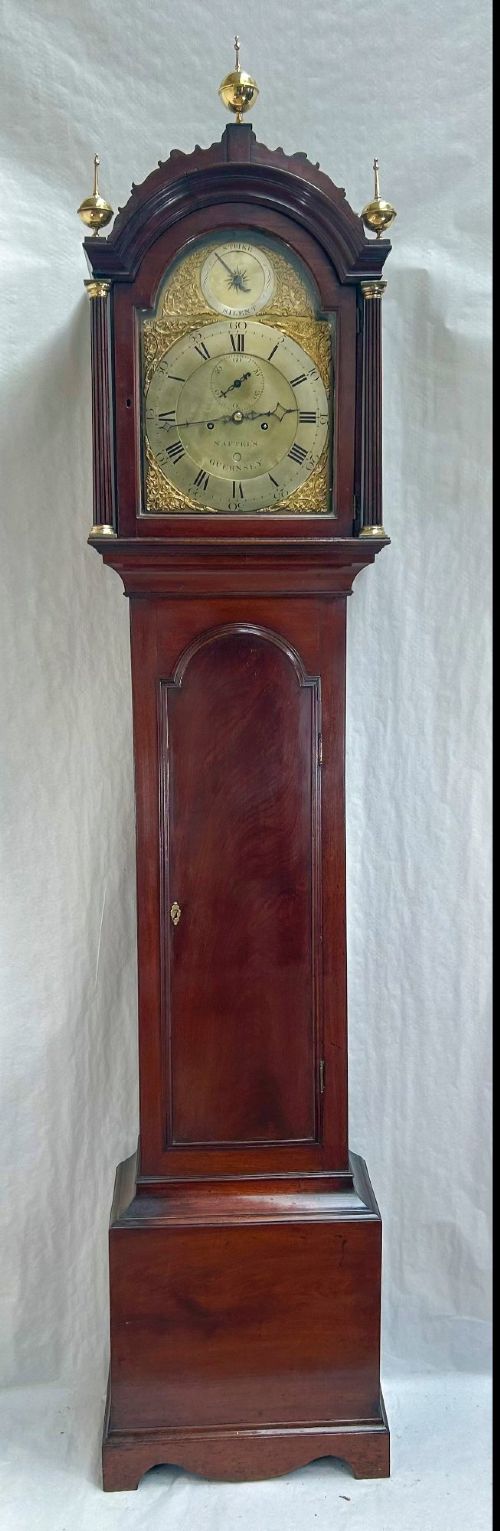
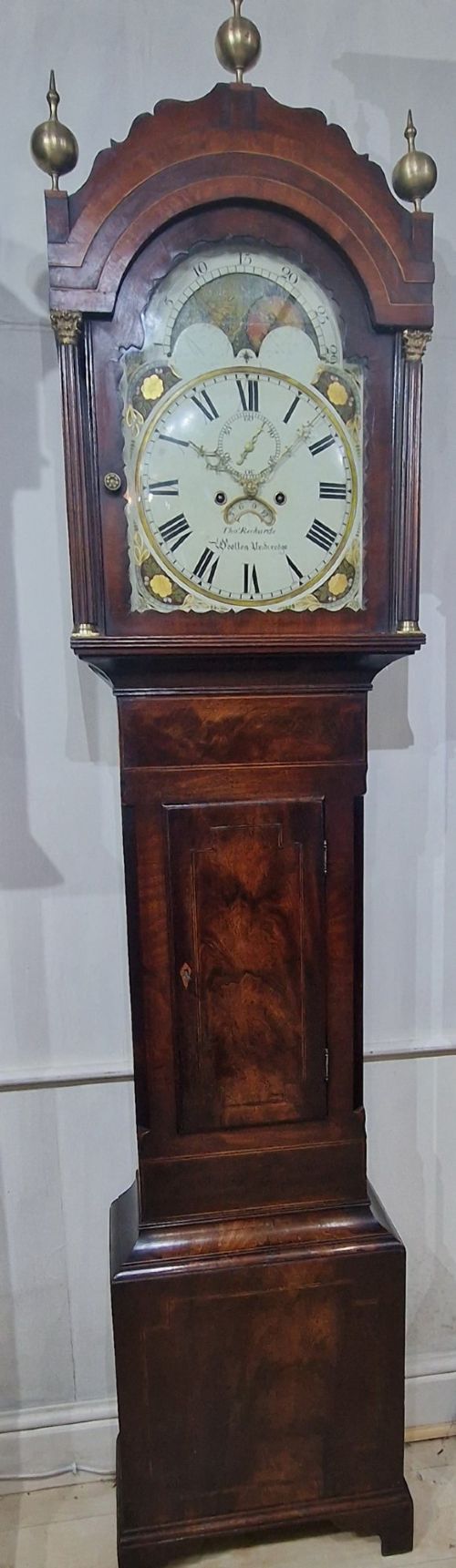


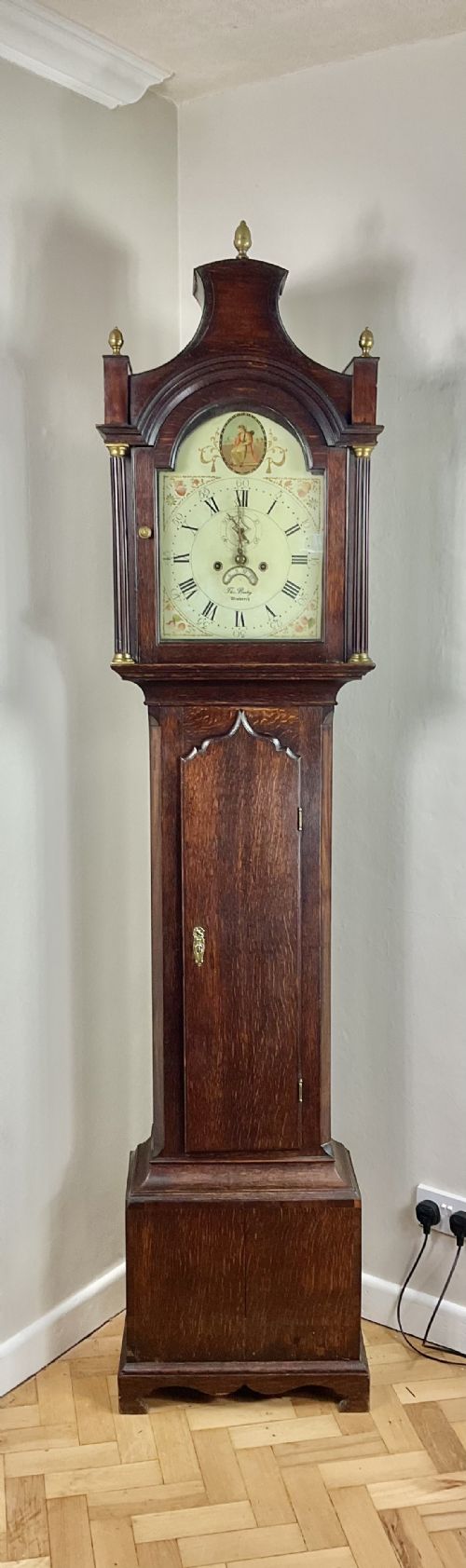

Brass Finial Grandfather Clock
A brass finial grandfather clock anchors a room with mechanical rhythm and stately presence, drawing the eye upwards to classical brass work.
What They Are
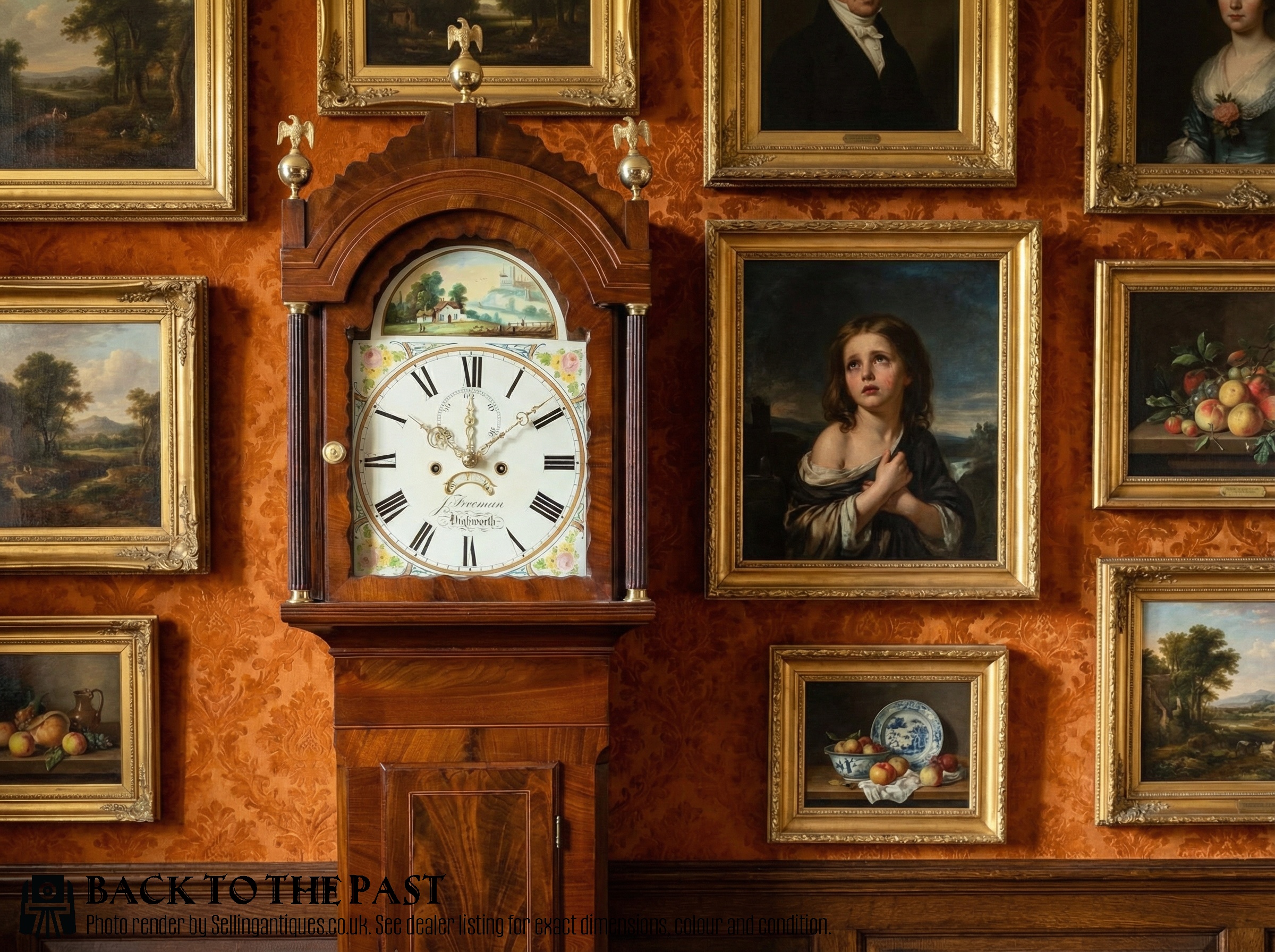
When you search for a brass finial grandfather clock, you examine tall floor clocks housing weight-driven movements beneath protective hoods topped with distinctive metal terminals. The examples appearing here span the Georgian era through to the nineteenth century, encompassing Scottish regional variations and metropolitan English craftsmanship.
The architectural format of these longcase clocks relies on tall wooden trunks designed to protect the pendulum and weights while presenting a dignified facade. Surviving pieces frequently utilise timbers such as mahogany, flame mahogany, oak, and ebonised wood to build the case.
Dial work within this selection ranges from traditional painted iron faces to detailed enamel work set behind glass panels. These tall clocks serve as both functional timekeepers and significant decorative furniture pieces within traditional interiors.

How They Were Made
Cabinetmakers constructed the tall wooden cases using solid planks and decorative veneers, selecting figured timber like flame mahogany or sturdy oak for structural integrity. The hoods incorporated glazed access doors and architectural details including brass finials mounted to the top.
Clockmakers built the internal eight-day movements from brass and steel components, integrating strike and silent mechanisms alongside painted iron or enamel dials. Each dial received hand-painted numerals and subsidiary chapter rings before being fitted into the protective case.
Retail Price Guide 2026
Typical UK retail prices for brass finial grandfather clock, calculated from the Sellingantiques database of over a million retail prices indexed since 2003. This retail price guide relies exclusively on Sellingantiques data; no external sources or auction records are used, so the figures do not describe the wider market.
Several clocks include a strike and silent lever, allowing eighteenth-century households to silence the hourly gong when guests stayed late.
What Varies in Quality
The distinction between standard and superior pieces rests in the execution of the timber veneer and the sophistication of the internal movement. Rich flame mahogany and crisp cabinet moulding elevate certain examples, whilst simpler oak cases represent more utilitarian domestic production.
Dial ornamentation and the refinement of the brass finial hardware dictate the visual hierarchy of the clocks. Signed London movements by makers such as William Tomlinson or Ed Hunsdon carry historical significance that separates them from provincial Scottish or unmarked regional pieces.
William Tomlinson·John Jackson·Ed Hunsdon
The Brass Finial Grandfather Clock Glossary
- Longcase clock
- An alternative term for a grandfather clock, describing the tall wooden case that encloses the movement, weights, and pendulum. This term appears frequently in formal horological records.
- Brass finial
- An ornamental metal terminal mounted to the top of the clock hood. These decorative elements frame the architectural apex of the case.
- Flame mahogany
- A timber veneer displaying a distinct torch-like grain pattern prized by cabinetmakers for formal furniture. It adds significant visual movement to the clock trunk.
- Eight day movement
- A mechanical clock movement that requires winding once a week. This system uses two or three weights suspended by lines or chains.
- Strike and silent
- A mechanical complication allowing the clock to be silenced while maintaining normal timekeeping. This feature prevented the hourly chime from disturbing sleep.
Frequently Asked Questions
How do I wind an eight day clock?
You insert the winding key into the small holes on the dial face and turn it gently until the weights rise to the top of the case.
Take care not to overwind the mechanism, stopping as soon as you feel firm resistance from the spring or weight line.
Where should I place a grandfather clock?
Position the clock against an interior wall away from direct sunlight, central heating radiators, and damp exterior stone. Rapid temperature changes can affect the wooden case and cause the movement to run irregularly.
Ensure the floor is level so the pendulum swings evenly and the clock keeps accurate time without stopping.
What maintenance does the movement need?
Mechanical longcase movements benefit from professional cleaning and lubrication every few years to prevent wear on the brass gears and pivots. Keeping the glass door closed protects the dial and hands from dust accumulation.
Avoid applying household oils or lubricants to the internal components, as this attracts dirt and harms the metal.