
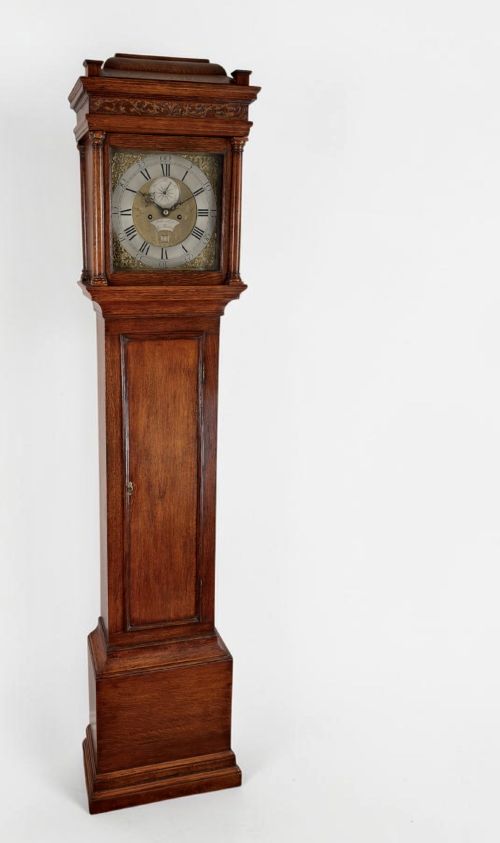
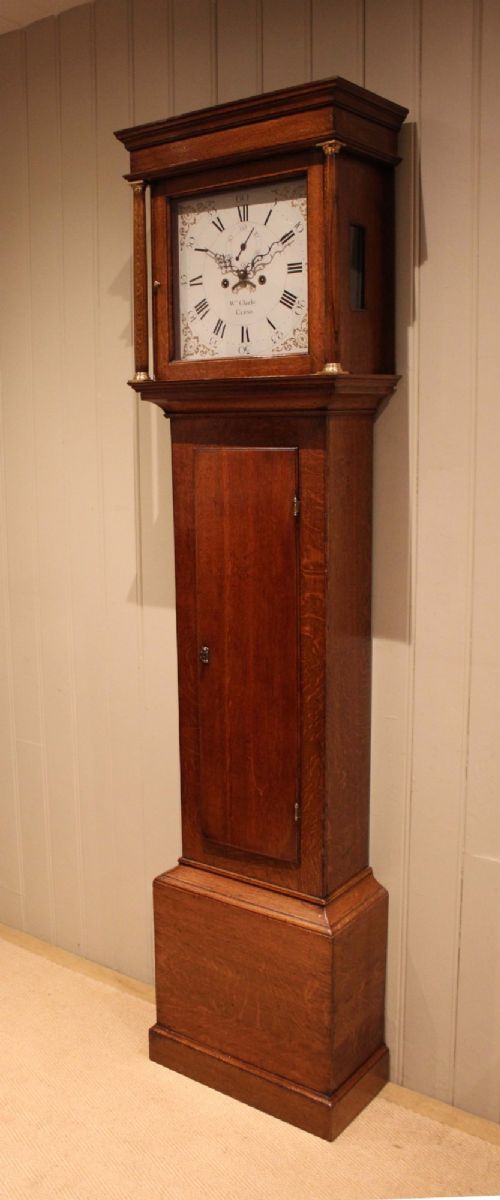
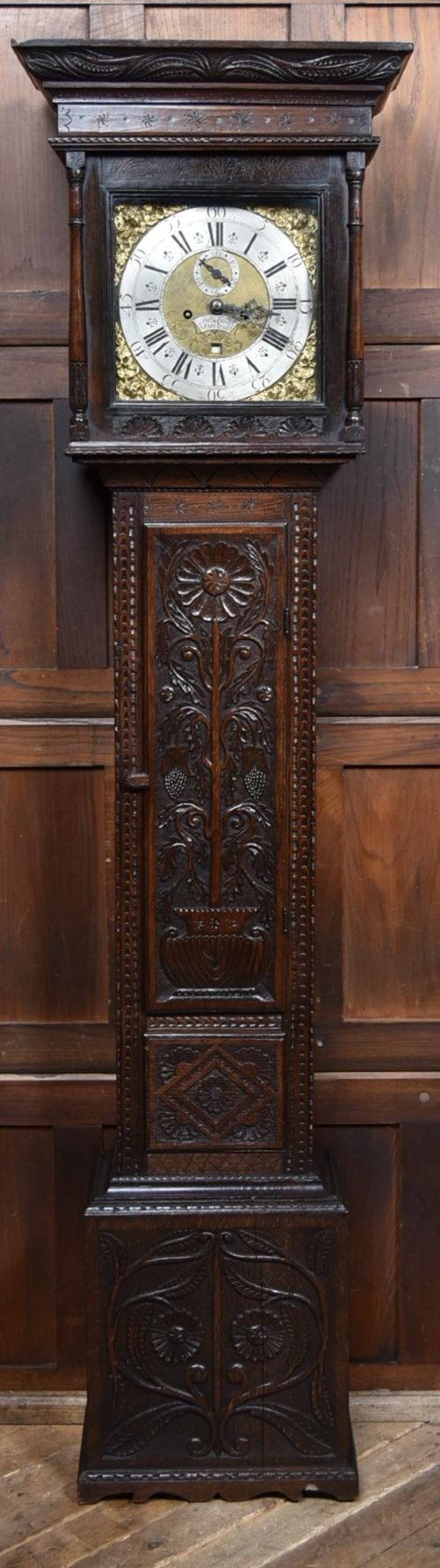
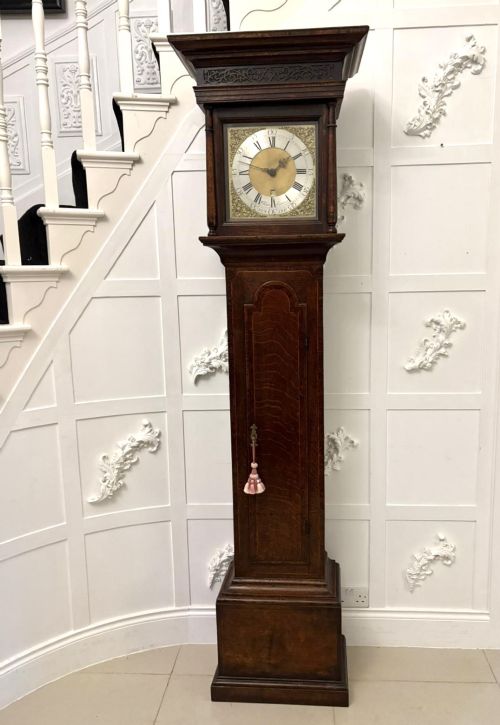
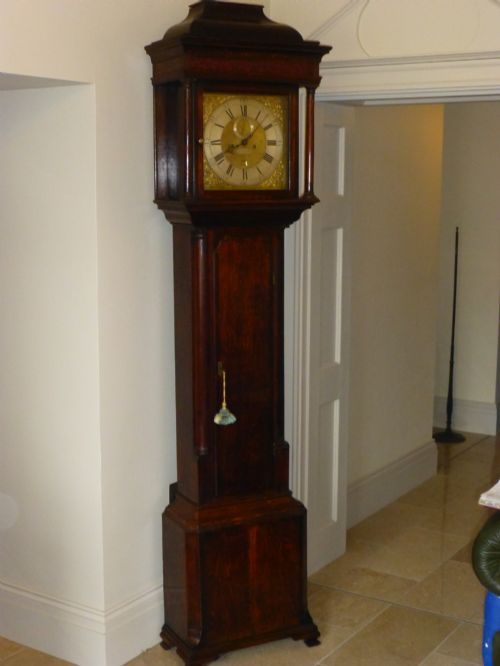
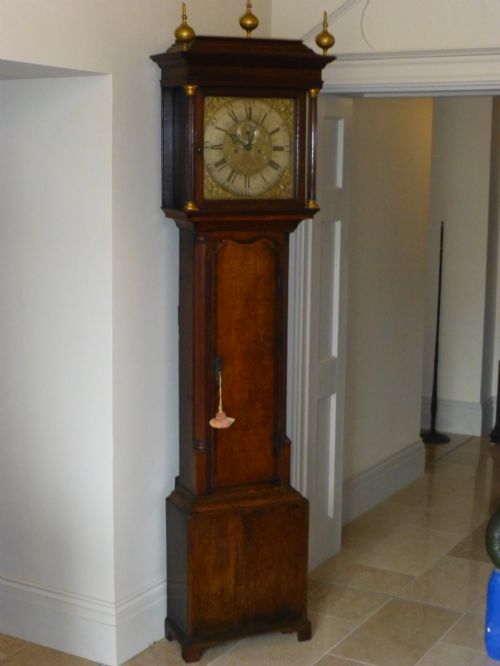
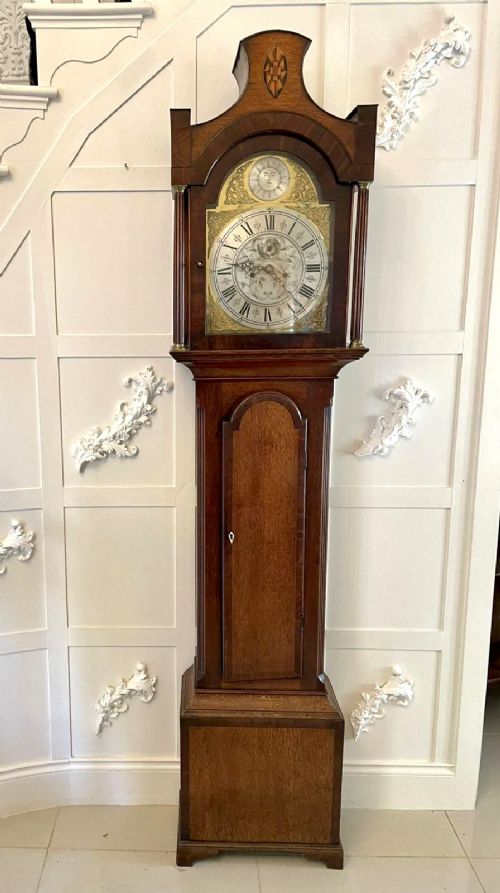
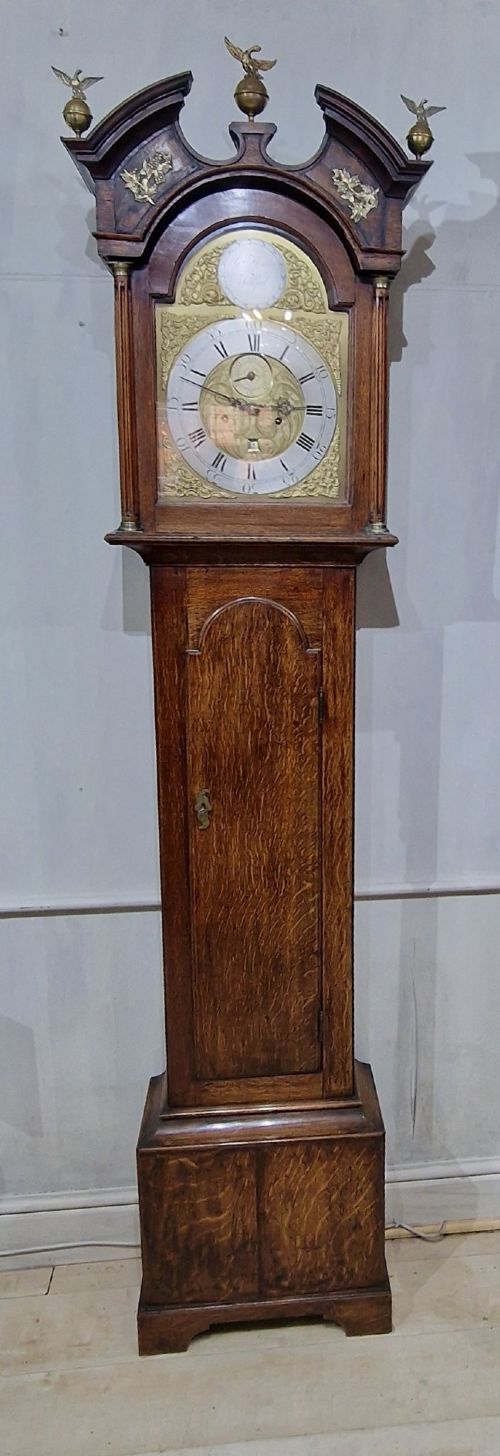
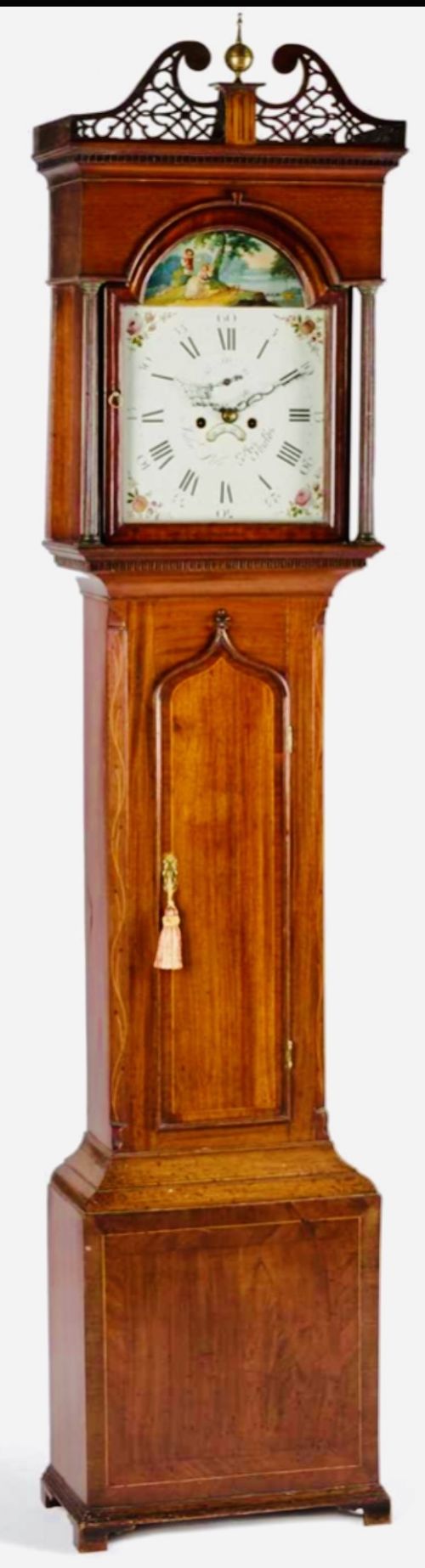
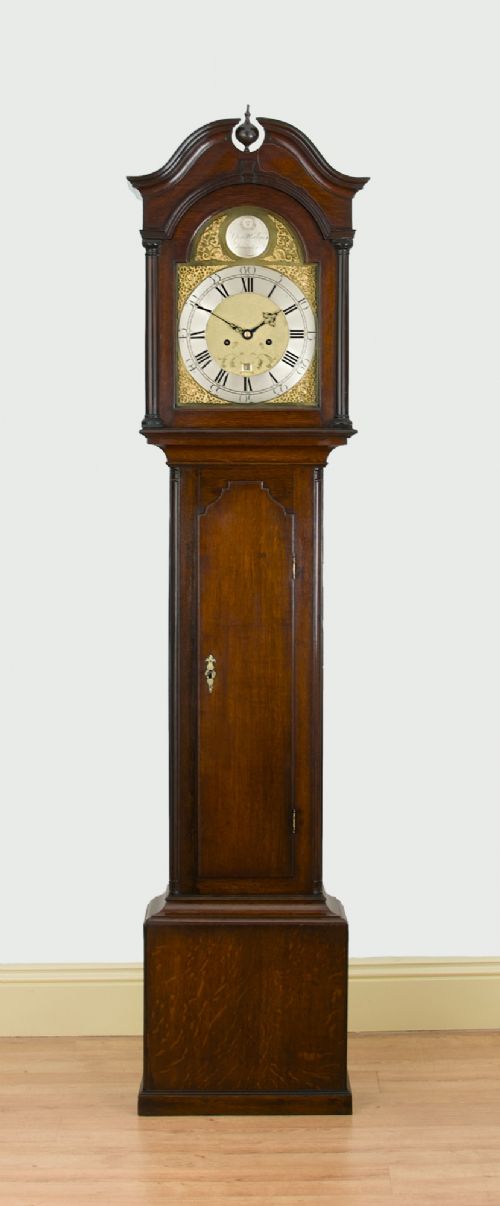


Georgian Oak Floor Clock
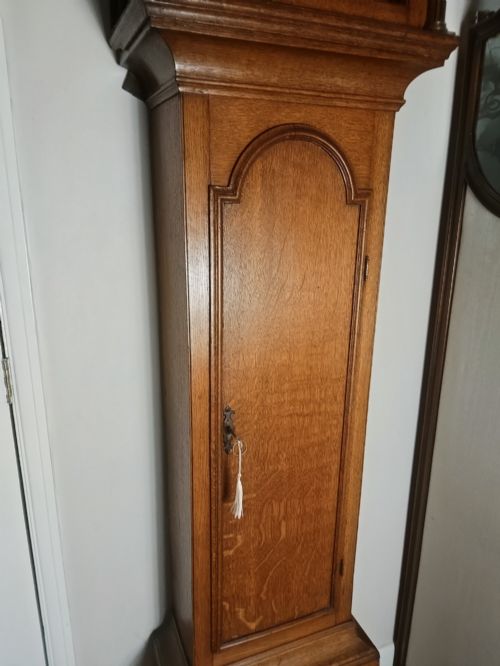
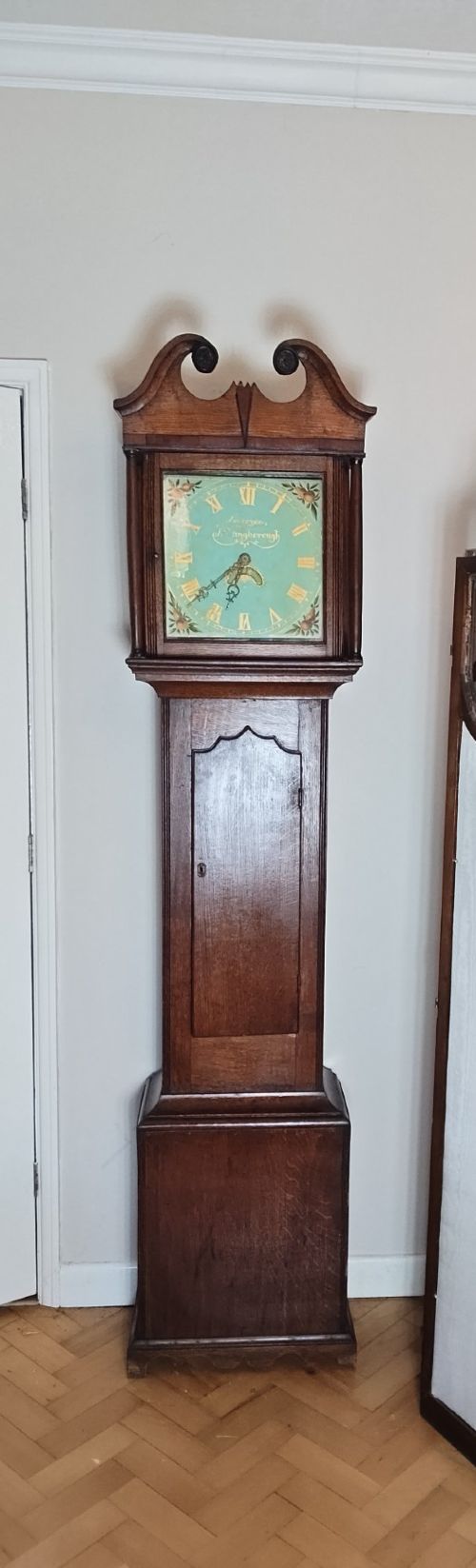
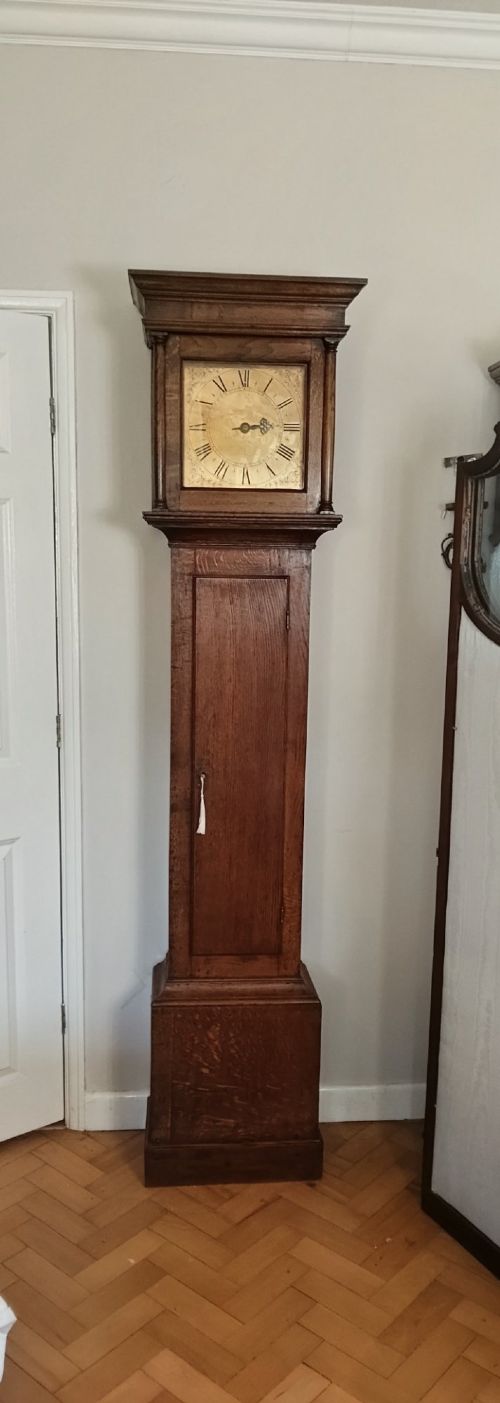
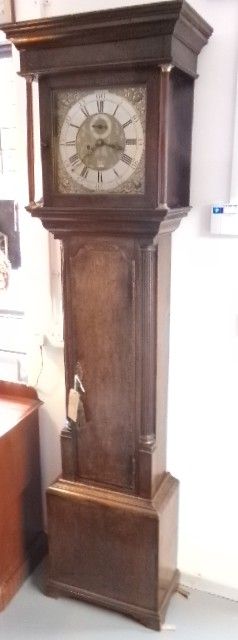
A georgian oak floor clock is a tall domestic timepiece built to measure hours in timber, standing as a heavy pillar in the hall.

Georgian Oak Floor Clock
When a buyer searches for a georgian oak floor clock, they encounter tall domestic timepieces spanning the eighteenth and early nineteenth centuries. These objects appear as longcase clocks, grandfather clocks, and long case clocks across Georgian, George III, Early Georgian, and Regency periods.
The versions met most frequently on this page combine oak primary timber with brass dials, housed in tall wooden cases designed to protect the movement. Regional makers signed these longcase clocks across English and Welsh towns, leaving records of provincial craftsmanship from the eighteenth century onwards.

Materials and construction
Cabinet makers built these tall cases primarily using oak, often incorporating mahogany, walnut, and burr oak for crossbanding and decorative contrast. Timber boards were joined to form the long trunk, hood, and base, enclosing heavy brass and steel mechanical movements.
Faces combine engraved brass dials or painted iron dials with protective glass panes set into the hood door. Iron and brass components inside drive the gear trains for timekeeping, striking, and sometimes moonphase indicators.
Georgian Oak Floor Clock Retail Price Guide 2026
Typical asking prices for georgian oak floor clock among the pieces listed under this phrase on Sellingantiques today, from the lower quarter to the upper quarter. They describe what is for sale here now, not the wider market.
Listings feature oak combined with mahogany, walnut, brass, glass, and painted iron across eighteenth and nineteenth-century periods.
Quality variations
The distinction between tiers rests on the proportion of the case and the ambition of the dial work. Finer examples display figured walnut or mahogany banding alongside crisply engraved brass faces by recorded makers.
Movements also separate standard production from superior output, with eight-day durations and moonphase complications commanding greater attention than single-handed thirty-hour versions. Case proportions range from small slim formats to imposing architectural hoods.
Lee of Great Marlow·Jn° Smith·Richard Corless·Smith of Chester·James Hendrie·George Hallifax·Thomas Webbe·Edward White·Thomas May
The Georgian Oak Floor Clock Glossary
- Longcase clock
- A tall pendulum clock enclosed in a wooden case that stands directly on the floor. This term is synonymous with grandfather clock.
- Moonphase
- A dial mechanism tracking the phases of the lunar cycle behind a shaped aperture. It appears on higher specification eighteenth-century dials.
- Crossbanding
- A border of veneer laid with the grain running perpendicular to the surrounding wood. Cabinet makers used mahogany or walnut for this decorative banding on oak cases.
- Dial
- The face of the clock displaying hours and minutes, constructed from brass or painted iron. Sizes vary from small dials to wide arched faces.
Georgian Oak Floor Clock: Frequently Asked Questions
How do I wind an eight day clock?
Eight day movements require winding every week using a crank key inserted into winding holes on the dial face. Care must be taken not to overwind the weights.
Weights suspended by cords or chains inside the trunk descend slowly as the mechanism operates, driving the timekeeping and strike trains.
Where should I place a longcase clock?
These tall clocks need a stable, dry interior wall away from direct sunlight and sudden temperature shifts. Floor stability ensures the pendulum swings evenly.
Securing the upper trunk to the wall prevents accidental toppling, as these heavy timber cases stand tall and narrow.
What is the difference between single and two-handed dials?
Single-handed dials indicate hours and approximate quarters using one pointer, a configuration typical of earlier eighteenth-century production. Two-handed dials separate hours and minutes for greater precision.
Single-handed movements often run for thirty hours between windings, whereas two-handed mechanisms frequently employ eight-day weights.
How do I identify a Georgian period case?
Georgian cases exhibit architectural proportions, moulded cornices, and bracket feet characteristic of eighteenth-century cabinet making. Oak serves as the primary carcase wood.
Later Regency variants introduce refined mahogany banding and painted iron dials alongside traditional oak construction.