


Brown Oak Longcase Clock
A brown oak longcase clock brings architectural presence and steady timekeeping into a room, joining regional craftsmanship with mechanical movement.
Brown Oak Longcase Clock
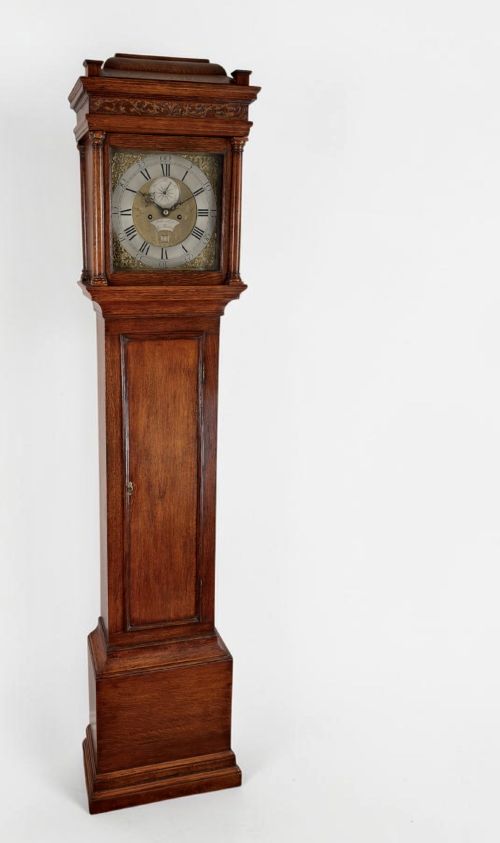
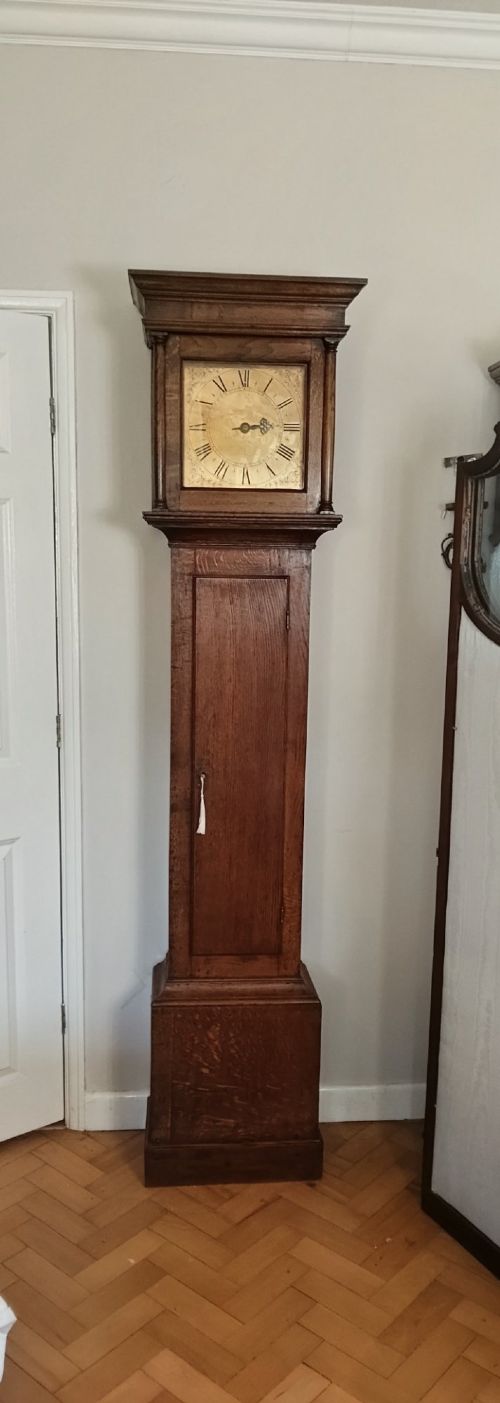
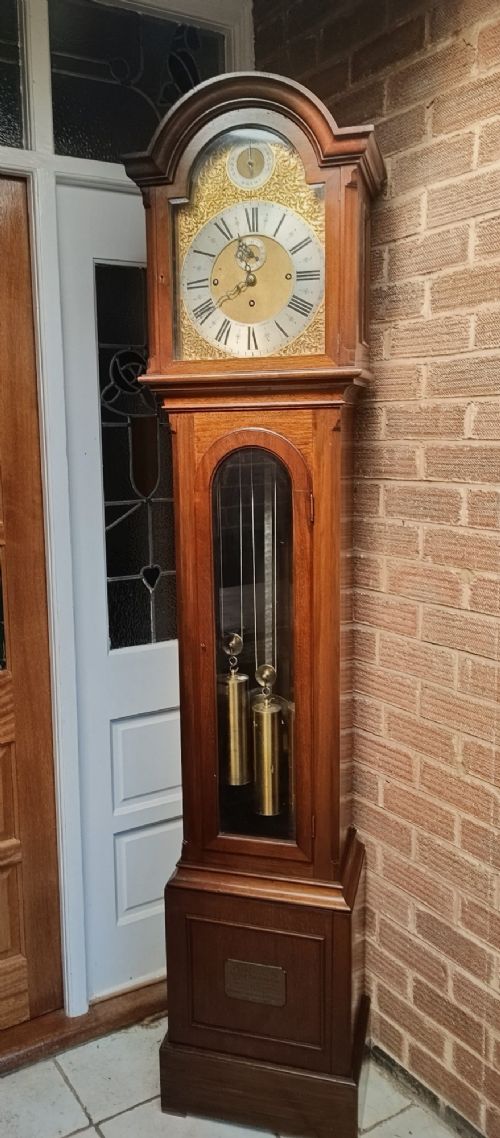
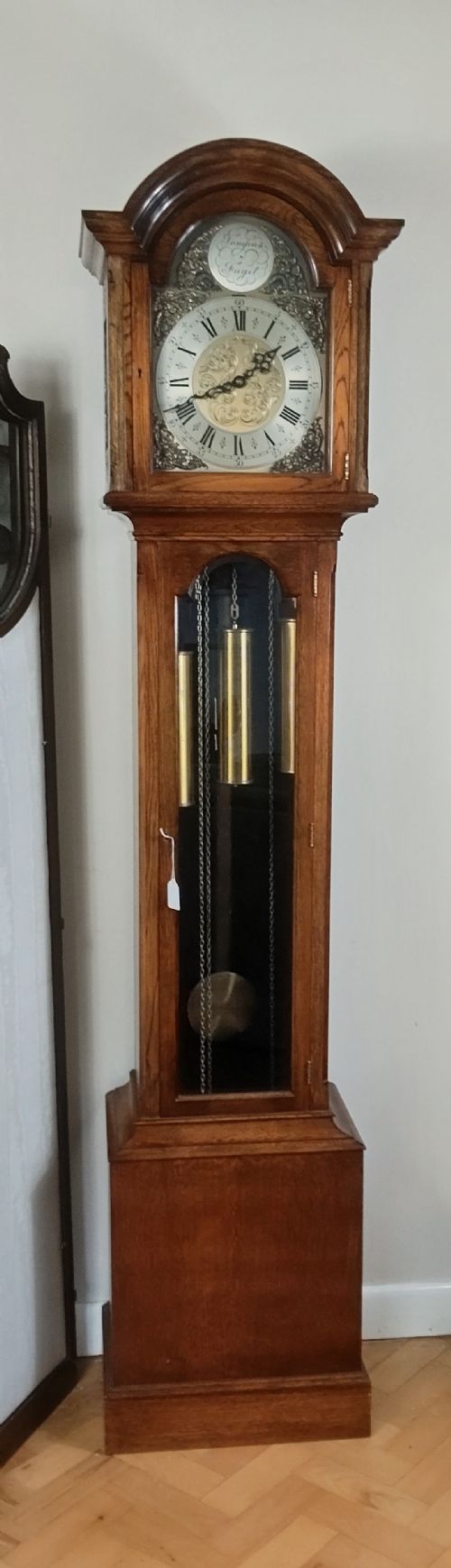
A brown oak longcase clock is a tall floor-standing timekeeper encountered most often in Georgian and 18th century examples. These pieces combine fitted wooden cases with brass or painted iron dials, standing upright to house weights and pendulums.
The selection ranges from early Georgian and George III designs to later 19th century and Edwardian variants. Buyers meet both straightforward local timepieces and complex musical or chiming editions carrying regional maker signatures.
Materials and Construction
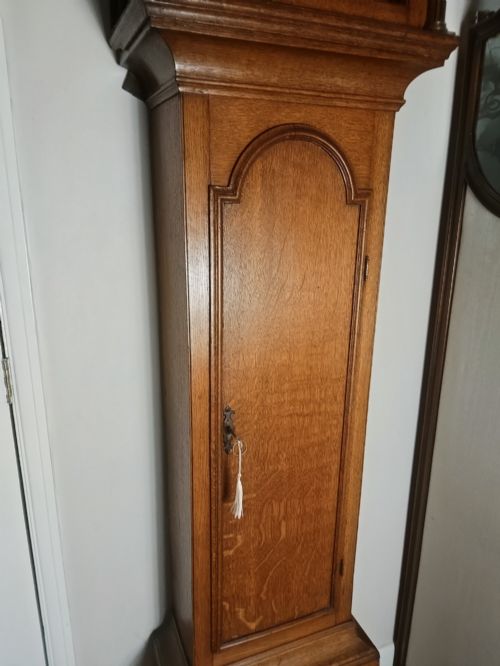
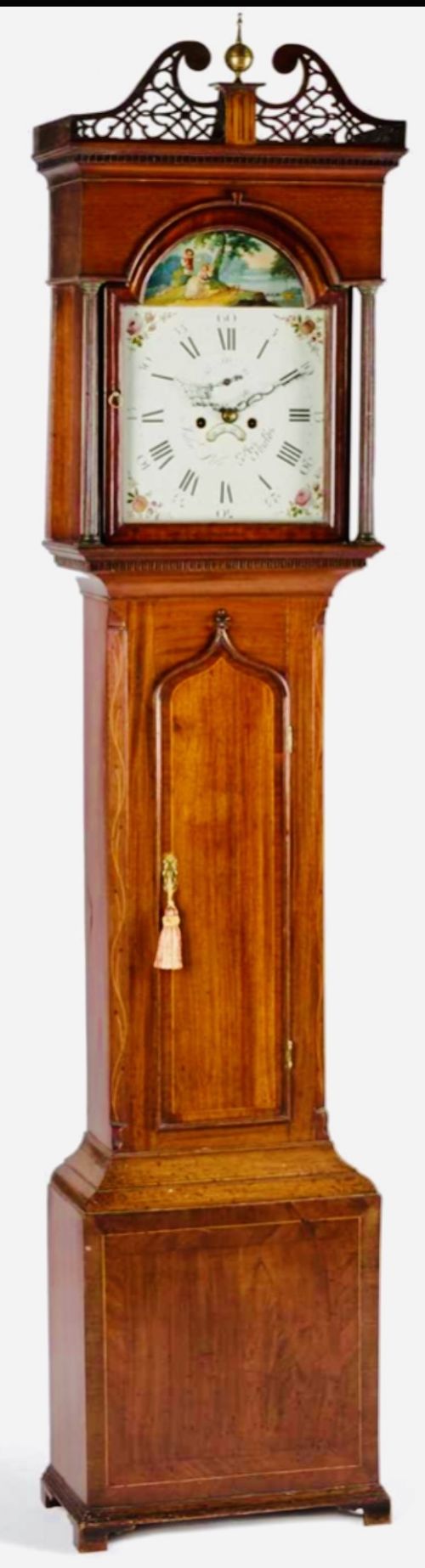
Makers utilised solid oak for the primary structural cases, frequently adding mahogany crossbanding or banding for visual contrast. Brass and painted iron formed the dial faces, complemented by glass hood doors and iron movement components.
Cabinetmakers joined the timber panels using traditional joinery methods to enclose the hanging weights and swinging pendulums. Dials received hand-painted numerals, subsidiary seconds tracks, and occasionally mechanical moon phases.
Brown Oak Longcase Clock Retail Price Guide 2026
Typical asking prices for brown oak longcase clock among the pieces listed under this phrase on Sellingantiques today, from the lower quarter to the upper quarter. They describe what is for sale here now, not the wider market.
Listings feature oak combined with mahogany, brass, and painted iron across periods spanning from Georgian to Art Deco.
Craftsmanship and Proportion
Quality rests in the harmony of the case proportions and the crispness of any applied crossbanding or dial engraving. Finer examples display balanced dial layouts and well-figured timber grain across the trunk and hood.
The sophistication of the internal movement separates standard thirty-hour clocks from complex eight-day, chiming, or moon-phase mechanisms. Regional makers signed the superior dials, marking the distinction between standard production and workshop specialisation.
Lee of Great Marlow·Thomas Webbe of New Quay·Edward White Birmingham·Richard Prew Of Tewksbury·Richard Alexander Devizes·James Coster Of Henley·Stanyer Nantwich·Preddy of Langport
The Brown Oak Longcase Clock Glossary
- Longcase clock
- A tall, weight-driven pendulum clock housed in a protective wooden case. Also commonly called a grandfather clock.
- Crossbanding
- A border technique where thin strips of veneer are laid across the grain of the primary wood. This adds decorative contrast around door edges and plinths.
- Moon phase
- A mechanical display on the dial tracking the lunar cycle through a rotating painted disc. It appeared on better regional timepieces.
- Dial
- The visible face of the clock displaying hours and minutes, typically fashioned from brass or painted iron. Signatures of the maker often appear upon its surface.
- Trunk
- The long central body section of the case enclosing the hanging weights and pendulum. It sits between the hood and the base.
Brown Oak Longcase Clock: Frequently Asked Questions
What is a brown oak longcase clock?
A brown oak longcase clock is a tall floor-standing timekeeper enclosed in an oak case, designed to house weights and a pendulum.
These pieces combine traditional cabinetmaking with mechanical clockwork, standing upright in hallways or principal rooms.
How do I wind an eight day clock?
An eight day clock requires winding approximately once a week by lifting the weights or turning the dial keying arbors.
Careful handling ensures the internal going train and striking mechanisms maintain proper alignment over time.
Where were these clocks made?
Regional clockmakers and cabinetmakers across Britain constructed these pieces in local workshops during the 18th and 19th centuries.
Many bear the signature of the maker and their town of operation inscribed directly onto the dial face.
How do I tell an 18th century clock apart from a later one?
Earlier 18th century examples often feature square brass dials and simpler oak proportions, while later variants introduce arched brass or painted iron dials.
Mahogany crossbanding and more intricate case decoration frequently point towards the later Georgian or Victorian eras.