
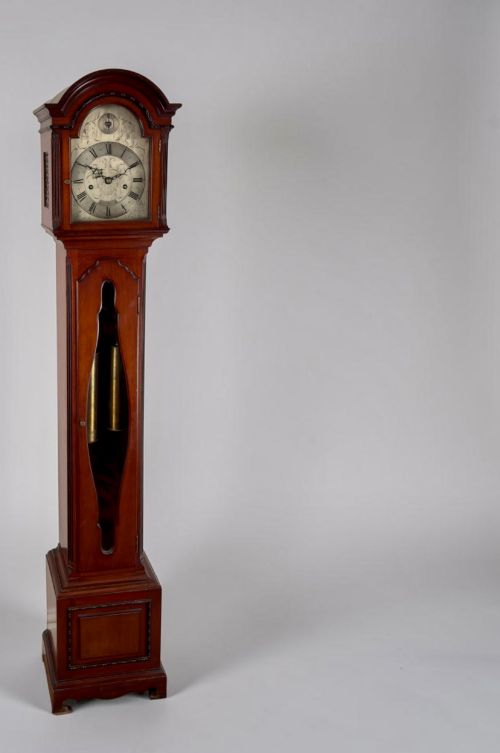
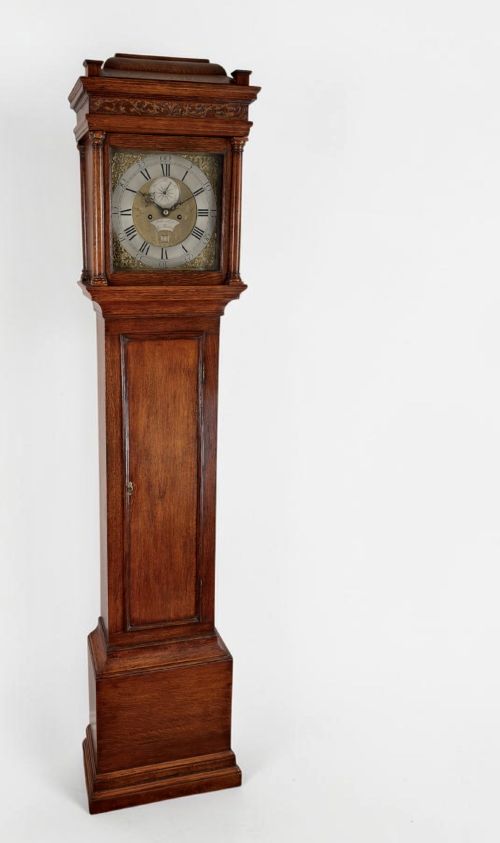
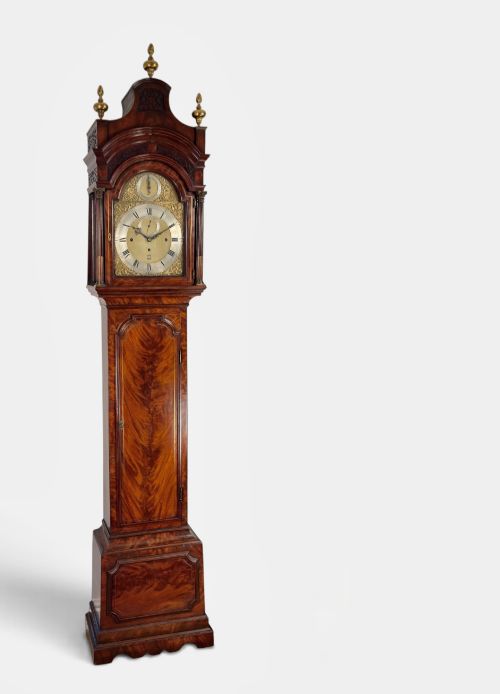
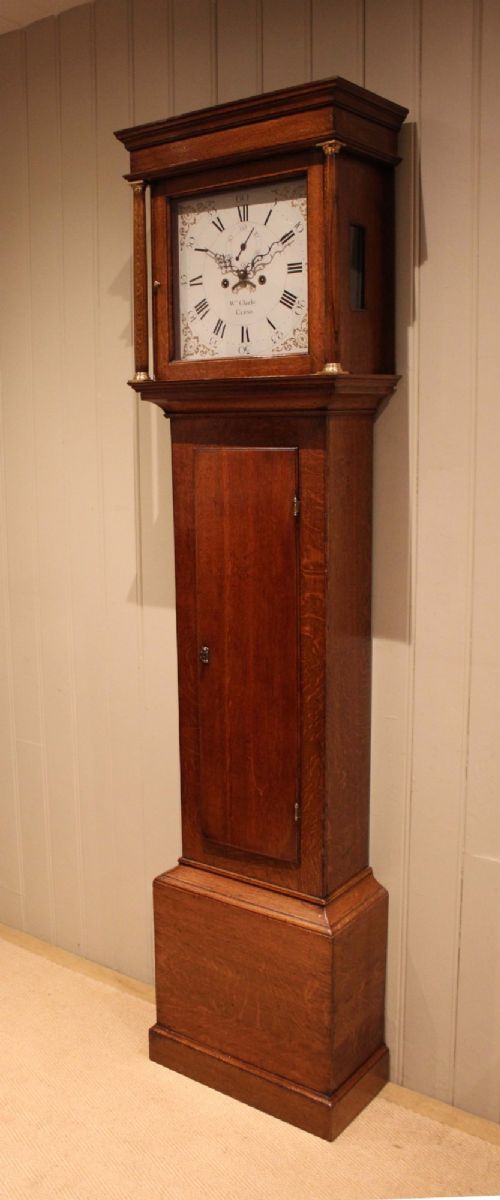
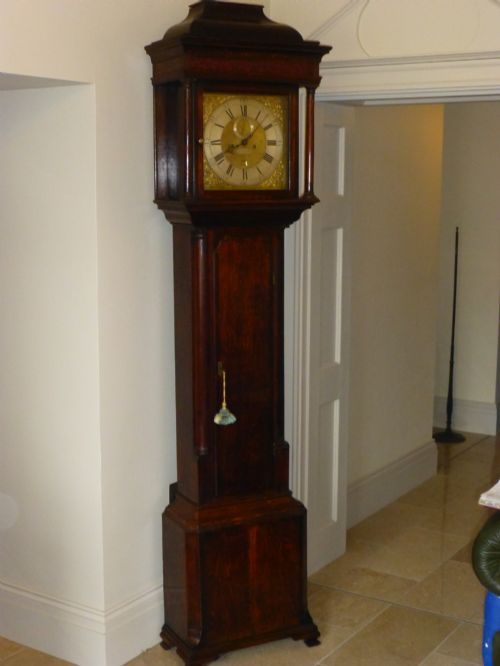
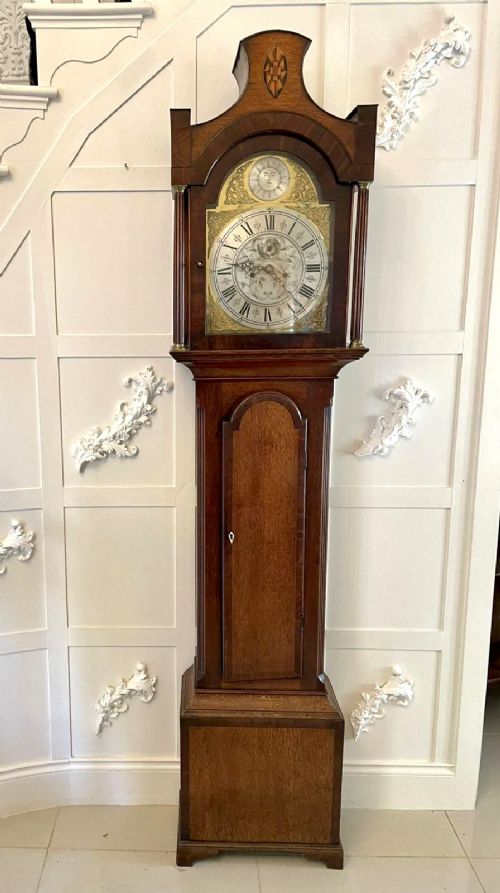
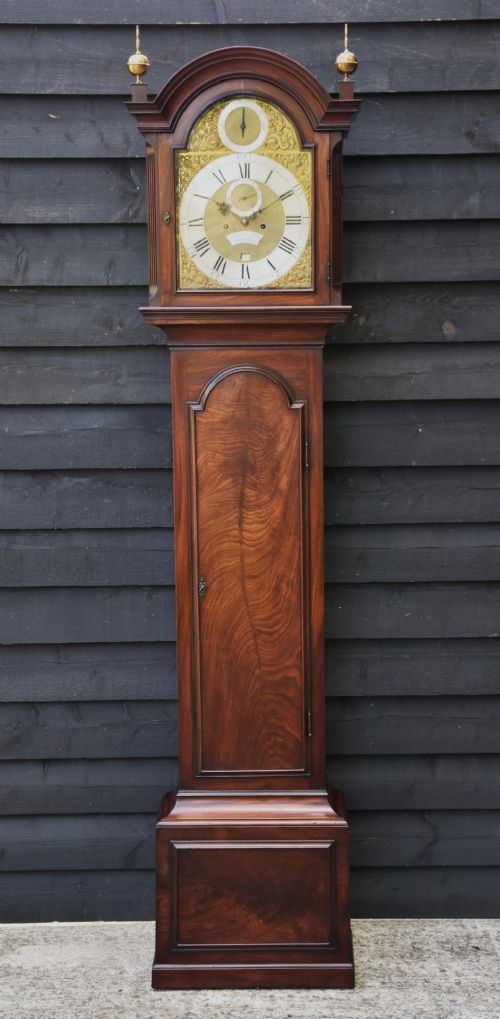
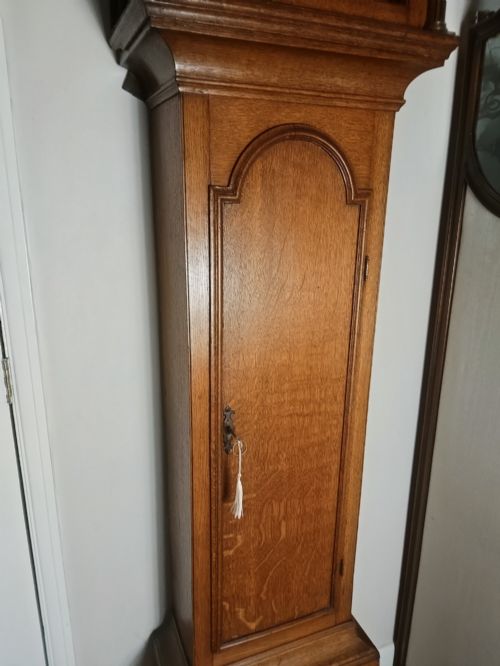
Antique English Longcase Clock
An antique English longcase clock brings monumental presence and precise mechanical heritage into a room.
Understanding the antique English longcase clock
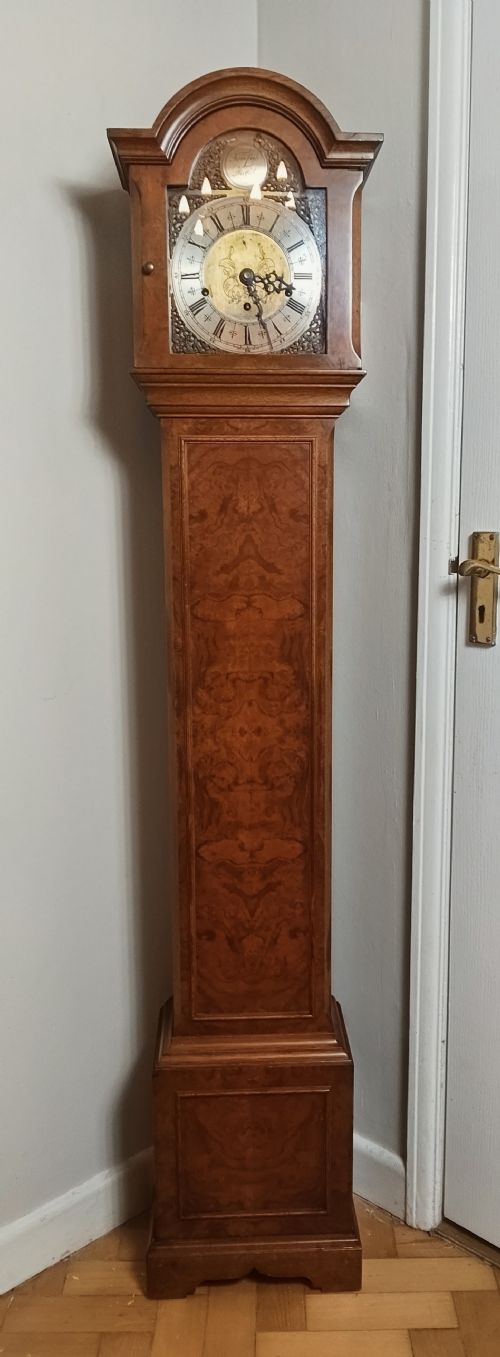
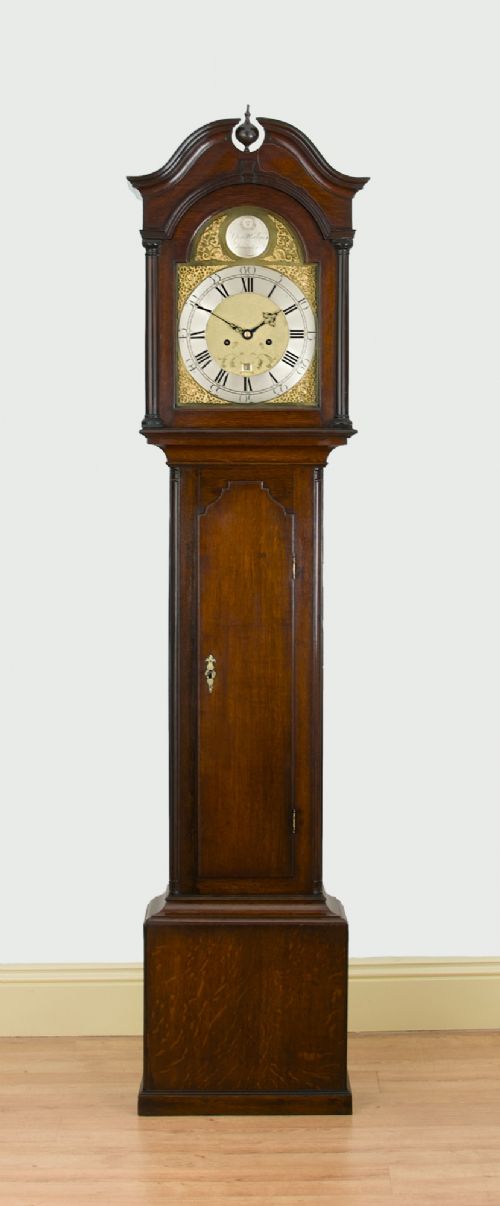
An antique English longcase clock stands as a towering piece of horological furniture, combining cabinet-making and mechanical engineering in a single vertical housing. When you search for an antique English longcase clock, you encounter substantial floor-standing timepieces designed to measure hours, days, and phases of the moon through elaborate weight-driven gear trains.
The pieces available span the Georgian period, early Georgian eras, and George III reigns, alongside broader eighteenth-century examples. Oak and mahogany dominate the structural woods, while walnut and marquetry inlay appear on more decorative iterations alongside glass dial covers and brass or steel movements.
Form follows function across these tall enclosures, housing long pendulums and heavy driving weights within slender trunks. Regional makers from Birmingham, Exeter, Merton Park, and Bridgnorth signed their dials, anchoring these mechanical works to distinct English provincial centres.
Construction and materials
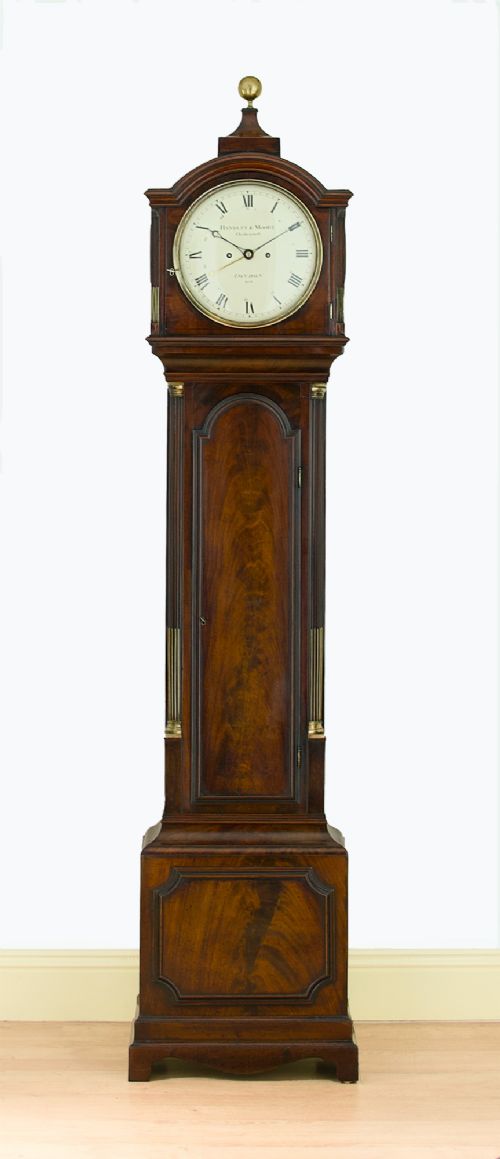
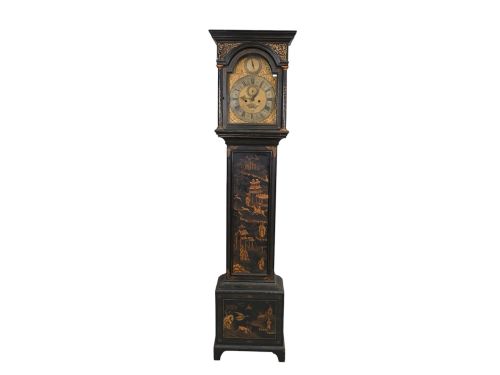
Cabinet makers built the tall wooden cases using native oak and imported mahogany or walnut, frequently incorporating marquetry inlay and lacquered finishes to achieve decorative depth. These timber housings required stable construction to protect the sensitive internal mechanics from environmental shifts while allowing easy access to the weights and pendulum.
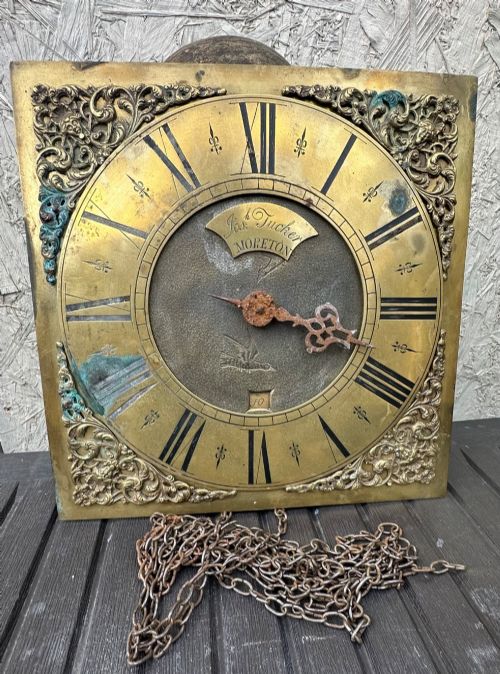
Horologists constructed the functional movements from brass and steel, pairing cogged wheels with escapements and striking mechanisms. Dials integrated engraved brass chapter rings, subsidiary seconds hands, and mechanical moon phase displays driven directly by the central gear train.
Retail Price Guide 2026
Typical UK retail prices for english longcase clock, calculated from the Sellingantiques database of over a million retail prices indexed since 2003. This retail price guide relies exclusively on Sellingantiques data; no external sources or auction records are used, so the figures do not describe the wider market.
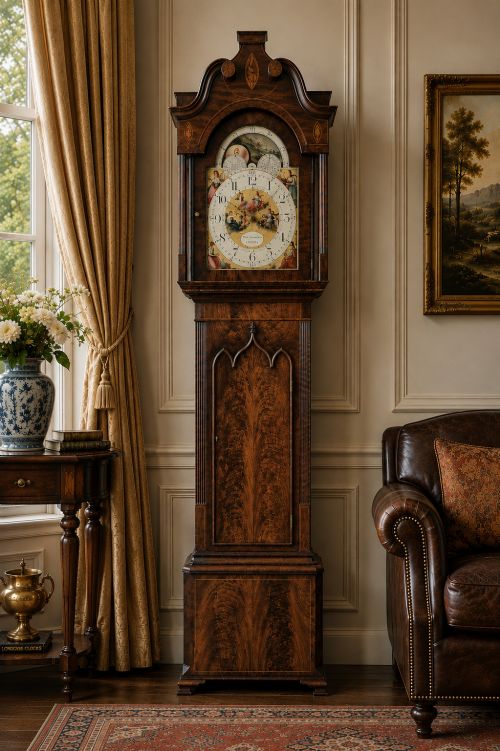
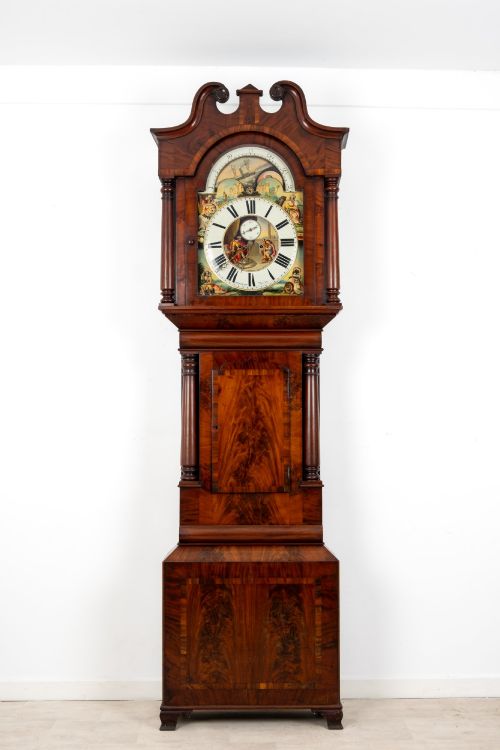
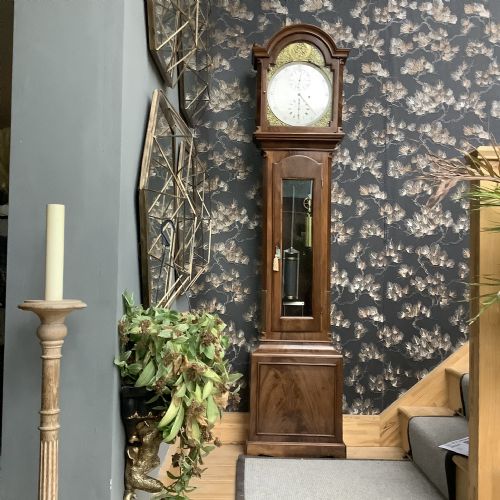
Listings demonstrate cabinet work in oak, mahogany, and walnut alongside lacquered finishes and marquetry inlay.
Distinctions in quality
Superior quality manifests in the crispness of dial engraving and the complexity of the movement, such as eight-day durations, strike-and-silent functions, or rolling moon displays. Maker signatures stamped or engraved onto signed brass dials elevate the horological standing of a piece compared to anonymous provincial work.
Cabinet work separates standard regional joinery from high-style examples featuring finely figured mahogany, intricate marquetry inlay, or specialised lacquered finishes. The harmonious proportion between hood, trunk, and base dictates the visual balance of the entire standing structure.
John Denbigh Merton Park·Edward Upjohn Exon·Nicholas of Birmingham·James Draycot Wells·Edward Glase of Bridgnorth
The Antique English Longcase Clock Glossary
- Longcase clock
- A tall freestanding weight-driven timepiece with a pendulum enclosed in a vertical wooden trunk, commonly known as a grandfather clock.
- George III
- The stylistic period spanning the long reign of King George III, characterised by refined mahogany cabinetry and classical decorative details.
- Marquetry inlay
- A decorative technique applying fitted pieces of contrasting wood veneer to create pictorial or geometric patterns on the clock case.
- Moon phase
- A mechanical dial display tracking the lunar cycle through a rotating painted disc visible through an arched aperture.
- Chapter ring
- The circular metal ring affixed to the dial face bearing the numerals for hours and minutes.
Frequently Asked Questions
How do eight day clocks work?
An eight day movement relies on heavy lead or cast iron weights suspended by cords or chains, which descend gradually as the gear train unwinds over the course of a week.
winding requires using a crank key to draw the weights back up to the top of the trunk every seven or eight days.
Where were these clocks made?
Makers constructed these longcase clocks in workshops across England, ranging from major hubs like Birmingham down to provincial towns such as Exeter, Merton Park, and Bridgnorth.
Local cabinet makers built the tall wooden housings while specialist horologists fitted the brass and steel movements.
What is a strike and silent function?
A strike and silent mechanism allows the owner to manually disengage the hourly bell or gong striking train without stopping the timekeeping gears.
This control lever proved useful in domestic settings where chiming through the night was undesirable.
How do I identify a Georgian clock?
Georgian longcase clocks display stylistic traits from the eighteenth century, typically constructed in solid oak or figured mahogany with architectural hoods framing the dial.
The proportions, brass dial furniture, and lettering styles on signed brass plates correspond directly to the prevailing aesthetics of the Georgian era.