
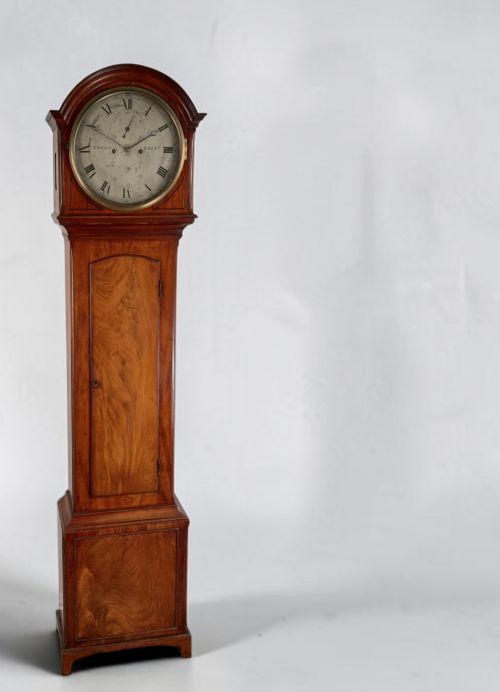
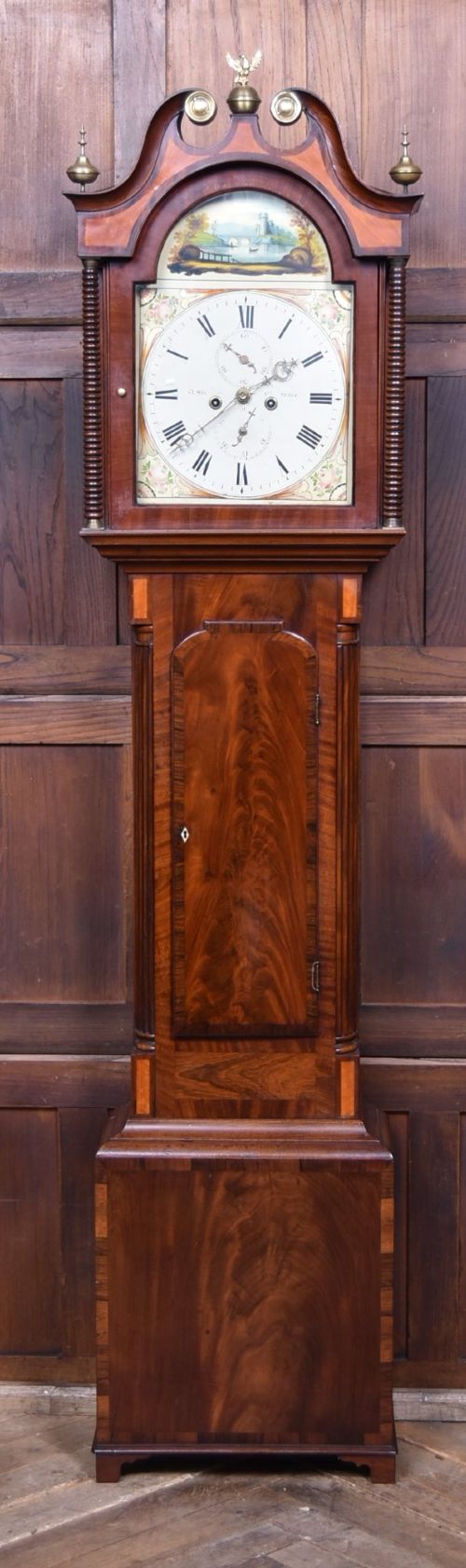
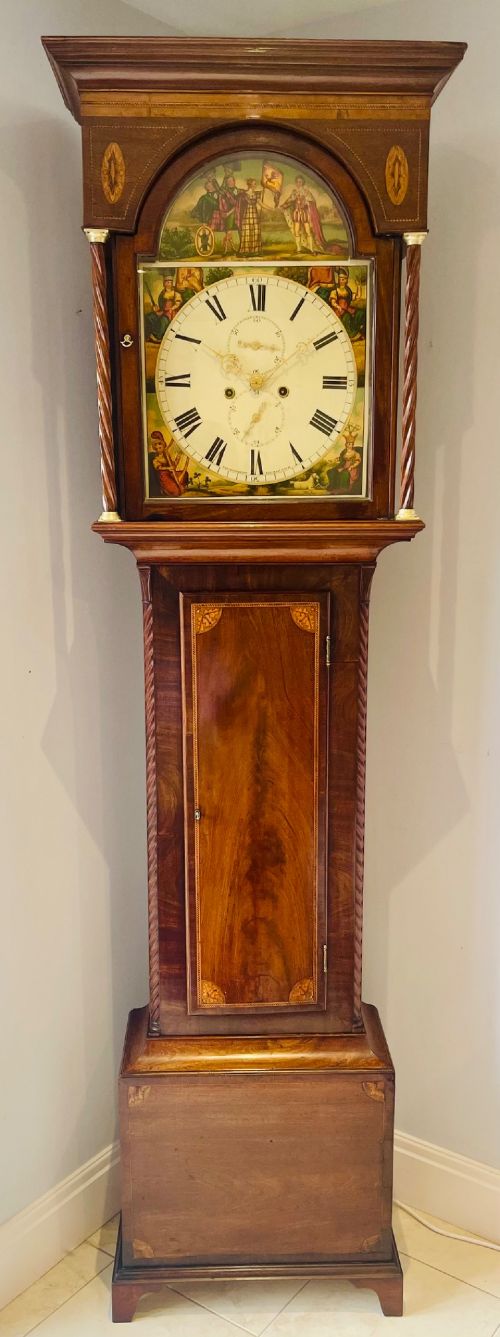
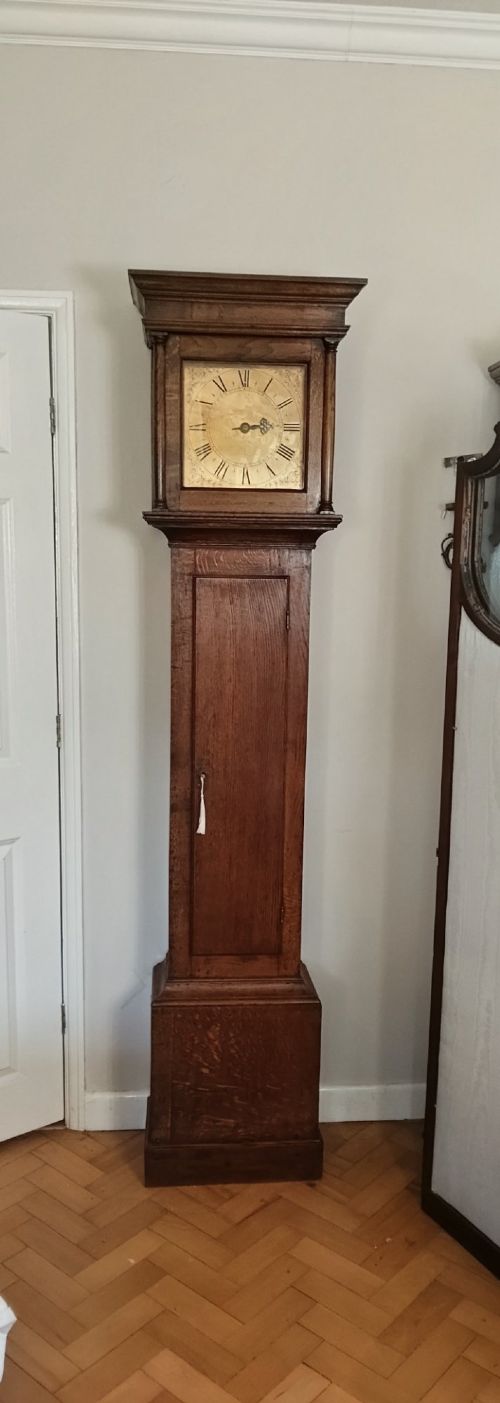


Brown Wooden Tallcase Clock
A brown wooden tallcase clock stands as a monumental centrepiece of British horology, offering steady measurement of time through centuries of cabinet-making skill.
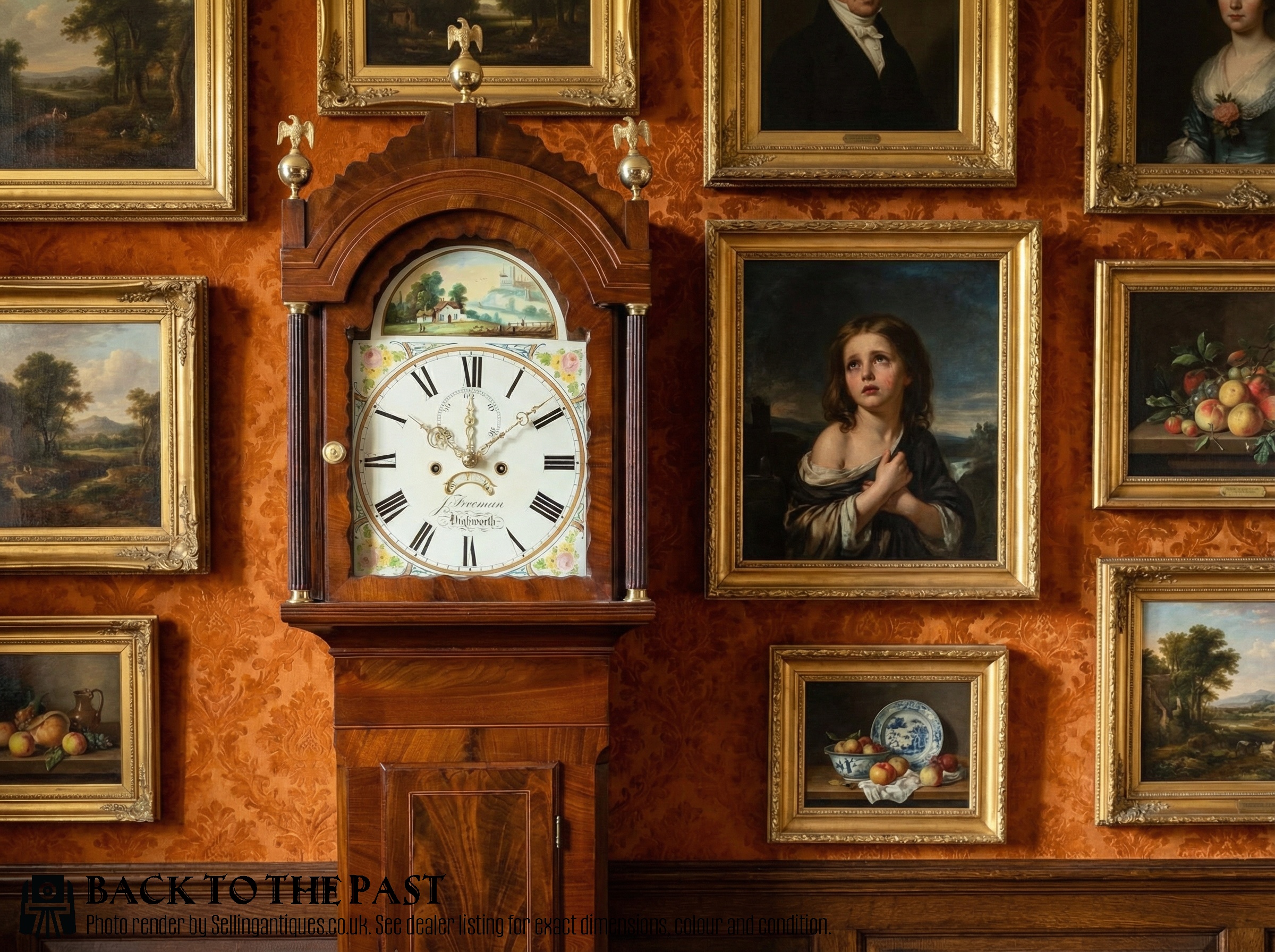
What a brown wooden tallcase clock is
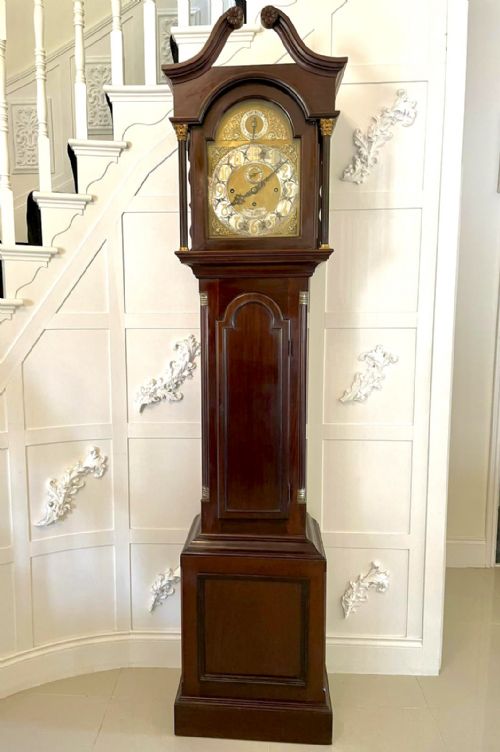
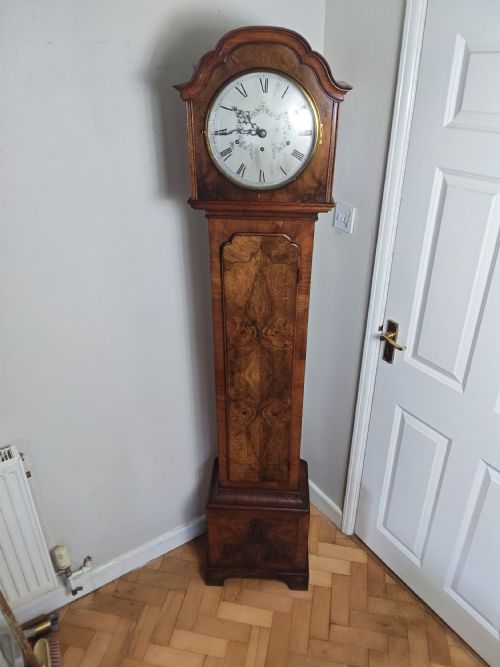
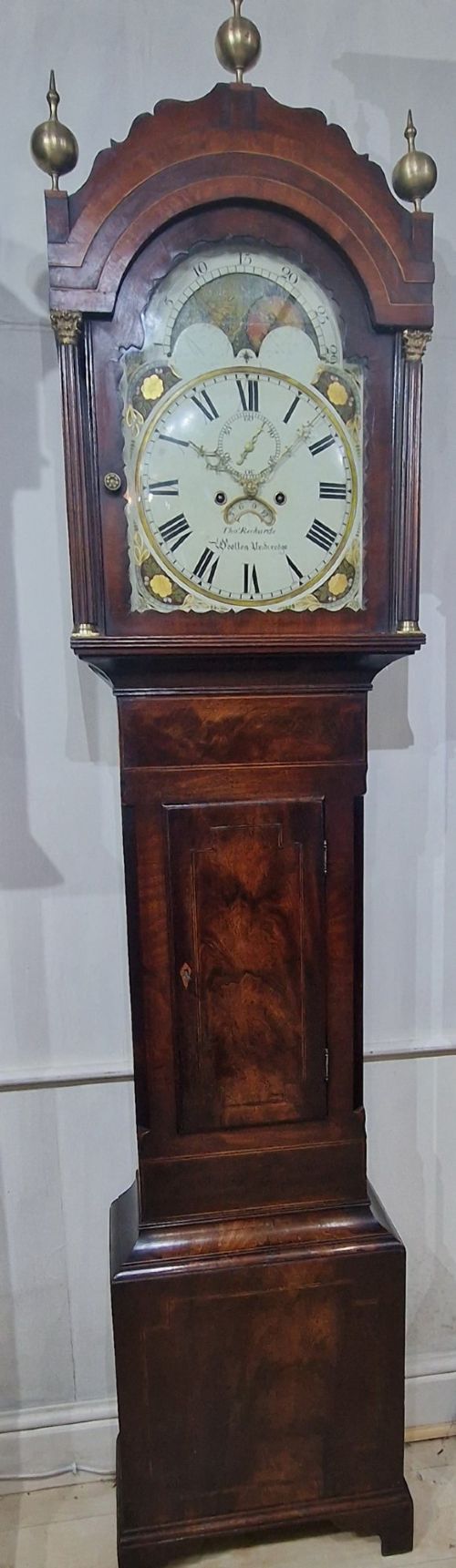
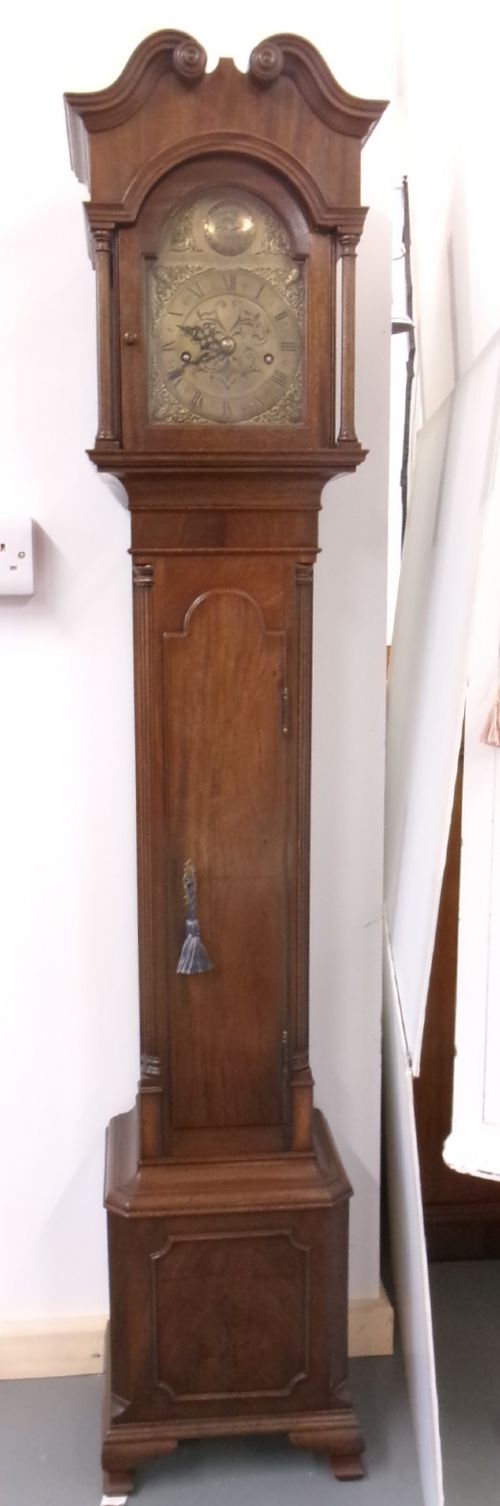
A brown wooden tallcase clock combines a tall protective timber housing with a precise weight-driven mechanical movement, designed to stand directly on the floor. These floor-standing timepieces range across several distinct periods, including the seventeenth century, the Georgian era, and the nineteenth century. Buyers searching for a brown wooden tallcase clock will encounter tall timber cases enclosing brass dials and oscillating pendulums.
The specimens most frequently found on this page display traditional cabinet woods like mahogany, oak, and walnut, often shaped into classic longcase clocks and grandfather clocks. Regional British makers signed dials from towns and cities such as Montrose, Exeter, Durham, and Sutton Ashfield. These vertical timekeepers typically measure movements running for eight days between windings.
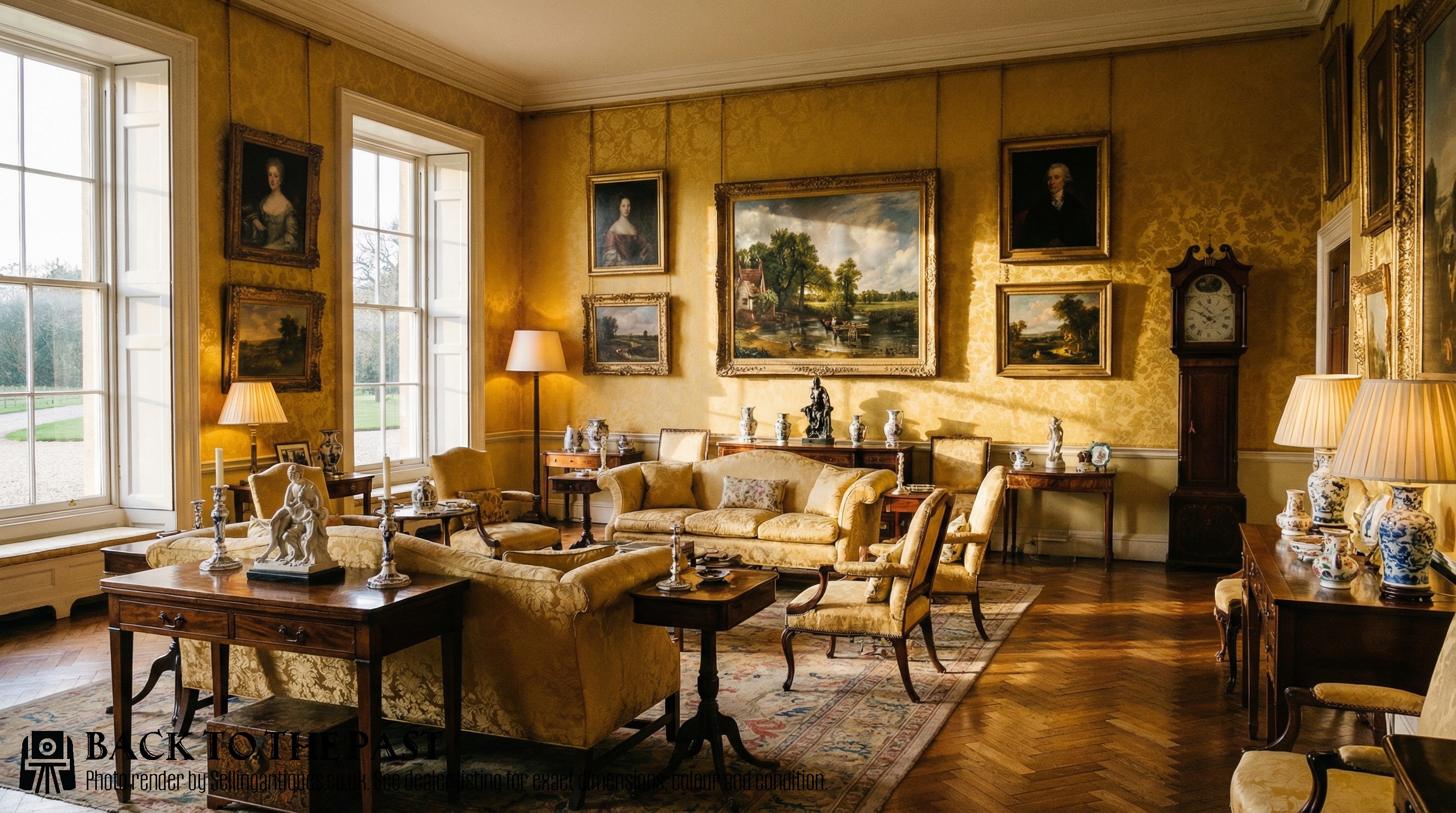
How they were made
Cabinet-makers constructed these tall enclosures using solid planks and veneers of native and imported timbers, selecting oak, walnut, flame mahogany, and standard mahogany for their rich grain patterns. These wooden housings enclose the weights and long pendulums that power the movement. Glass panels protect the dial face while permitting a clear view of the time.
Dial faces incorporate engraved and polished brass alongside painted iron, displaying the signature of the maker and the town of origin. Movement components depend upon cast and turned brass gears driven by suspended lead or iron weights. Skilled artisans fitted these mechanical elements directly into the bespoke wooden trunk to ensure reliable timekeeping.
Retail Price Guide 2026
Typical UK retail prices for brown wooden tallcase clock, calculated from the Sellingantiques database of over a million retail prices indexed since 2003. This retail price guide relies exclusively on Sellingantiques data; no external sources or auction records are used, so the figures do not describe the wider market.
Early clockmakers occasionally signed their names on hidden brass plates inside the movement where only future repairers could read them.
What varies in quality
The refinement of the cabinet-work establishes the primary distinction between standard examples and superior pieces. Selected veneers like flame mahogany or figured walnut demonstrate greater care by the original maker than plain utility woods. Proportions, moulding details, and the integrity of the timber case dictate overall execution.
The complexity and finish of the dial and movement further separate categories of work. Signed dials by noted regional makers carry distinct weight compared to anonymous movements. The sophistication of the eight-day mechanism and the crispness of brass engraving reflect the skill invested in the creation.

The Brown Wooden Tallcase Clock Glossary
- Tallcase clock
- A freestanding, weight-driven timepiece enclosed in a tall wooden case designed to rest upon the floor. These instruments are also frequently known as longcase clocks or grandfather clocks.
- Flame mahogany
- A decorative wood veneer characterised by a distinctive flame-like pattern created by slicing across the bough of the mahogany tree. Cabinet-makers reserved this material for the most prominent surfaces of elite clock cases.
- Eight day
- A movement specification requiring manual winding via a crank key once every week to maintain continuous operation. This mechanism utilises two weights suspended on cords or chains.
- Painted iron
- A dial material introduced in the later eighteenth century, replacing sheet brass as a smooth white surface for black numerals and decorative scenes. Artisans painted these metal plates by hand before mounting them behind glass.
Frequently Asked Questions
How do I wind an eight day clock?
Winding requires inserting a small crank key into the winding holes on the dial face and turning it gently until the weight rises to its upper limit.
Care must be taken not to over-wind the mechanism, stopping firmly as soon as resistance is felt from the barrel or pulley.
Where should I place a tallcase clock?
These tall timepieces require a stable, dry interior wall away from direct sunlight and sudden temperature fluctuations from radiators or fireplaces.
Placement on a level floor is essential to ensure the pendulum swings evenly and the movement keeps accurate time.
How do I tell eighteenth century clocks apart?
Eighteenth century examples often display regional characteristics in the painted iron or brass dials, alongside differences in case timber such as walnut or mahogany.
Maker signatures inscribed on the dial often reference specific British towns, helping to date and attribute the piece.
Why does the clock need to be level?
A level foundation ensures that the long pendulum swings with symmetrical beats to the left and right.
If the case leans, the escapement mechanism becomes unbalanced, causing the clock to gain, lose, or stop entirely.