
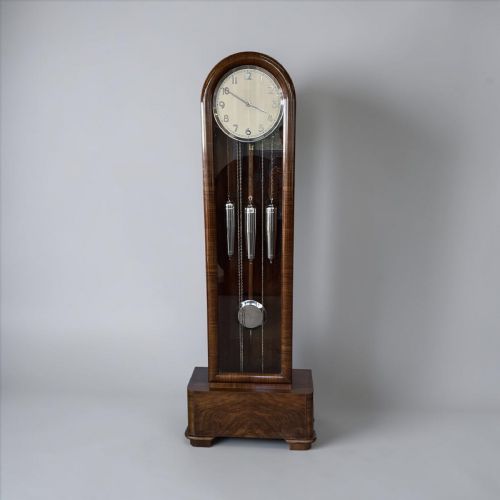
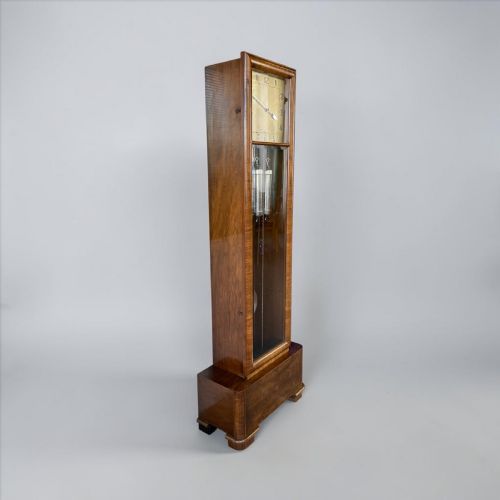
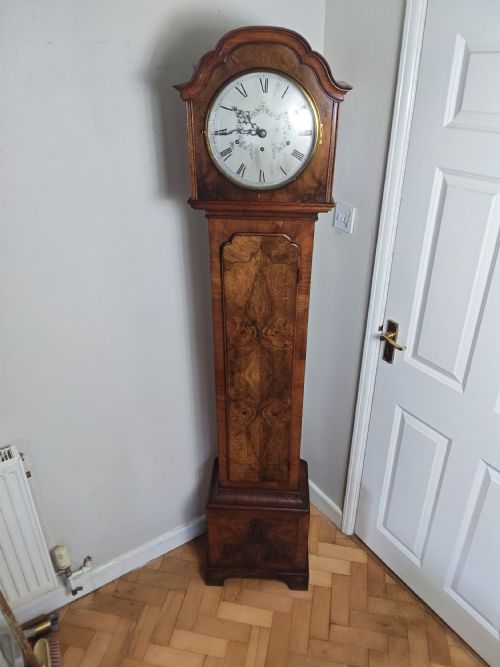
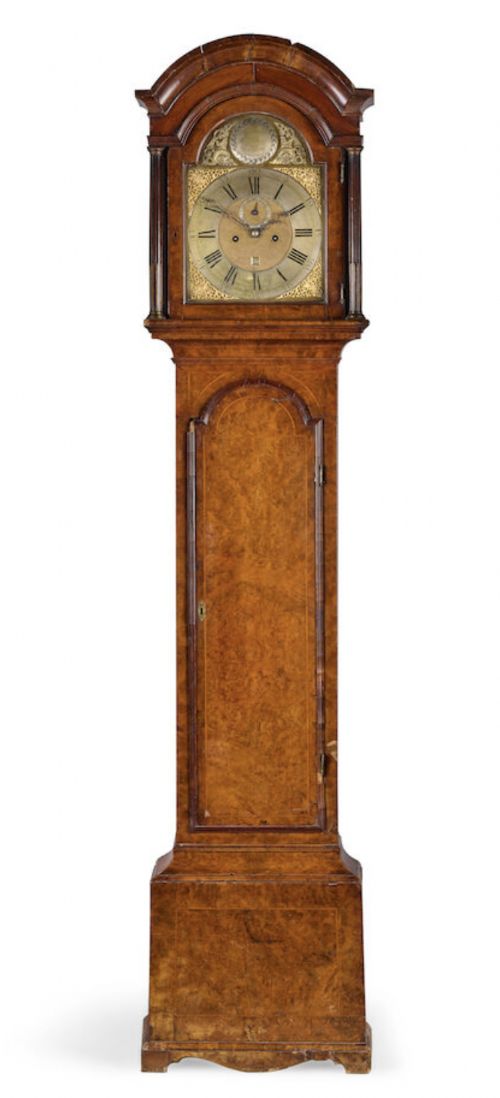
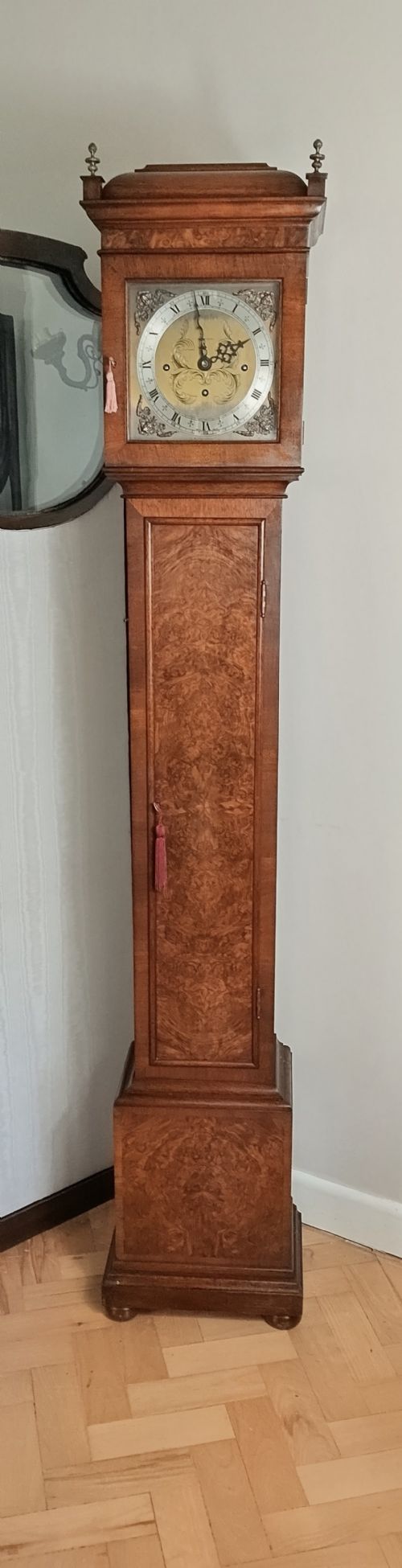
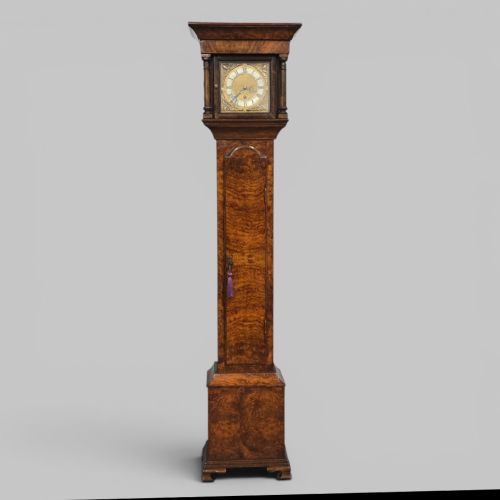


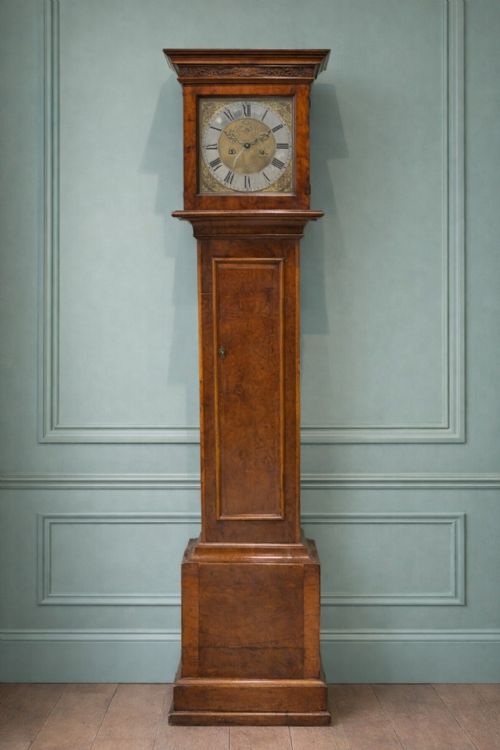
Burr Walnut Grandfather Clock
A burr walnut grandfather clock brings tactile warmth and deep figured grain to an interior.

Understanding the Burr Walnut Grandfather Clock
A burr walnut grandfather clock is a tall floor-standing timepiece housed in a wooden case notable for its highly figured timber veneer. When buyers search for a burr walnut grandfather clock, they encounter items ranging from seventeenth-century London examples to twentieth-century revivals.
The selections span periods including the seventeenth century, Georgian era, seventeen-fifties, nineteenth century, and nineteen-ten. Styles visible across the inventory include William and Mary, Queen Anne revival, and George II.
The forms encompass traditional longcase clocks alongside smaller grandmother or dwarf grandfather variations. Materials paired with the timber include brass, glass, oak, and steel.
Construction and Materials
The cases are constructed using burr walnut and plain walnut veneers applied over secondary woods such as oak. Cabinetmakers sliced thin sheets of burr timber from the knotty growths of walnut trees to exploit the intricate, swirling grain patterns.
Internal movements utilise brass and steel components, housed behind glass dial doors. Dial faces frequently incorporate engraved brass plates and chapter rings matching the mechanical sophistication of eight-day or chiming gear trains.
Retail Price Guide 2026
Typical UK retail prices for burr walnut grandfather clock, calculated from the Sellingantiques database of over a million retail prices indexed since 2003. This retail price guide relies exclusively on Sellingantiques data; no external sources or auction records are used, so the figures do not describe the wider market.
Listings feature periods spanning the seventeenth century through to nineteen-ten, utilising burr walnut, plain walnut, oak, brass, and glass.
Distinctions in Quality
Quality rests upon the density and expanse of the burr walnut figuring across the entire case front. Finer examples display symmetrical veneer matching that flows uninterrupted down the trunk of the longcase.
The distinction between standard production and the highest grade involves the calibre of the movement and the reputation of the maker. Clocks signed by recorded London and provincial watchmakers elevate the tier above unsigned or later revival pieces.
Windmills and Wightman·Edward East·Edward Stanton·Joseph Windmills·Joseph Oxley
The Burr Walnut Grandfather Clock Glossary
- Burr walnut
- A veneer sliced from tree growths containing clustered bud formations. This timber creates distinctive swirling patterns across furniture panels.
- Longcase clock
- An alternative term for a grandfather clock. These tall pendulum timepieces require vertical floor clearance.
- Grandmother clock
- A scaled-down version of the standard longcase. These diminutive variants occupy less vertical space while retaining traditional proportions.
- Dial
- The face of the clock where time is indicated. These brass or painted plates display hours, minutes, and often subsidiary seconds or calendar apertures.
- Movement
- The mechanical inner workings driven by weights or springs. These brass and steel assemblies measure and regulate time.
Frequently Asked Questions
What is a burr walnut grandfather clock?
A tall weight-driven timepiece enclosed in a wooden case veneered with highly figured burr walnut timber.
These pieces function as both accurate timekeepers and prominent architectural furniture within a room.
How do I tell an older clock from a revival piece?
Examine the construction methods, timber patination, and the stylistic cues of the movement and case.
Seventeenth and eighteenth-century examples display period-specific cabinet details, whereas nineteen-ten items reflect twentieth-century revival aesthetics.
Where should I place a longcase clock?
Position the clock on a stable, level floor against a secure wall away from direct heat sources.
Proper placement ensures the pendulum swings freely and keeps the mechanical movement running accurately.
What maintenance do these clocks require?
Longcase clocks need regular winding according to their eight-day or multi-train specifications, along with periodic professional servicing.
Lubricating the brass and steel gears preserves the operational life of the historic movement.