
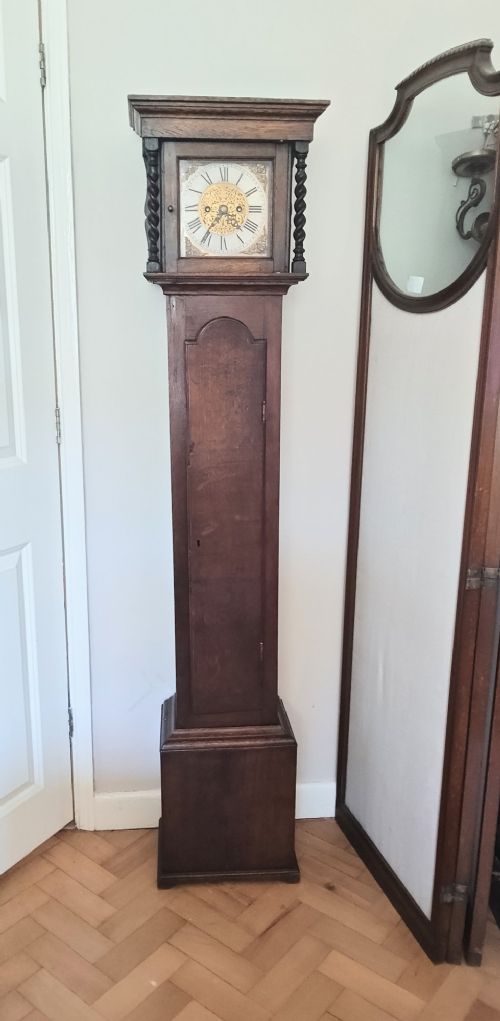
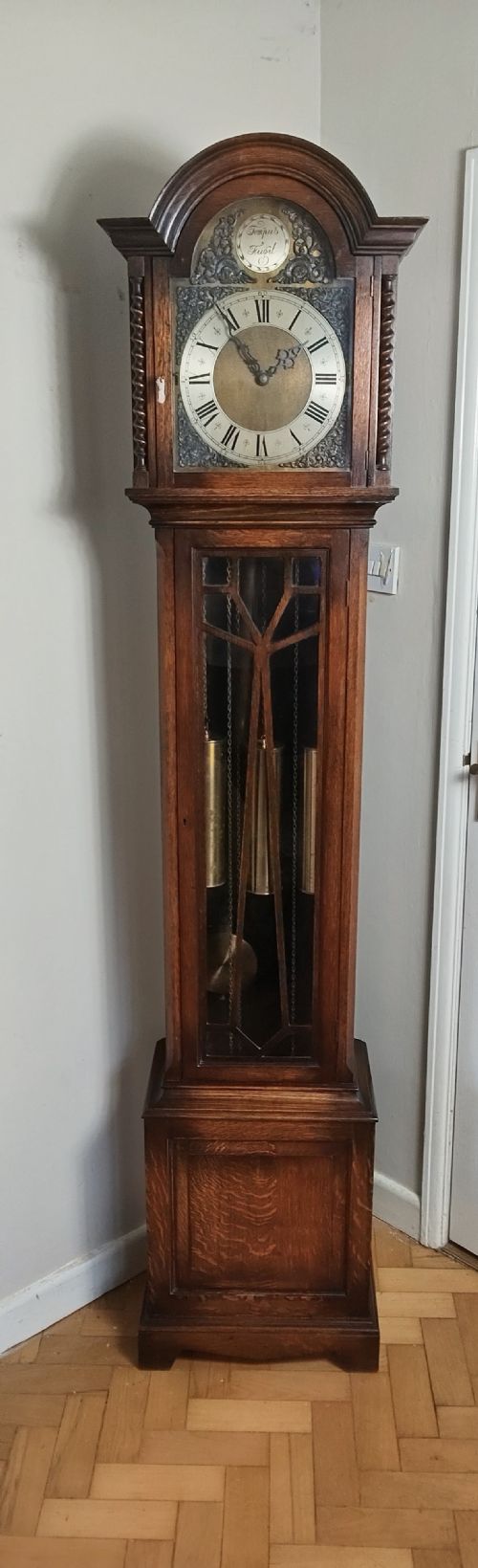
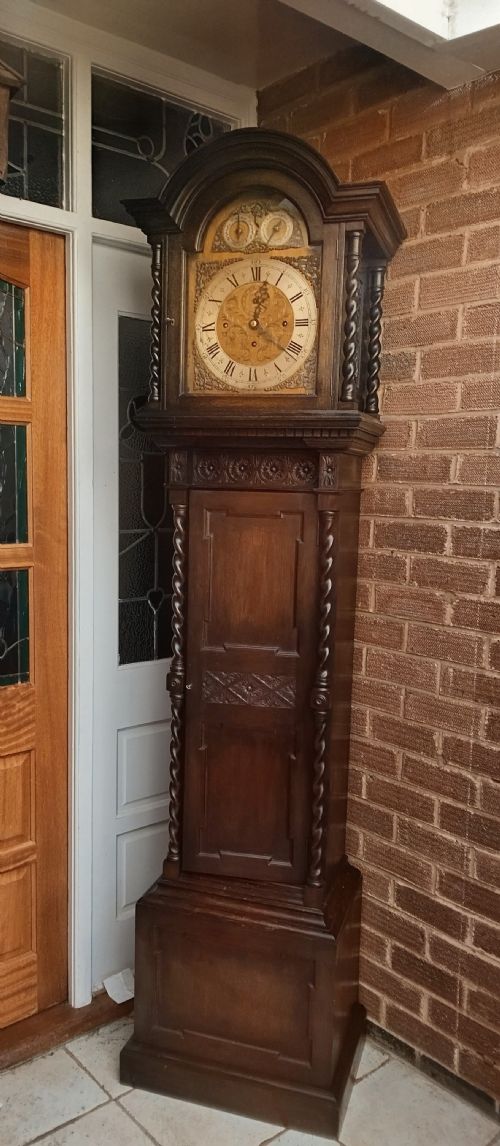
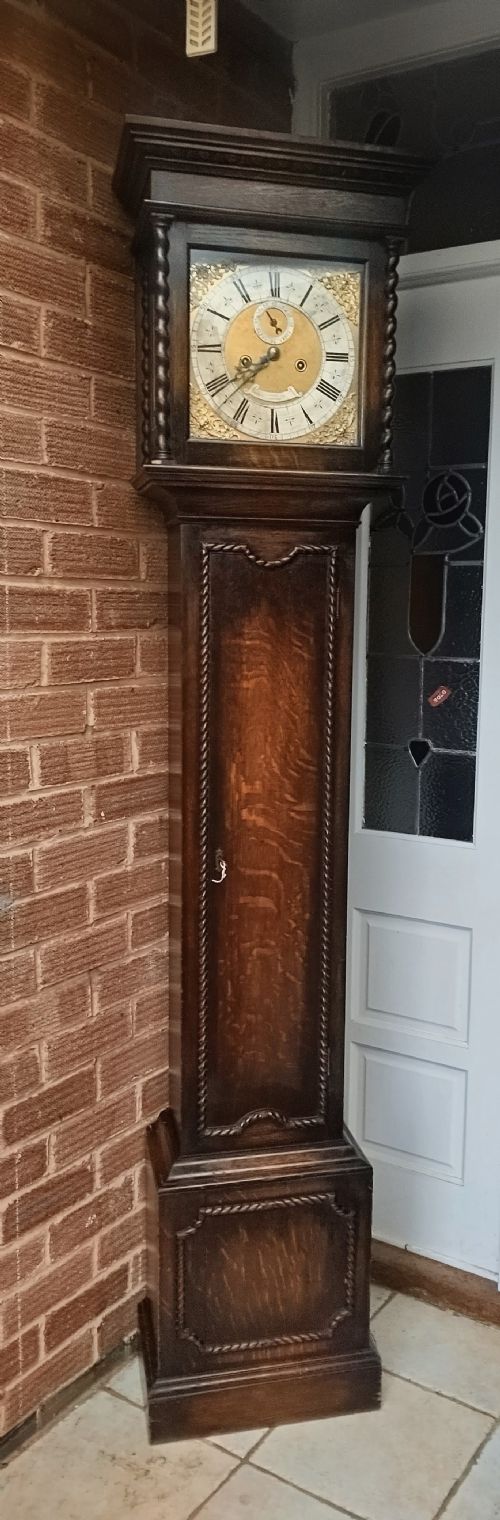
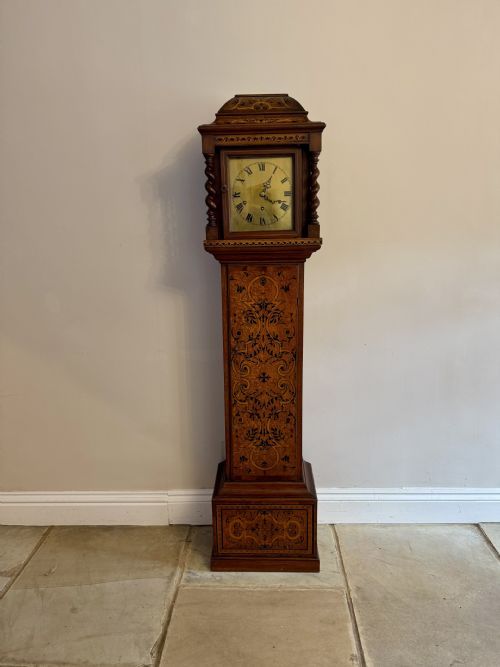


Barley Twist Longcase Clock
A barley twist longcase clock combines rhythmic mechanical precision with the distinctive spiral turning that defines period case design.
What barley twist longcase clocks are
When you search for a barley twist longcase clock, you are looking at tall floor-standing timepieces featuring distinctive spiral columns on the hood or trunk. The evidence shows these clocks appearing in various forms from the seventeenth century through to the twentieth century, encompassing both original period pieces and later revivals.
You are most likely to meet oak and walnut examples dating from the twentieth century, particularly the 1920s, featuring triple weight movements and Westminster chimes alongside earlier seventeenth century pieces. These range from small grandmother clocks to taller grandfather versions, incorporating glazed doors and silvered dials.
The style draws heavily on Jacobean, William and Mary, and Restoration aesthetics, translating historic turning techniques into domestic timekeepers. Whether housing a musical movement or a simpler thirty-hour train, each piece maintains the vertical presence characteristic of longcase clocks.
How they were made
Cabinetmakers utilised solid timbers such as oak, walnut, maple, and ebony, frequently employing ebonised wood to create dark, uniform surfaces. Cases often featured panelled construction and star inlay work alongside the characteristic spiral turnings.
Mechanisms integrated brass components, glass face covers, and weights to drive the gear trains. Movements ranged from simple thirty-hour dial layouts to complex musical systems capable of chiming quarters and hours.
Retail Price Guide 2026
Typical UK retail prices for barley twist longcase clock, calculated from the Sellingantiques database of over a million retail prices indexed since 2003. This retail price guide relies exclusively on Sellingantiques data; no external sources or auction records are used, so the figures do not describe the wider market.
Listings feature oak, walnut, maple, and ebony materials spanning the seventeenth century through to 1920.
What varies in quality
Quality rests in the crispness of the timber turning and the proportion of the case architecture. Superior examples display sharply cut spirals and harmonious integration between hood columns and trunk design.
The sophistication of the internal movement further separates examples, moving from basic timepieces to intricate triple weight musical movements by known makers. Choice of cabinet wood, from standard oak to figured walnut and panelled ebony, marks the distinction in tier.
Edward East·Joseph Knibb·William Noke Of Shropshire·John Drew
The Barley Twist Longcase Clock Glossary
- Barley twist
- A spiral turning resembling a twisted rope, frequently used on the hood columns of longcase clocks. This decorative feature appears extensively across seventeenth-century and revival pieces.
- Longcase clock
- A tall, floor-standing timepiece enclosed in a wooden case with a pendulum and weights. Often termed a grandfather or grandmother clock depending on its overall height.
- Triple weight
- A movement driven by three separate suspended weights, typically powering the timekeeping, the hour strike, and the musical chimes. This configuration is common in twentieth-century musical examples.
- Regulator
- A precision timekeeping clock designed for high accuracy. These movements often feature specialised gear arrangements to minimise friction.
- Ebonised wood
- Timber treated with a finish to imitate expensive ebony. Cabinetmakers utilised this technique to achieve deep black surfaces on period and revival cases.
Frequently Asked Questions
How do triple weight clocks work?
Triple weight movements use three separate suspended weights housed inside the trunk to power the timekeeping train, the hour strike, and the musical chime train respectively.
As the weights descend over their operational cycle, they release stored mechanical energy through the gear train to drive the hands and hammers.
How do I date a barley twist clock?
Dating relies on examining the timber species, dial construction, and movement signatures alongside the overall case style. Seventeenth-century examples display distinct vernacular joinery and brass dial configurations compared to twentieth-century revivals.
Reference to known clockmakers inscribed on the dial or movement plates provides a precise period anchor.
Where should I place a longcase clock?
Longcase clocks require a stable, level floor and a firm interior wall to anchor the case securely. Avoiding areas with significant temperature fluctuations or direct sunlight helps preserve the timber case and internal wooden components.
Sufficient clearance is needed inside the trunk for the pendulum to swing freely without obstruction.