


Nineteenth Century Longcase Clock
A nineteenth century longcase clock marks the passing hours with regional character, tall timber cases, and meticulous dial work.
Nineteenth Century Longcase Clock
A nineteenth century longcase clock combines tall cabinet woodwork with complex mechanical movements designed to keep precise time. These standing clocks appear in Georgian, Regency, and Victorian styles, each bearing regional signatures from English, Scottish, Welsh, and Irish makers.
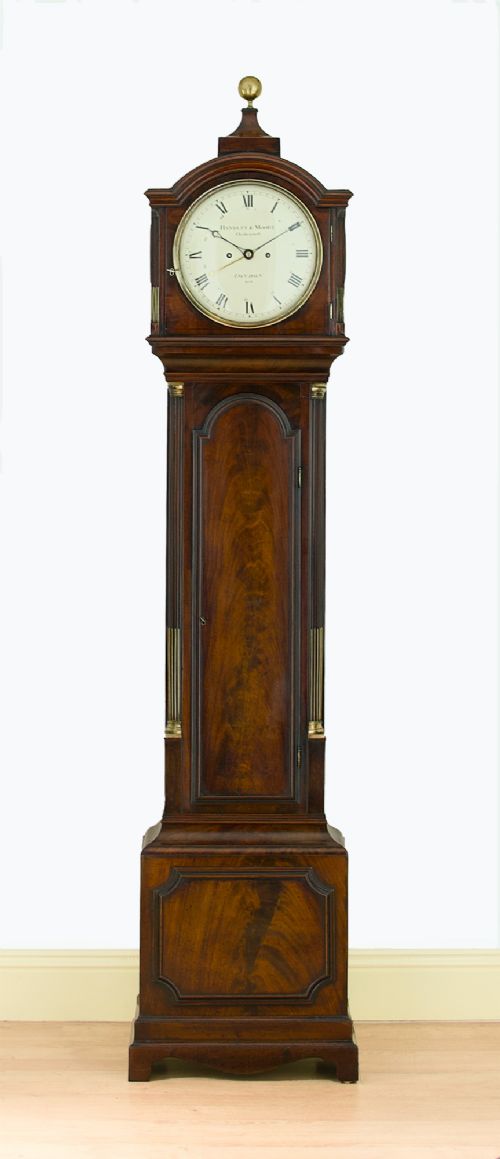
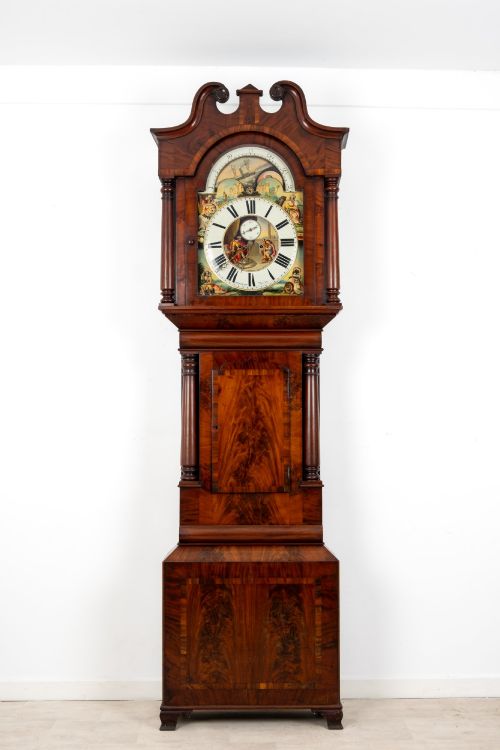
Most examples standing in this range utilise mahogany, flame mahogany, oak, or marquetry inlay across their trunk doors and hood cornices. Dial faces vary from painted iron and silvered metal to brass, often featuring moon phase mechanisms or regulator layouts.
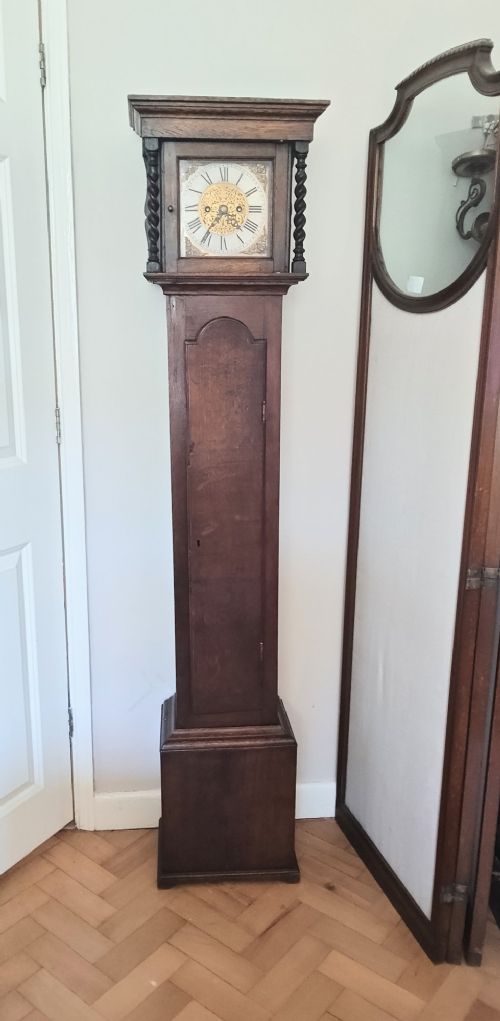
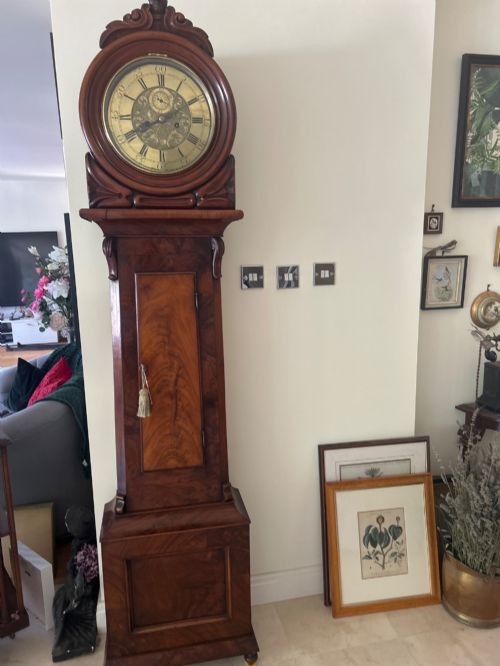
Regional variations emerge clearly across the inventory, from Scottish drumhead and marquetry designs to Welsh moonphase pieces and London regulators. Buyers encounter both full-sized grandfather clocks and smaller grandmother clock variants.

Materials and Construction
Cabinetmakers constructed the tall housing primarily from mahogany, flame mahogany, and oak, applying decorative veneers and marquetry inlay to enrich the timber surfaces. Glass protected the dial faces set within hinged or sliding hood doors, while brass and silvered metal formed the chapter rings and indicator plates.
Horologists fitted eight-day movements and rolling moon mechanisms behind painted iron and metal dials. Weights and pendulums hung within the trunk to power the escapement, requiring precise alignment by regional clockmakers.
Nineteenth Century Longcase Clock Retail Price Guide 2026
Typical asking prices for nineteenth century longcase clock among the pieces listed under this phrase on Sellingantiques today, from the lower quarter to the upper quarter. They describe what is for sale here now, not the wider market.
Some provincial dials display charmingly idiosyncratic floral hand-painting that suggests the local painter improvised the botanical details.
Quality and Craftsmanship
Distinction across these timepieces lies in the crispness of the cabinet woodwork, the depth of the flame mahogany figures, and the precision of the marquetry inlay. Superior examples display balanced proportions, clean hood mouldings, and well-preserved timber patination.
Dial execution separates standard production from exceptional work, particularly where hand-painted moon phases, silvered metal chapters, and signed brass plates survive intact. The integration of precision regulator movements further elevates an example.
Handley And Moore·Parkinson Bros·David Craig·Whitelaw Of Edinburgh·Wightman Of London·James Wood·Ganthony Of London·David Griffith·Aitchison Of Glasgow·Frederick Rowe·Richard Rowell
The Nineteenth Century Longcase Clock Glossary
- Longcase clock
- A tall freestanding weight-driven timepiece housed in a wooden case, commonly called a grandfather clock. These standing clocks protect the pendulum and weights within a vertical trunk.
- Regulator
- A precision timepiece designed for extreme accuracy, featuring a simplified dial layout with separate minute and hour indicators. These movements often appeared in scientific or high-status domestic settings.
- Moon phase
- A dial mechanism tracking the lunar cycle through painted rotating discs visible behind an arched opening on the clock face. This complication required careful gearing to match the phases of the moon.
- Drumhead clock
- A timepiece featuring a circular dial housing mounted atop a tapered wooden trunk, particularly characteristic of Scottish regional design. This distinct silhouette differs from traditional architectural hoods.
- Marquetry
- The art of applying decorative veneer pieces to wooden surfaces to create pictorial or geometric patterns. Makers utilised contrasting timbers to enrich the visual depth of the clock door and base.
Nineteenth Century Longcase Clock: Frequently Asked Questions
Where should a longcase clock go?
Position your timepiece against a stable interior wall away from direct sunlight, heating vents, and damp exterior stone. A level floor ensures the pendulum swings evenly and the movement keeps accurate time.
Allow sufficient vertical clearance for the tall wooden case, measuring your ceiling height before choosing between full-sized grandfather models and smaller grandmother variants.
How do eight day movements work?
An eight-day movement relies on hanging weights suspended by cords or chains that descend slowly down the wooden trunk as gravity drives the gear train. Winding requires a key or crank to draw the weights back up once a week.
This system provides more sustained power than thirty-hour movements, maintaining steadier tension across the escapement and dial mechanics.
How are regional styles identified?
Examine the dial configuration, timber choice, and hood architecture to trace where a clock originated. Scottish makers frequently produced drumhead designs and intricate marquetry, while Welsh pieces often showcased distinctive painted moonphase arches.
London workshops favoured refined mahogany cases and precise regulator dials, reflecting metropolitan horological standards of the Georgian and Regency eras.
What is a rolling moon dial?
A rolling moon mechanism displays two painted lunar spheres on a rotating disc that tracks the twenty-nine and a half day cycle of the moon. This complication sits within the arched top of the dial face above the main chapter ring.
Clockmakers geared these displays to turn continuously behind shaped apertures, offering both practical sky-tracking and decorative movement.
How do I care for timber cases?
Maintain stable indoor humidity levels to prevent the mahogany, oak, or veneer surfaces from drying out or splitting. Dust the carved mouldings and glass panels regularly with a soft, dry cloth.
Apply specialist wax sparingly only when the timber appears dull, avoiding modern silicone sprays that can damage antique patination.