


Dark Mahogany Grandfather Clock
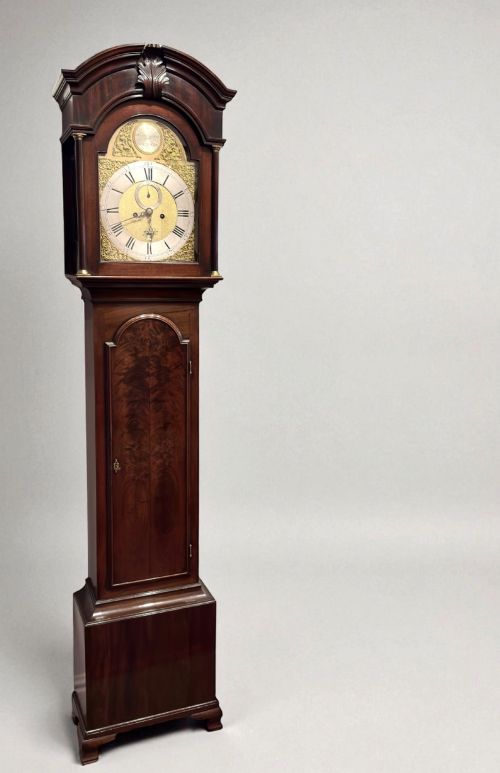
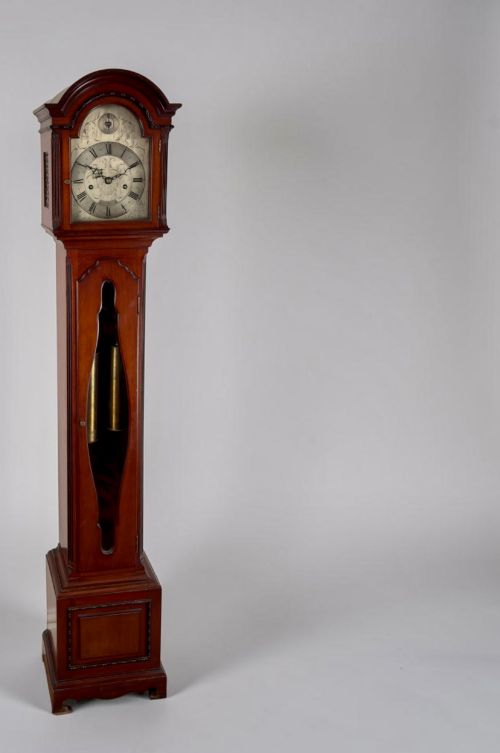
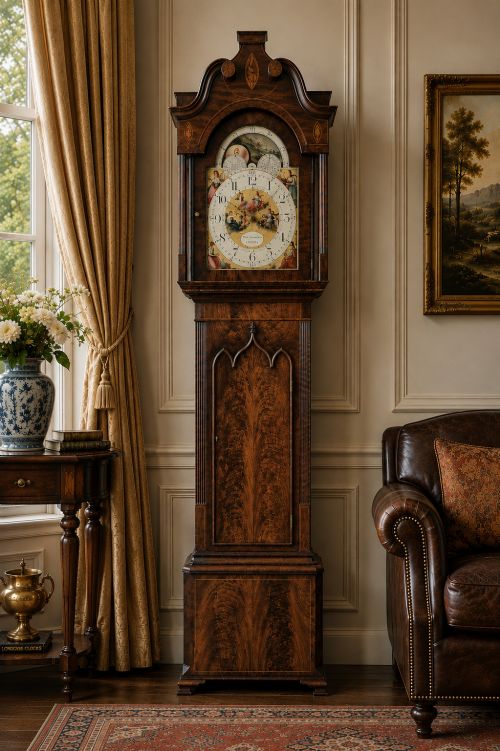
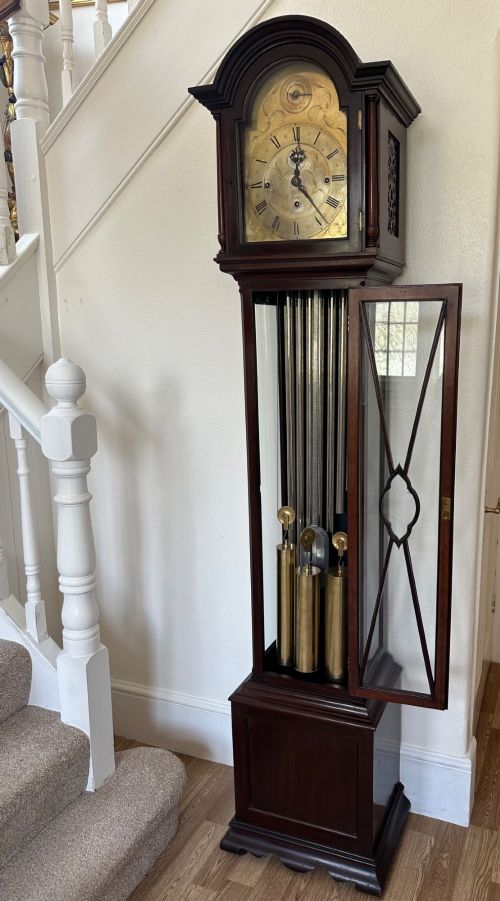
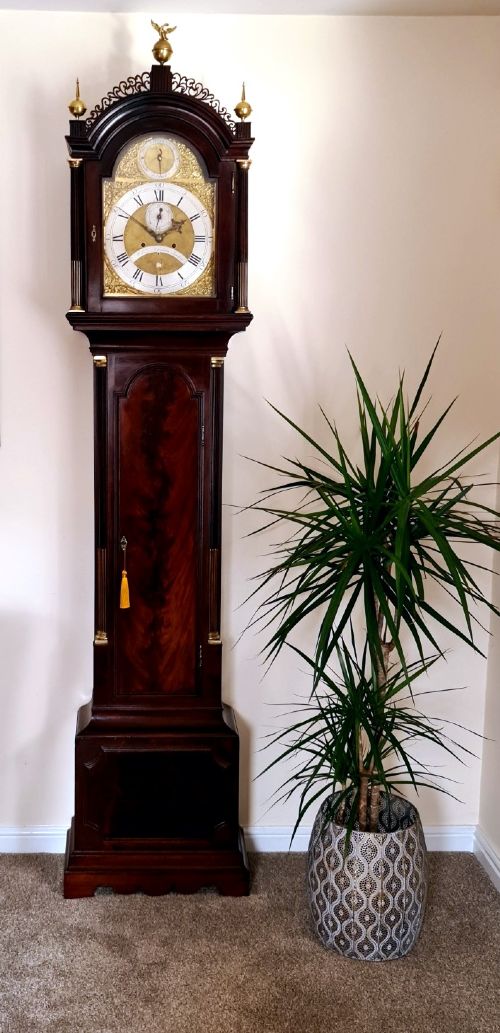
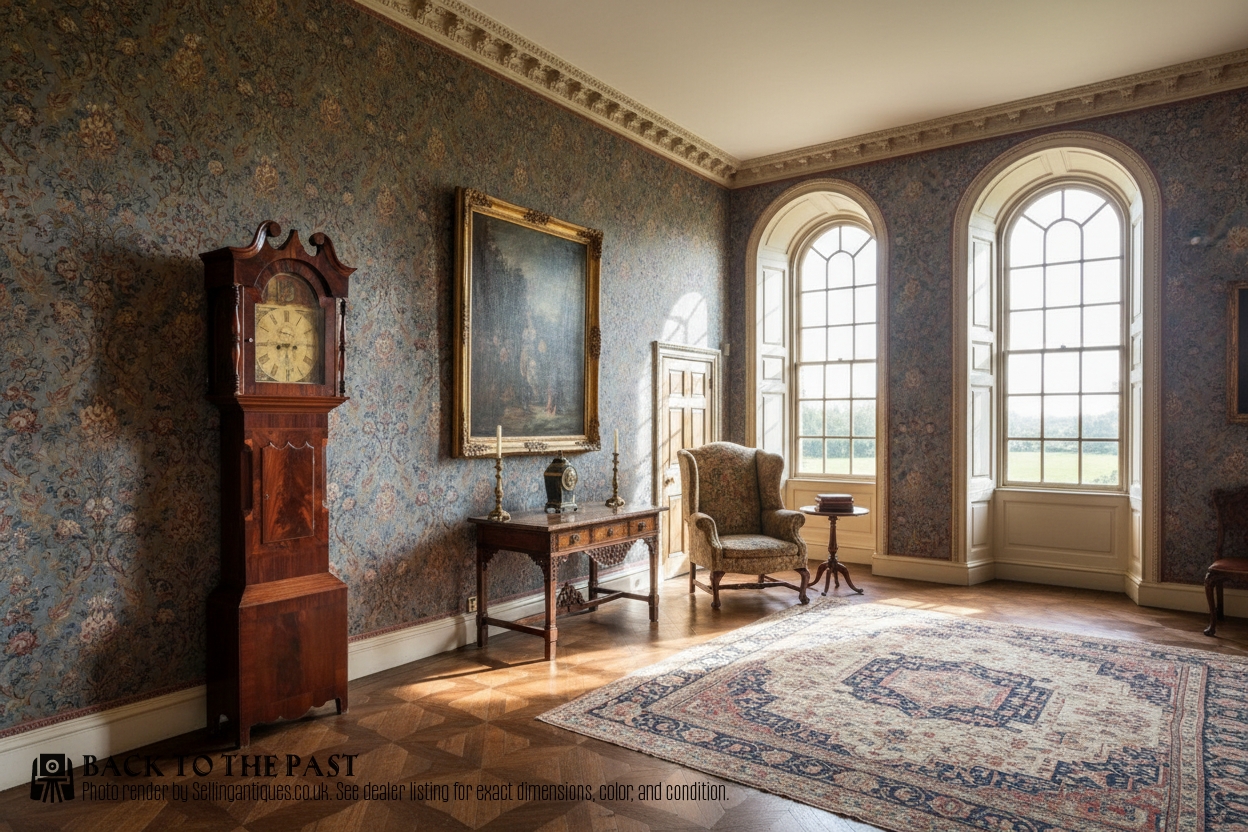
A dark mahogany grandfather clock holds time in a tall wooden case, bringing deep timber warmth and mechanical precision to a room.
Dark Mahogany Grandfather Clock
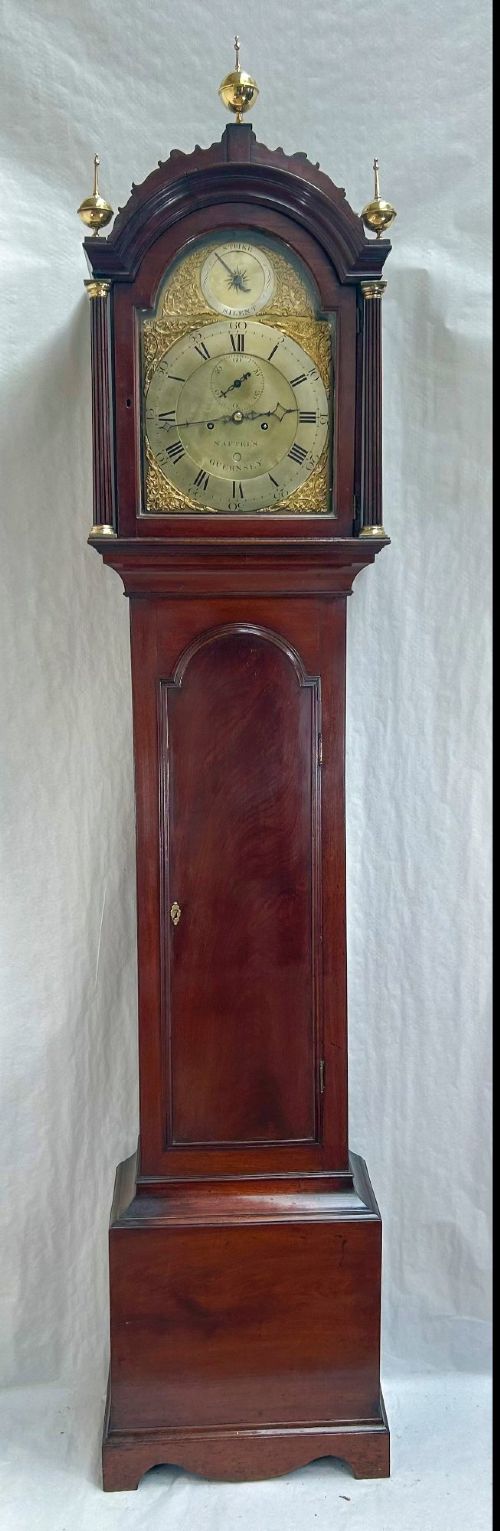
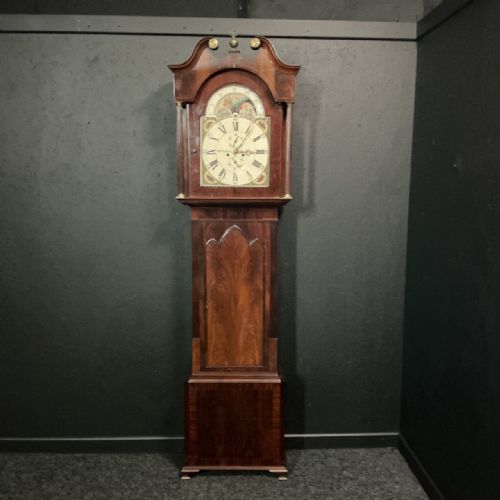
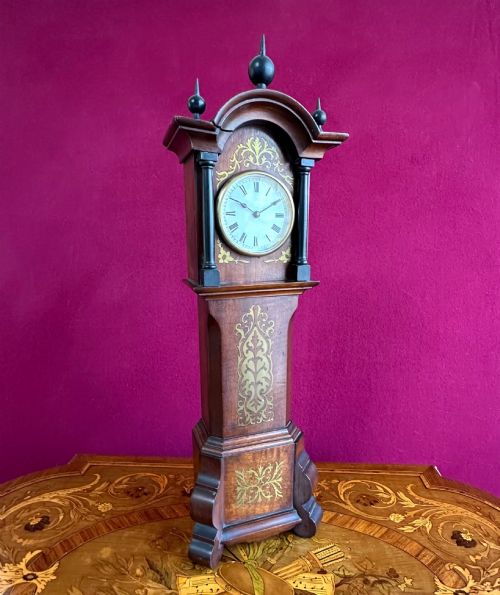
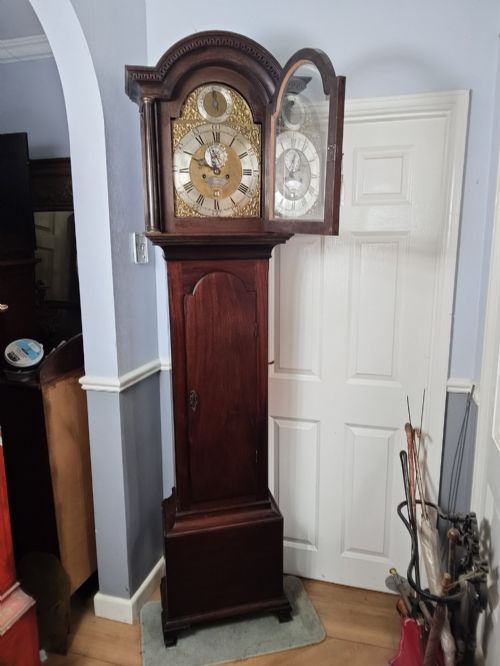
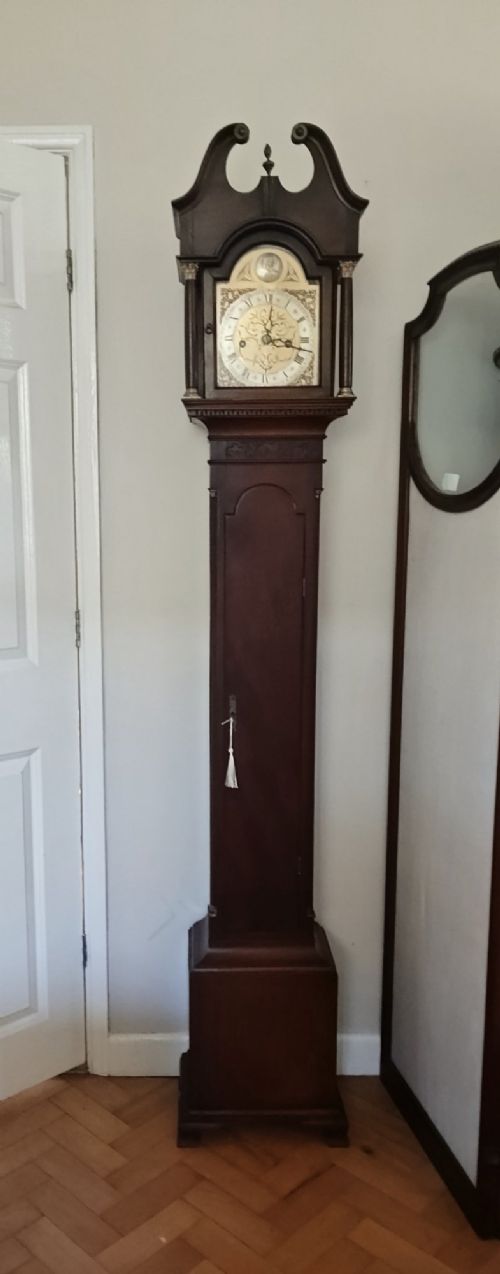
A dark mahogany grandfather clock stands as a tall case timepiece, appearing most frequently in Georgian and nineteenth-century forms across these listings. Makers housed complex movements inside narrow wooden trunks, balancing architectural proportion with practical utility.
The selection ranges from robust provincial English examples to refined London pieces and Scottish variations. Buyers encounter standard height longcase clocks alongside smaller grandmother clocks and specialised drumhead models.
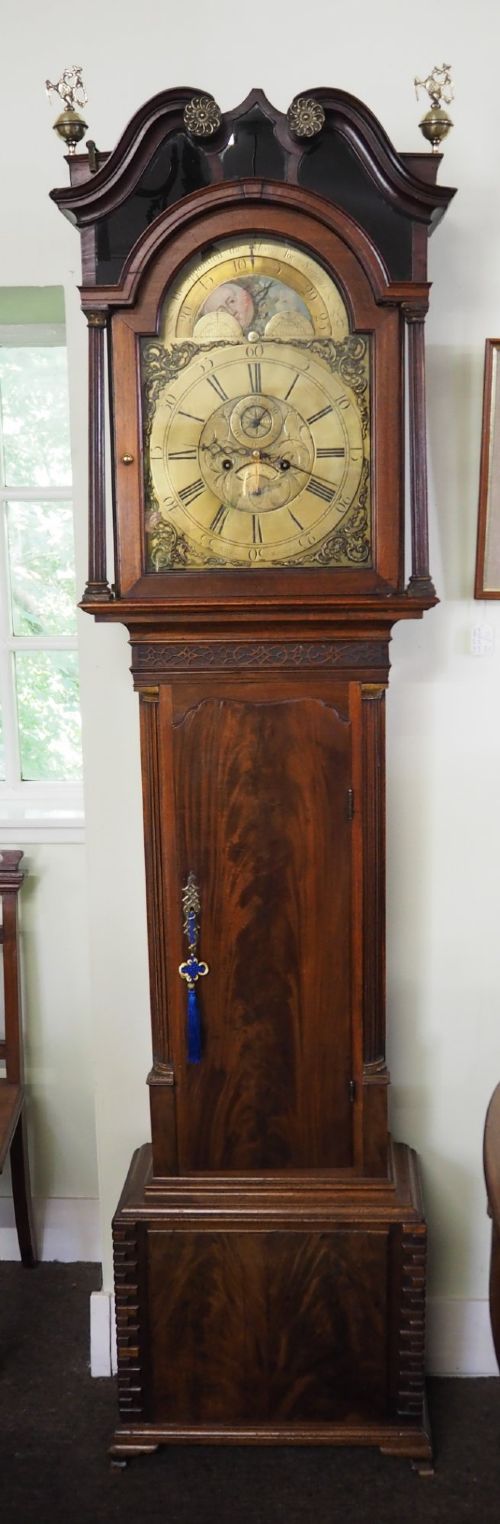
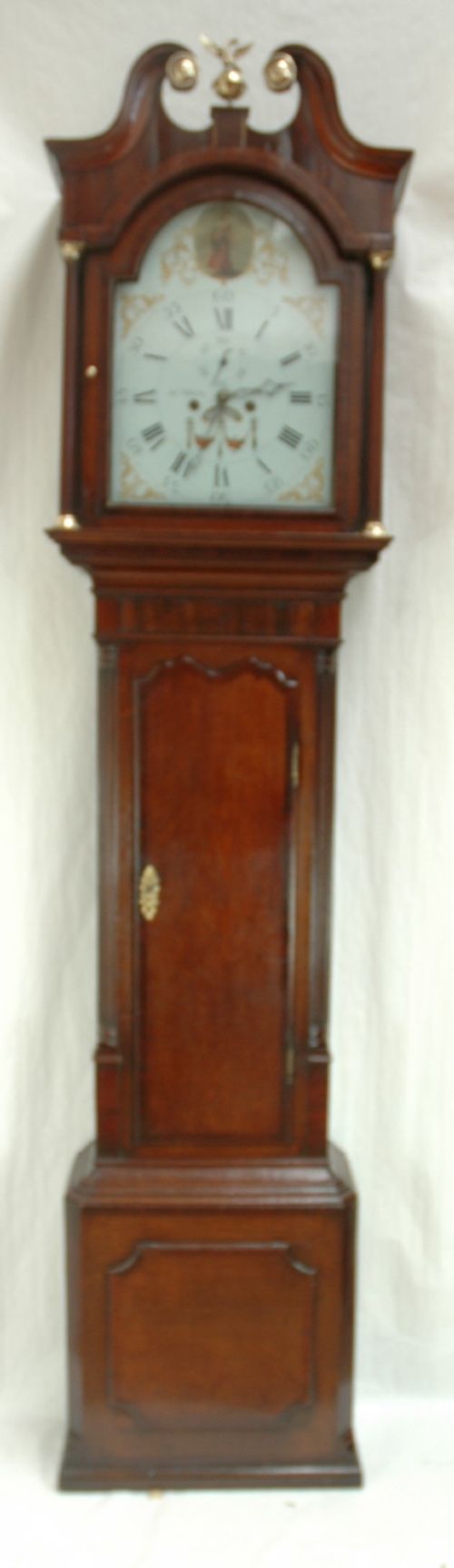
Dial variations define much of what collectors examine, with painted iron, brass, and moon roller faces appearing regularly. These functional faces track hours, minutes, and lunar phases through mechanical gears.
How they were made
Craftsmen built these tall cases primarily using mahogany and flame mahogany timbers, sometimes accented with oak or brass fittings. Glass protected the delicate dial faces while iron and steel formed the internal weights and gear trains.
Cabinetmakers shaped the timber into slender trunks with arched or flat hoods, housing movements designed by regional clockmakers. Dial construction involved engraved brass plates or painted iron sheets, often signed by the maker near the centre.
Dark Mahogany Grandfather Clock Retail Price Guide 2026
Typical asking prices for dark mahogany grandfather clock among the pieces listed under this phrase on Sellingantiques today, from the lower quarter to the upper quarter. They describe what is for sale here now, not the wider market.
Horse illustrations occasionally share dial space with lunar phases.
What varies in quality
Quality rests in the depth of the mahogany grain and the crispness of the dial engraving or painting. Superior examples exhibit well-proportioned hoods and balanced casework that has retained its original colour and surface texture over centuries.
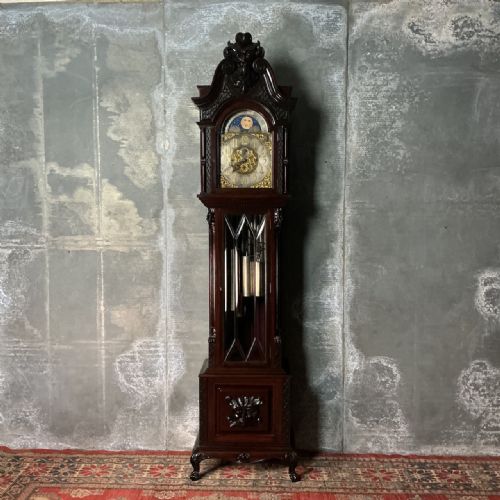
Movement complexity separates standard eight-day clocks from advanced pieces featuring chime mechanisms, tubular bells, or strike-silent options. The reputation of the maker inscribed on the dial further elevates the standing of an individual clock.
Gordon of Aberdeen·Gillett and Johnston of Croydon·James Field of Hempstead·Samuel Kellett of Bredbury·William Jourdain·George Hallifax of Doncaster·Henry Weedon London·Edward Shepley of Manchester·Matt Wylie Paisley·Joseph Gibson Ecclefechan·Thwaites London·Charles Dowsett of Canterbury·John Denbigh Merton Park·William Moon London·Edward White Birmingham·William Betagh Dublin·Priory of Dundee Scotland
The Dark Mahogany Grandfather Clock Glossary
- Longcase clock
- A tall pendulum clock enclosed in a wooden case resting on the floor. This term serves as the formal descriptor for grandfather clocks.
- Moon roller
- A mechanism behind the dial that tracks the phases of the moon through a rotating disc. It adds significant mechanical complexity to the movement.
- Grandmother clock
- A smaller, more slender version of the traditional longcase clock. These usually date from the Edwardian period or later.
- Drumhead
- A circular dial housing set atop a tapered wooden trunk, characteristic of specific Scottish and Regency models. This distinctive silhouette contrasts with traditional square or arched hoods.
- Strike-silent
- A mechanism allowing the chiming train to be turned off manually. It prevents the clock from sounding the hours during the night.
Dark Mahogany Grandfather Clock: Frequently Asked Questions
How do I wind an eight day clock?
Use the winding key to raise the weights inside the waist door every week. Turn the key steadily until the weight reaches the top.
Take care not to overwind the mechanism, stopping as soon as resistance increases noticeably.
Where should I place a longcase clock?
Position the clock against an interior wall away from direct sunlight and heating vents. Wood and internal gears react poorly to extreme temperature fluctuations.
Ensure the floor is level so the pendulum swings with an even, regular beat.
What is the difference between a grandfather and grandmother clock?
Grandfather clocks stand tall and command a dominant position in a hallway or principal room. They represent the standard proportions established in the eighteenth century.
Grandmother clocks are significantly shorter and narrower, designed to fit into smaller domestic spaces during the Edwardian era.
How do I tell a Georgian clock from a later one?
Georgian clocks display characteristic eighteenth-century cabinet proportions, often featuring brass dials with subsidiary seconds and calendar arches. The mahogany timber patination shows deep age and honest wear.
Later Victorian and Edwardian examples frequently incorporate painted iron dials or distinct regional casework styles from Scotland and northern England.